HelloGrowthCRM software
Built for real small-business sales teams
HelloGrowthCRM helps reps qualify faster, follow up on time, and close more deals—with practical automation in one place.
- AI lead scoring and pipeline visibility
- Built-in dialer, WhatsApp, and email automation
- Sales forecasting and RevOps-ready reporting
Call deflection is a method businesses use to reduce the volume of incoming phone calls by guiding customers to other communication channels such as online FAQs, chatbots, or self-service portals. This helps free up phone lines and sales or support staff to focus on higher-value interactions. This article covers why call deflection matters for small businesses, a step-by-step guide to implementing it, a practical example with numbers, common pitfalls, and how HelloGrowthCRM’s built-in dialer can support your team.
Why this comes up / what goes wrong
Small businesses often struggle with high volumes of incoming calls that slow down response times and overwhelm sales or support teams. For example, a dental practice with two locations may receive many routine questions about office hours, appointment scheduling, or insurance coverage. Handling all these calls can lead to long wait times, lost leads, and frustrated customers. Without tools to efficiently manage or redirect calls, businesses risk losing potential sales or damaging customer satisfaction.
Call deflection helps by directing routine inquiries away from phone lines to faster, automated, or self-service options. This reduces the load on staff and improves response speed for calls that require personal attention.
Step-by-step
- Identify common call reasons
- Track why customers call your business (e.g., billing questions, appointment booking).
- Check call logs or ask your team to list frequent inquiries.
- Create alternative channels
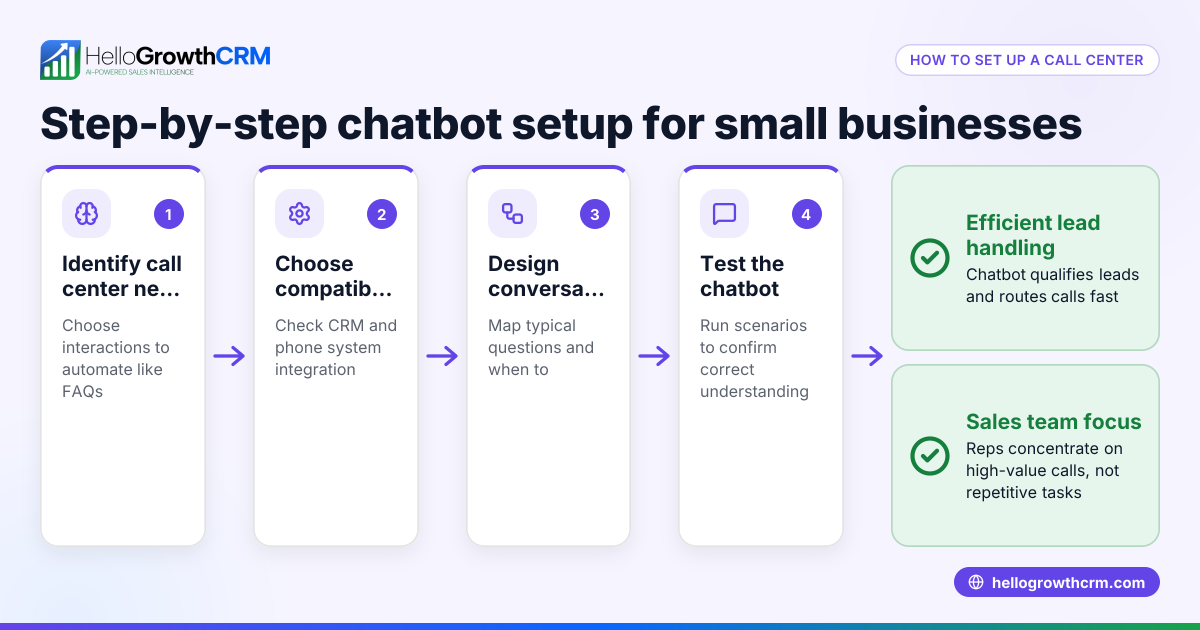
- Develop online FAQs, chatbots, or self-service portals that answer these common questions.
- Ensure these channels are easy to access and user-friendly.
- Inform customers about alternatives
- Update your phone system’s automated messages to guide callers to these channels.
- Use your website, email, and social media to promote self-service options.
- Train your team
- Teach staff to recognize when to encourage customers to use alternative channels.
- Have scripts ready for redirecting calls politely.
- Monitor call volume and customer feedback
- Regularly check if call deflection reduces phone traffic.
- Ask customers if the alternative channels meet their needs.
- Adjust based on data
- Improve your self-service options and phone scripts as needed.
- Use insights from call outcomes to refine your approach.
- Use CRM tools to manage calls efficiently
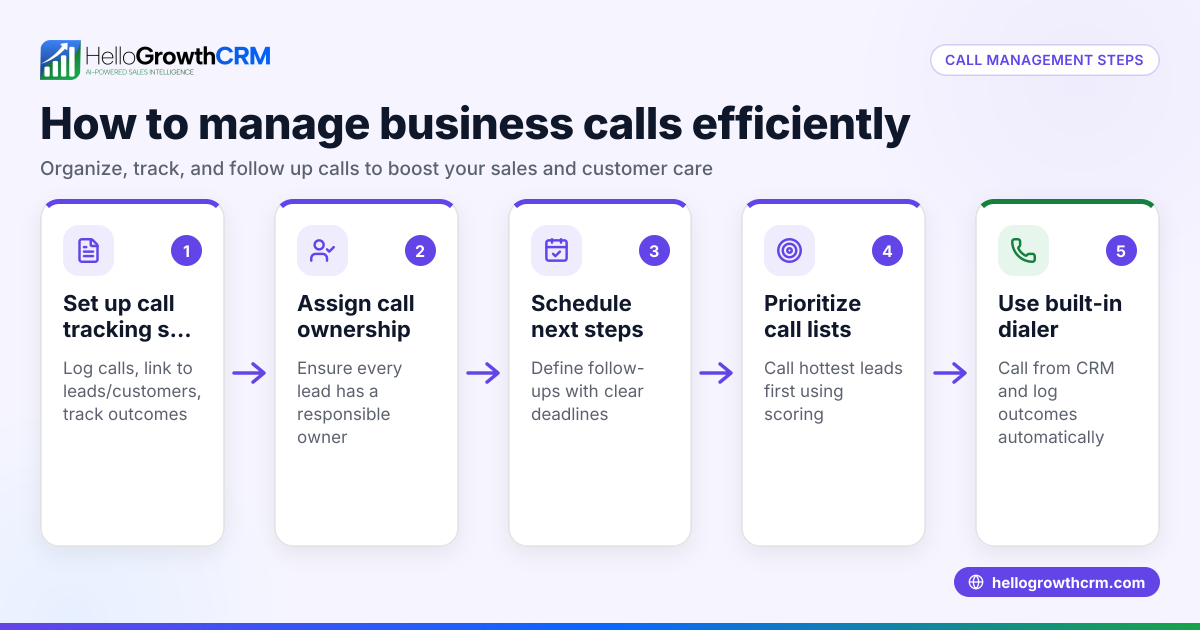
- Employ a built-in CRM dialer to work through call lists and log call outcomes.
- Track follow-ups and customer interactions in one place.
Example (fictional figures)
A two-location dental practice in Columbus, Ohio, receives 2,000 calls monthly. They find 40% of calls are about appointment scheduling and 30% about office hours.
- Total calls: 2,000
- Appointment calls: 2,000 × 40% = 800
- Office hours calls: 2,000 × 30% = 600
They create an online booking system and update their phone system to direct callers to it.
After 3 months:
- Calls reduced by 25% due to deflection.
- New call volume: 2,000 × 75% = 1,500
This frees up 500 calls worth of staff time to focus on treatment consultations and follow-ups.
Common mistakes
- Not analyzing call reasons first: Without knowing why customers call, deflection efforts may miss key issues. Prevent by tracking call reasons carefully.
- Making alternative channels hard to find or use: If self-service options are confusing, customers will call anyway. Prevent by testing usability.
- Failing to inform customers clearly: If callers don’t know about alternatives, deflection fails. Prevent by updating phone messages and website prominently.
- Ignoring staff training: Employees must support deflection efforts. Prevent by providing clear guidance and scripts.
- Not monitoring results: Without measuring impact, you won’t know if deflection works. Prevent by regularly reviewing call volumes and customer feedback.
- Over-deflecting complex calls: Some calls need personal attention. Prevent by training staff to recognize and handle these appropriately.
Doing this in HelloGrowthCRM
HelloGrowthCRM offers a built-in dialer that lets your reps work through call lists directly inside the CRM. Each call’s outcome is logged on the lead record, keeping a full call history tied to contacts and deals. This helps your team stay organized and track follow-ups efficiently while managing call deflection efforts. Learn more about the built-in CRM dialer and how HelloGrowthCRM supports WhatsApp and SMS CRM for multi-channel communication. For US businesses, see HelloGrowthCRM for the United States.
Frequently asked questions
What is the main goal of call deflection? The main goal is to reduce the number of incoming calls by guiding customers to alternative channels like online self-service or chat. This frees up staff to focus on calls that need personal attention.
How can small businesses start with call deflection? Start by identifying common reasons customers call, then create easy-to-use alternatives such as FAQs or online booking. Inform customers about these options through phone messages and your website.
Does call deflection reduce customer satisfaction? If done poorly, yes. But if alternative channels are clear, accessible, and effective, call deflection can improve satisfaction by providing faster answers.
Can call deflection be used in sales as well as support? Yes. Deflecting routine sales inquiries to automated tools or online resources frees sales reps to focus on leads with higher potential.
How does a CRM help with call deflection? A CRM with a built-in dialer helps track calls, log outcomes, and manage follow-ups. This organization supports efficient call handling and monitoring of deflection effectiveness.
Key takeaways
- Call deflection directs routine calls to alternative channels to reduce phone volume.
- Identify common call reasons before creating self-service options.
- Clearly inform customers about alternatives via phone and online.
- Train staff to support deflection and monitor results regularly.
- Use CRM tools like HelloGrowthCRM’s built-in dialer to track calls and outcomes.
Start managing your leads and calls more efficiently with HelloGrowthCRM. Start on the Free Forever plan (200 leads, no credit card).
Ready to put this into practice?
Set up your pipeline, WhatsApp follow-ups, and AI lead scoring in minutes — free, no credit card.
Try HelloGrowthCRM freeGet CRM tips in your inbox
Join thousands of sales professionals who get weekly insights on CRM strategy, AI automation, and pipeline optimization.

The HelloGrowthCRM team publishes guides on CRM strategy, AI sales tools, and revenue operations for small business sales teams.