HelloGrowthCRM software
Built for real small-business sales teams
HelloGrowthCRM helps reps qualify faster, follow up on time, and close more deals—with practical automation in one place.
- AI lead scoring and pipeline visibility
- Built-in dialer, WhatsApp, and email automation
- Sales forecasting and RevOps-ready reporting
In the United States, a good CRM for a Little Rock real estate agent should do more than store contacts: it should reflect Arkansas lead sources, U.S. calling and email rules, local deal handoffs, and the way earnest money, checks, wires, and commission paperwork actually move.
That matters in Little Rock because the work is not one straight line from inquiry to closing. A lead may start on Google Business Profile, arrive by text after a yard sign scan, then become a showing request, then a financing conversation, then a contract file with lender, title, and inspection milestones. If your CRM treats all of that as a generic “lead,” you lose context fast. The right setup gives you usable records, not just a larger database.
For many brokerages and independent agents, the useful test is simple: can the system show who the prospect is, where they came from, what permission you have to contact them, what property they care about, what the next action is, and who owns the handoff? If it cannot, you will end up running the business from your inbox and phone instead.
Little Rock lead sources should create different records, not one generic contact
In Little Rock, new business usually does not come from one source. You may get inbound interest from Google Business Profile, Facebook, Zillow-style portal traffic handled outside the CRM, referral texts, your own website forms, and repeat clients from prior transactions. In the United States, that source detail matters because the first follow-up method, the expected response speed, and the compliance record are different by channel.
A referral from a past client should not be treated the same way as a cold inquiry from a landing page. The referral likely needs relationship context: who referred them, whether they are buying or selling, and which neighborhood they mentioned. A website form needs source attribution, consent wording captured at the moment of submission, and routing rules so nobody claims the lead twice. A sign-call or direct phone inquiry needs a call outcome tied to the contact record, not buried in one agent’s handset.
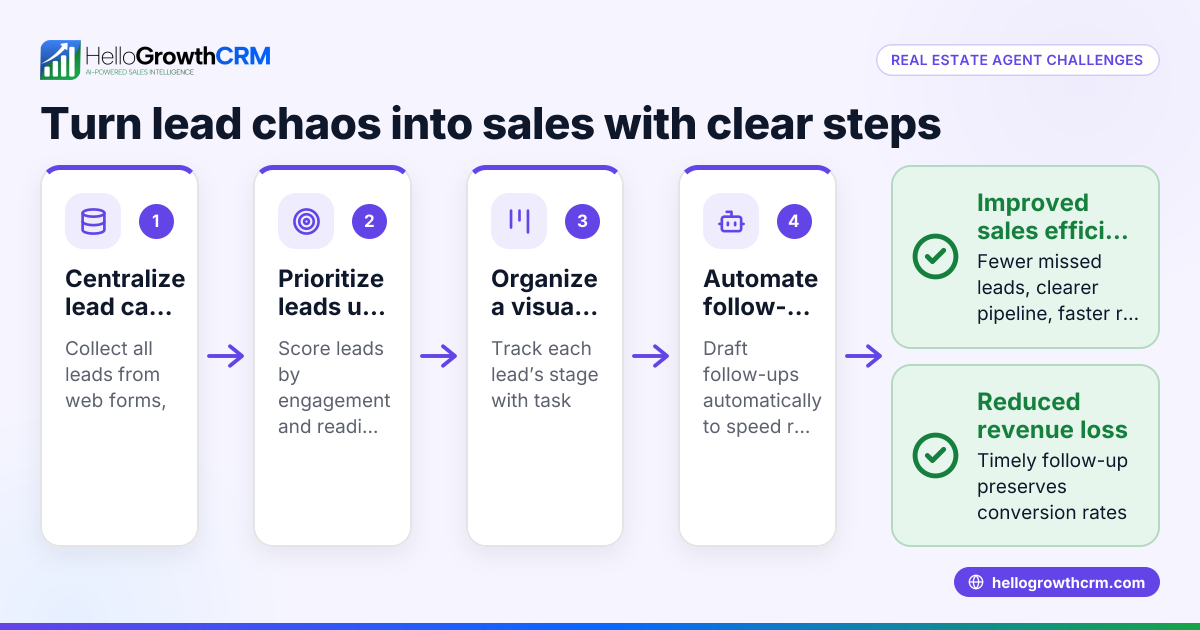
This is where lead capture and qualification tools are more useful than a plain address book. They let you separate inquiry type, motivation, property side, and source before the record enters the pipeline. For a Little Rock team, that means a Chenal Valley listing lead, a North Little Rock first-time buyer, and an investor asking about several properties can each enter the system with different fields and different next steps.
TCPA and CAN-SPAM make follow-up history a legal record in the United States
For U.S. agents, follow-up is not only a sales habit. It is also a compliance issue. The Telephone Consumer Protection Act is enforced through the FCC, and it matters because calling and texting rules can turn your contact history into evidence. The Federal Trade Commission also enforces CAN-SPAM for commercial email, which requires a working opt-out and truthful sender information. There is no single nationwide privacy rule that covers every sales contact the same way, so your process has to show what happened for each person.
That is especially relevant in real estate because agents often work across personal phones, team inboxes, ISA staff, and automated reminders. If someone says they never agreed to receive marketing texts, your answer cannot be “we think they filled out a form once.” You need the source, the wording used at capture, the message history, and the opt-out status in one place.
One useful setup is to keep calls, notes, emails, and text conversations attached to the same record. A built-in dialer can help with phone activity logging, and SMS workflows can keep messaging tied to the contact rather than scattered across devices. The point is not volume. The point is having a record that shows who contacted the prospect, through which channel, and what happened next.
Your pipeline should mirror an Arkansas real estate transaction, not SaaS sales stages
Many CRMs fail real estate agents because they come with pipeline stages designed for subscription software or field services. A Little Rock agent needs stages that reflect the transaction itself. Buyer and seller pipelines should usually be separate, because the milestones and documents differ from the start.
For buyers, the useful stages often begin with inquiry, qualification, consultation scheduled, active search, showing booked, offer discussion, offer submitted, under contract, inspection and repair negotiation, appraisal and financing, clear to close, and closed. For sellers, you might need valuation requested, listing appointment, signed listing agreement, pre-listing preparation, active listing, under contract, and closed. Those are business stages, not just reminders.
A proper pipeline management layer helps because stage movement, expected value, and activity history stay attached to the same deal record. In practice, that means your CRM can answer operational questions: which buyers are still active but have not toured this week, which listings are stuck before going live, and which contracts are waiting on a repair response. That is much more useful than a dashboard that only counts contacts.
Earnest money, checks, ACH, and wires create blind spots if your CRM assumes card payments
In the United States, real estate money does not all pass through card processors. Earnest money may be delivered by check or wire. Broker invoices may be paid by ACH. Vendor costs may be reimbursed outside the main payment system. If your CRM only reflects card activity, the deal record will look cleaner than reality.
That matters because ACH and check payments do not automatically appear in a card processor dashboard. Manual recording is not optional when you need to see whether a fee was requested, whether payment was received, and which transaction it belongs to. For agents who charge for certain broker services or want cleaner commission-adjacent records, the CRM should expose those off-platform movements rather than hiding them.
The arithmetic below is illustrative; the figures are made up to show the shape of the decision, and they leave out title charges, lender fees, taxes, and brokerage-specific accounting treatment. An illustrative buyer deal record might show a property under contract at $285,000, illustrative earnest money of $3,000 paid by wire, an illustrative inspection invoice of $475 paid by card directly to the inspector, and an illustrative brokerage admin fee of $395 collected later by ACH. If the CRM only tracks the card payment, the record misses the wire and the ACH even though both affect what your team believes has happened.
For that reason, agents should look closely at how quotes, invoices, and payments received are tied back to deal records, and whether non-card events can be logged cleanly. The software is not replacing a trust account or legal closing file. It is giving the operating team a truthful picture of the transaction.
Arkansas licensing is separate from tax registration and contractor paperwork
U.S. small businesses often mix up licensing, tax, and vendor administration, and a CRM should help keep them distinct. Real estate agents in Arkansas answer to the Arkansas Real Estate Commission for licensing rules. That has nothing to do with whether your business has the right federal tax identification setup with the IRS, or whether a contractor should receive a Form 1099 under IRS rules. Those are separate tracks.
This matters inside a CRM because brokerages and team leads often store outside photographers, transaction coordinators, staging vendors, sign installers, and freelance marketers in the same system as prospects and clients. If you do that without deliberate record types, you create confusion over who is a customer, who is a vendor, and what documents belong to each relationship.
It also matters for taxes. The United States does not have a federal VAT or GST. Sales tax is imposed at state and often local level, and treatment depends on the transaction and location. If your business expands beyond Arkansas into referral networks or ancillary services across state lines, economic nexus and state sales tax registration become operational questions governed by state departments of revenue, not something a generic CRM can decide for you. Current rules, filing obligations, and registration details are published by the IRS and the relevant state revenue department, so the CRM should store the necessary facts and documents, not guess at compliance outcomes.
Scheduling in Little Rock still needs U.S. time-zone discipline
It is easy to think one Arkansas market does not need sophisticated scheduling logic. In practice, Little Rock agents regularly coordinate with relocation buyers, out-of-state sellers, lenders, military families, and investors based elsewhere in the United States. That makes time zones a live issue even when every property is local.
The United States has multiple time zones, and Arizona and Hawaii do not observe daylight saving the same way as most states. A showing request or consultation booked months ahead must survive that clock change. A March appointment made in October can shift if your CRM stores a loose time label instead of a real time-zone-aware event.
Scheduling also intersects with business norms. Federal holidays are widely observed, while state holiday practices vary. A lender, title company, county office, or contractor may not be operating on the exact pattern your team expects. A proper booking tool should make the appointment clear to the client and preserve the intended time in the record.
For Little Rock, that often means separating consultation bookings from showings and from internal transaction milestones. One is customer-facing, one depends on property access, and one is a team handoff. Treating them all as “meetings” creates avoidable misses.
Spanish-language follow-up is a mainstream operating choice, not a special case
Across the United States, Spanish-language communication is a normal market decision, not a fringe add-on. In real estate, that affects lead capture, template design, and handoff quality. If an inquiry starts in Spanish but your CRM stores only English templates and one free-text note, the next agent may answer with the wrong tone or miss key details.
For Little Rock teams, this is less about adding more marketing channels and more about preserving context. Store language preference as a real field. Keep message templates separated by language. Make sure appointment confirmations and follow-up sequences match the client’s preferred language. That reduces friction and also lowers the chance of accidental misinformation caused by rushed translation between team members.
Email and message automation can help here if it is tied to the contact record and trigger rules are clear. A shared inbox can also be useful when assistants and agents both handle incoming questions, because the conversation history stays visible instead of living in one person’s mailbox.
Team handoffs are the real stress test for a brokerage CRM
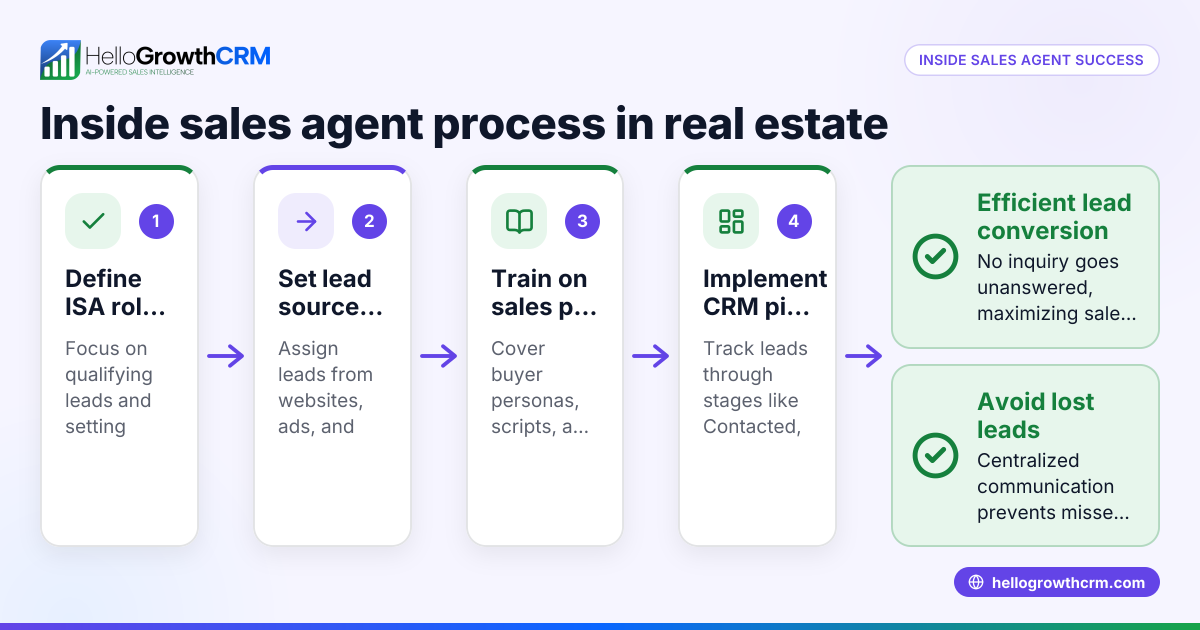
The strongest real estate CRM is usually not the one with the most fields. It is the one that survives handoffs. In a Little Rock brokerage, a lead may move from ISA to buyer’s agent, then to showing assistant, then to transaction coordinator, then back to the agent for inspection negotiations. Each handoff can drop information unless the record is structured for ownership changes and task visibility.
That is why activity logs and task boards matter. If the CRM keeps calls, meetings, notes, and next actions attached to the same record, another team member can step in without making the client repeat everything. Task boards and activity tracking are valuable here because they turn “I thought someone handled that” into a visible queue.
The practical questions to check are:
- Whether lead ownership can change without losing contact history.
- Whether buyer and seller workflows can have different required fields.
- Whether message history, notes, and appointments stay on one record.
- Whether tasks can be assigned to admin staff, agents, and coordinators separately.
- Whether source tracking survives when a lead becomes an active deal.
Where HelloGrowthCRM fits for a Little Rock real estate workflow
HelloGrowthCRM is useful here if you want one system for lead capture, pipeline tracking, task management, scheduling, and multichannel follow-up without splitting the work across several tools. Its lead capture and AI lead scoring can help organize new inquiries, while the pipeline in the CRM can track open opportunities from first contact through close. Activities, meetings, notes, and task boards can keep the handoff trail visible, and scheduling pages can shorten the path from inquiry to consultation.
If your team wants to try the structure before a full rollout, the free plan is the sensible place to test record design, stages, and follow-up ownership with real Little Rock workflows. Choose the CRM that matches how U.S. real estate work is actually documented, because that is what keeps leads, clients, and closings from slipping through the gaps.
Ready to put this into practice?
Set up your pipeline, WhatsApp follow-ups, and AI lead scoring in minutes — free, no credit card.
Try HelloGrowthCRM freeGet CRM tips in your inbox
Join thousands of sales professionals who get weekly insights on CRM strategy, AI automation, and pipeline optimization.

The HelloGrowthCRM team publishes guides on CRM strategy, AI sales tools, and revenue operations for small business sales teams.