HelloGrowthCRM software
Built for real small-business sales teams
HelloGrowthCRM helps reps qualify faster, follow up on time, and close more deals—with practical automation in one place.
- AI lead scoring and pipeline visibility
- Built-in dialer, WhatsApp, and email automation
- Sales forecasting and RevOps-ready reporting
HelloGrowthCRM Pipeline Audit Tool is a built-in pipeline inspection workspace that helps sales managers find stalled deals, missing next steps, empty close dates, and weak stage hygiene in minutes, so they can fix forecast risk early without building custom reports or manually checking every opportunity.
Key Takeaways
- HelloGrowthCRM’s pipeline audit tool flags stalled deals, missing tasks, overdue follow-ups, and stage hygiene issues from one view.
- Managers can use it to clean pipelines faster than spreadsheet reviews or custom dashboard audits.
- The tool is most useful for weekly forecast calls, rep 1:1s, and end-of-month pipeline cleanup.
- Audit alerts become more powerful when paired with AI Pipeline Management, Sales Forecasting, and Sales Task Boards.
- Teams under pressure to improve forecast accuracy can start with default alerts, then refine rules by sales motion and deal size.
- HelloGrowthCRM is our product, so this guide is product-led by design and focused on how the workflow works in practice.
What is the HelloGrowthCRM pipeline audit tool?
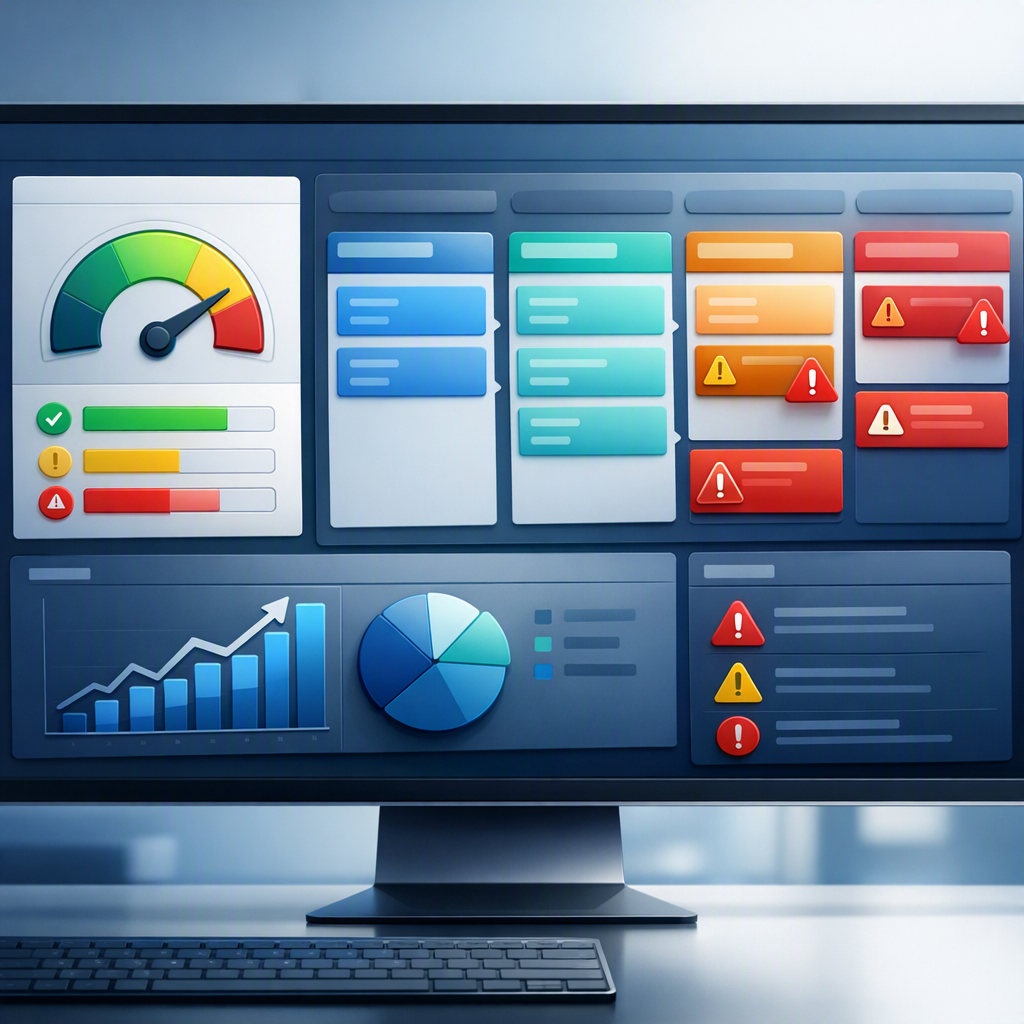
The HelloGrowthCRM pipeline audit tool is a pipeline health view that scans open deals for common execution gaps, including stalled stage movement, missing next steps, overdue tasks, old close dates, and incomplete field hygiene, then groups those issues so managers can act quickly before pipeline quality hurts forecast accuracy.
At a simple level, this tool answers one manager question: “Which deals need attention right now?”
Instead of opening every opportunity one by one, a manager can see audit alerts across the full pipeline. That matters because poor hygiene usually hides inside otherwise healthy-looking pipeline coverage. A rep may show enough pipeline value, but if next steps are missing and stages have not moved, the forecast is weaker than it looks.
In HelloGrowthCRM, the audit workflow sits naturally beside Sales Forecasting and AI Deal Insights. You can inspect deal quality, then move straight into coaching, reassignment, or follow-up execution.
From my own RevOps work, this is the gap most teams miss. When I have audited pipelines like this, the biggest problems were rarely dramatic. They were small process leaks repeated across dozens of deals: no task after a discovery call, close dates pushed without note updates, and proposal-stage deals with no buyer response logged for two weeks.
Harvard Business Review has reported extensively on sales execution discipline and pipeline quality as core drivers of predictable growth. The operational lesson is simple: better pipeline hygiene usually beats more pipeline noise.
Why pipeline audits matter before forecasts slip
Pipeline audits matter before forecasts slip because forecast risk usually starts as execution risk: deals stay too long in stage, next steps disappear, tasks go overdue, and close dates become stale. A fast audit catches those signals early enough for managers to coach reps and protect forecast quality.
Forecast calls often fail for one reason. Leaders discuss committed revenue before validating deal hygiene.
That creates false confidence. If a deal has no meeting booked, no recent buyer engagement, and no clear mutual action plan, the stage label alone does not mean much. This is why pipeline auditing should happen before forecasting, not after.
A useful benchmark comes from process discipline. Gartner’s sales research hub highlights CRM adoption and data quality as foundational to sales execution. Good forecasts depend on trusted CRM inputs. Bad inputs create polished but misleading dashboards.
In one rollout we did with a 12-person sales team, we found that managers were spending nearly an hour every Monday just asking reps whether deals were “real.” After we standardized next-step requirements and surfaced stale deals in one audit view, forecast meetings became shorter and much less argumentative.
Common risks a pipeline audit should catch
A good audit tool should surface issues such as:
- Deals with no open next-step task
- Opportunities stalled in stage beyond expected stage-velocity in days
- Close dates in the past
- Close dates unchanged for too long
- Late-stage deals with weak recent activity
- Missing core qualification fields such as MEDDPICC criteria
- Deals owned by inactive or overloaded reps
This is where Pipeline Health Score can also help teams benchmark the broader health of the funnel, while the pipeline audit tool tells managers exactly what to fix now.
What “stalled” really means
“Stalled” should not mean one universal number of days.
For SMB transactional sales, seven days with no buyer response may be a problem. For enterprise sales, 21 days might be normal in procurement. The better method is to define expected stage-velocity by stage, segment, and average sales cycle length.
That is why HelloGrowthCRM works best when audit thresholds reflect your actual process, not generic defaults.
Which issues does HelloGrowthCRM flag automatically?
HelloGrowthCRM flags automatically detectable pipeline issues such as stalled stage movement, missing or overdue tasks, aging close dates, inactive late-stage deals, missing required fields, and ownership gaps, giving managers a fast, prioritized view of where pipeline discipline is breaking down and which deals need immediate action.
The value is speed. Managers do not need to build a custom report every time they want answers.
Common audit alerts include:
- Stalled deal alerts: Deals that have stayed in one stage longer than the allowed threshold
- Missing next step alerts: Deals with no future task, meeting, or action logged
- Overdue follow-up alerts: Deals with tasks past due date
- Close date hygiene alerts: Opportunities with past or untouched close dates
- Field completeness alerts: Missing amount, decision date, competitor, or qualification data
- Activity gap alerts: No email, call, note, or meeting in a set period
- Owner risk alerts: Deals with inactive owners or uneven distribution
These alerts become more useful when connected to execution tools. For example, a rep can move from an audit alert into Email Automation, log calls through the CRM Dialer, or schedule follow-ups using Meeting Scheduler.
The most valuable alert for managers
If you only track one thing, start with missing next steps.
A deal without a scheduled next action is not progressing. It is waiting. In practice, this single rule often cleans up more forecast risk than complex scoring models. If your rep cannot answer “What happens next, and when?” the deal should not stay in a strong forecast category.
In HelloGrowthCRM, this becomes even stronger with Sales Task Boards, because managers can move from diagnosis into task creation without leaving the workflow.
How the pipeline audit tool helps managers move faster than custom reports
The HelloGrowthCRM pipeline audit tool helps managers move faster than custom reports by showing action-ready exceptions instead of raw CRM data, which means less time filtering dashboards and more time coaching reps, reassigning work, and fixing deal hygiene directly inside the pipeline workflow.
Custom reporting has value. It is just slow for daily management.
Most CRM reports answer broad questions like pipeline by stage or deals closing this month. Those are useful, but they do not show hidden execution gaps. Managers then create more filters, more exports, and more spreadsheet tabs. The process becomes fragile.
Here is the practical difference:
| Approach | What it shows | Time to insight | Best use case | Main limitation |
|---|---|---|---|---|
| Standard pipeline report | Pipeline totals, stages, owners | Fast | Executive visibility | Misses missing next steps and hygiene gaps |
| Spreadsheet audit | Manual checks across deal fields | Slow | One-off cleanup | High effort and easy to miss issues |
| Custom dashboard build | Tailored metrics and widgets | Medium to slow | Structured reporting | Needs setup and ongoing maintenance |
| HelloGrowthCRM pipeline audit tool | Exception-based alerts on stalled deals and missing actions | Fastest | Weekly management and forecast prep | Works best when stages and fields are well defined |
In one audit project I led for a SaaS team selling into mid-market accounts, the biggest gain was not better analytics. It was manager focus. Instead of reviewing 120 open deals, the team reviewed the 28 deals with real risk signals. That changed coaching quality immediately.
When custom reports are still useful
The audit tool does not replace every report.
You should still use standard reporting for:
- Board and executive summaries
- Conversion rate analysis
- Stage-by-stage volume trends
- Territory or segment comparisons
- Revenue attribution, which HelloGrowthCRM supports through Revenue Attribution
The better model is simple. Use reports for trend analysis. Use the audit tool for action.
How to use the HelloGrowthCRM pipeline audit tool in your sales process: Step-by-Step
Using the HelloGrowthCRM pipeline audit tool works best as a repeatable weekly process: review alerts, prioritize deal risk by forecast impact, assign fixes to reps, verify next steps and dates, and rerun the audit before forecast review so pipeline quality improves continuously rather than only at quarter end.
- Open the audit view
- Review high-risk alerts first
- Sort by amount and close window
- Inspect deal context
- Create or assign the next action
- Correct stage and close date hygiene
- Coach the rep on qualification gaps
- Rerun the audit before forecast review
Best cadence for most teams
For most B2B teams, a light audit two to three times per week works well. A deeper manager audit before the weekly forecast meeting is usually enough. High-velocity SDR or SMB teams may check daily. Large enterprise teams may audit by stage gates and close windows.
What good pipeline hygiene looks like in HelloGrowthCRM
Good pipeline hygiene in HelloGrowthCRM means every active deal has a current stage, realistic close date, named next step, recent buyer activity, complete qualification data, and clear ownership, so managers can trust pipeline reviews and reps can move opportunities forward without confusion.
You do not need perfect data. You need decision-grade data.
A clean pipeline usually shows five things:
- Every deal has a next step.
- Every stage has an expected exit condition.
- Close dates reflect evidence, not optimism.
- Recent buyer activity exists on active opportunities.
- Required fields are complete enough for forecasting and coaching.
This is where HelloGrowthCRM’s broader platform matters. AI Lead Scoring helps teams focus on better-fit opportunities upstream. AI Pipeline Management helps monitor risk during the deal cycle. And Managed RevOps can help if your team needs process design, not just software.
Limitations to know before you rely on any audit tool
This kind of workflow has limits, and it is important to say that clearly.
An audit tool can detect data gaps and inactivity. It cannot always detect political risk inside an account, hidden budget freezes, or rep overconfidence unless those signals are logged. For teams above 50 reps across multiple motions, expect to tune alert thresholds by segment. One global rule set often creates noise.
That is not a flaw in HelloGrowthCRM. It is the reality of pipeline management.
How HelloGrowthCRM fits into a modern RevOps workflow
HelloGrowthCRM fits into a modern RevOps workflow by connecting pipeline audit alerts to forecasting, task management, rep activity, and AI guidance, so sales leaders can move from finding problems to fixing them inside one operating system instead of jumping between reports and disconnected tools.
This is the part buyers often care about most. Will the audit view live in isolation, or will it change behavior?
In HelloGrowthCRM, the point is not just to identify bad records. The point is to create a cleaner operating rhythm:
- Audit the pipeline
- Fix missing actions
- Coach the rep
- update the forecast
- track whether the issue repeats
That loop is why teams often start with a Free Trial or request a Demo after seeing the workflow. They want fewer dashboards and more action.
If you are evaluating systems broadly, review the full Features set and the current Pricing to see whether the audit workflow fits your team size, process complexity, and admin capacity.
If your pipeline reviews feel slower than they should, HelloGrowthCRM’s pipeline audit tool gives managers a faster way to spot stalled deals, missing next steps, and weak stage hygiene before those issues damage the forecast. Try HelloGrowthCRM with a Free Trial or book a Demo to see the audit workflow on your own pipeline.
About the author
Ronan Hale is a Sales Operations Lead at HelloGrowthCRM with 10 years of experience in B2B SaaS revenue operations, CRM design, and forecast process improvement. He has led pipeline governance projects across SMB and mid-market sales teams, including one redesign that standardized stage exit criteria and next-step rules for a 12-person account executive team. That hands-on work shaped the workflow and recommendations in this article. HelloGrowthCRM is the product he works on, and this post reflects that direct product and operating experience.
Frequently Asked Questions
Q: What does the HelloGrowthCRM pipeline audit tool actually do?
A: The HelloGrowthCRM pipeline audit tool scans open deals for stalled progress, missing next steps, overdue tasks, stale close dates, and incomplete data. It gives managers an exception-based view so they can fix deal hygiene quickly without building custom reports.
Q: How is a pipeline audit tool different from a normal CRM dashboard?
A: A pipeline audit tool is different from a normal CRM dashboard because it highlights deal-level risks and missing actions, not just totals and stage counts. Dashboards show the shape of pipeline. Audit tools show what needs fixing now.
Q: Can the HelloGrowthCRM pipeline audit tool help forecast accuracy?
A: Yes, the HelloGrowthCRM pipeline audit tool can help forecast accuracy by catching weak deal hygiene before forecast reviews happen. When reps maintain next steps, realistic dates, and clean stages, forecast categories become more reliable.
Q: What counts as a stalled deal in HelloGrowthCRM?
Frequently Asked Questions
Ready to put this into practice?
Set up your pipeline, WhatsApp follow-ups, and AI lead scoring in minutes — free, no credit card.
Try HelloGrowthCRM freeGet CRM tips in your inbox
Join thousands of sales professionals who get weekly insights on CRM strategy, AI automation, and pipeline optimization.

The HelloGrowthCRM team publishes guides on CRM strategy, AI sales tools, and revenue operations for small business sales teams.