HelloGrowthCRM software
Built for real small-business sales teams
HelloGrowthCRM helps reps qualify faster, follow up on time, and close more deals—with practical automation in one place.
- AI lead scoring and pipeline visibility
- Built-in dialer, WhatsApp, and email automation
- Sales forecasting and RevOps-ready reporting
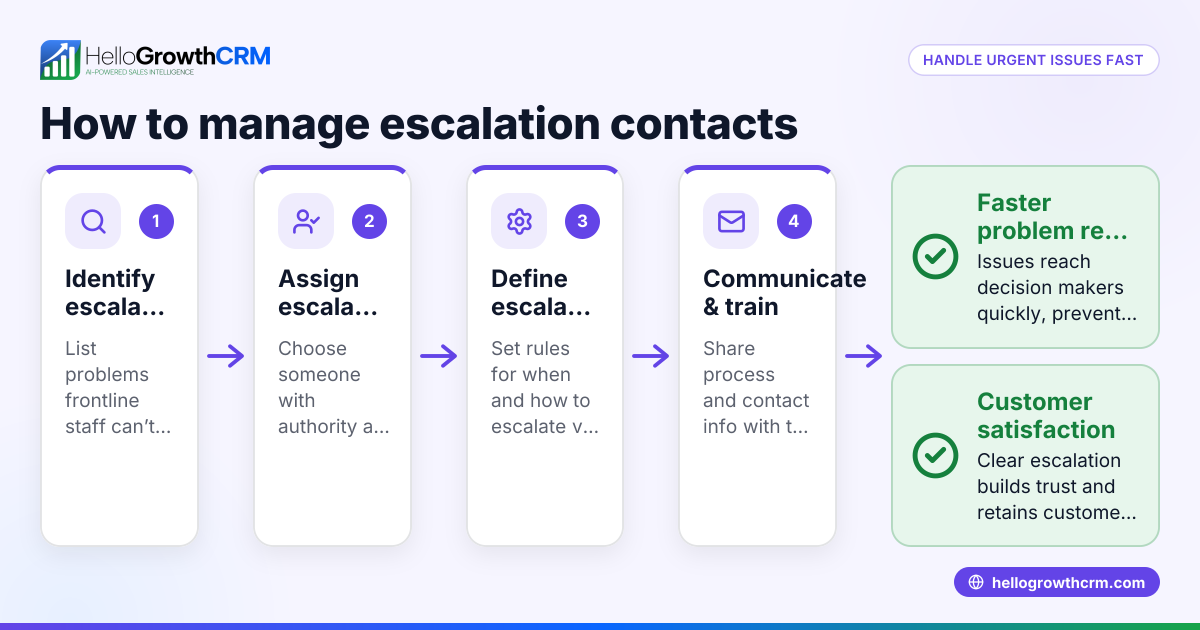
Customer service escalations occur when a customer's issue is not resolved at the first level of support and requires higher-level attention. For Indian small businesses, managing these escalations effectively is essential to maintain customer trust and avoid loss of business. Common causes include delayed responses, unclear accountability, and incomplete information.
Why this comes up / what goes wrong
Small business owners in India typically handle customer queries through WhatsApp, phone calls, or manual logs like spreadsheets. Without a structured escalation process, complaints can get lost, responses delayed, or responsibility shifted without resolution. This leads to frustrated customers, negative word of mouth, and lost sales. Teams often lack clear guidelines on when and how to escalate issues, causing inconsistent handling.
Step-by-step
- Acknowledge the escalation immediately: When a customer raises an issue beyond routine support, confirm receipt within 1 hour. This reassures the customer that their concern is being taken seriously.
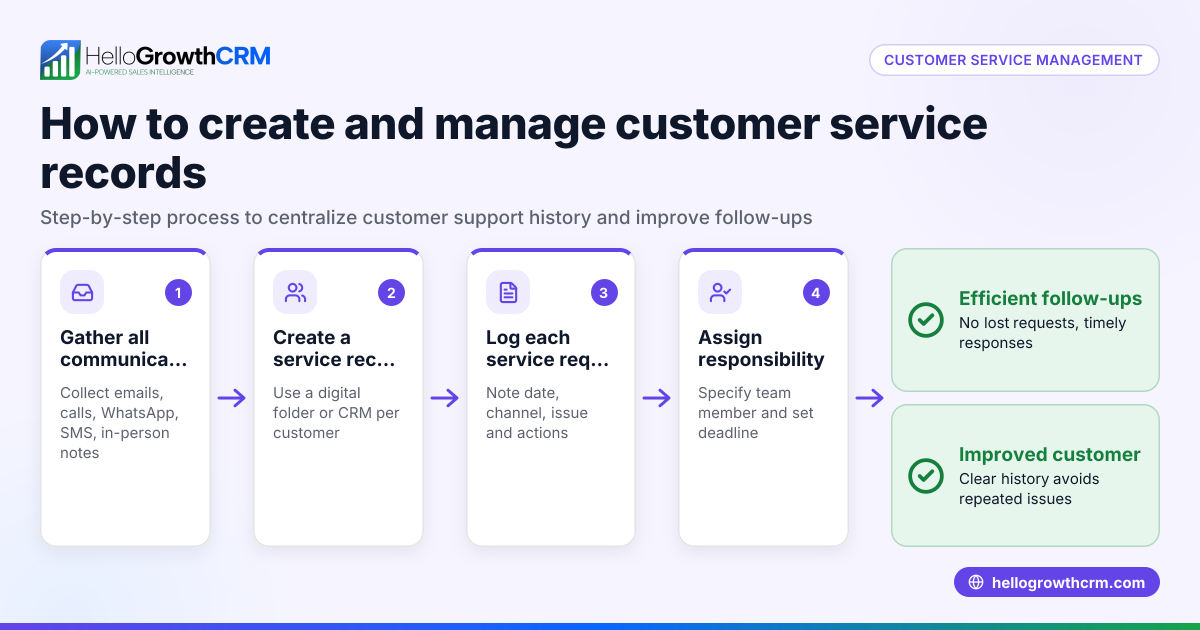
- Record the complaint details fully: Capture customer name, contact details, product or service involved, detailed description of the issue, date of complaint, and any prior interactions. Use a ticketing system or CRM to avoid missing information.
- Assess urgency and impact: Determine if the issue is critical (e.g., product safety, service outage) or less urgent. Prioritise accordingly to allocate resources effectively.
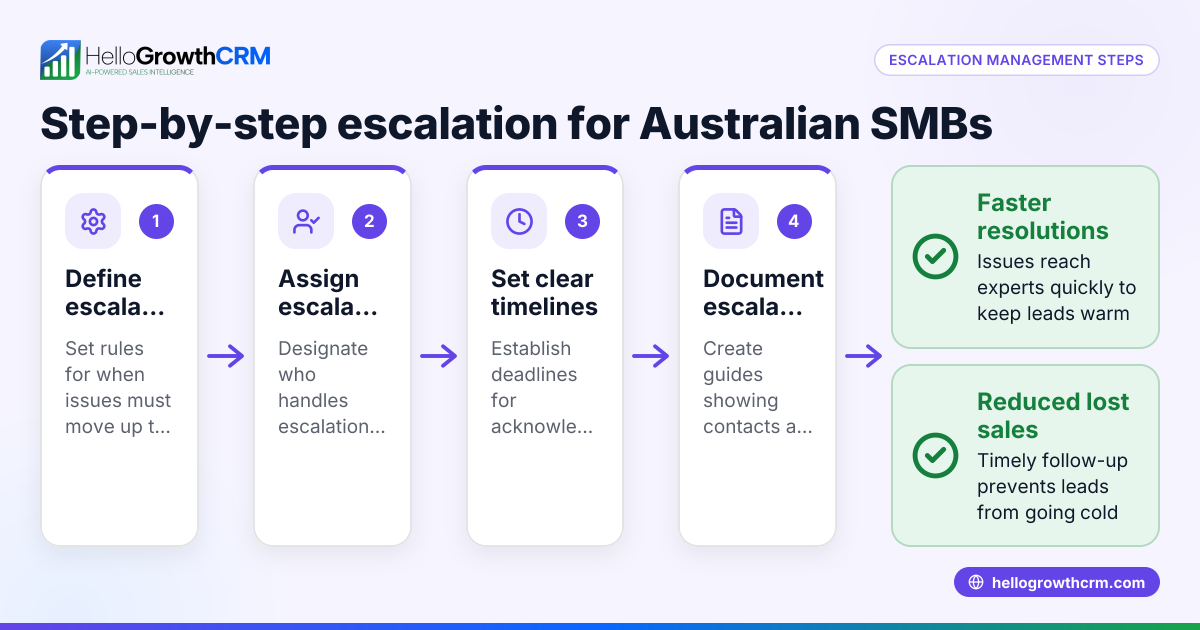
- Assign the escalation to the right person or team: Forward the issue to a specialist, manager, or technical team with clear instructions and a deadline for resolution.
- Communicate regularly with the customer: Provide updates at least every 24-48 hours. Even if there is no new progress, inform the customer to maintain transparency and trust.
- Resolve the issue and confirm customer satisfaction: Implement the solution or offer compensation if appropriate. Contact the customer to confirm the problem is resolved to their satisfaction.
- Document resolution and close the ticket: Record the resolution steps, any follow-up actions, and formally close the escalation case.
- Review escalation trends monthly: Analyse recurring issues to identify process improvements and reduce future escalations.
Using tools that integrate communication channels like WhatsApp and SMS with ticketing and knowledge bases can streamline this process. See WhatsApp and SMS CRM and customer health score for more.
Example (fictional figures)
On 10/05/2024, a customer, Mr. Sharma, reports a faulty mixer grinder purchased for ₹4,500 on 01/04/2024. The frontline support team cannot fix the issue within 3 days, so the case escalates to the service manager.
Step 1: Acknowledge escalation on 10/05/2024 at 10:00 AM.
Step 2: Record complaint: Mixer grinder fault, purchase date, customer contact.
Step 3: Assess urgency: Product failure affecting daily use — high priority.
Step 4: Assign to service manager with deadline 13/05/2024.
Step 5: Update customer on 11/05/2024: “Your issue is being reviewed.”
Step 6: Service manager orders a replacement part costing ₹1,200.
Step 7: Repair completed and tested on 13/05/2024.
Step 8: Customer confirms satisfaction on 14/05/2024.
Step 9: Close ticket with notes.
Arithmetic for cost example:
Replacement part cost = ₹1,200
Labour cost = ₹300
Total repair cost = ₹1,200 + ₹300 = ₹1,500
This example shows how timely communication and clear responsibility prevent further escalation.
Common mistakes
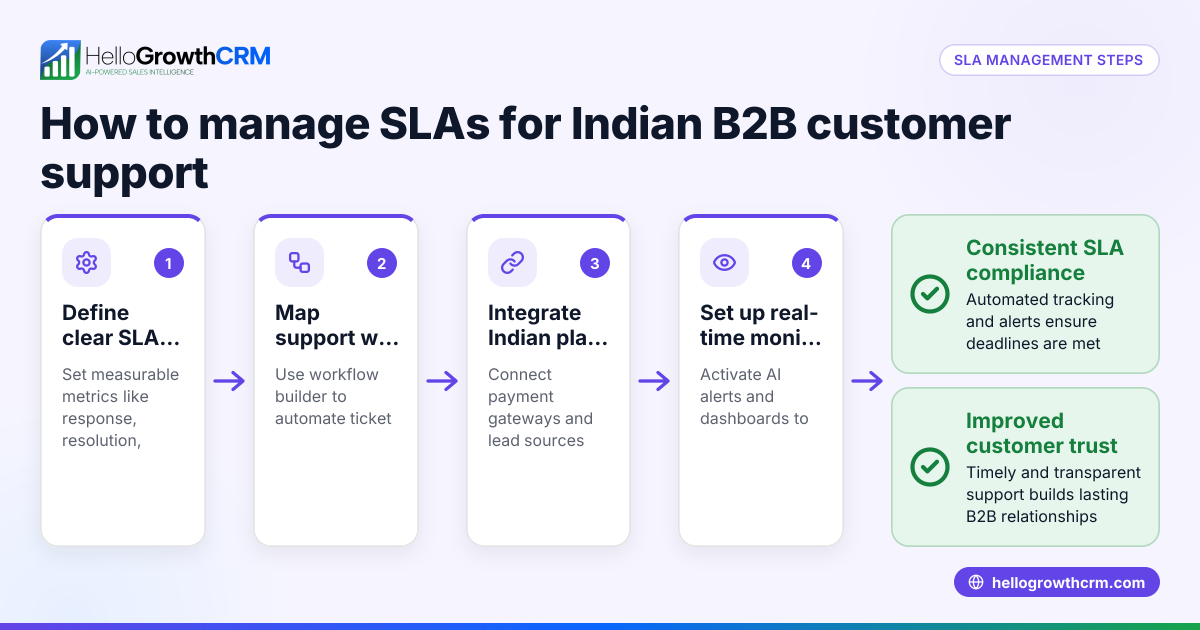
- Delaying acknowledgment: Customers feel ignored if you don’t confirm receipt quickly. Prevent by setting and monitoring response SLAs.
- Incomplete complaint records: Missing details cause confusion and delay resolution. Use a ticketing system or CRM to capture all information.
- Poor assignment: Escalating to the wrong person delays resolution. Define clear roles and escalation paths.
- Lack of regular updates: Silence frustrates customers and damages trust. Schedule reminders for updates.
- Closing without customer confirmation: Never close an escalation until the customer confirms resolution.
- Ignoring escalation analysis: Without reviewing trends monthly, the same issues repeat. Hold regular reviews to improve processes.
Use tools like HelloGrowthCRM to keep all service requests linked to the same customer record as deals. This helps track escalations and resolutions efficiently. See HelloGrowthCRM for India.
Doing this in HelloGrowthCRM
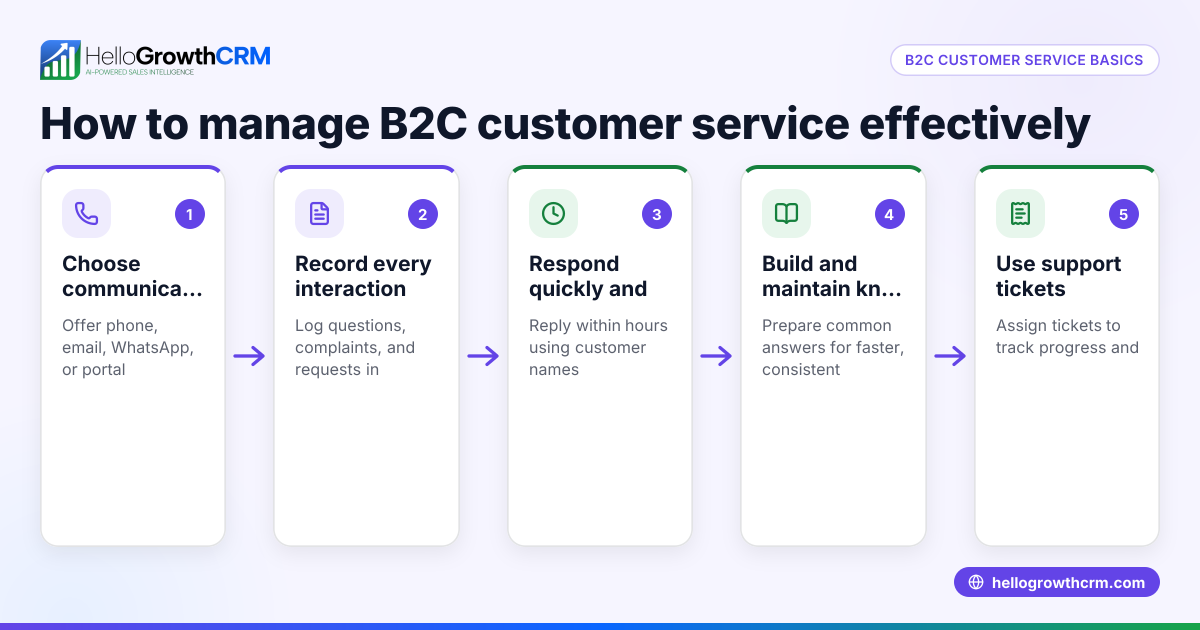
HelloGrowthCRM provides a branded self-service customer portal where customers can raise tickets directly. After the sale, all service requests remain linked to the same customer record as the deal, allowing your team to see the full history. The built-in ticket system and knowledge base enable your team to assign, track, and resolve escalations efficiently. Referral programme tracking and business listings management further support customer relationship management after the sale.
Frequently asked questions
What is the first step in handling a customer service escalation? The first step is to acknowledge the complaint promptly, ideally within 1 hour, to show the customer you are addressing their concern.
How can small businesses track escalations effectively? Using a CRM or ticketing system that integrates communication channels like WhatsApp and SMS helps keep all complaint details and follow-ups in one place, reducing errors and delays. HelloGrowthCRM supports these channels and ticket tracking.
How often should I update the customer during an escalation? Provide updates at least every 24 to 48 hours, even if there is no new progress, to maintain trust and transparency.
Can most escalations be prevented? Yes, by resolving issues at first contact, training your team, and analysing escalation trends to fix root causes.
How does HelloGrowthCRM help with escalations? It keeps service requests linked to deals, offers a customer portal, tickets, and knowledge base, making it easier to assign, track, and resolve escalations efficiently.
Key takeaways
- Acknowledge escalations promptly and record full complaint details.
- Assign the right team and communicate regularly with customers.
- Confirm resolution with the customer before closing the issue.
- Review escalation trends monthly to improve service quality.
- Use CRM tools like HelloGrowthCRM for integrated tracking and faster resolution.
Managing customer service escalations well protects your business reputation and keeps customers satisfied. Start on the Free Forever plan (200 leads, no credit card) at HelloGrowthCRM to track and resolve customer issues efficiently.
Ready to put this into practice?
Set up your pipeline, WhatsApp follow-ups, and AI lead scoring in minutes — free, no credit card.
Try HelloGrowthCRM freeGet CRM tips in your inbox
Join thousands of sales professionals who get weekly insights on CRM strategy, AI automation, and pipeline optimization.

The HelloGrowthCRM team publishes guides on CRM strategy, AI sales tools, and revenue operations for small business sales teams.