HelloGrowthCRM software
Built for real small-business sales teams
HelloGrowthCRM helps reps qualify faster, follow up on time, and close more deals—with practical automation in one place.
- AI lead scoring and pipeline visibility
- Built-in dialer, WhatsApp, and email automation
- Sales forecasting and RevOps-ready reporting
To manage payment follow ups effectively for your small business in India, create a clear schedule for reminders, track invoices and payments carefully, communicate politely but firmly, and use task management to avoid missed follow-ups. This article covers why payment follow-ups matter, step-by-step instructions, a worked example with Indian rupees, common mistakes, and how HelloGrowthCRM can help streamline the process.
Why this comes up / what goes wrong
Small business owners in India often face delays in receiving payments from customers. This can happen because of unclear payment terms, lack of reminders, or manual tracking methods like spreadsheets and WhatsApp messages that are easy to overlook. Without a system, follow-ups can be inconsistent or forgotten, leading to cash flow problems. Founders and sales teams may also struggle to balance polite communication with firmness, risking relationship strain or delayed payments.
Step-by-step
- Set clear payment terms upfront
- When issuing a quotation or invoice, specify the payment due date clearly.
- Confirm accepted payment methods (bank transfer, UPI, cheque, etc.).
- Record the invoice and its due date
- Maintain a list or system that records invoice numbers, amounts, issue dates, and due dates.
- Double-check that the customer details and amounts are correct.
- Schedule your first follow-up before the due date
- Send a polite reminder 3 to 5 days before the payment due date.
- Confirm the customer has received the invoice and check if they need any assistance.
- Follow up immediately after the due date if unpaid
- Call or message the customer on the due date or the next day.
- Keep the tone professional and inquire about the payment status.
- Send a second reminder 7 days after the due date
- If no payment or response, send a firmer reminder.
- Include the invoice details and mention any late payment terms agreed.
- Escalate follow-ups weekly until payment is received
- Keep a weekly schedule for calls or messages.
- Document each follow-up attempt.
- Offer payment plans if needed
- If the customer is facing difficulties, propose a payment plan to recover dues gradually.
- Record payments immediately when received
- Update your records to avoid duplicate follow-ups.
- Send a receipt or confirmation to the customer.
- Review overdue payments weekly
- Use a task board or checklist to track pending follow-ups.
- Prioritize high-value or long-overdue invoices.
- Maintain professional communication throughout
- Avoid aggressive language.
- Keep notes of all interactions for future reference.
Using tools like task boards can help you avoid missing follow-ups. See sales task boards for managing daily calls and follow-ups systematically.
Example (fictional figures)
A small business issues an invoice of ₹1,20,000 on 01/05/2024 with payment terms of 30 days.
- Invoice amount = ₹1,20,000
- Invoice date = 01/05/2024
- Due date = 01/06/2024 (30 days after invoice date)
Step-by-step:
- 27/05/2024 (5 days before due): Send polite reminder.
- 02/06/2024 (1 day after due): Call customer to check payment status.
- 08/06/2024 (7 days after due): Send firmer reminder mentioning late payment terms.
- 15/06/2024 (14 days after due): Follow up again, offer payment plan if needed.
If customer pays ₹60,000 on 20/06/2024:
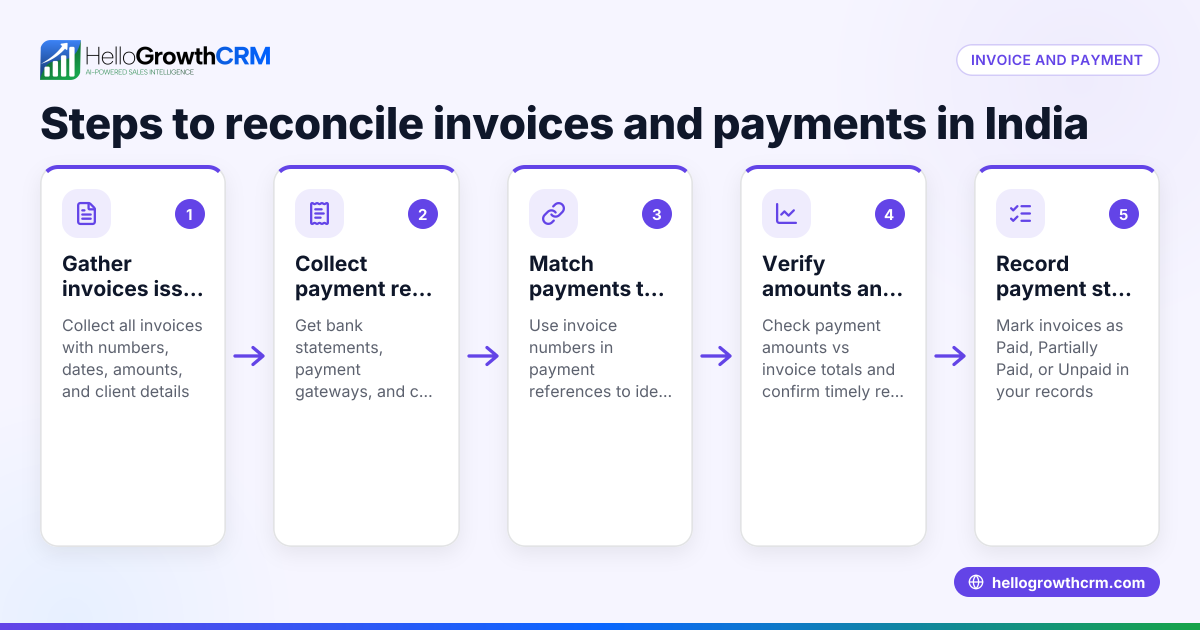
- Update records: ₹1,20,000 - ₹60,000 = ₹60,000 balance remaining.
- Schedule follow-ups for remaining ₹60,000.
This example shows the timeline and amounts to manage payments clearly.
Common mistakes
- Not setting clear payment terms upfront: Always specify due dates and accepted payment methods to avoid confusion.
- Relying on memory or informal notes: Use task boards or digital tools to track follow-ups and due dates.
- Delaying follow-ups: Start reminders before due dates and follow up promptly after.
- Using aggressive language: Maintain professionalism to preserve customer relationships.
- Ignoring partial payments: Acknowledge and update records, then follow up on balance.
- Not documenting follow-up attempts: Keep notes for accountability and future reference.
Prevent these by using organized systems and clear communication. See email automation and sequences for automating reminders.
Doing this in HelloGrowthCRM
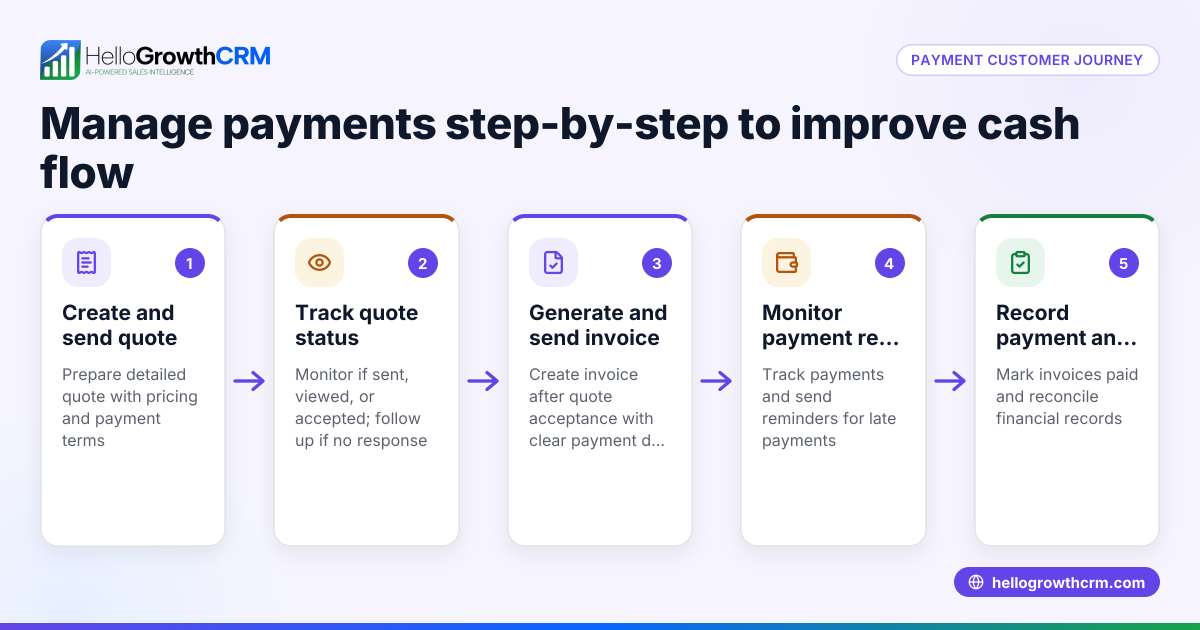
HelloGrowthCRM helps small businesses manage payment follow ups with built-in quoting and invoicing tools. You can create, send, and track quotations and invoices directly from each deal record, seeing the status (sent, viewed, accepted) alongside your follow-up tasks. Each payment received is linked to the invoice and deal for easy reconciliation.
If you don’t have a dedicated sales manager, HelloGrowthCRM’s Managed RevOps service assigns a revenue specialist to work your follow-up queue weekly, ensuring no payment is missed. The platform also includes activities and task boards so every follow-up becomes a scheduled task with a due date, turning your daily calls into a manageable list rather than a memory test.
Learn more about these features at HelloGrowthCRM for India.
Frequently asked questions
How soon should I start payment follow-ups? Start reminders 3 to 5 days before the payment due date to ensure the customer is aware and prepared to pay on time.
What is the best way to communicate payment reminders? Use polite emails or WhatsApp messages first, then follow up with a call if there is no response. Keep communication professional and clear.
How do I handle partial payments? Record the partial payment immediately, send a receipt, and schedule follow-ups for the remaining balance.
Can I automate payment follow-ups? Yes, tools like HelloGrowthCRM support email automation and task boards to schedule and track reminders efficiently. See email automation and sequences for details.
What if a customer repeatedly delays payments? Consider offering a payment plan or adjusting your credit terms. Keep communication documented and escalate follow-ups regularly.
Is it necessary to document every follow-up? Yes, documenting helps track progress, avoid duplication, and provides proof if disputes arise.
Key takeaways
- Set clear payment terms and due dates upfront.
- Schedule reminders before and after due dates.
- Use task boards or digital tools to track follow-ups.
- Maintain professional and polite communication.
- Document all follow-up attempts and payments received.
- Use automation where possible to avoid missed reminders.
Start managing your payment follow-ups more efficiently today. You can Start on the Free Forever plan (200 leads, no credit card) with HelloGrowthCRM to organize your sales and payment processes.
Ready to put this into practice?
Set up your pipeline, WhatsApp follow-ups, and AI lead scoring in minutes — free, no credit card.
Try HelloGrowthCRM freeGet CRM tips in your inbox
Join thousands of sales professionals who get weekly insights on CRM strategy, AI automation, and pipeline optimization.

The HelloGrowthCRM team publishes guides on CRM strategy, AI sales tools, and revenue operations for small business sales teams.