HelloGrowthCRM software
Built for real small-business sales teams
HelloGrowthCRM helps reps qualify faster, follow up on time, and close more deals—with practical automation in one place.
- AI lead scoring and pipeline visibility
- Built-in dialer, WhatsApp, and email automation
- Sales forecasting and RevOps-ready reporting
Managing payment follow ups is essential for small businesses in New Zealand to maintain healthy cash flow and customer relationships. This guide explains why payment follow ups matter, provides a clear step-by-step process you can implement immediately, shares a worked example with realistic NZ figures, highlights common mistakes, and introduces how HelloGrowthCRM supports your follow-up tasks.
Why this comes up / what goes wrong
Small business owners often face delayed payments that disrupt cash flow, making it hard to pay suppliers and staff on time. This happens because payment terms may be unclear, follow-ups are inconsistent, or reminders get lost in busy schedules. Many small businesses use spreadsheets, emails and texts to manage payments, which can cause missed or late follow-ups. Without a clear system, customers may forget invoices, and owners may hesitate to chase payments, risking strained relationships and financial pressure.
Step-by-step
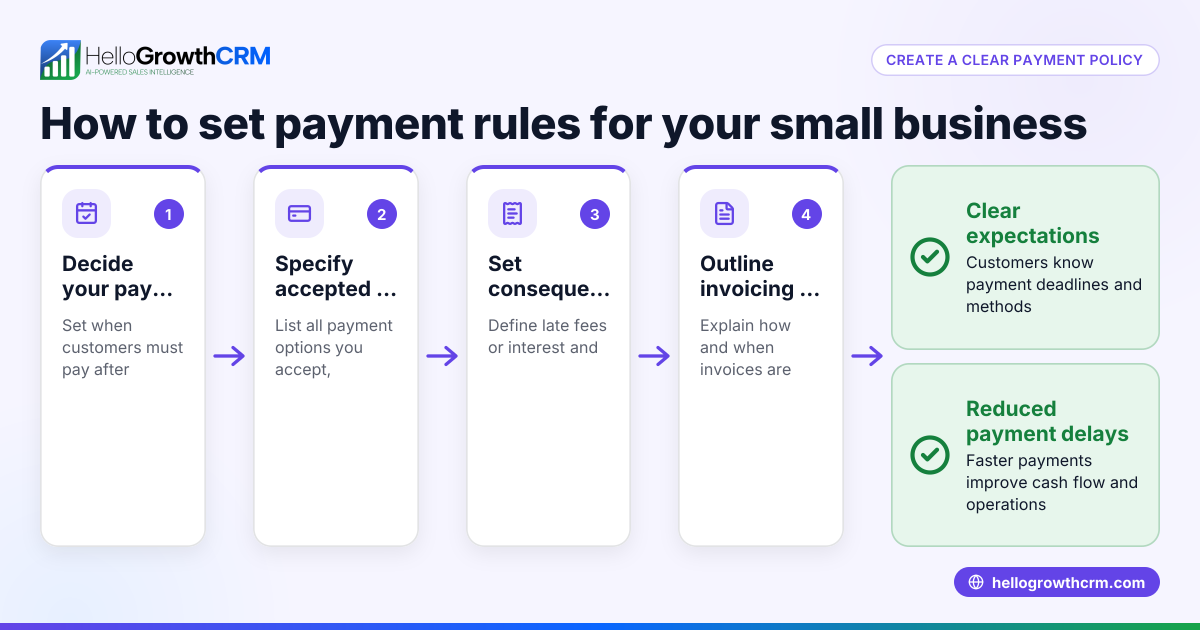
- Organise your invoices and payment terms clearly
- Ensure every invoice states the amount, due date, payment methods accepted, and contact details.
- Check your payment terms are consistent and agreed upon before delivery.
- Track all outstanding invoices in one place
- Use a spreadsheet or a CRM to record invoice numbers, issue dates, due dates, amounts, and client details.
- Update this list regularly to reflect payments received.
- Schedule follow-up reminders before and after due dates
- Send a polite reminder 3 days before the due date.
- If unpaid on the due date, send a second reminder immediately.
- Follow up weekly after the due date until payment is received or a payment plan is agreed.
- Communicate clearly and professionally
- Use email or WhatsApp messages to send reminders.
- Keep messages polite, stating the invoice details and payment options.
- Offer to discuss any issues preventing payment.
- Record each follow-up action and response
- Note when reminders were sent and any customer replies.
- Adjust follow-up frequency based on responses.
- Escalate if needed
- If payment is overdue by more than 30 days with no response, consider a phone call.
- For persistent non-payment, seek advice on debt collection or legal options (NEEDS EXPERT REVIEW).
- Review and improve your process regularly
- Analyse which clients pay late and why.
- Adjust payment terms or require deposits for future work.
Example (fictional figures)
Sarah runs a Queenstown-based tourism company. She issued an invoice on 01/05/2024 for a guided tour service:
- Invoice amount: NZ$4,800
- Payment terms: 14 days
- Due date: 15/05/2024
Sarah tracks this invoice in her spreadsheet:
| Invoice No | Issue Date | Due Date | Amount | Client | Status |
|---|---|---|---|---|---|
| 1001 | 01/05/2024 | 15/05/2024 | NZ$4,800 | Adventure Co. | Outstanding |
Step-by-step follow-up:
- 12/05/2024 (3 days before due): Sarah sends a polite reminder email.
- 15/05/2024 (due date): Invoice still unpaid, Sarah sends a second reminder.
- 22/05/2024 (7 days overdue): Sarah calls the client to check if there are payment issues.
- 25/05/2024: Client promises payment by 28/05/2024.
- 28/05/2024: Payment received; Sarah updates the spreadsheet status to Paid.
This process ensures Sarah stays on top of payments and maintains good client relations.
Common mistakes
- No central tracking system: Leads to missed follow-ups. Prevent by using a spreadsheet or CRM to track invoices.
- Delayed reminders: Waiting too long to follow up causes cash flow problems. Set reminders before and on the due date.
- Unclear payment terms: Customers may delay if terms are ambiguous. Always specify payment due date and methods.
- Ignoring communication: Avoiding follow-ups to not upset customers can worsen delays. Keep communication polite and professional.
- No escalation plan: Without a plan for overdue payments, debt can accumulate. Decide when to escalate and act accordingly.
- Relying on memory: Trying to remember follow-ups without tools leads to errors. Use task boards or scheduling tools like sales task boards.
Doing this in HelloGrowthCRM
HelloGrowthCRM helps small businesses manage payment follow ups with integrated features:
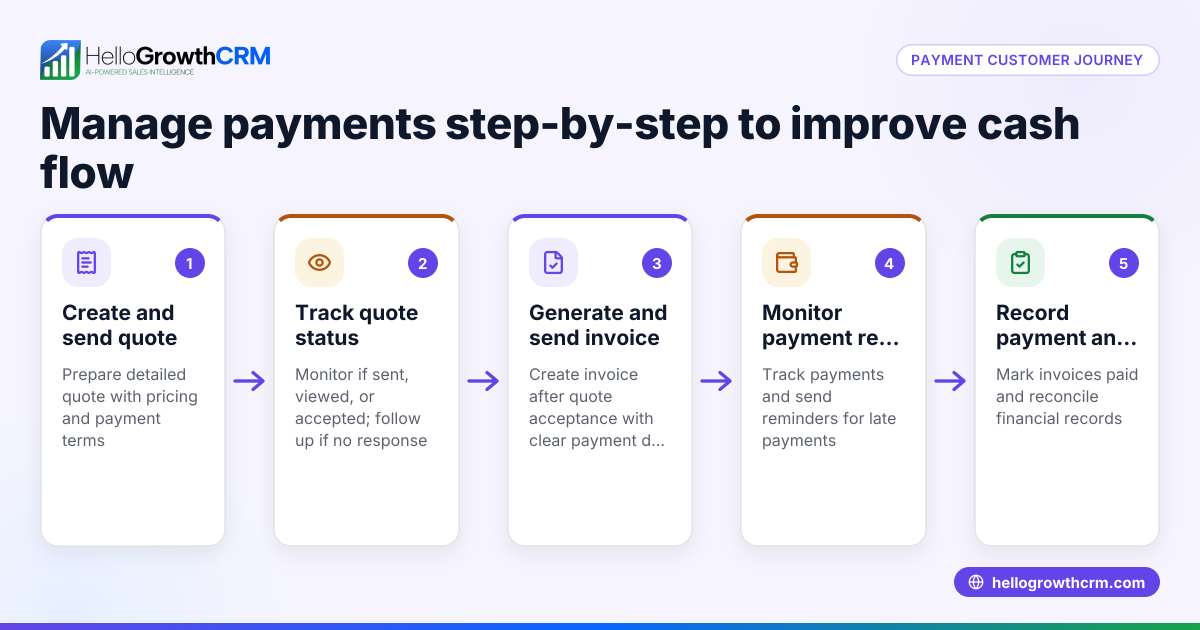
- Quotes, proposals, invoices and payments received: Send and track quotations and invoices directly from the deal record. See the status (sent, viewed, accepted) alongside your follow-up tasks for easy management.
- Managed RevOps: If you don’t have a sales manager, a revenue specialist can work your follow-up queue weekly to ensure no payment task is missed.
- Activities and task boards: Turn each payment follow-up into a task with a due date. Your daily calls and reminders become a clear list, reducing reliance on memory.
Learn more about these features at HelloGrowthCRM for New Zealand.
Frequently asked questions
How soon should I start following up on unpaid invoices? Start reminders 3 days before the invoice due date and continue promptly on and after the due date. Early and consistent follow-ups improve payment speed.
What is the best way to communicate payment reminders? Use professional, polite emails or WhatsApp messages. Keep communication clear with invoice details and payment options. Follow up with calls if necessary.
How can I avoid damaging customer relationships when chasing payments? Maintain a polite tone, offer help for payment issues, and be consistent but understanding. Clear terms upfront also reduce misunderstandings.
Can I automate payment follow ups? Yes, using tools like email automation and sequences helps schedule reminders automatically, saving time and ensuring consistency.
What if a customer never pays? Have an escalation plan: call the client, offer payment plans, and if needed, seek professional advice on debt recovery (NEEDS EXPERT REVIEW).
Key takeaways
- Keep all invoices and payment terms clear and consistent.
- Track outstanding payments in one system and update regularly.
- Schedule reminders before and after due dates.
- Communicate politely and professionally with customers.
- Record every follow-up action and response.
- Use escalation steps for overdue payments.
Start managing your payment follow ups today with a clear process and tools like HelloGrowthCRM. To get started easily, Start on the Free Forever plan (200 leads, no credit card).
Ready to put this into practice?
Set up your pipeline, WhatsApp follow-ups, and AI lead scoring in minutes — free, no credit card.
Try HelloGrowthCRM freeGet CRM tips in your inbox
Join thousands of sales professionals who get weekly insights on CRM strategy, AI automation, and pipeline optimization.

The HelloGrowthCRM team publishes guides on CRM strategy, AI sales tools, and revenue operations for small business sales teams.