HelloGrowthCRM software
Built for real small-business sales teams
HelloGrowthCRM helps reps qualify faster, follow up on time, and close more deals—with practical automation in one place.
- AI lead scoring and pipeline visibility
- Built-in dialer, WhatsApp, and email automation
- Sales forecasting and RevOps-ready reporting
A payment policy for a small business is a clear set of rules about when and how customers must pay for goods or services. It helps avoid confusion, ensures timely payments, and protects your cash flow. This article explains why a payment policy matters, gives step-by-step guidance to create one, shows an example with realistic figures, highlights common mistakes, and describes how HelloGrowthCRM can help you manage payments efficiently.
Why this comes up / what goes wrong
Small business owners often face late or missed payments that disrupt cash flow and hurt operations. Without a clear payment policy, customers may not know your preferred payment methods, deadlines, or consequences for late payments. This leads to delays, disputes, and extra time spent chasing payments. For example, a landscaping contractor may deliver services but wait weeks to get paid, making it hard to pay suppliers or employees on time. A clear payment policy sets expectations upfront and reduces confusion.
Step-by-step
- Decide your payment terms: Choose how soon customers must pay after receiving an invoice (e.g., net 30 days). Consider your business cash flow needs and industry standards.
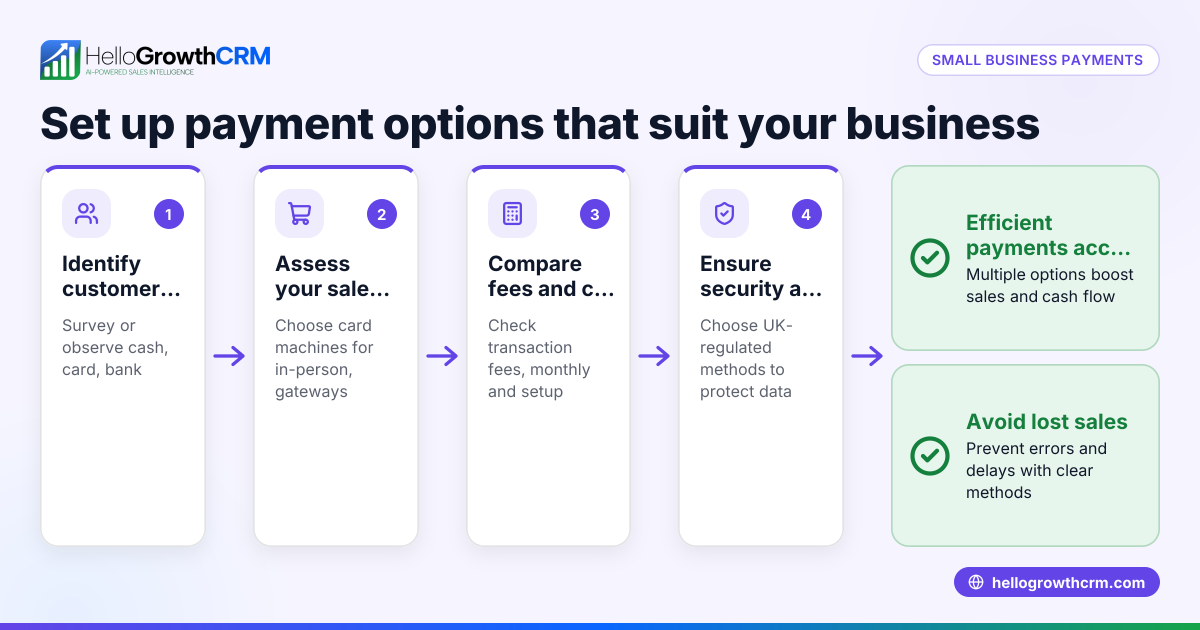
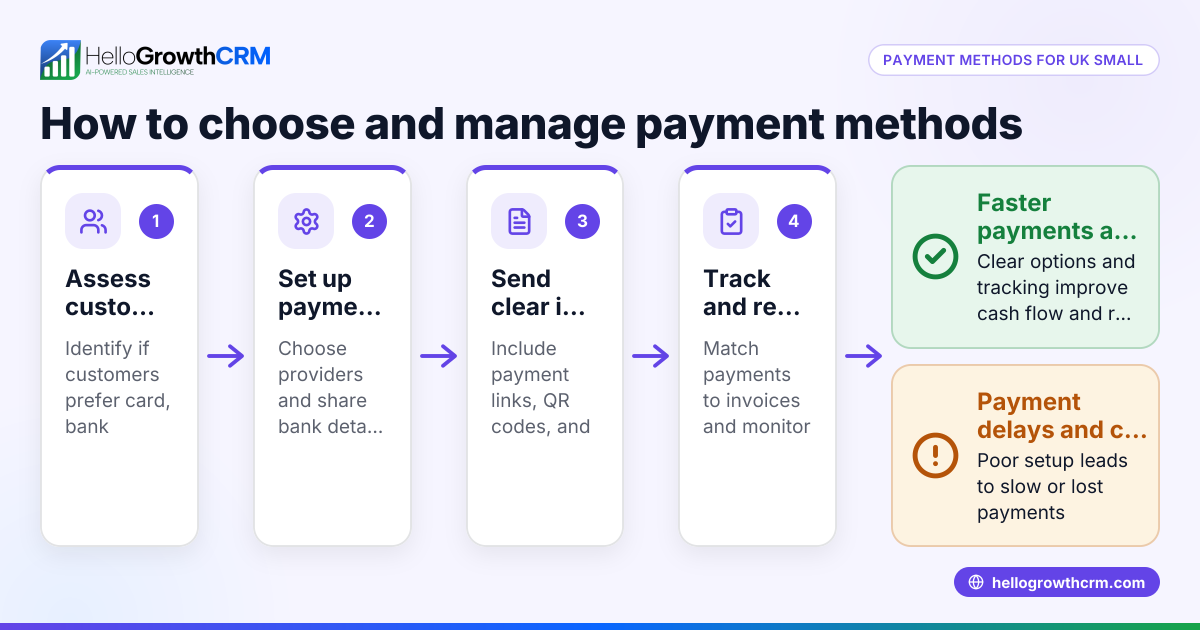
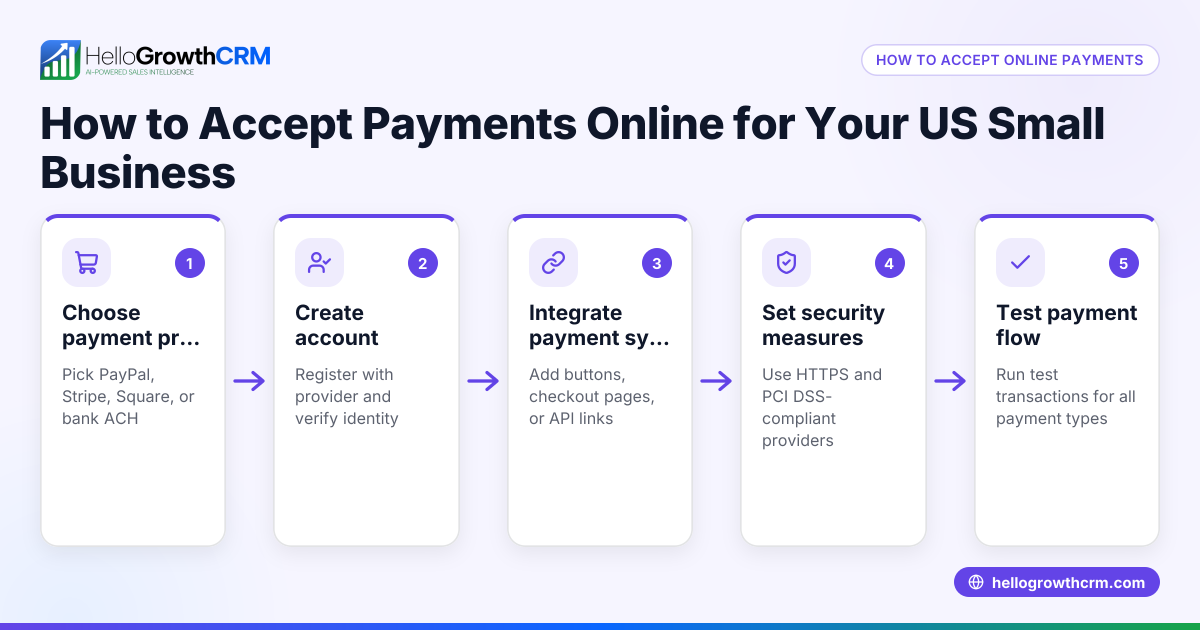
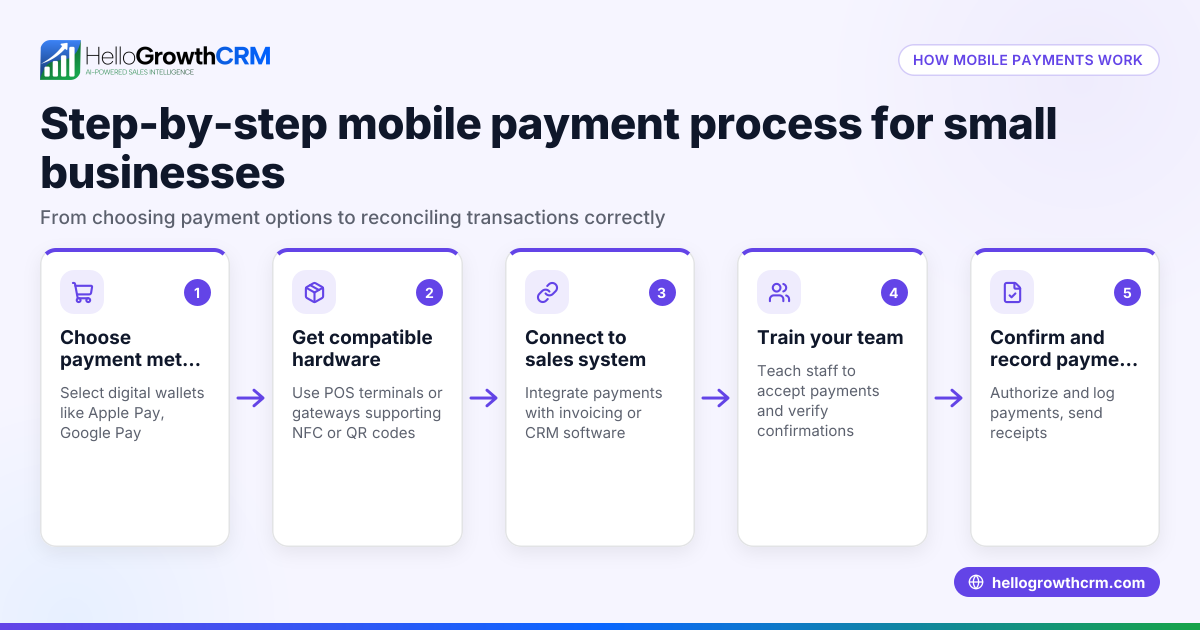
- Specify accepted payment methods: List all payment options you accept (e.g., credit card, bank transfer, check, digital wallets).
- Set late payment consequences: Define if you charge late fees or interest on overdue balances and when these apply.
- Outline invoicing process: Explain how and when invoices will be sent (e.g., immediately after service completion, monthly).
- Communicate your policy clearly: Include the payment policy on quotes, proposals, contracts, and invoices to ensure customers see it before paying.
- Follow up promptly on overdue payments: Have a process to send reminders and escalate if needed.
- Review and update your policy regularly: Adjust terms based on what works best for your cash flow and customer behavior.
Check your payment policy aligns with your sales and accounting systems to avoid manual errors or missed invoices. Using a CRM that integrates quotes, invoices, and payments can streamline this (see the product section).
Example (fictional figures)
Sarah runs a landscaping business in Charlotte, North Carolina. She sets a payment policy with net 30 terms, accepts credit card and bank transfers, and charges a 1.5% monthly late fee after 30 days.
- Invoice amount: $5,000
- Invoice date: 04/01/2026
- Payment due date: 05/01/2026 (30 days after invoice date)
- Payment received: 06/01/2026 (31 days late)
Late fee calculation: $5,000 × 1.5% = $75 late fee
Total amount due on 06/01/2026: $5,000 + $75 = $5,075
Sarah sends the invoice on 04/01/2026, clearly stating these terms. When payment is late, she applies the late fee and follows up with a reminder. This clear policy helps her maintain steady cash flow.
Common mistakes
- Not having a written payment policy: Prevent by documenting and sharing your policy with every customer.
- Using vague or inconsistent terms: Prevent by standardizing terms like due dates and late fees across all documents.
- Ignoring late payments: Prevent by setting reminders and following up promptly.
- Not specifying accepted payment methods: Prevent by clearly listing acceptable payment options to avoid delays.
- Failing to update the policy: Prevent by reviewing the policy annually to reflect business changes.
Using tools with quoting and invoicing features helps keep payment info organized and links follow-up tasks to payment status. HelloGrowthCRM offers these capabilities to support your process.
Doing this in HelloGrowthCRM
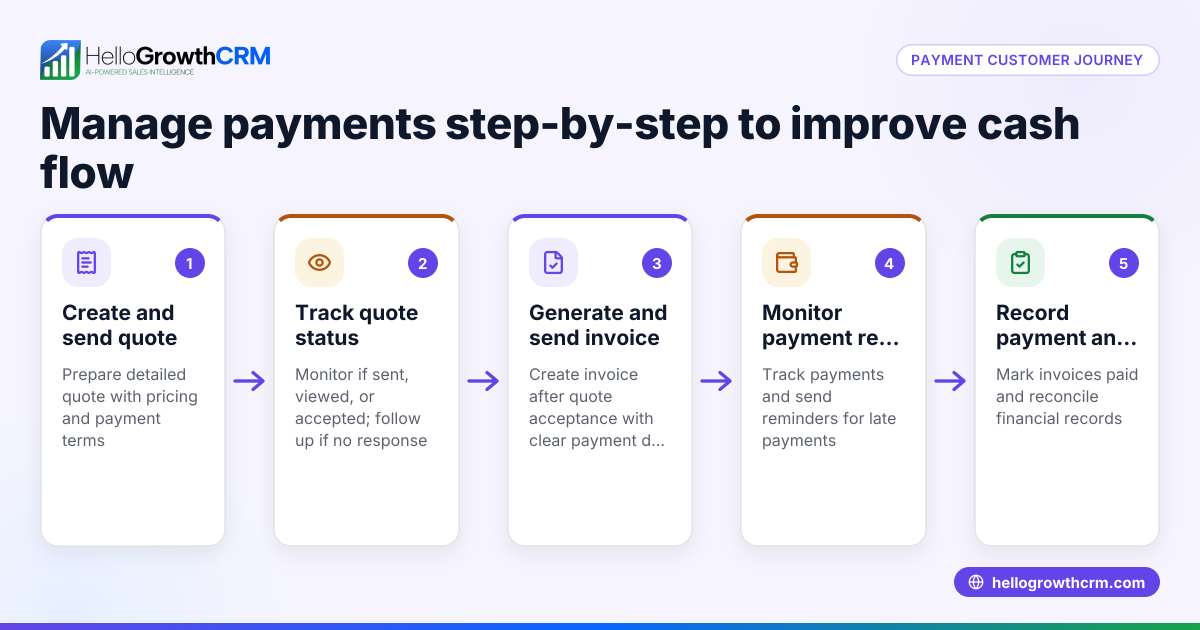
HelloGrowthCRM simplifies managing your payment policy with built-in quoting, proposal, invoice, and payment tracking tools. You can create and send quotes and proposals directly from a deal record, and see their status—sent, viewed, or accepted—on the same screen as your follow-up tasks. Once a deal closes, invoices can be generated and payments reconciled within the CRM, reducing manual tracking. For founders without a sales manager, Managed RevOps provides a revenue specialist who handles weekly follow-ups and pipeline hygiene, ensuring timely payment collection. Learn more about HelloGrowthCRM's WhatsApp and SMS CRM and how it supports small businesses in the United States.
Frequently asked questions
What should a small business include in its payment policy? A payment policy should include payment terms (like net 30), accepted payment methods, invoicing procedures, and late payment penalties. It ensures customers know when and how to pay and what happens if they don’t.
How do I enforce a payment policy without losing customers? Be clear and upfront about your payment terms before starting work. Communicate politely but firmly when payments are late, and offer flexible payment methods. Using a CRM to automate reminders can help maintain good customer relationships. See options for a free CRM for small business.
Can I change my payment policy after customers have agreed? You can update your policy for future transactions but should inform existing customers and get agreement if changes affect their current contracts. Transparency is key to avoid disputes.
How does HelloGrowthCRM help with payment policies? The platform integrates quotes, proposals, invoices, and payment tracking in one place. This lets you send clear payment terms and follow up on payments efficiently. Managed RevOps can also help by handling follow-up tasks weekly.
What payment methods are best for small businesses? Common methods include credit/debit cards, bank transfers, checks, and digital wallets. Offering multiple options improves the chance of timely payment.
Key takeaways
- A clear payment policy sets expectations and protects cash flow.
- Include payment terms, methods, invoicing, and late fees in your policy.
- Communicate your policy clearly on all customer documents.
- Follow up promptly on overdue payments to reduce delays.
- Avoid common mistakes by standardizing and updating your policy.
- Use quoting and invoicing tools to manage payments efficiently.
Start managing your payment policy and collections more effectively today. Start on the Free Forever plan (200 leads, no credit card).
Ready to put this into practice?
Set up your pipeline, WhatsApp follow-ups, and AI lead scoring in minutes — free, no credit card.
Try HelloGrowthCRM freeGet CRM tips in your inbox
Join thousands of sales professionals who get weekly insights on CRM strategy, AI automation, and pipeline optimization.

The HelloGrowthCRM team publishes guides on CRM strategy, AI sales tools, and revenue operations for small business sales teams.