HelloGrowthCRM software
Built for real small-business sales teams
HelloGrowthCRM helps reps qualify faster, follow up on time, and close more deals—with practical automation in one place.
- AI lead scoring and pipeline visibility
- Built-in dialer, WhatsApp, and email automation
- Sales forecasting and RevOps-ready reporting
Managing repeat customer complaints in India requires a clear, consistent process. Start by recording each complaint with customer details, product or service involved, and the issue description. Analyse these complaints to find recurring patterns and root causes. Respond to customers within 24 hours with clear communication and assign a team member to resolve the issue. Take corrective action promptly and follow up after resolution to confirm customer satisfaction. Maintaining a complaint log helps prevent repeats and improves your service.
Why this comes up / what goes wrong
Small business owners in India often encounter repeat customer complaints because there is no formal system to track and resolve issues. Many rely on WhatsApp messages or Excel sheets that do not capture complaint history well. This causes delays in response and unresolved problems. Without a structured approach, teams miss follow-ups or fail to learn from past complaints. This leads to dissatisfied customers who complain repeatedly, harming reputation and sales.
Step-by-step
- Record every complaint in detail: Capture customer name, contact information, complaint date, product or service involved, issue description, and if it is a repeat complaint. Check completeness before moving on.
- Categorise complaints: Group complaints by type such as product defect, delivery delay, billing error, or service quality. Regularly review categories to identify frequent issues.
- Analyse root causes: At least monthly, review complaint categories to find patterns. Investigate if problems arise from suppliers, internal processes, or staff errors.
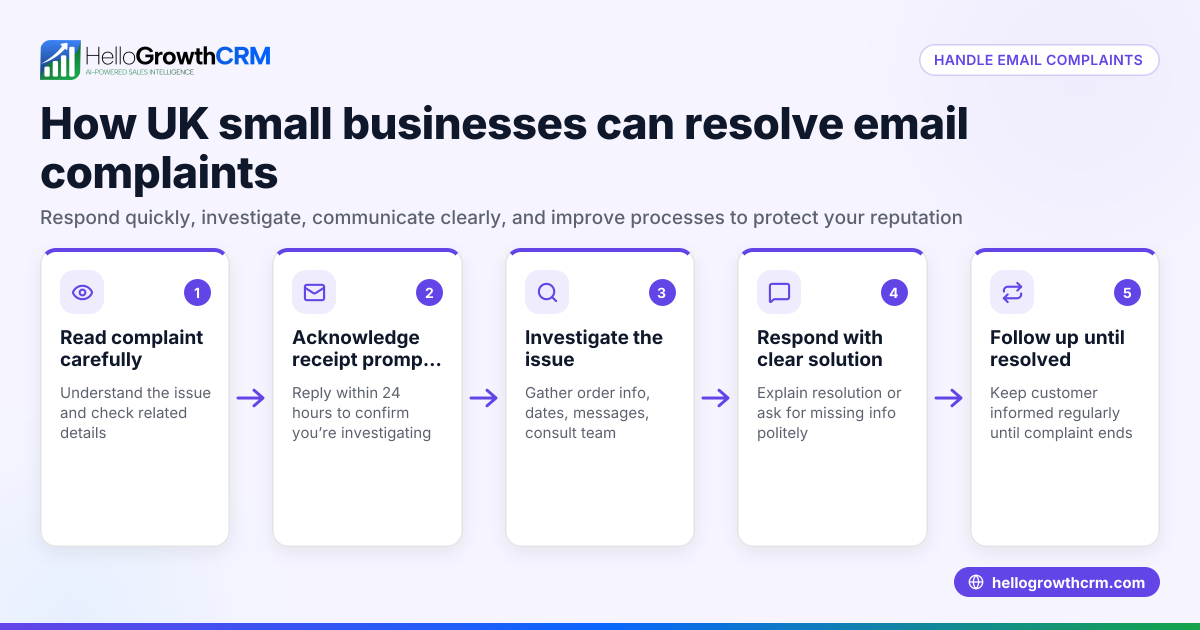
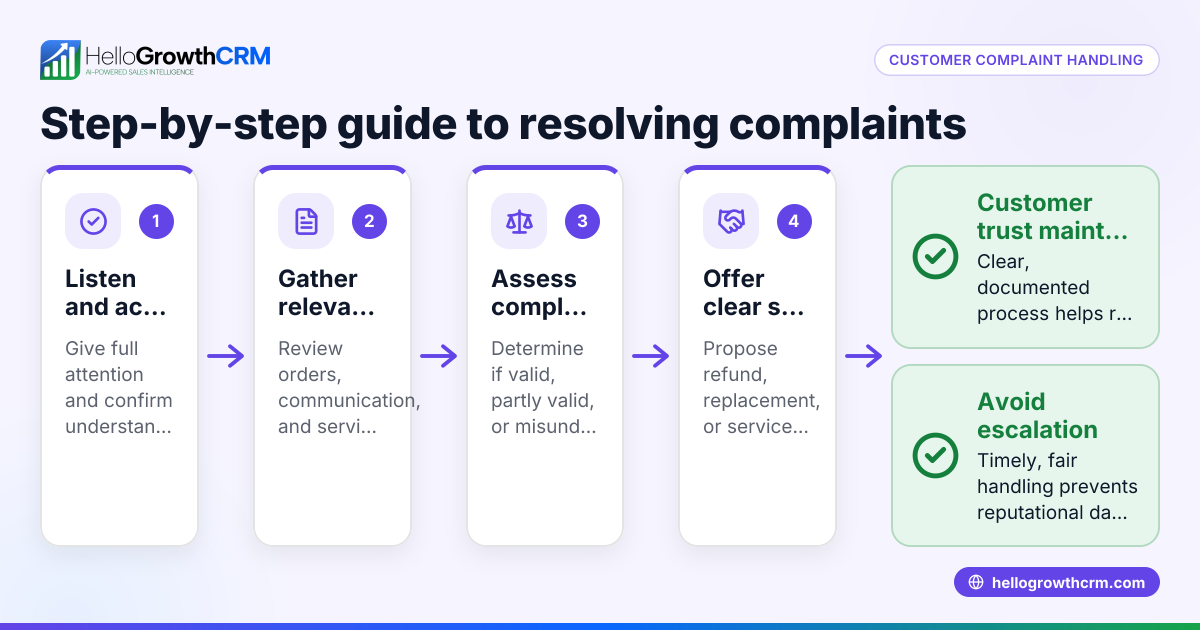
- Respond promptly and clearly: Acknowledge receipt of the complaint within 24 hours. Explain the next steps and provide timelines for resolution. Ensure responses are polite and informative.
- Assign responsibility: Designate a team member to handle each complaint. Confirm they understand the issue and deadlines.
- Take corrective action: Fix the issue by replacing products, issuing refunds, rescheduling deliveries, or providing services. Confirm with the customer that the solution meets their satisfaction.
- Follow up after resolution: Contact the customer a few days later to check if the problem is fully resolved and to invite feedback.
- Maintain a complaint log and generate reports: Use a system to track complaints, actions taken, and resolutions. Review reports weekly to monitor trends and prevent recurrence.
- Train your team regularly: Share insights from complaint analysis and corrective actions in meetings. Ensure the team follows the complaint management process.
- Use customer feedback for continuous improvement: Update processes, product quality, and communication based on complaint trends to reduce repeats.
Example (fictional figures)
On 15/05/2024, Rahul’s electronics store received a repeat complaint from customer Mr. Sharma about a mobile phone battery issue.
- Complaint date: 15/05/2024
- Previous complaint date: 10/04/2024
- Product price: ₹12,000
- Replacement battery cost: ₹1,500
Steps taken:
- Recorded complaint details including repeat nature.
- Categorised as product defect.
- Root cause analysis identified faulty battery batch.
- Responded to Mr. Sharma within 24 hours, apologising and explaining replacement plan.
- Assigned technician to replace battery.
- Replacement completed on 20/05/2024.
- Followed up on 25/05/2024; Mr. Sharma confirmed satisfaction.
Cost calculation:
₹12,000 (product price) - ₹1,500 (replacement cost) = ₹10,500 net sale value retained
This example shows that prompt, tracked action reduces loss and maintains customer trust.
Common mistakes
- Ignoring complaint history: Prevent by logging all complaints in one place to spot repeats.
- Delayed responses: Prevent by setting a 24-hour response goal and reminders.
- No clear responsibility assigned: Prevent by designating a complaint owner for each case.
- Not analysing root causes: Prevent by scheduling monthly reviews of complaint data.
- Failing to follow up after resolution: Prevent by setting follow-up reminders.
- Relying on informal tracking methods like WhatsApp or spreadsheets: Prevent by using a CRM or ticketing system to maintain records and reports.
Doing this in HelloGrowthCRM
HelloGrowthCRM supports managing repeat customer complaints with a branded self-service customer portal where customers can log tickets directly. Service requests stay linked to the same customer record as the deal, keeping complaint history visible. The system includes tickets and a knowledge base to assist quick resolution and tracks referrals for customer insights. Learn more about customer health score and how HelloGrowthCRM helps Indian SMBs on HelloGrowthCRM for India.
Frequently asked questions
How can small businesses track complaints without complex software? Start with a simple spreadsheet or notebook, logging complaint details, dates, and follow-ups. Regular reviews and assigning responsibilities help maintain accountability.
What is the best way to respond to upset customers in India? Respond politely and promptly, acknowledge the issue, explain corrective steps clearly, and provide timelines. Using WhatsApp or SMS with templates helps keep communication consistent, as detailed in WhatsApp and SMS CRM.
How often should complaint data be reviewed? Monthly reviews are best to identify patterns and root causes. Frequent analysis helps prevent repeat complaints and improves your processes.
Can repeat complaints harm my business reputation? Yes, unresolved or repeated complaints damage trust and reduce customer loyalty. Proper complaint management improves reputation and encourages referrals.
Is team training important for complaint management? Yes, regular training on complaint handling and using tools like CRM improves response quality and reduces errors.
Key takeaways
- Record and categorise every complaint in detail.
- Analyse root causes regularly to prevent repeats.
- Respond promptly and assign responsibility for resolution.
- Follow up after resolution to confirm customer satisfaction.
- Use systematic tracking instead of informal methods.
- Train your team on complaint handling and process improvements.
Managing repeat customer complaints efficiently protects your business reputation and improves customer loyalty. Start managing complaints better today with a clear process and tools like HelloGrowthCRM. Start on the Free Forever plan (200 leads, no credit card).
Ready to put this into practice?
Set up your pipeline, WhatsApp follow-ups, and AI lead scoring in minutes — free, no credit card.
Try HelloGrowthCRM freeGet CRM tips in your inbox
Join thousands of sales professionals who get weekly insights on CRM strategy, AI automation, and pipeline optimization.

The HelloGrowthCRM team publishes guides on CRM strategy, AI sales tools, and revenue operations for small business sales teams.