HelloGrowthCRM software
Built for real small-business sales teams
HelloGrowthCRM helps reps qualify faster, follow up on time, and close more deals—with practical automation in one place.
- AI lead scoring and pipeline visibility
- Built-in dialer, WhatsApp, and email automation
- Sales forecasting and RevOps-ready reporting
Opting in to text messaging means obtaining clear, explicit permission from your customers or leads before sending them promotional or sales-related text messages. This consent ensures compliance with US regulations and helps maintain customer trust. This article covers why opt-in is critical, practical steps to collect it, common pitfalls to avoid, a real-world example, and how a built-in CRM dialer supports your outreach.
Why this comes up / what goes wrong
Small business owners often want to use text messaging because it’s direct and effective. However, without proper opt-in, they risk violating laws like the Telephone Consumer Protection Act (TCPA), which can lead to fines and damaged reputation. (docs.fcc.gov) Many businesses lose leads or face complaints because they send texts without clear permission or use unclear opt-in methods. Without a reliable system, tracking who consented becomes difficult, increasing legal risks and inefficiencies.
Additionally, when businesses use text messaging without documented consent, they may face customer frustration and damage to their brand reputation. This is especially true for small and mid-sized businesses that rely heavily on repeat customers and word-of-mouth referrals. Clear opt-in procedures help maintain good customer relationships and ensure your marketing efforts reach interested recipients only.
Step-by-step
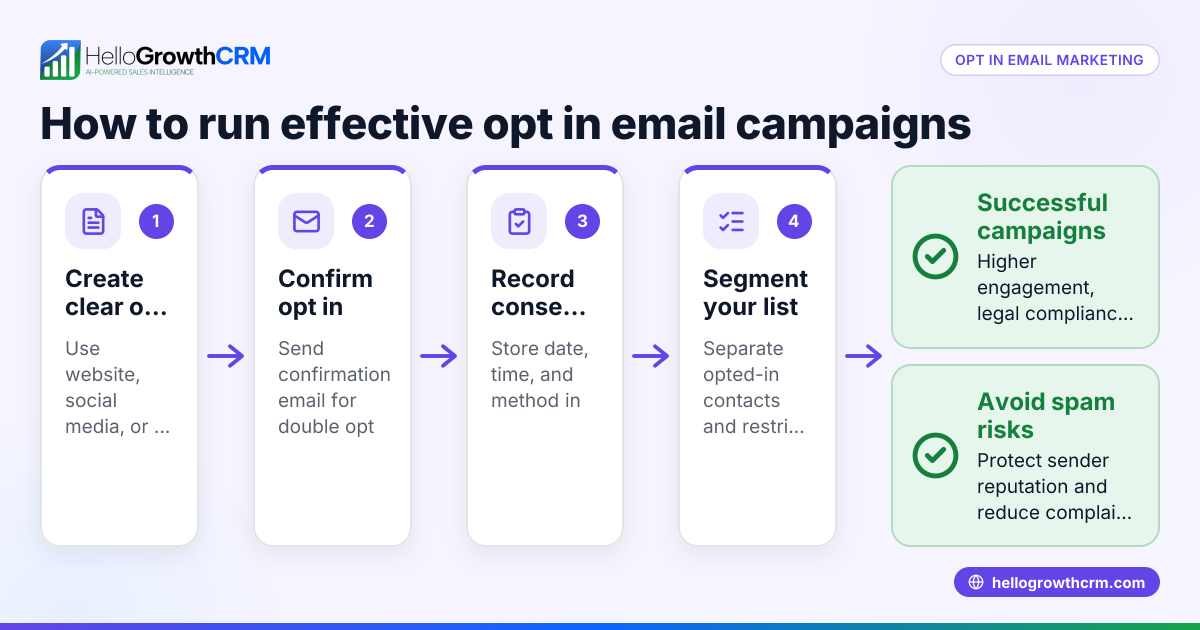
- Explain what customers are opting into: Clearly state that by providing their phone number, they agree to receive text messages related to your products, services, or promotions. Use straightforward language that customers can easily understand.
- Get explicit consent: Use a checkbox or a text response that customers must actively select or send. Avoid pre-checked boxes or implied consent. For example, on a web form, include a statement like "I agree to receive promotional text messages" with an unchecked box.
- Record the opt-in details: Keep the date, time, method, and exact wording of the consent. This documentation is crucial if you need to prove permission later. Maintain this information securely and organized.
- Provide opt-out instructions upfront: Let customers know how to stop receiving texts, typically by replying with "STOP". Include this information in your initial opt-in message and every subsequent message.
- Use opt-in only for the stated purpose: Don’t send unrelated messages or share their number without permission. Stick to the content and frequency agreed upon.
- Verify numbers before texting: Confirm the phone number is valid and belongs to the person who opted in. This can be done by sending a confirmation message and requiring a reply.
- Maintain an updated opt-in list: Regularly remove numbers that opt out or become inactive. Keep your contact list clean to avoid sending texts to people who have withdrawn consent.
- Train your team and document processes: Ensure everyone understands the opt-in rules and follows them consistently. Document your procedures and update them as regulations or business needs change.
Following these steps helps you stay compliant and build customer trust. Managing your contacts and calls is easier with tools like a built-in CRM dialer and solutions for WhatsApp and SMS CRM.
Example (fictional figures)
A two-location dental practice in Columbus, Ohio, wants to start text reminders for appointments and promotions. They collect phone numbers via a web form on 01/10/2026 with clear opt-in language.
- Number of patients who opt in: 1,200
- Average revenue per patient from promotions: $150
- Estimated increase in appointments from texts: 10%
Calculation:
1,200 × $150 = $180,000 total revenue from opt-in patients
10% × $180,000 = $18,000 additional revenue from text campaigns
This example shows how proper opt-in can unlock significant revenue while staying compliant.
Common mistakes
- Using implied consent or pre-checked boxes: Always require active opt-in to avoid legal issues. Prevent this by designing forms and messages that require clear action from customers.
- Failing to document consent details: Keep accurate records to prove permission. Use digital logs or CRM notes to store consent information securely.
- Ignoring opt-out requests: Promptly remove numbers that reply "STOP" to respect customer wishes. Automate opt-out handling if possible.
- Sending unrelated or excessive messages: Stick to agreed topics and frequency to maintain trust. Avoid spamming customers with irrelevant offers.
- Not verifying phone numbers: Texting wrong or inactive numbers wastes resources and risks complaints. Confirm numbers before adding them to your list.
- Mixing consent methods: Use consistent opt-in processes across channels to avoid confusion and compliance gaps.
Prevent these by following the step-by-step guide and training your team. Learn more about managing messages with a built-in CRM dialer and explore options for WhatsApp and SMS CRM.
Doing this in HelloGrowthCRM
A built-in dialer lets your rep work a list of leads directly inside the CRM. Each call’s outcome is logged on the lead record, helping you track who has opted in or needs follow-up. This organized approach supports compliance by keeping detailed contact histories and improving your outreach efficiency. See more about the built-in CRM dialer and how it fits US businesses on HelloGrowthCRM for the United States.
Frequently asked questions
What does it mean to opt in to text messaging? Opting in means a customer explicitly agrees to receive text messages from your business. This consent must be clear, documented, and voluntary to comply with regulations.
Can I use phone numbers collected for calls to send texts? No, unless you have explicit opt-in for text messaging. Consent for calls does not automatically cover texts.
How should I collect opt-in consent? Use clear language on web forms, paper forms, or verbal consent recorded during calls. The key is active agreement, such as checking a box or replying with "YES".
What if a customer opts out? You must immediately stop sending texts to that number. Provide easy opt-out instructions in every message, usually by replying "STOP".
Is opt-in required for all types of text messages? Most promotional and marketing texts require opt-in. Transactional messages like appointment reminders may have different rules but still benefit from clear consent.
How can a built-in dialer help manage opt-ins? A built-in dialer lets you call leads and log consent outcomes directly in the CRM, keeping your opt-in records organized and accessible.
Key takeaways
- Always get explicit, documented opt-in before texting customers.
- Explain clearly what customers agree to and how to opt out.
- Keep detailed records of consent dates, methods, and wording.
- Use consistent, active opt-in methods like checkboxes or text replies.
- Train your team and regularly update your opt-in list.
- A built-in dialer helps track calls and consent efficiently.
Start managing your text messaging opt-ins properly today. Start on the Free Forever plan (200 leads, no credit card).
Ready to put this into practice?
Set up your pipeline, WhatsApp follow-ups, and AI lead scoring in minutes — free, no credit card.
Try HelloGrowthCRM freeGet CRM tips in your inbox
Join thousands of sales professionals who get weekly insights on CRM strategy, AI automation, and pipeline optimization.

The HelloGrowthCRM team publishes guides on CRM strategy, AI sales tools, and revenue operations for small business sales teams.