HelloGrowthCRM software
Built for real small-business sales teams
HelloGrowthCRM helps reps qualify faster, follow up on time, and close more deals—with practical automation in one place.
- AI lead scoring and pipeline visibility
- Built-in dialer, WhatsApp, and email automation
- Sales forecasting and RevOps-ready reporting
Sales training pharmaceutical means preparing your sales representatives with the skills and knowledge needed to sell pharmaceutical products effectively and compliantly. It involves teaching product details, industry regulations, customer engagement techniques, and sales process management tailored to the pharmaceutical sector. This article explains why this training is necessary, outlines a step-by-step approach to training, highlights common mistakes, provides a realistic example, and shows how HelloGrowthCRM supports pharmaceutical sales teams.
Why this comes up / what goes wrong
Small and mid-sized pharmaceutical businesses often struggle with sales training because their sales teams must navigate complex product information and strict regulatory rules. Without proper training, reps can give inaccurate information, fail to comply with legal requirements, or lose sales due to poor communication skills. Additionally, many small businesses run sales operations on fragmented tools like emails, texts, and spreadsheets, making follow-up inconsistent and resulting in lost leads.
Pharmaceutical sales require detailed product knowledge, understanding of healthcare providers’ needs, and adherence to compliance standards. Without structured training, sales reps may lack confidence or make mistakes that damage customer relationships or lead to legal issues. Business owners want a practical, repeatable training process that enables reps to engage customers effectively and close deals while staying compliant.
Step-by-step
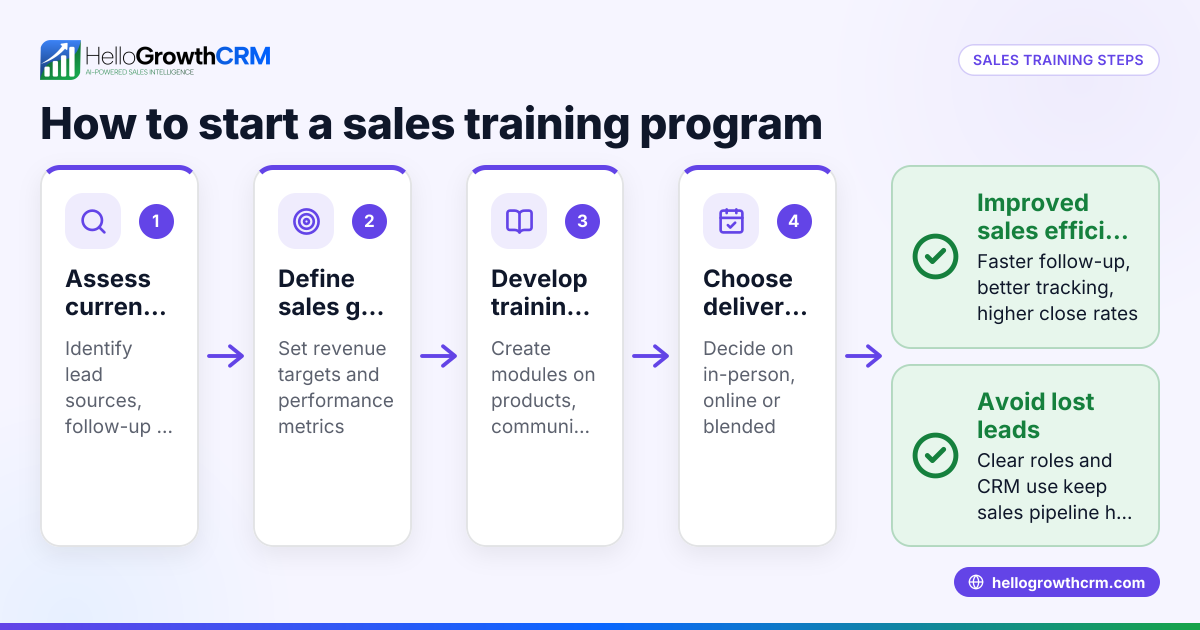
- Assess Training Needs
- Identify knowledge gaps in your sales team about products, regulations, and sales skills.
- Check if reps understand FDA rules, HIPAA, and industry ethical standards.
- Develop Training Materials
- Create clear, up-to-date content covering pharmaceutical products, benefits, side effects, and contraindications.
- Include compliance guidelines and examples of ethical sales practices.
- Choose Training Methods
- Use a mix of classroom sessions, role-playing, e-learning modules, and on-the-job coaching.
- Check that training is engaging and allows reps to practice real sales scenarios.
- Schedule Regular Training Sessions
- Plan initial onboarding training plus ongoing refreshers to keep knowledge current.
- Verify that sessions fit the team’s schedules to maximize attendance.
- Incorporate Sales Process Training
- Teach how to manage leads, follow up systematically, and use sales tools effectively.
- Check that reps understand pipeline stages and how to move deals forward.
- Evaluate Training Effectiveness
- Use quizzes, role-play assessments, and sales performance metrics to measure learning.
- Review feedback from reps to improve future training.
- Support with Technology
- Implement a CRM system tailored to pharmaceutical sales to track leads, calls, and follow-ups.
- Confirm the CRM supports compliance documentation and reporting.
For more guidance on managing your sales process and training effectiveness, visit CRM academy.
Example (fictional figures)
A Denver-based pharmaceutical distributor, MedPharma Solutions, has 15 sales reps. They decide to implement a structured sales training program starting 03/01/2026.
- Training development costs: $10,000
- Trainer fees for 3 sessions: $4,500
- Time spent by reps in training (15 reps × 8 hours × $50/hour wage): 15 × 8 × $50 = $6,000
- Total training investment: $10,000 + $4,500 + $6,000 = $20,500
After training, their average deal size increases from $8,000 to $10,000, and the monthly closed deals go from 25 to 30.
Monthly sales increase calculation:
Old revenue = 25 deals × $8,000 = $200,000 New revenue = 30 deals × $10,000 = $300,000
Increase = $300,000 - $200,000 = $100,000
Return on training investment (ROI) per month:
ROI = $100,000 / $20,500 ≈ 4.88 (or 488%)
This shows the training pays off quickly by improving sales effectiveness.
Common mistakes
- Skipping Compliance Training
- Prevent by including all relevant regulatory content and updating it regularly.
- One-Time Training Only
- Prevent by scheduling ongoing refreshers and coaching.
- Ignoring Sales Process Training
- Prevent by integrating CRM usage and pipeline management into training.
- Using Generic Sales Training
- Prevent by tailoring content to pharmaceutical products and customer types.
- Not Measuring Training Impact
- Prevent by setting clear KPIs and collecting feedback.
Learn more about managing sales territories and field operations to support your reps on the go at HelloGrowthCRM for the United States.
Doing this in HelloGrowthCRM
HelloGrowthCRM helps pharmaceutical businesses manage their sales pipeline efficiently. Deals in the pipeline show quotations at the 'quote sent' stage with follow-up dates, ensuring no opportunities are forgotten. Territory and field operations features allow sales reps to log visits from their phones, while managers can monitor daily activities. For founders without a sales manager, Managed RevOps provides weekly follow-up support to keep leads moving. These tools help maintain training gains by enforcing consistent sales practices and follow-up discipline. Learn more about these features at WhatsApp and SMS CRM.
Frequently asked questions
What topics should pharmaceutical sales training cover? Training should include product knowledge, regulatory compliance (FDA, HIPAA), ethical sales practices, customer engagement skills, and sales process management.
How often should pharmaceutical sales training happen? Initial training should happen when reps join, with regular refreshers at least quarterly to keep skills and knowledge current.
Can small businesses afford pharmaceutical sales training? Yes, by focusing on essential content and using blended learning methods, small businesses can train reps cost-effectively and see a strong return on investment.
How does technology improve pharmaceutical sales training? A CRM system helps track leads, manage follow-ups, and measure sales performance, reinforcing training through better process adherence.
What are key compliance risks in pharma sales? Misrepresenting products, ignoring patient privacy laws, and unethical incentives are risks. Training must address these to avoid legal issues.
Key takeaways
- Pharmaceutical sales training combines product knowledge, compliance, and sales skills.
- Structured, ongoing training improves sales effectiveness and reduces compliance risks.
- Use a CRM to support sales process training and follow-up discipline.
- Avoid common mistakes like skipping compliance or ignoring sales process training.
- Small businesses can implement affordable, impactful training programs.
Effective sales training is vital for pharmaceutical businesses to grow sales and stay compliant. To try managing your sales pipeline and team follow-up efficiently, start on the Free Forever plan (200 leads, no credit card).
Ready to put this into practice?
Set up your pipeline, WhatsApp follow-ups, and AI lead scoring in minutes — free, no credit card.
Try HelloGrowthCRM freeGet CRM tips in your inbox
Join thousands of sales professionals who get weekly insights on CRM strategy, AI automation, and pipeline optimization.

The HelloGrowthCRM team publishes guides on CRM strategy, AI sales tools, and revenue operations for small business sales teams.