HelloGrowthCRM software
Built for real small-business sales teams
HelloGrowthCRM helps reps qualify faster, follow up on time, and close more deals—with practical automation in one place.
- AI lead scoring and pipeline visibility
- Built-in dialer, WhatsApp, and email automation
- Sales forecasting and RevOps-ready reporting
In person sales training means gathering your sales team together physically to teach and practice sales skills. Unlike online courses or self-study, it involves real-time interaction, immediate feedback, and practical exercises that build confidence and competence.
Why this comes up / what goes wrong
Small business owners often turn to in person sales training because their sales results lag behind expectations. Many small and mid-sized businesses rely on informal sales methods like texting, emailing, or spreadsheets, which can cause slow follow-up and lost leads. Without structured training, sales reps may lack consistent messaging, struggle with objections, or fail to close deals effectively. In person training addresses these gaps by providing focused skill-building and team alignment.
Step-by-step
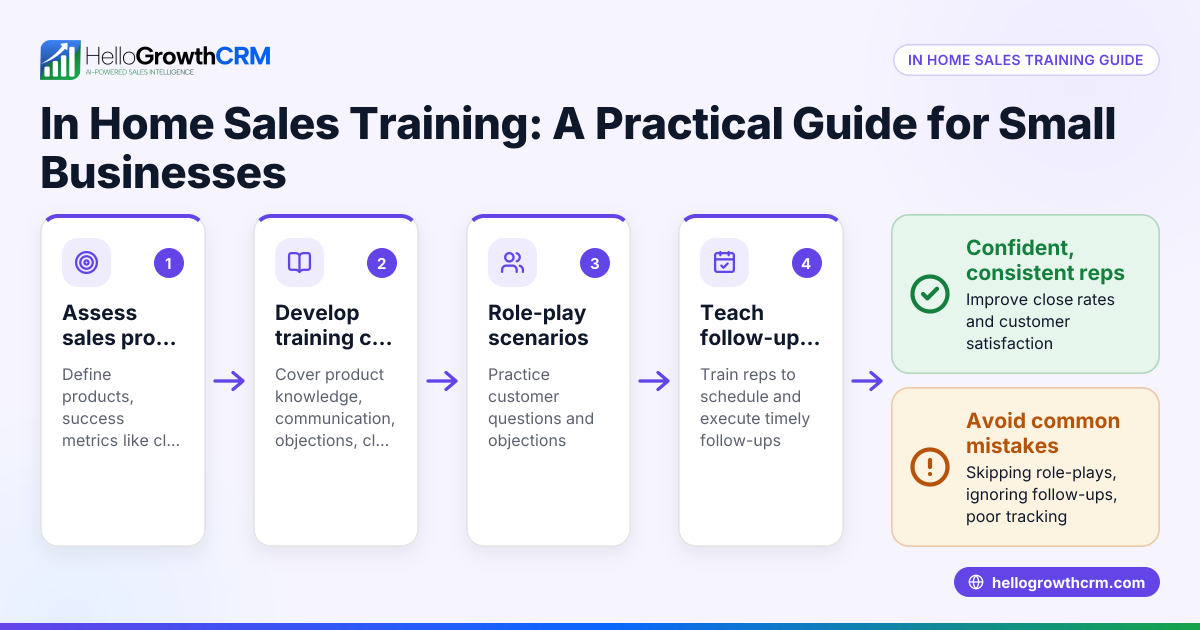
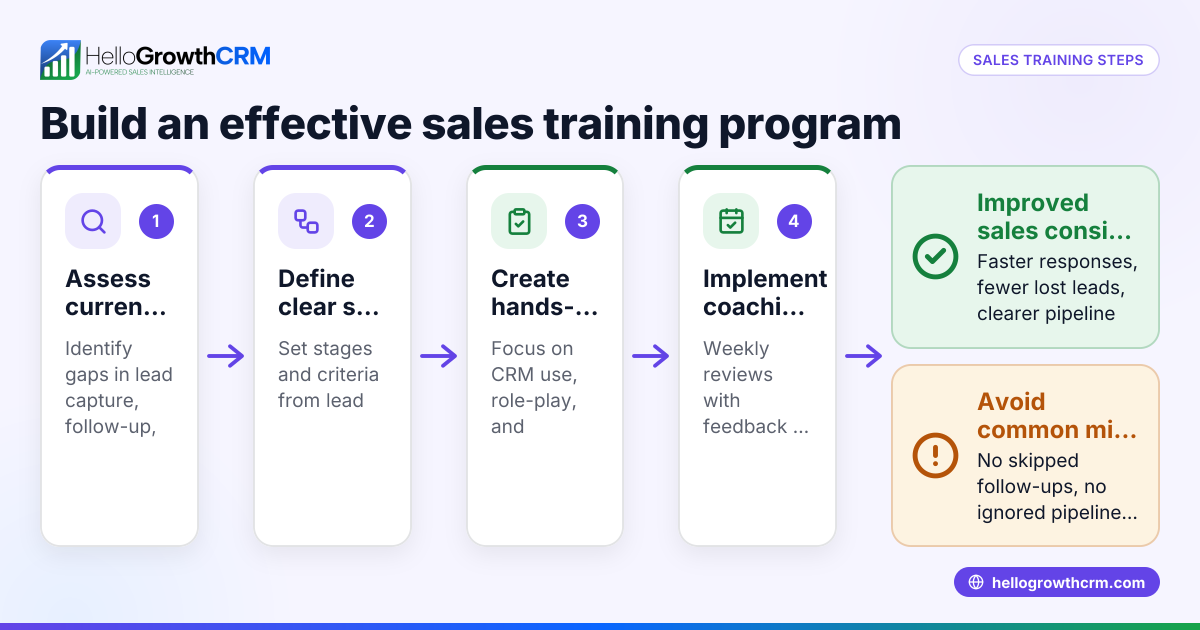
- Assess your team’s current skills and challenges
- Conduct a brief survey or informal interviews to identify weak points.
- Check if slow lead follow-up or inconsistent messaging is an issue.
- Set clear training goals
- Define what you want to improve: closing rates, objection handling, product knowledge.
- Ensure goals are measurable and realistic.
- Choose a training format and schedule
- Plan workshops, role-playing sessions, and real sales call practice.
- Schedule sessions during times that minimize disruption.
- Prepare training materials and exercises
- Develop scripts, objection responses, and product demos.
- Include real case studies from your sales pipeline.
- Conduct the training in person
- Engage participants actively with role-plays and group discussions.
- Provide immediate feedback and coaching.
- Assign follow-up tasks and track progress
- Have reps apply new skills in live calls or meetings.
- Schedule check-ins to review progress and challenges.
- Measure results and adjust
- Compare sales metrics before and after training.
- Collect feedback to refine future sessions.
For more tips on managing your sales process and tasks, visit our CRM academy.
Example (fictional figures)
A plumbing company in Austin, Texas, with 10 sales reps noticed a 20% lead drop-off due to slow follow-up. They planned in person sales training on 03/15/2026 to improve follow-up speed and closing skills.
- Current monthly leads: 500
- Current conversion rate: 10%
- Monthly closed deals: 500 × 10% = 50
After training, they aimed to increase conversion to 15% and reduce follow-up time by 50%.
- New conversion rate: 15%
- Expected closed deals: 500 × 15% = 75
The 25 additional deals at an average sale of $2,000 each would increase monthly revenue by:
- 25 × $2,000 = $50,000
This example shows how focused in person training can directly impact sales outcomes.
Common mistakes
- Skipping needs assessment: Without knowing your team’s weaknesses, training may miss key issues. Prevent by surveying before planning.
- Setting vague goals: Goals like "improve sales" are too broad. Prevent by defining measurable targets.
- Overloading content in one session: Too much info at once reduces retention. Prevent by spacing sessions.
- Ignoring follow-up: Training without practice and feedback loses impact. Prevent by assigning tasks and tracking progress.
- Not involving leadership: Without management buy-in, training may lack support. Prevent by engaging leaders early.
- Failing to connect training with daily tools: Sales reps need to apply skills using their CRM and communication platforms. Prevent by integrating training with tools like HelloGrowthCRM.
See more on sales process management at HelloGrowthCRM for the United States.
Doing this in HelloGrowthCRM
HelloGrowthCRM supports your in person sales training by helping track and manage sales activities:
- Deals (pipeline): Keep quotations and follow-ups organized by moving deals through stages like "quote sent" with scheduled follow-up reminders, so no opportunity is forgotten.
- Built-in dialer: Your reps can work lead lists directly inside the CRM, logging call outcomes and keeping full call histories tied to each lead.
- Territories, field operations and commissions: Field sales reps can log visits from their phones, and managers can monitor daily activities and commissions, ensuring accountability and real-time feedback.
Learn more about these features at WhatsApp and SMS CRM.
Frequently asked questions
What is the main benefit of in person sales training compared to online training? In person training offers immediate interaction, real-time role-playing, and direct feedback, which helps salespeople practice skills more effectively. It also fosters team bonding and allows trainers to adjust sessions dynamically.
How often should small businesses conduct in person sales training? Frequency depends on your team size and sales cycle, but many small businesses find quarterly sessions effective, supplemented by ongoing coaching and check-ins.
Can in person sales training work for remote or hybrid teams? Yes, but it requires careful planning to gather team members physically or use hybrid formats. For remote teams, supplementing with virtual sessions and CRM tools is important.
How do I measure if the training was successful? Track key sales metrics like conversion rates, lead follow-up times, and revenue before and after training. Also gather qualitative feedback from your sales reps.
What role does a CRM play in sales training? A CRM helps track leads, deals, and follow-ups, making it easier to apply training lessons consistently. It can remind reps of next steps and log sales activities for review.
Key takeaways
- In person sales training is a hands-on, interactive way to build sales skills with your team.
- Start by assessing needs, setting clear goals, and preparing practical exercises.
- Avoid common mistakes like vague goals, no follow-up, or ignoring CRM integration.
- Track progress with measurable sales metrics and adjust training accordingly.
- HelloGrowthCRM helps manage your sales pipeline, calls, and field visits to support training application.
Start improving your sales skills and team performance today. Start on the Free Forever plan (200 leads, no credit card).
Ready to put this into practice?
Set up your pipeline, WhatsApp follow-ups, and AI lead scoring in minutes — free, no credit card.
Try HelloGrowthCRM freeGet CRM tips in your inbox
Join thousands of sales professionals who get weekly insights on CRM strategy, AI automation, and pipeline optimization.

The HelloGrowthCRM team publishes guides on CRM strategy, AI sales tools, and revenue operations for small business sales teams.