HelloGrowthCRM software
Built for real small-business sales teams
HelloGrowthCRM helps reps qualify faster, follow up on time, and close more deals—with practical automation in one place.
- AI lead scoring and pipeline visibility
- Built-in dialer, WhatsApp, and email automation
- Sales forecasting and RevOps-ready reporting
A sales prospector is a person or tool that identifies potential customers (leads) who might be interested in your product or service. Prospecting is the first step in the sales process where you find and qualify leads to build your sales pipeline. This article explains why sales prospecting is important, the step-by-step process to prospect effectively, common mistakes to avoid, and how HelloGrowthCRM can help manage your prospects and deals.
Why this comes up / what goes wrong
Small-business owners often struggle with finding enough qualified leads to keep their sales pipeline full. Without a clear prospecting process, leads may be lost or forgotten, resulting in slow follow-up and missed sales opportunities. Many small sales teams run their sales on text messages, emails, and spreadsheets, which can be disorganized and inefficient. This leads to confusion about who to contact next and when, causing delays that let competitors win your potential customers.
Step-by-step
- Identify your target market: Define the characteristics of your ideal customers such as industry, company size, location, and role. Check that these match your product or service benefits.
- Gather leads: Use sources like web forms, referrals, social media, or purchased lists. Verify contact information to avoid wasting time.
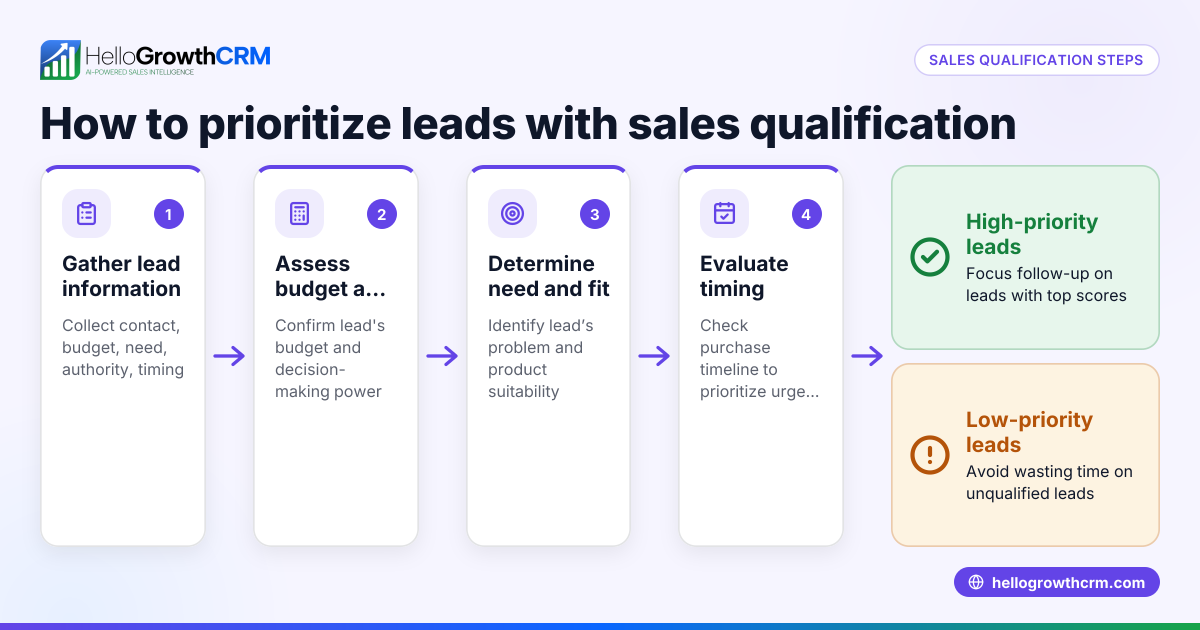
- Qualify leads: Determine if the lead has the budget, authority, need, and timeline to buy. Check for fit before investing time.
- Reach out promptly: Contact leads quickly via email, WhatsApp, SMS, or phone. Check that your message is clear and personalized.
- Record and track leads: Use a CRM or organized spreadsheet to log all interactions and next steps. Check that follow-up dates are set.
- Nurture interested leads: Send relevant content or offers to keep them engaged. Check for responses regularly.
- Move qualified leads to deals: When a lead is ready, create a deal in your pipeline and track progress towards closing.
Using a CRM with a built-in CRM dialer can help speed up contact and record calls automatically. Managing territories and field visits is easier with territories, field operations and commissions features.
Example (fictional figures)
A plumbing company in Austin, Texas, wants to grow its commercial client base starting 03/01/2026.
- Step 1: Define target market as commercial buildings in Austin with 10+ employees.
- Step 2: Gather 100 leads from local business directories and website inquiries.
- Step 3: Qualify leads by phone to find 40 with an immediate plumbing need and budget over $5,000.
- Step 4: Reach out to these 40 leads by WhatsApp and email within 24 hours.
- Step 5: Log all leads and set follow-up dates in a CRM pipeline.
- Step 6: Nurture 20 leads interested but not ready to buy yet.
- Step 7: Move 10 leads to deals and send quotations.
If the average deal value is $8,000:
$8,000 × 10 = $80,000 expected revenue from these deals.
Following up on quotations promptly increases the chance of closing these deals.
Common mistakes
- Ignoring lead qualification: Contacting unqualified leads wastes time. Prevent by setting clear criteria and checking before outreach.
- Slow follow-up: Leads lose interest if not contacted quickly. Use reminders and pipeline tools to track follow-ups.
- Disorganized tracking: Using spreadsheets or notes that are hard to update causes lost information. Use a CRM to centralize lead data.
- Not personalizing communication: Generic messages reduce response rates. Prevent by tailoring messages to each lead’s needs.
- Forgetting to update deal stages: Without moving deals through pipeline stages, you can’t forecast sales. Check and update deal status regularly.
- Neglecting lead nurturing: Leads not ready to buy need ongoing engagement. Schedule regular check-ins.
HelloGrowthCRM’s Deals (pipeline) feature helps you track quotations as deals with follow-up dates so no lead is forgotten.
Doing this in HelloGrowthCRM
HelloGrowthCRM helps small businesses stay organized and follow up effectively. Its Deals (pipeline) feature shows quotations sent last week as deals at the 'quote sent' stage with a follow-up date, so you never forget to follow up. If your business has field reps, the Territories, field operations and commissions tools let reps log visits from their phones, and managers can see daily activity. For founders without a sales manager, the Managed RevOps service provides weekly follow-up queue management and pipeline cleanup, ensuring leads are contacted on time and your sales process stays healthy.
Frequently asked questions
What is the difference between a sales prospector and a sales lead? A sales prospector is the person or method used to find and qualify potential customers before they become leads. A lead is a potential customer who has shown some interest or fits your target criteria. Prospecting comes first to generate leads.
How can I improve my sales prospecting? Focus on defining your ideal customer, use multiple lead sources, qualify leads carefully, and respond quickly. Organize your process with a CRM to track all contacts and follow-ups.
Is it better to prospect by phone, email, or messaging apps? The best channel depends on your audience. Many small businesses find WhatsApp and SMS effective for quick, personal contact. Phone calls allow direct conversations, while emails are good for detailed information. Using multiple channels increases reach.
How does a CRM help with sales prospecting? A CRM centralizes lead data, tracks interactions, schedules follow-ups, and moves leads through the sales pipeline. This reduces lost leads and slow responses.
What are territories in sales, and why do they matter? Territories divide sales areas or customer groups among reps to avoid overlap and improve coverage. Tracking visits and commissions by territory helps managers optimize field sales.
Key takeaways
- A sales prospector finds and qualifies potential customers to build your sales pipeline.
- Define your ideal customer and gather leads from reliable sources.
- Qualify leads before investing time and follow up promptly.
- Use a CRM to track leads, deals, and follow-ups to avoid losing opportunities.
- Avoid common mistakes like slow follow-up and disorganized tracking.
- HelloGrowthCRM’s Deals pipeline and territory tools support effective prospecting and follow-up.
Start improving your sales prospecting today. Start on the Free Forever plan (200 leads, no credit card) to organize your leads and follow-ups with HelloGrowthCRM.
Ready to put this into practice?
Set up your pipeline, WhatsApp follow-ups, and AI lead scoring in minutes — free, no credit card.
Try HelloGrowthCRM freeGet CRM tips in your inbox
Join thousands of sales professionals who get weekly insights on CRM strategy, AI automation, and pipeline optimization.

The HelloGrowthCRM team publishes guides on CRM strategy, AI sales tools, and revenue operations for small business sales teams.