HelloGrowthCRM software
Built for real small-business sales teams
HelloGrowthCRM helps reps qualify faster, follow up on time, and close more deals—with practical automation in one place.
- AI lead scoring and pipeline visibility
- Built-in dialer, WhatsApp, and email automation
- Sales forecasting and RevOps-ready reporting
A sales scorecard is a simple but powerful way to monitor your sales performance by tracking key indicators such as leads, follow-ups, deals won, and revenue. For small businesses, it brings clarity to sales efforts and helps focus on what drives growth.
Why this comes up / what goes wrong
Small business owners often struggle to keep track of their sales activities and results. Sales may happen across WhatsApp, email, and spreadsheets, making it hard to see which leads are hot, which deals are stalled, and whether the team is following up promptly. Without clear visibility, leads get lost, sales slow, and revenue suffers. A sales scorecard provides a straightforward way to measure progress and spot issues early.
Step-by-step
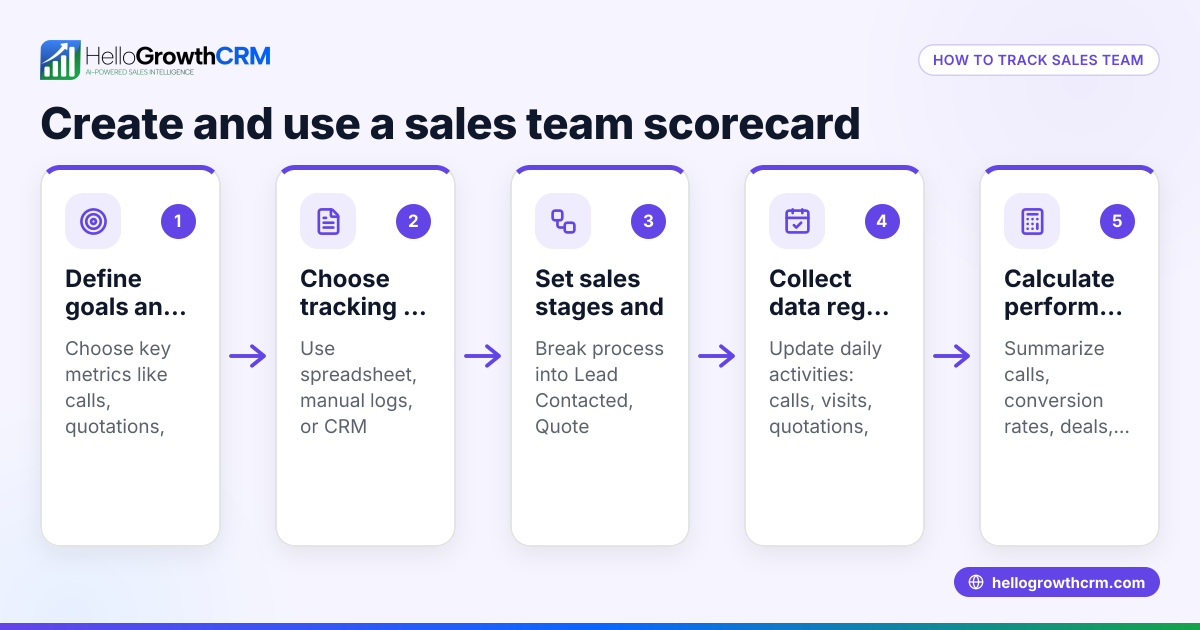
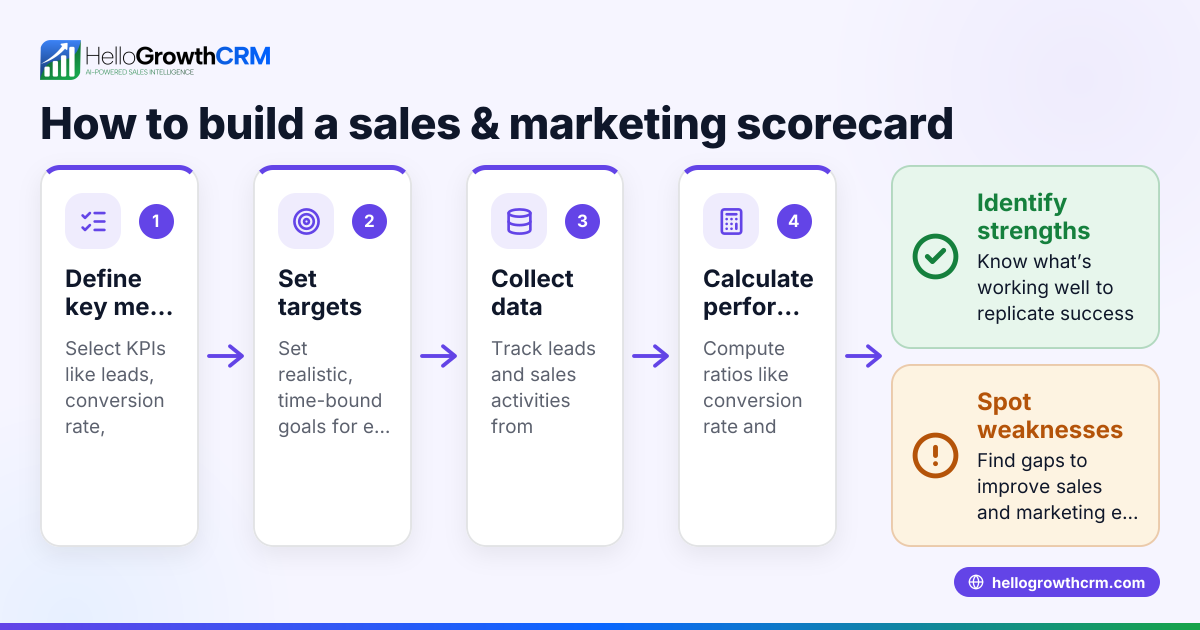
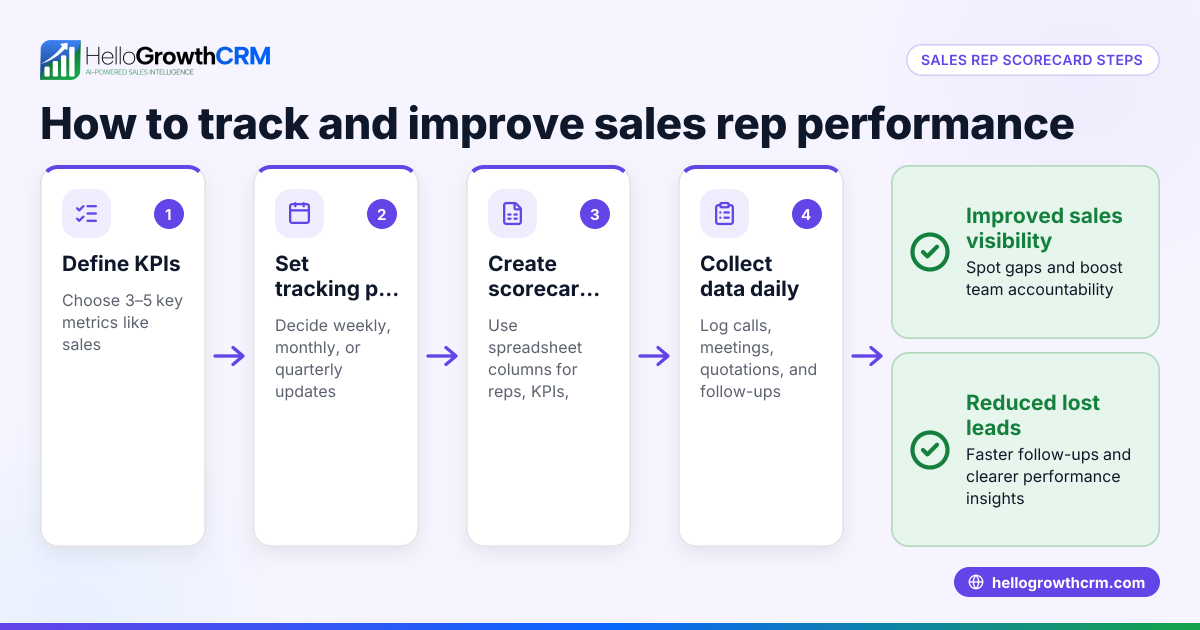
- Define your key sales metrics: Decide what to track, such as number of leads contacted, follow-up calls made, quotes sent, deals closed, and revenue generated. Check that these metrics align with your sales goals.
- Collect accurate data regularly: Use your CRM, spreadsheets, or manual logs to record sales activities and results daily or weekly. Check data for completeness and correctness.
- Create a simple scorecard layout: Use a table or spreadsheet with rows for each metric and columns for time periods (e.g., weeks or months). Include targets and actual results.
- Calculate performance against targets: For each metric, subtract target from actual to see if you are on track. Highlight areas needing attention.
- Review and update the scorecard weekly: Check progress with your sales team, discuss challenges, and agree on actions to improve.
- Use the scorecard to guide follow-up and coaching: Prioritise leads and deals that need attention based on scorecard insights.
Example (fictional figures)
A kitchen-fitting company in Leeds wants to track its sales for March 2024.
| Metric | Target | Actual | Difference |
|---|---|---|---|
| Leads contacted | 100 | 90 | 90 - 100 = -10 |
| Follow-up calls made | 80 | 85 | 85 - 80 = +5 |
| Quotes sent | 50 | 45 | 45 - 50 = -5 |
| Deals closed | 20 | 18 | 18 - 20 = -2 |
| Revenue (£) | 150,000 | 140,000 | 140,000 - 150,000 = -10,000 |
The scorecard shows the company is slightly behind on leads contacted, quotes sent, deals closed, and revenue. Follow-up calls exceeded the target, suggesting good persistence. The company can focus on improving lead generation and converting quotes to deals.
Common mistakes
- Tracking too many metrics: Focus on a few key indicators that truly impact sales. Prevent by choosing metrics aligned with your goals.
- Using outdated or incomplete data: This leads to wrong conclusions. Prevent by updating the scorecard weekly and verifying data accuracy.
- Ignoring the scorecard results: If you don’t act on insights, the scorecard is wasted. Prevent by reviewing it regularly with the team and setting clear follow-up actions.
- Not linking scorecard to daily sales activities: Metrics must reflect what the sales team actually does. Prevent by integrating scorecard tracking with your sales process and tools like HelloGrowthCRM.
- Relying on manual tracking alone: Manual methods can be error-prone and slow. Prevent by using CRM features such as deals pipeline and follow-up reminders to automate data collection.
Doing this in HelloGrowthCRM
HelloGrowthCRM helps small businesses manage their sales scorecard through its Deals (pipeline) feature, where every quotation sent is tracked as a deal at the 'quote sent' stage with a follow-up date, ensuring no opportunity is forgotten. For businesses with field sales teams, Territories, field operations and commissions tools let reps log visits from their phones, giving managers a clear view of daily sales activities. Founders without a sales manager can benefit from Managed RevOps, where a revenue specialist works the follow-up queue weekly to keep sales moving. Learn more about WhatsApp and SMS CRM, built-in CRM dialer, and HelloGrowthCRM for the United Kingdom.
Frequently asked questions
What is a sales team scorecard? A sales team scorecard tracks the performance of the entire sales team using key metrics like calls made, meetings booked, deals won, and revenue. It helps sales leaders identify who needs coaching and which parts of the process need improvement.
How often should I update my sales scorecard? Ideally, update your sales scorecard weekly to keep it relevant and actionable. Frequent updates help spot trends early and allow timely adjustments to sales tactics.
Can I create a sales scorecard without a CRM? Yes, you can use spreadsheets or manual logs, but it requires more time and risks errors. A CRM like HelloGrowthCRM automates tracking, sends follow-up reminders, and centralises data, making scorecard management easier.
What metrics should I include in my sales scorecard? Start with metrics that reflect your sales process stages: leads contacted, follow-ups, quotes sent, deals closed, and revenue. Adjust as your business grows or changes.
How does HelloGrowthCRM help with sales follow-up? HelloGrowthCRM’s Deals (pipeline) feature tracks each deal’s stage with follow-up dates, ensuring no lead is forgotten. Managed RevOps provides dedicated support for follow-up execution, helping keep your sales funnel active.
Key takeaways
- A sales scorecard tracks key sales metrics to measure performance and progress.
- Focus on a few important metrics aligned with your sales goals.
- Update and review the scorecard weekly to guide follow-up and coaching.
- Avoid common mistakes like tracking too many metrics or ignoring data.
- HelloGrowthCRM supports scorecard management with deals pipeline, field operations, and Managed RevOps.
Start improving your sales tracking today with HelloGrowthCRM. Start on the Free Forever plan (200 leads, no credit card).
Ready to put this into practice?
Set up your pipeline, WhatsApp follow-ups, and AI lead scoring in minutes — free, no credit card.
Try HelloGrowthCRM freeGet CRM tips in your inbox
Join thousands of sales professionals who get weekly insights on CRM strategy, AI automation, and pipeline optimization.

The HelloGrowthCRM team publishes guides on CRM strategy, AI sales tools, and revenue operations for small business sales teams.