Customer Onboarding
Structured onboarding checklists and health check workflows for agencies, SaaS, and professional services teams.
First 90 days that keep clients
These onboarding templates are built for agencies, SaaS customer success teams, and professional services firms that win the deal and then lose momentum — credentials arrive late, kickoffs slip, and the client's enthusiasm decays while internal tasks bounce between inboxes. Churn in month four usually traces back to chaos in month one.
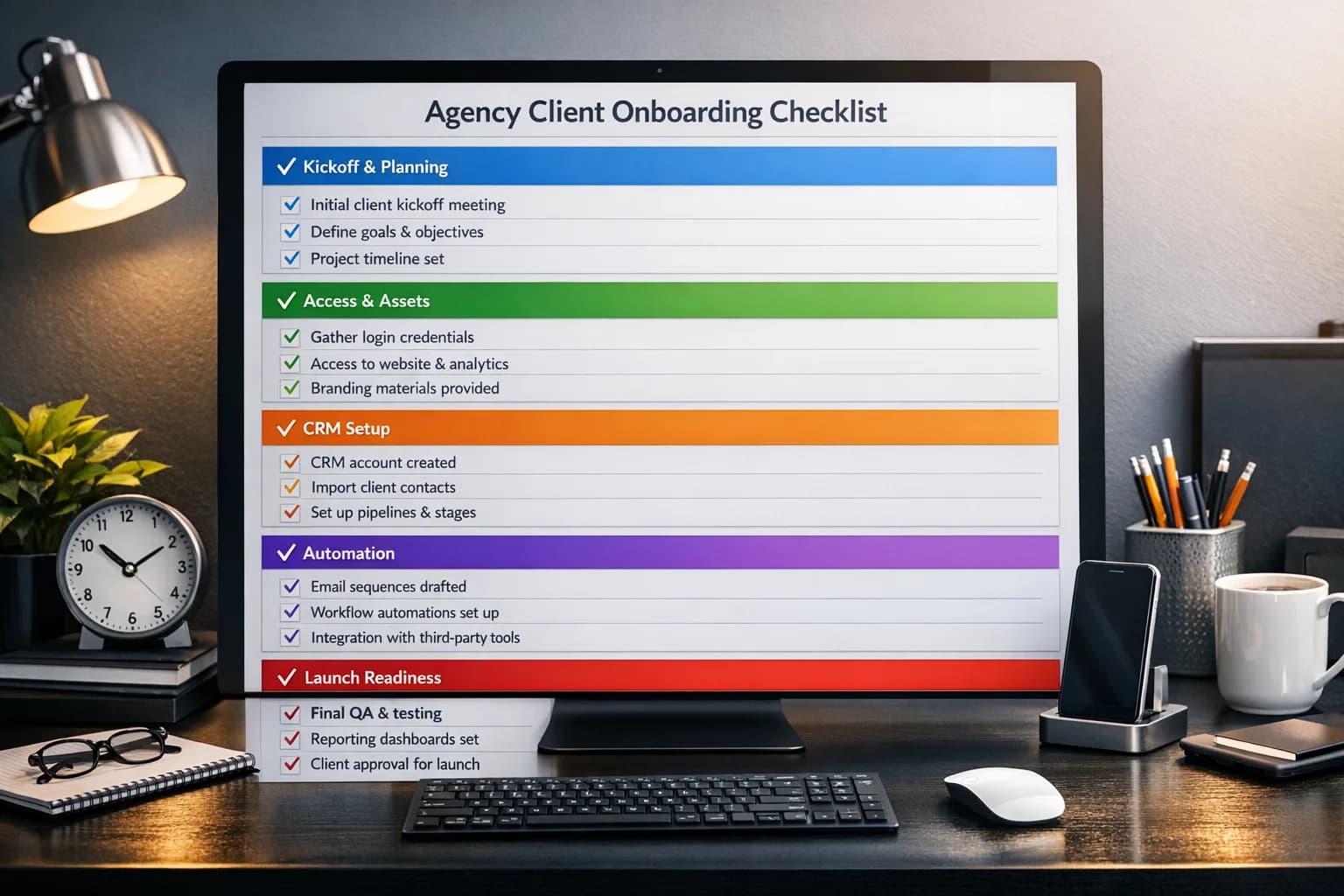
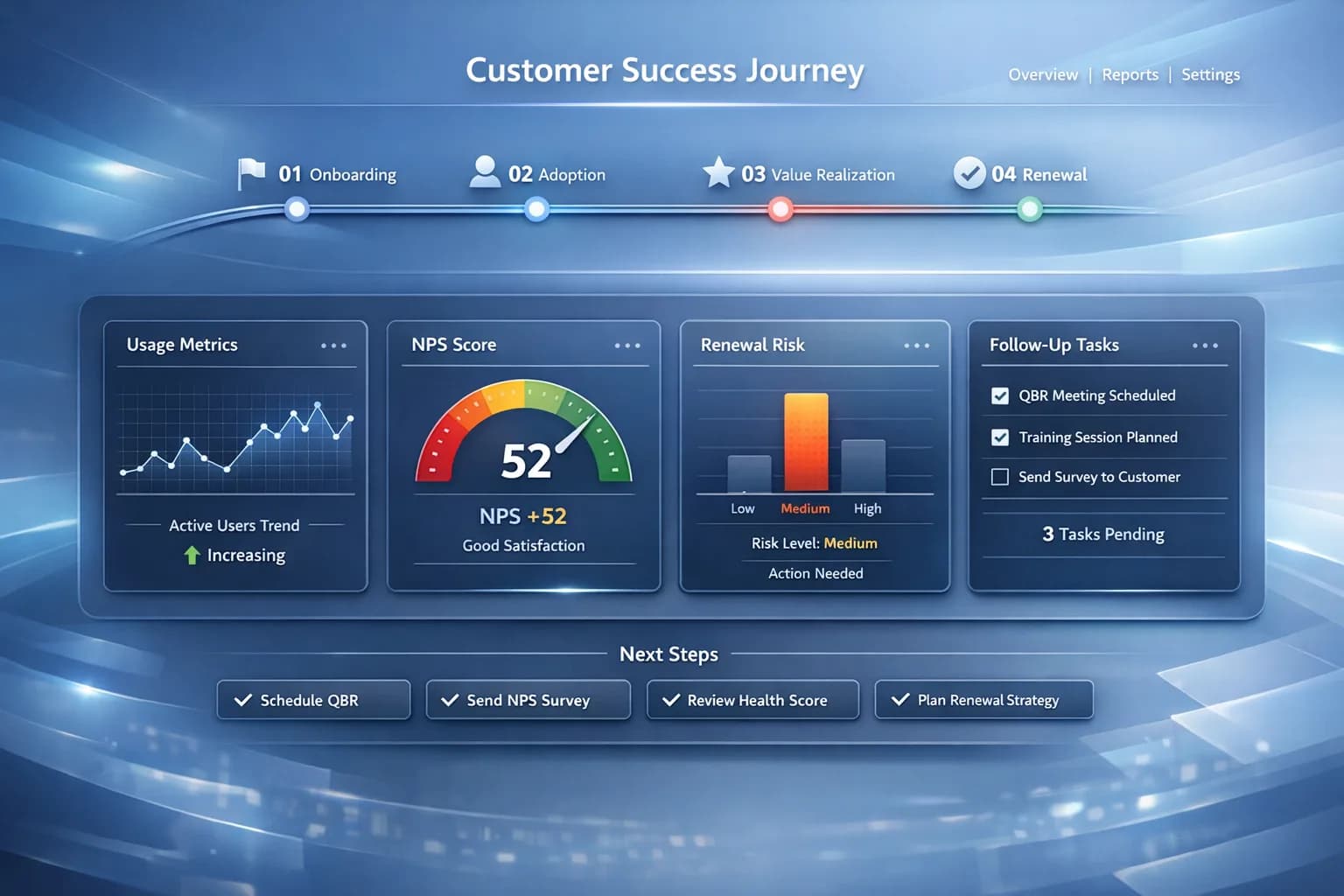
Two templates anchor the category: a 22-step agency client onboarding checklist organized into five milestones from kickoff through launch readiness, and a customer success health check that scores accounts on usage, engagement, and sentiment so you can see which clients are drifting long before the renewal conversation.
Owner clarity
Every checklist item names a responsible owner on your side and the client's, so 'waiting on access' stops being a black hole nobody is accountable for.
Milestone tracking
Onboarding is grouped into dated milestones with visible progress, letting you spot a client falling behind in week two instead of discovering it at the 90-day review.
Customer health signals
Health-check scoring starts on day one, building the usage and sentiment baseline that later powers renewal forecasts and churn-save plays.
Template library
Ready-to-use customer onboarding
Pick a template, review the workflow details, then download or adapt it for your CRM rollout.
Format availability varies by template.

Rollout path
Standing up an onboarding process in one client cycle
Teams get better adoption when the template is customized before automation is layered on top.
Run your next real client through it
Do not pilot onboarding templates hypothetically. Take the client signing this week, load the checklist, and adapt items as reality pushes back — that produces a usable process in one cycle.
Split items between your team and the client
Half of onboarding delays are client-side: access, assets, approvals. Mark which checklist items the client owns and share that view with them, so chasing becomes visible instead of awkward.
Date the milestones, not just the tasks
Set target dates for each of the five milestones. A task slipping two days is noise; a milestone slipping a week is a signal that needs a conversation.
Start health scoring at go-live
Begin the health check the day onboarding ends, while the baseline is fresh. The first 30-day score becomes your reference point for spotting drift later.
Customize first
Make the template match your team
Browse ready-to-use customer onboarding you can adapt for your sales team, RevOps process, or CRM rollout. Every template includes practical guidance so you can move from planning to execution faster.
Edit ownership, terminology, handoff rules, required fields, timing expectations, and reporting views first. Those changes make the framework feel native to your team and improve adoption after rollout.
When you deploy a template into HelloGrowthCRM, the automation layer comes with it — see the full feature set for what each plan automates, or check pricing if you are sizing the rollout for a team. Every template here works on the free plan.
Service Agreement / AMC Template
A free service agreement and annual maintenance contract (AMC) template for trade and field-service businesses: scope, schedule, pricing, and renewal terms.
OpenHVAC Maintenance Checklist Template
A free, printable HVAC maintenance checklist for service visits: inspection points, readings, and sign-off — in PDF or editable copy.
OpenAccounting Engagement Letter Template
A free engagement letter template for accountants, bookkeepers and tax practices: scope of services, fees, responsibilities, and term — ready to adapt and send.
OpenCommon questions
Customer Onboarding: what teams ask before downloading
For agencies, the 22-step checklist typically compresses into two to four weeks when both sides hit their dates — kickoff and access in week one, CRM and data setup in week two, automation and launch readiness after. The duration matters less than the slippage pattern: a client who misses the access milestone by a week will miss every later milestone too unless someone intervenes at that first slip.
Three signal families: usage (logins, feature adoption, data volume), engagement (meeting attendance, email responsiveness, support tone), and outcomes (progress against the goals captured at kickoff). The template weights them into a green/yellow/red score. The most predictive single signal for most teams is meeting attendance — clients who start skipping check-ins churn months later, and the score catches it immediately.
Yes — the milestone structure transfers cleanly. SaaS teams rename 'Access & Asset Collection' to data import and integration setup; consultancies map it to discovery inputs and stakeholder interviews. Keep the five-milestone skeleton and the owner-per-item discipline, and replace the item text. The structural insight — onboarding fails at handoffs, not at tasks — is industry-agnostic.
Whoever owns it, the template forces the part that matters: an explicit handoff with documented goals. The checklist's kickoff milestone includes transferring deal context — why the client bought, what they were promised, what success looks like — from the closing rep to the onboarding owner. Teams that skip that transfer make the client repeat themselves in week one, which is the fastest way to spend goodwill you just earned.
More categories