Lead Scoring Models
Pre-built scoring models that combine firmographic, behavioral, and engagement signals to rank and route leads automatically.

Rank leads before reps waste hours on them
These lead scoring templates serve marketing and sales teams drowning in leads of wildly uneven quality — the team where reps chase whoever shouted last while a high-intent buyer waits two days for a callback. Scoring fixes the prioritization, but only if the model reflects how your buyers actually behave.
Two complementary models are included: a B2B lead scoring model that combines firmographic fit, behavioral signals, and engagement recency into a 0–100 score with routing thresholds, and a product-led growth scoring model that identifies Product Qualified Leads from usage signals like team invitations and integration activations rather than marketing touches.
Fit and intent rules
Firmographic fit and behavioral intent are scored in separate buckets, so a perfect-fit company that went silent never outranks a smaller account actively asking for a demo.
Priority routing
Pre-set thresholds route hot leads to sales, warm leads to nurture, and cold leads back to marketing — the rules deploy as live automations, not just a spreadsheet.
Score-based next steps
Each score band maps to a concrete action and owner, which ends the classic standoff where marketing celebrates MQLs that sales quietly ignores.
Template library
Ready-to-use lead scoring models
Pick a template, review the workflow details, then download or adapt it for your CRM rollout.
Format availability varies by template.
Rollout path
Building a scoring model your reps will trust
Teams get better adoption when the template is customized before automation is layered on top.
Define your ICP before assigning points
Scoring weights encode your ideal customer profile. Agree on company size, industry, and role criteria with sales first, or the model will automate a disagreement.
Start with the default weights
The templates ship with researched starting weights. Deploy them unchanged for the first month — premature tuning based on three leads creates noise, not signal.
Connect behavioral data sources
Wire website visits, email engagement, and form fills (or product events for PLG) into the score. A fit-only score is just a static account list.
Recalibrate against won and lost deals quarterly
Pull the original scores of deals that closed and deals that died. Where winners scored low or losers scored high, adjust the responsible weights.
Customize first
Make the template match your team
Browse ready-to-use lead scoring models you can adapt for your sales team, RevOps process, or CRM rollout. Every template includes practical guidance so you can move from planning to execution faster.
Edit ownership, terminology, handoff rules, required fields, timing expectations, and reporting views first. Those changes make the framework feel native to your team and improve adoption after rollout.
When you deploy a template into HelloGrowthCRM, the automation layer comes with it — see the full feature set for what each plan automates, or check pricing if you are sizing the rollout for a team. Every template here works on the free plan.
B2B Lead Scoring Model
A 0-100 B2B lead scoring model with point values for fit, behavior and intent, a 30-day decay rule, and 70/40 routing tiers — in Excel or your CRM.
OpenProduct-Led Growth Scoring
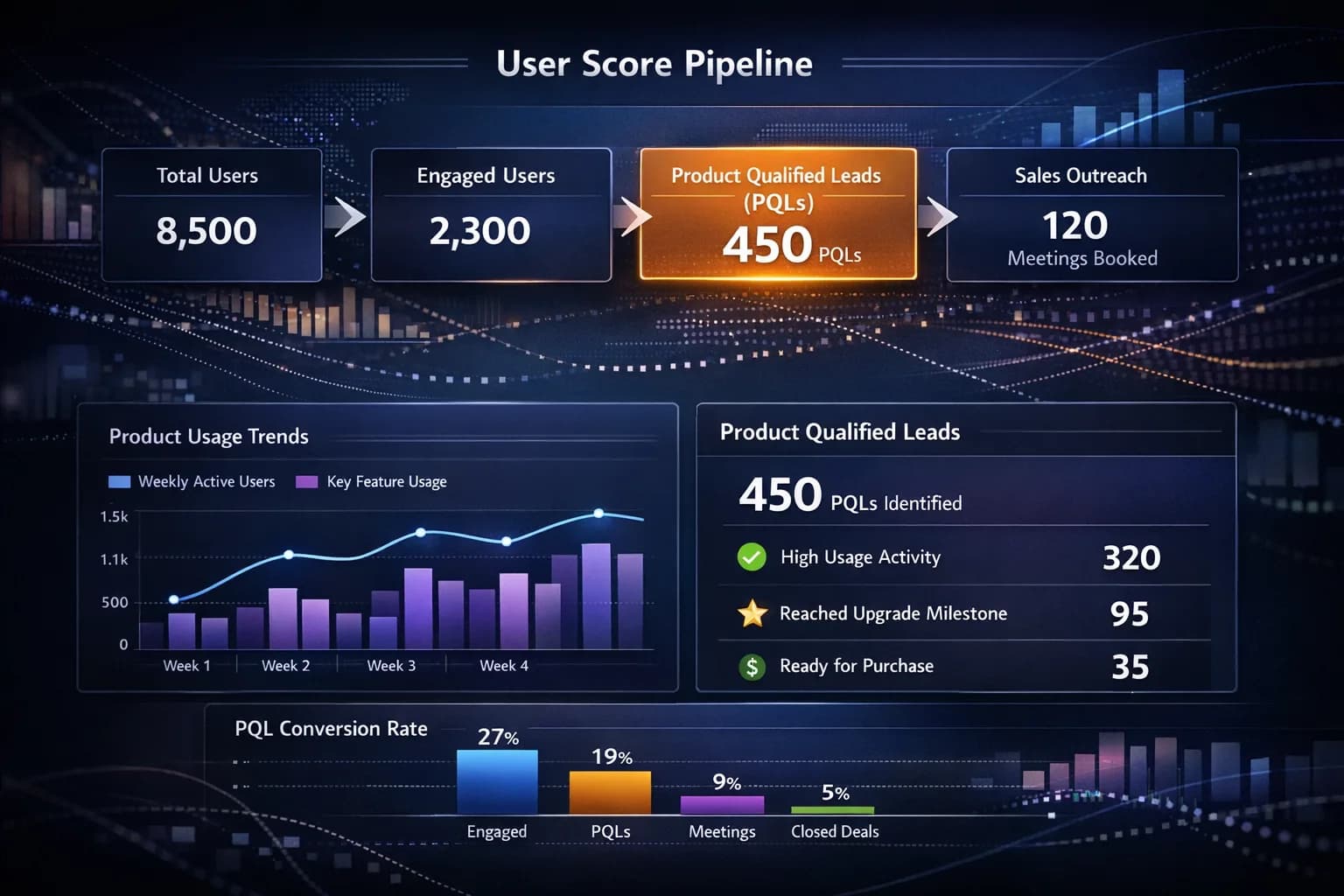
Score users based on product usage to automatically identify Product Qualified Leads (PQLs) for sales outreach.
OpenCommon questions
Lead Scoring Models: what teams ask before downloading
The templates default to 70 out of 100, but the right threshold is a capacity question as much as a quality one. If reps clear their queue daily, lower the threshold to 60 and let them work more warm leads; if hot leads wait hours, raise it. The mechanically honest approach: set the threshold so the number of leads crossing it each week matches the follow-up volume your team actually sustains.
Yes — decay and disqualifiers keep the queue honest. The B2B model subtracts points after 30 days of inactivity and supports hard disqualifiers like student email domains or competitor companies. Without decay, your sales queue fills with leads who were briefly interested a quarter ago, and reps learn to distrust the score entirely, which kills the whole system.
These templates are rules you define; the AI score is a pattern learned from your win/loss history, and it is included on every plan. Rules give you explainability — you can tell a rep exactly why a lead scored 85 — while the AI catches signals you did not think to encode. Run both columns side by side: leads where they sharply disagree are your best clue to a stale rule or a data gap.
The moment your free product generates more signups than sales can manually review — usually a few hundred a month. Before that, a simple firmographic check is enough. PQL scoring earns its setup cost when usage data exists in volume, because product behavior (inviting teammates, activating integrations) predicts conversion 5–10x better than content downloads ever will.
More categories