HelloGrowthCRM software
Built for real small-business sales teams
HelloGrowthCRM helps reps qualify faster, follow up on time, and close more deals—with practical automation in one place.
- AI lead scoring and pipeline visibility
- Built-in dialer, WhatsApp, and email automation
- Sales forecasting and RevOps-ready reporting
Sales scheduling means setting specific times and reminders for sales activities like calls, meetings, and follow-ups with prospects and customers. It helps sales teams stay organized, avoid missed opportunities, and close deals faster. This article covers why sales scheduling is important for small businesses, how to implement it step-by-step, a detailed example with calculations, common pitfalls, and how HelloGrowthCRM can assist with scheduling and tracking.
Why this comes up / what goes wrong
Small business owners often juggle multiple roles and rely on informal methods like text messages, emails, or spreadsheets to track sales activities. This can lead to slow follow-up, lost leads, and inconsistent communication. Without a clear sales schedule, it’s easy to forget to reach out at the right time or miss chances to move deals forward. Sales scheduling ensures salespeople know exactly when to contact a prospect, what stage the deal is in, and what the next action should be.
Step-by-step
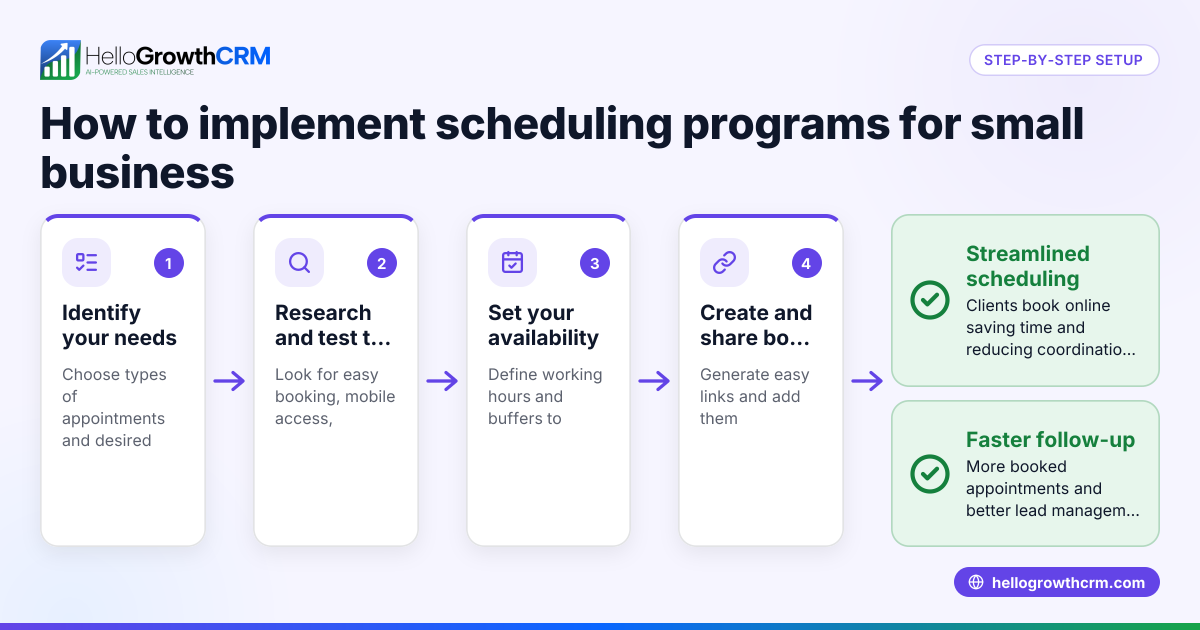
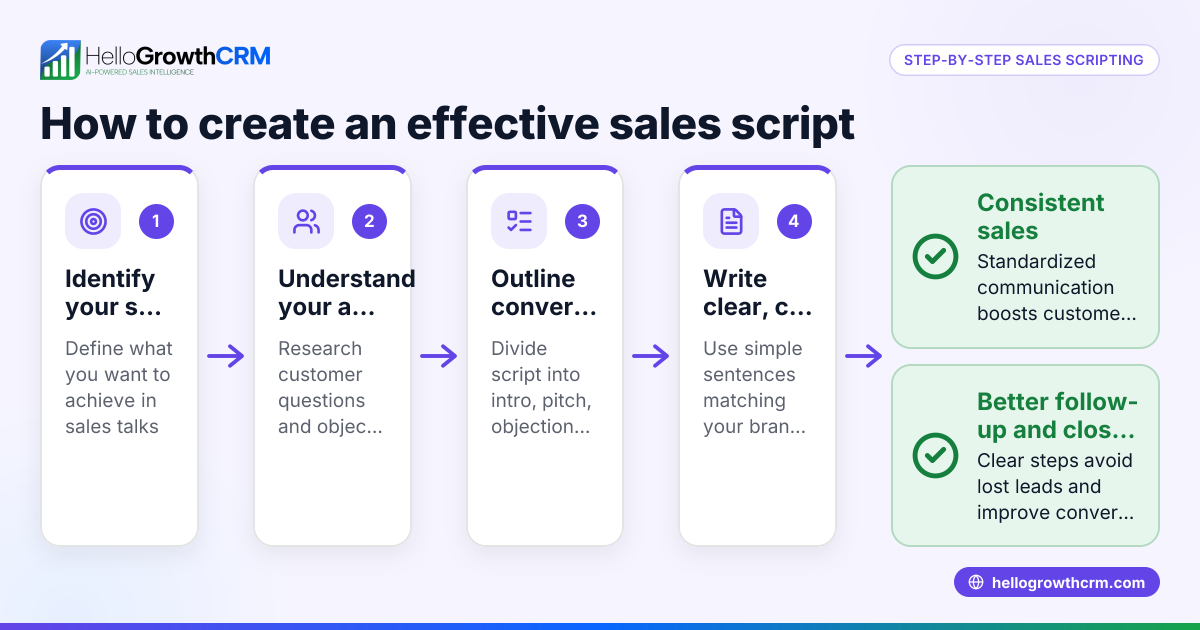
- Identify your sales activities to schedule: List all key sales actions such as initial calls, product demos, quote follow-ups, and contract reviews.
- Set clear timelines for each activity: Decide when each action should happen after a trigger event (e.g., follow up 5 days after sending a quote).
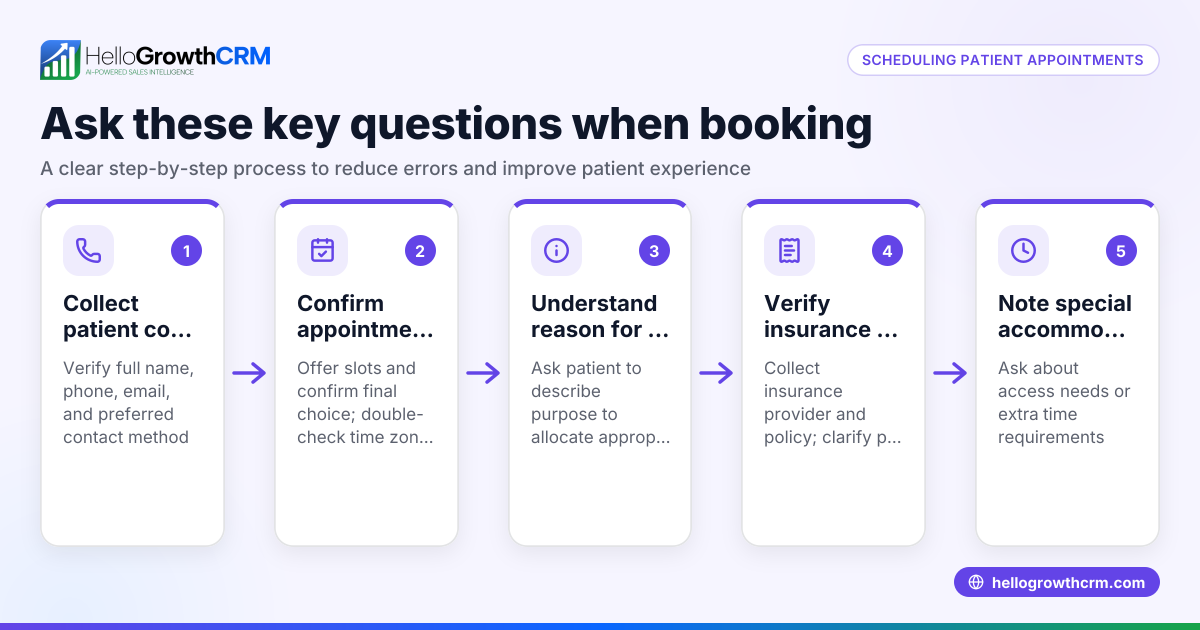
- Use a calendar or scheduling tool: Enter each activity with date, time, and details. Confirm availability of your sales reps and prospects.
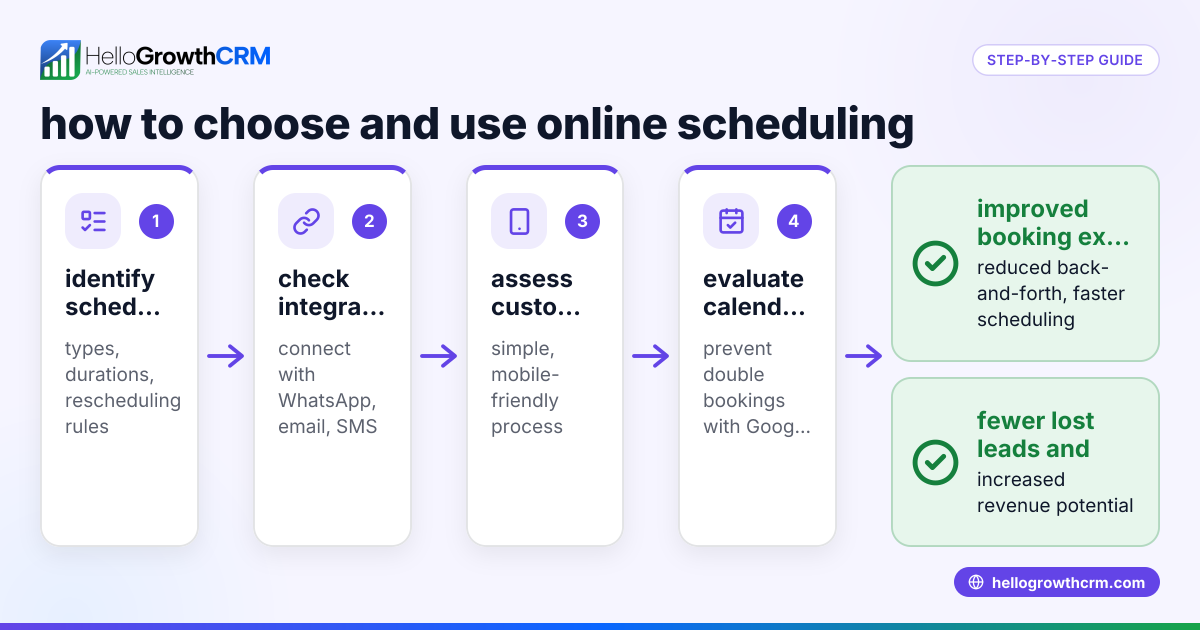
- Send scheduling links to prospects: Instead of back-and-forth emails or WhatsApp messages, provide a link where prospects can pick a meeting slot.
- Track each activity’s status and next steps: Use a pipeline or deals board to monitor progress and set reminders for follow-up.
- Review and adjust regularly: At the end of each week, check which activities were completed or missed and reschedule as needed.
For a more detailed guide on scheduling meetings efficiently, see WhatsApp and SMS CRM.
Example (fictional figures)
A plumbing company in Austin, Texas, named "Austin Pipe Solutions," sends a quote on 05/01/2026 for $12,000 to a commercial client. They schedule a follow-up call 5 days later to discuss the quote.
- Quote sent date: 05/01/2026
- Follow-up scheduled: 05/06/2026
- Deal value: $12,000
On 05/06/2026, the sales rep calls the client and confirms interest. They then schedule a site visit for 05/10/2026.
- Site visit scheduled: 05/10/2026
After the visit, the rep updates the deal stage to "site visit complete" and sets a reminder to send the contract on 05/12/2026.
This clear schedule helps Austin Pipe Solutions avoid missed follow-ups and move the deal steadily toward closing.
Calculations for timing follow-ups:
05/01/2026 + 5 days = 05/06/2026 (follow-up call)
05/06/2026 + 4 days = 05/10/2026 (site visit)
05/10/2026 + 2 days = 05/12/2026 (send contract)
Common mistakes
- Not setting specific follow-up dates: Leads get forgotten. Prevent this by always adding a follow-up date when sending quotes or demos.
- Relying on manual reminders or memory: Leads slip through cracks. Use a CRM or calendar with automated reminders.
- Back-and-forth scheduling via messages: Wastes time and frustrates prospects. Send a scheduling link instead.
- Ignoring deal stages in scheduling: Follow-ups happen too early or late. Track deals in a pipeline to time activities properly.
- Failing to review the schedule regularly: Missed opportunities pile up. Weekly reviews help adjust plans and priorities.
Learn how to avoid these with tools like the built-in CRM dialer and deal tracking features.
Doing this in HelloGrowthCRM
HelloGrowthCRM supports sales scheduling with several features:
- Deals (pipeline): When you send a quotation, it appears as a deal in the "quote sent" stage with a follow-up date to ensure it’s not forgotten.
- Scheduling and booking: Prospects can pick a meeting slot from a link, eliminating time-consuming back-and-forth on WhatsApp.
- Territories, field operations and commissions: Field sales reps log visits from their phones, and managers see the day’s planned activities, making scheduling and tracking easier.
These features help small and mid-sized businesses organize their sales activities efficiently. Learn more about HelloGrowthCRM for the United States.
Frequently asked questions
What is the best way to schedule sales meetings? Use a scheduling tool that lets prospects pick available time slots directly. This avoids endless messages and speeds up booking. Scheduling links can be shared via WhatsApp or email, as described in WhatsApp and SMS CRM.
How often should I follow up with a lead? Follow-up frequency depends on the sales cycle and deal stage. A good rule is to follow up within 3 to 7 days after sending a quote or demo. Adjust based on prospect responsiveness.
Can scheduling help improve sales team productivity? Yes. Scheduling reduces time wasted on manual coordination and missed calls. It ensures timely follow-ups and keeps deals moving, which improves overall productivity.
How do I keep track of multiple sales activities at once? Use a deals pipeline or task board that shows all open opportunities with their next scheduled activity. Deals tracking tools help monitor stages and follow-up dates in one place.
Is it possible to schedule sales visits for field reps? Yes, with territory and field operations tools, sales reps can log visits and managers can plan daily beats. This is supported in HelloGrowthCRM for distributors and field teams.
Key takeaways
- Sales scheduling means planning sales calls, meetings, and follow-ups with clear dates and times.
- Using scheduling links saves time and reduces back-and-forth communication.
- Tracking deals in a pipeline helps time follow-ups according to deal stages.
- Regularly review and adjust your sales schedule to avoid missed opportunities.
- Avoid relying on memory or manual reminders by using a CRM or calendar.
- Tools exist to support scheduling, deal tracking, and field sales management.
Start organizing your sales activities today to improve follow-up speed and win more deals. Start on the Free Forever plan (200 leads, no credit card).
Ready to put this into practice?
Set up your pipeline, WhatsApp follow-ups, and AI lead scoring in minutes — free, no credit card.
Try HelloGrowthCRM freeGet CRM tips in your inbox
Join thousands of sales professionals who get weekly insights on CRM strategy, AI automation, and pipeline optimization.

The HelloGrowthCRM team publishes guides on CRM strategy, AI sales tools, and revenue operations for small business sales teams.