Smart Lead Routing — Right Lead to the Right Rep, Instantly
Stop assigning leads manually. HelloGrowthCRM routes every new lead to the correct rep or team automatically — based on territory, industry, deal size, or round-robin — the moment they enter the CRM.
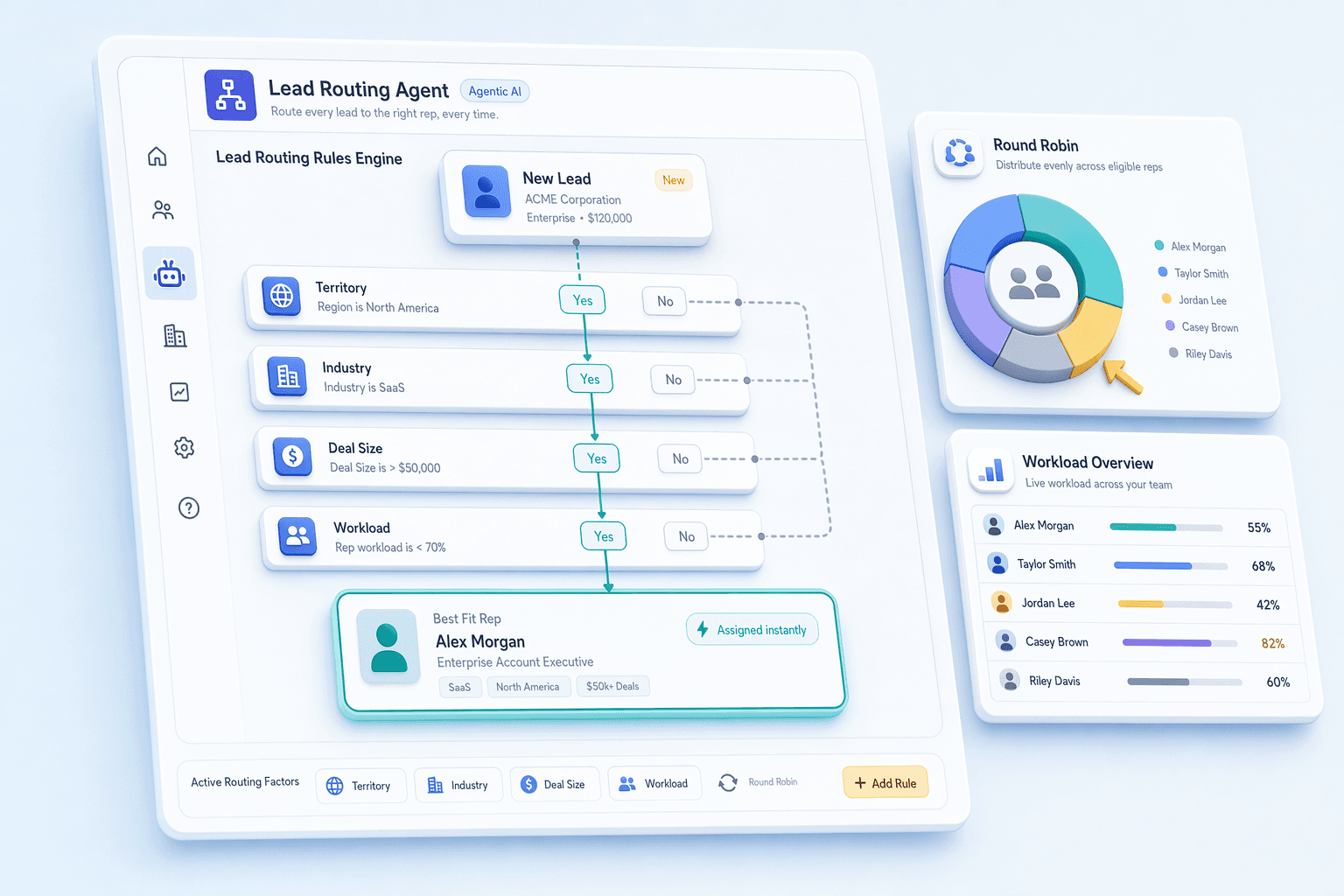
Why teams evaluate lead routing
Lead Routing usually becomes important when a repeated part of the revenue workflow is creating too much manual work, too little visibility, or too much tool-switching. Teams are rarely shopping for a feature in isolation. They are usually trying to make one meaningful workflow cleaner, faster, and easier to inspect.
That is why buyers usually look beyond the headline capability and inspect the surrounding details: Territory-based lead routing by geography or account, Round-robin assignment with capacity awareness, Skill-based routing — match lead type to rep specialization, Lead score threshold routing — only route qualified leads. Those details determine whether the feature actually improves day-to-day execution or simply adds another surface area to manage.
Where lead routing fits in the workflow
Most teams adopt this capability as part of practical motions such as territory sales teams, inside sales sdr routing, agency account distribution. The value tends to show up fastest when the workflow is tied to a clear owner, a clear next action, and a visible outcome that managers can review later.
It also matters how this page connects to the rest of the stack. For many teams, tools such as Salesforce, HubSpot Forms, Typeform, Zapier are what make the feature operational instead of theoretical because they keep data, communication, and handoffs in sync.
What a strong rollout looks like for lead routing
The best rollout usually starts small: one high-value workflow, one clear ownership model, and one review rhythm for adoption. Once the team is consistently using the feature, managers can expand into deeper automation, reporting, or cross-functional handoffs without rebuilding the foundation.
In practice, that means evaluating not only what the feature can do, but also whether the team can maintain the process around it. Ease of use, reporting trust, and manager visibility matter just as much as the feature checklist itself.
- Use it first for territory sales teams if that is the workflow creating the most friction today.
- Use it first for inside sales sdr routing if that is the workflow creating the most friction today.
- Use it first for agency account distribution if that is the workflow creating the most friction today.
- Use it first for enterprise deal escalation if that is the workflow creating the most friction today.
Key Features
Use Cases
Territory Sales Teams
Route inbound leads automatically to the rep owning that region or account.
What teams care about
- Fast adoption with less manual cleanup for managers and reps.
- Clear visibility into workflow execution, outcomes, and accountability.
- Reliable handoffs into the CRM record so downstream teams keep full context.
Deep dive
Open the sections that matter most instead of scrolling through a long uninterrupted text block.
What Is Lead Routing and Why Does It Matter?
Lead routing is the process of automatically assigning new leads to the right sales rep or team the moment they enter your CRM. Manual routing is slow, inconsistent, and loses deals because hot leads cool down while waiting for manual assignment. Smart lead routing uses territory, industry, deal size, and capacity rules to ensure every lead reaches the right rep instantly.
The best lead routing systems are fast, fair, and capable. Fast means sub-second assignment so reps can call within minutes. Fair means capacity-aware distribution so no single rep gets overloaded. Capable means the rules can express how your team actually works — territory, skill, deal size, and capacity — without code.
How Lead Routing Impacts Sales Velocity and Conversion
Speed-to-lead is one of the strongest predictors of conversion. Research shows that leads called within 5 minutes are 9x more likely to convert than leads called after 30 minutes. Smart lead routing eliminates delays caused by manual assignment, message-forwarding, and rep confusion — so leads get to the right person instantly.
Beyond speed, smart routing improves conversion because leads go to the rep most likely to win them. Territory-based routing ensures the rep knows the account. Industry-based routing ensures the rep knows the solution. Skill-based routing ensures the rep has the right specialization for that type of deal. The result is higher conversion rates and shorter sales cycles.
AI Lead Routing vs Rule-Based Assignment
Most CRM lead routing configurations rely on round-robin assignment or simple territory rules: if the lead is from Maharashtra, assign to Rep A; if from Delhi, assign to Rep B. These rules break down quickly — Rep A might already be at capacity, Rep B might have a stronger track record with manufacturing companies, and the lead might actually be a better fit for a senior enterprise rep. Rule-based routing cannot weigh these variables simultaneously. The Lead Routing Agent evaluates all of them in real time.
Machine learning-based routing uses your historical CRM data to identify which rep attributes correlate most strongly with deal close — by industry, deal size, lead source, and stakeholder title. Over time, the model learns that certain rep and lead combinations have higher conversion rates and routes accordingly, without any manual rule updates. This adaptive routing improves with every deal closed, creating a compounding advantage that simple rule systems cannot replicate.
Speed to Lead and Why It Determines Conversion
Research consistently shows that the probability of qualifying a lead drops by 10x if you wait more than 5 minutes after they first engage. The Lead Routing Agent reduces the time between a lead's first action and rep assignment to under 30 seconds — with Slack/email notification and automatic CRM task creation. This speed advantage is especially significant for inbound demo requests and free trial signups, where the lead's intent is highest immediately after they take action.
The agent also handles the edge cases that human dispatchers miss: leads that arrive outside business hours, leads from territories without a primary rep, leads that match multiple routing criteria. Instead of sitting unassigned until someone notices, these leads are routed to an on-call rep or a backup territory assignment with an alert flagging the exception. No lead falls through the cracks because of routing configuration gaps.
Lead routing is the process of automatically assigning new leads to the right sales rep or team the moment they enter your CRM. Manual routing is slow, inconsistent, and loses deals because hot leads cool down while waiting for manual assignment. Smart lead routing uses territory, industry, deal size, and capacity rules to ensure every lead reaches the right rep instantly.
The best lead routing systems are fast, fair, and capable. Fast means sub-second assignment so reps can call within minutes. Fair means capacity-aware distribution so no single rep gets overloaded. Capable means the rules can express how your team actually works — territory, skill, deal size, and capacity — without code.
Buyer playbook
Compare, launch, and govern the workflow with an interactive overview instead of four long generic essays.
How teams evaluate lead routing
The best pages help buyers understand fit quickly instead of forcing them through long walls of copy.
Check whether the product covers the capabilities you actually care about, such as Territory-based lead routing by geography or account, Round-robin assignment with capacity awareness, Skill-based routing — match lead type to rep specialization, Lead score threshold routing — only route qualified leads.
Test if it supports real execution scenarios like Territory Sales Teams, Inside Sales SDR Routing, Agency Account Distribution.
Confirm the workflow stays connected to Salesforce, HubSpot Forms, Typeform, Zapier so reporting and handoffs remain reliable.