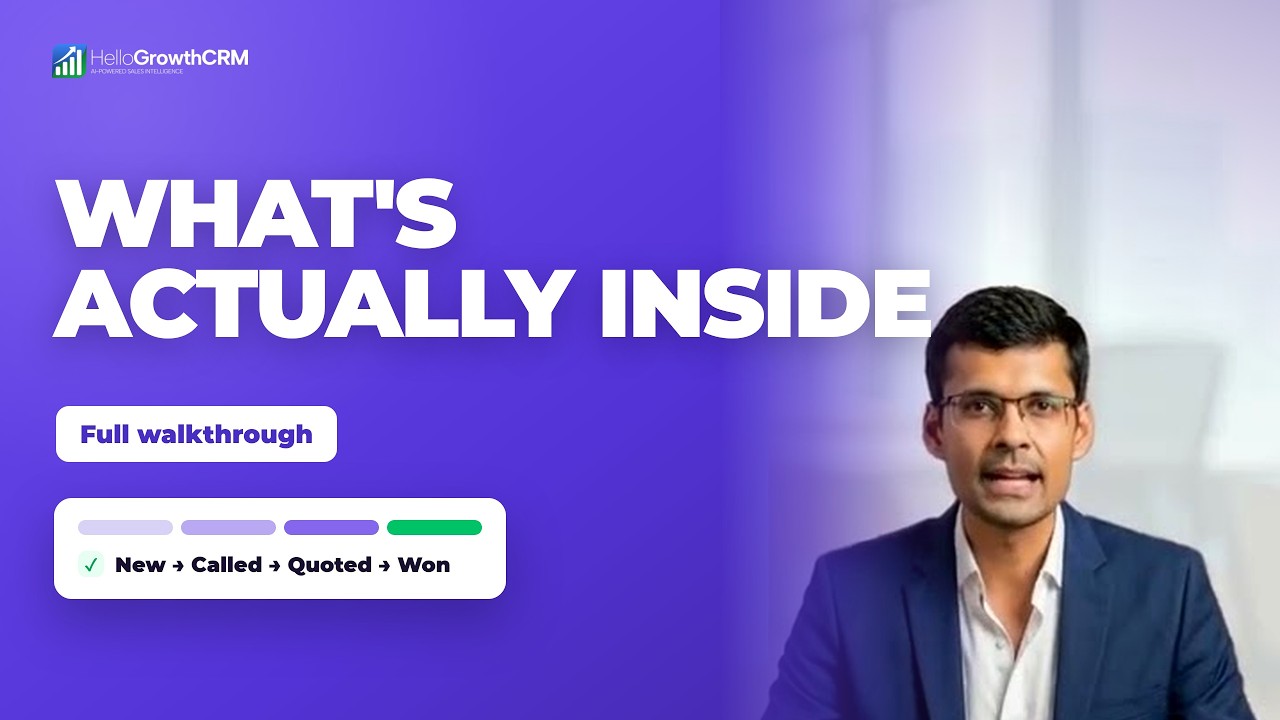
At 9 a.m., a rep at a five-person industrial supplies distributor opens the pipeline and finds overnight leads already scored — the two enquiries with the highest close probability sit at the top of the list instead of buried under forty others. A draft follow-up email is waiting for the proposal that went quiet last week; the rep edits two lines and sends it. Mid-morning, a WhatsApp enquiry about pricing gets an instant templated reply while the rep is on a call, and the conversation is logged against the right deal automatically.
After lunch, the rep makes six calls through the built-in dialer. Each one is recorded and summarised — no typing up notes, no forgetting what was agreed. By 5 p.m., the sales manager checks the forecast view: one deal has been flagged as at risk because activity dropped for ten days, so it gets a task assigned before it slips. Nothing in this day required a new tool or a separate AI product — the agents run inside the same AI CRM pipeline the team already works in, and the busiest workflows, like scoring and follow-up, are exactly where teams usually start. When you want to see the mechanics behind each action, the AI Credits reference lists every agent operation and its cost.