Competitor Tracking
Track competitor mentions across calls and conversations to improve positioning and enablement.
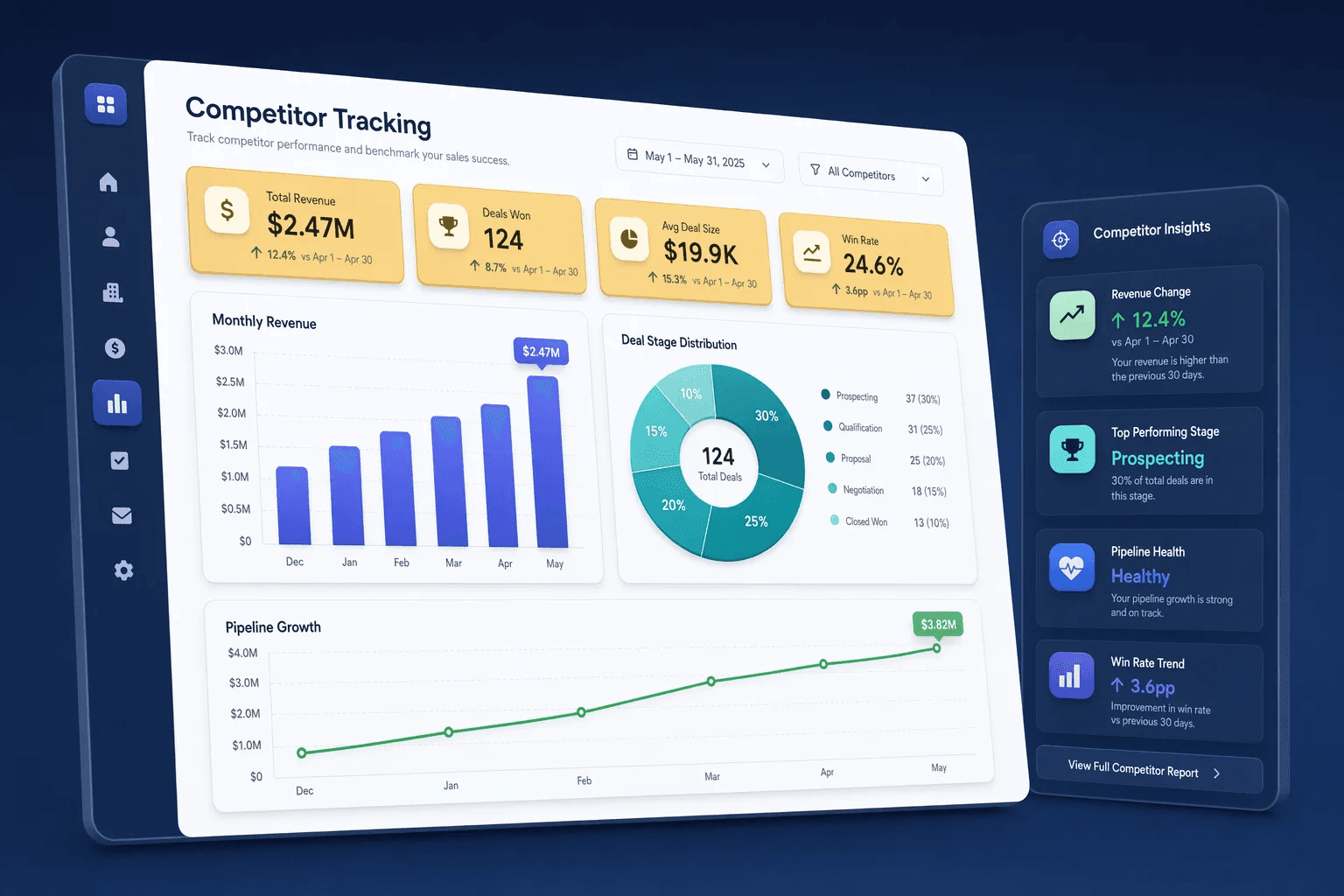


Measure what moves revenue.
Logged every day
- Calls & messages
- Deal stage changes
- Wins & losses
CRM analytics
Live dashboards
- Filter by rep, source, period
- Stage-by-stage conversion
- Trends over time
KPIs
- Win rate & conversion rate
- Sales cycle length
- Activity per rep
- Pipeline coverage & forecast
Quick navigation
Problem this feature solves
Ask a sales team who they lose to and you get anecdotes. The rep who lost a deal last week names that competitor, and the one before is forgotten. Leadership builds positioning and pricing around the loudest story. A new rival can appear in a third of conversations before anyone senior notices, because each rep has heard the name only once or twice and thought nothing of it.
- Identify which competitors show up most often
- Capture mention context from calls and notes
- Support better objection handling and battlecards
- Help leadership understand market pressure earlier
Feature interaction and workflow impact
Track competitor mentions across calls and conversations to improve positioning and enablement. This capability is part of the Analytics & Reporting category — reporting, forecasting, dashboards, and intelligence layers that help teams understand pipeline health, activity patterns, and performance trends.
Competitor Tracking counts and collects competitor mentions across calls and conversations. It identifies which competitors come up most often, and it captures the context of each mention from calls and notes, so you can read what the prospect actually said: that the rival is cheaper, or has a feature, or is already in use elsewhere in the company. Frequency tells you who you are really up against. Context tells you why. Together they are the raw material for battlecards and objection handling that reflect real conversations. Because mentions accumulate over time, leadership can see pressure from a competitor building earlier than win and loss numbers would show it. The tracking depends on mentions being captured, so calls need to be transcribed or noted, and competitor names kept consistent.
More in Analytics & Reporting
Explore the other 9 capabilities in this category.
This is useful when your team is deciding whether the current feature is enough on its own or whether the broader category is the real buying unit. In many CRM rollouts, the surrounding workflow matters as much as the individual capability.
Analytics Dashboard
Advanced analytics with conversion funnels and caller performance reporting for revenue teams.
Activity Heatmap
Visual heatmaps show when team activity is highest so leaders can spot effective windows and gaps.
Pipeline Forecasting
Forecast revenue and analyze pipeline trends to predict outcomes, gaps, and risk earlier.
Dashboard
Main dashboard providing a daily overview of performance, tasks, activity, and key metrics.
Goal & Quota Tracking
Set, monitor, and report on individual and team quotas to keep revenue targets visible and accountable.
Win Rate & Deal Velocity
Track how often deals close and how fast they move so teams find bottlenecks and improve conversion.
Rep Performance & KPI Dashboards
Track every rep's activity KPIs — calls, emails, deals moved, follow-ups completed — with leaderboards and coaching flags.
Growth Audit (Guided Funnel Audit)
Free guided growth audit — answer a short chat about your business and funnel and get a scored report with prioritised recommendations.
Call Insights & Sentiment Analysis
Analyse every call for sentiment, talk ratio, competitor mentions, and objection patterns — across your entire team.
Explore all feature categories
HelloGrowthCRM includes 119 capabilities across 14 categories.
Where teams use Competitor Tracking
Common ways teams put this capability to work.
Updating a battlecard
The three objections prospects most often attach to one competitor are pulled from mention context and answered in a one-page guide.
Noticing a new entrant
A name that did not appear last quarter now shows up regularly, prompting a look at what they are offering.
Pricing discussions
Leadership reads how often price is the reason a competitor is mentioned before deciding on a discount policy.
Competitor Tracking FAQs
Where do mentions come from?
From calls and conversations, with context captured from calls and notes.
What does it tell us beyond a count?
The context of each mention, which is what explains why a competitor is being considered.
Is this a win/loss report?
No. It tracks mentions during the sale. The win/loss report records outcomes and reasons after it. They are best read together.
How do we keep the data clean?
Agree one spelling per competitor and ask reps to name the competitor in their call notes when one comes up.
Ready to use Competitor Tracking?
Get started free — no credit card required.
← Back to Analytics & Reporting · All feature categories · Pricing