Communication & Outreach
Calling, messaging, email, chat, and attribution tools that help revenue teams engage leads without leaving the CRM.
23
Communication & Outreach features
Featured workspace
Built-in Phone Dialer (Twilio-Powered)
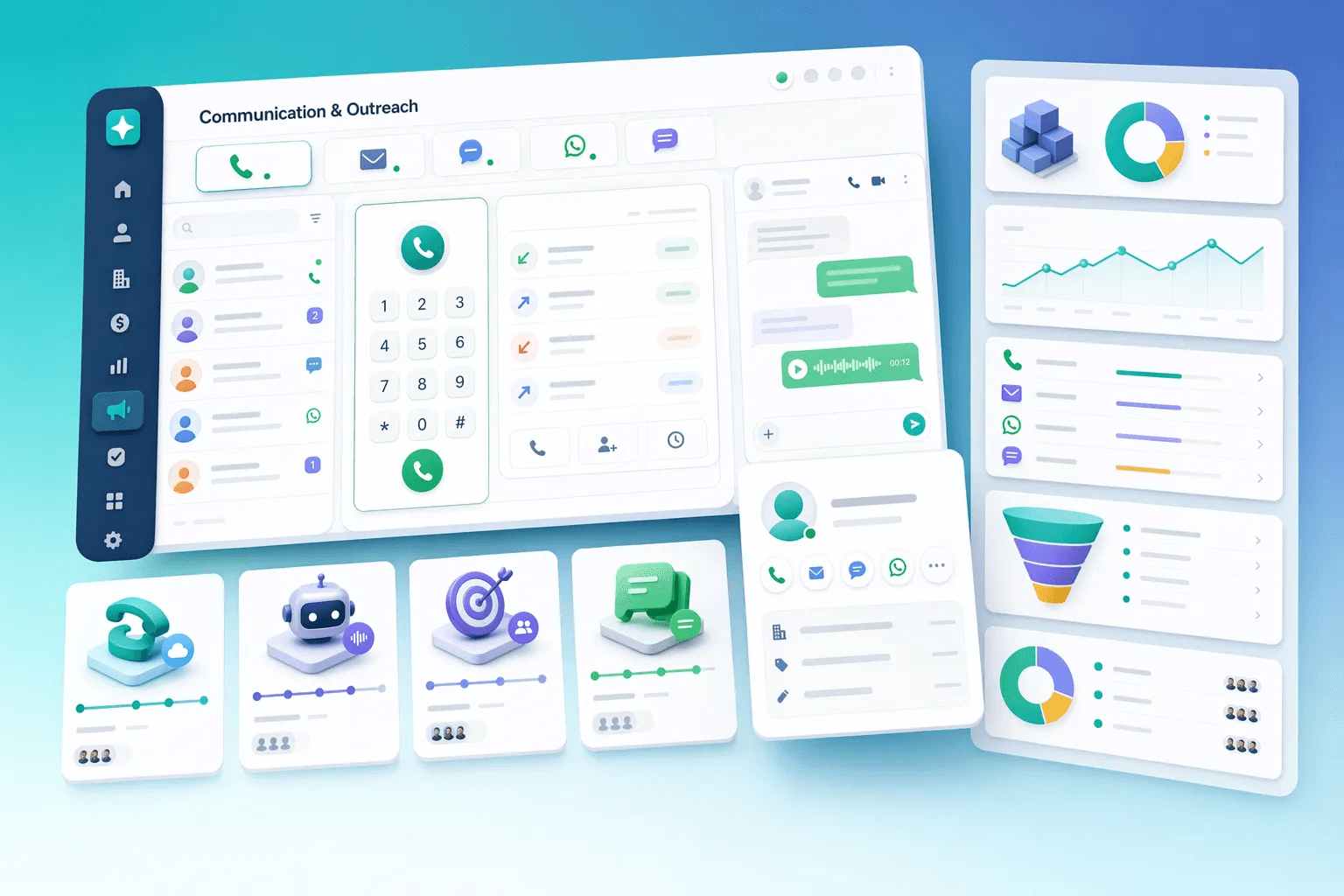
How teams use communication & outreach
Teams usually review communication & outreach when they want to improve a specific operating motion, not just add another isolated feature. In practice, that means turning related capabilities such as Built-in Phone Dialer (Twilio-Powered), AI Voice Agent (ElevenLabs + Twilio), Cold Call Campaigns, SMS Messaging into one clearer workflow that reps, managers, and operators can actually use every day.
For most buyers, the real question is how this category changes execution. Common evaluation paths include respond faster to hot leads, run mobile-first follow-up, scale outbound campaigns, where the value comes from cleaner ownership, faster next steps, and better visibility into what should happen after each customer interaction.
A strong rollout usually starts with one high-value use case, then expands into reporting, automation, and team inspection once adoption is consistent. That is why this category page groups related modules together first and then links into deeper feature pages for more specific evaluation.
Communication infrastructure has become the defining surface of modern CRM operations. The vendor whose CRM bundles dialer, WhatsApp, email, SMS, and meeting scheduling natively into one workflow has structurally different unit economics from the vendor whose CRM requires bolting on separate calling tool, separate messaging app, separate email-sequence platform. For most growing teams, this stack consolidation alone justifies a CRM migration — even before considering the deal-management features that originally motivated the search.
Channel mix in B2B sales has shifted decisively away from email-only outreach toward multi-channel sequences that match the channel to the buyer's actual preferences. The reps performing best in 2026 are running cadences that include WhatsApp for first-touch, calling for substantive conversations, email for documentation, and LinkedIn for warm reactivation — all sequenced and tracked in the CRM rather than juggled across separate tools. The communication-and-outreach feature category exists to make this multi-channel discipline operationally tractable for teams without RevOps headcount.
Quality and quantity of outbound activity are easier to measure when the activity flows through CRM-integrated channels. Email open and click rates, WhatsApp read receipts, call connect rates and talk-time distributions, meeting-show rates by source — all become queryable metrics that inform coaching and capacity decisions. Teams running outbound through separate tools lose this visibility entirely, and the loss compounds: without metrics, coaching defaults to opinion, and capacity planning defaults to gut feel.
Explore modules
Communication & Outreach features
Pick a module to see details, workflows, and how it fits into the CRM.


Common use cases
Where teams use communication & outreach
Practical workflows built from the features in this category, grouped around the outcomes teams usually care about first.
Use these examples to decide whether you need one focused capability or a broader category rollout. In most teams, adoption improves when the first workflow is concrete and tied to a measurable operational problem rather than a broad feature wish list.
Respond faster to hot leads
Blend calls, WhatsApp, SMS, and email from the CRM timeline instead of switching tools.
See workflowRun mobile-first follow-up
Use WhatsApp and SMS for reminders, reactivation, collections, and quick buyer replies.
See workflowScale outbound campaigns
Queue cold calls, bulk messages, and email touchpoints while keeping ownership visible.
See workflowCapture website conversations
Convert visitors through chat and lead-capture workflows that feed sales follow-up.
See workflowSuggested workflow
Turn features into a working motion
Start with a focused setup, connect the next action, and expand once the team has a repeatable rhythm.
Step 1
Start with the core workflow
Use Built-in Phone Dialer (Twilio-Powered) as the first workspace so the team has one clear place to begin.
Step 2
Connect the next action
Layer in AI Voice Agent (ElevenLabs + Twilio) to turn the workflow into repeatable daily execution.
Step 3
Scale what works
Use Cold Call Campaigns to refine adoption, coaching, and team visibility as usage grows.
All Your Customer Communication in One Place
HelloGrowthCRM's Communication & Outreach module brings every channel your sales and customer success teams use — WhatsApp, email, phone calls, SMS, and in-app chat — into a single unified platform. Reps manage conversations, run outreach sequences, make calls, and log every interaction without switching between a dialer, a WhatsApp app, an email client, and the CRM. Context is always one click away.
Indian sales teams operate across a uniquely diverse channel mix. Enterprise buyers prefer email; SME owners respond best on WhatsApp; field sales runs on phone calls. A CRM that handles only one channel forces reps to maintain parallel records, miss follow-ups, and operate without a complete picture of the customer relationship. HelloGrowthCRM's multi-channel design ensures that no matter how a conversation starts, the full history is in one record — accessible by the whole team.
Key Capabilities
- Unified Inbox: All incoming WhatsApp messages, emails, and chat requests appear in one inbox sorted by priority and recency. Reps never need to check multiple apps or tabs to stay on top of conversations.
- WhatsApp Business Integration: Send and receive WhatsApp messages natively inside HelloGrowthCRM using the official Meta Business API. Manage templates, broadcasts, catalog shares, and individual conversations in one place.
- Built-In CRM Dialer: Make and receive calls directly from any contact or deal record. Calls are auto-logged with duration, outcome, and optional recording. No external dialer required.
- Email Sequencing: Build multi-step email sequences triggered by pipeline stage, lead score, or time. Track opens, clicks, and replies — and automatically stop sequences when a prospect replies.
- Bulk SMS Campaigns: Send transactional or marketing SMS to segmented lists. Merge fields personalise each message. Delivery and click reports are available per campaign.
- Multi-Channel Sequences: Combine email, WhatsApp, SMS, and call tasks in a single outreach sequence. Each step triggers based on the previous outcome — automatically adapting the cadence to how the prospect responds.
- Team Inbox & Assignment Rules: Route incoming conversations to the right rep based on source, contact owner, language, product interest, or round-robin. SLA alerts escalate unanswered messages to the supervisor.
- Consent & DND Compliance: DND numbers are filtered automatically from SMS outreach. WhatsApp and email consent is tracked per contact with timestamp. DPDPA-compliant consent collection templates are included.
How Indian Teams Use It
- B2B Enterprise Sales: A Hyderabad enterprise SaaS company runs a 7-step outreach sequence combining email, WhatsApp, and call tasks. Cold leads get 2 emails before a WhatsApp. Warm leads that opened the email get a direct call. The sequence runs automatically — reps only engage when a prospect replies or picks up.
- Financial Services Customer Onboarding: A mutual fund distributor uses the unified inbox to manage WhatsApp KYC conversations alongside email document collection. Both channels are logged to the client record — giving compliance teams a complete communication trail for regulatory audits.
- D2C Post-Purchase Engagement: An e-commerce brand uses HelloGrowthCRM to send WhatsApp order confirmations, delivery updates, and review requests automatically. Replies flow into the same inbox the customer service team monitors — giving them full order and conversation context without switching systems.
Frequently Asked Questions
- What communication channels does HelloGrowthCRM support?
- HelloGrowthCRM supports WhatsApp Business (via official Meta API), email (Gmail, Outlook, custom SMTP), telephony (built-in dialer, SIP trunk, and cloud providers), SMS, and in-app chat. All channels are managed from a single inbox so reps never switch between apps.
- Can I run multi-channel outreach sequences in HelloGrowthCRM?
- Yes. HelloGrowthCRM's sales automation lets you build sequences that combine email, WhatsApp, SMS, and call tasks in a single workflow. For example: Day 1 email, Day 2 WhatsApp follow-up, Day 4 call task for rep, Day 7 re-engagement email. Each step triggers automatically based on the previous step's outcome.
- Does HelloGrowthCRM log all communication activity to the contact record?
- Yes. Every email sent or received, every WhatsApp message, every call (with duration and recording if enabled), and every SMS is logged automatically to the contact's activity timeline. Reps and managers always have full communication history without manual note-taking.
- How does HelloGrowthCRM handle outreach compliance for Indian privacy laws?
- HelloGrowthCRM includes DPDPA-compliant consent tracking. You can capture and log WhatsApp consent, email opt-ins, and phone consent. DND (Do Not Disturb) numbers are automatically filtered from SMS and call outreach. Consent status is visible on every contact record.
All communication channels are included from the Starter plan. See pricing. Dive deeper into WhatsApp CRM or email automation. Learn how insurance teams manage multi-channel outreach.