HelloGrowthCRM software
Built for real small-business sales teams
HelloGrowthCRM helps reps qualify faster, follow up on time, and close more deals—with practical automation in one place.
- AI lead scoring and pipeline visibility
- Built-in dialer, WhatsApp, and email automation
- Sales forecasting and RevOps-ready reporting
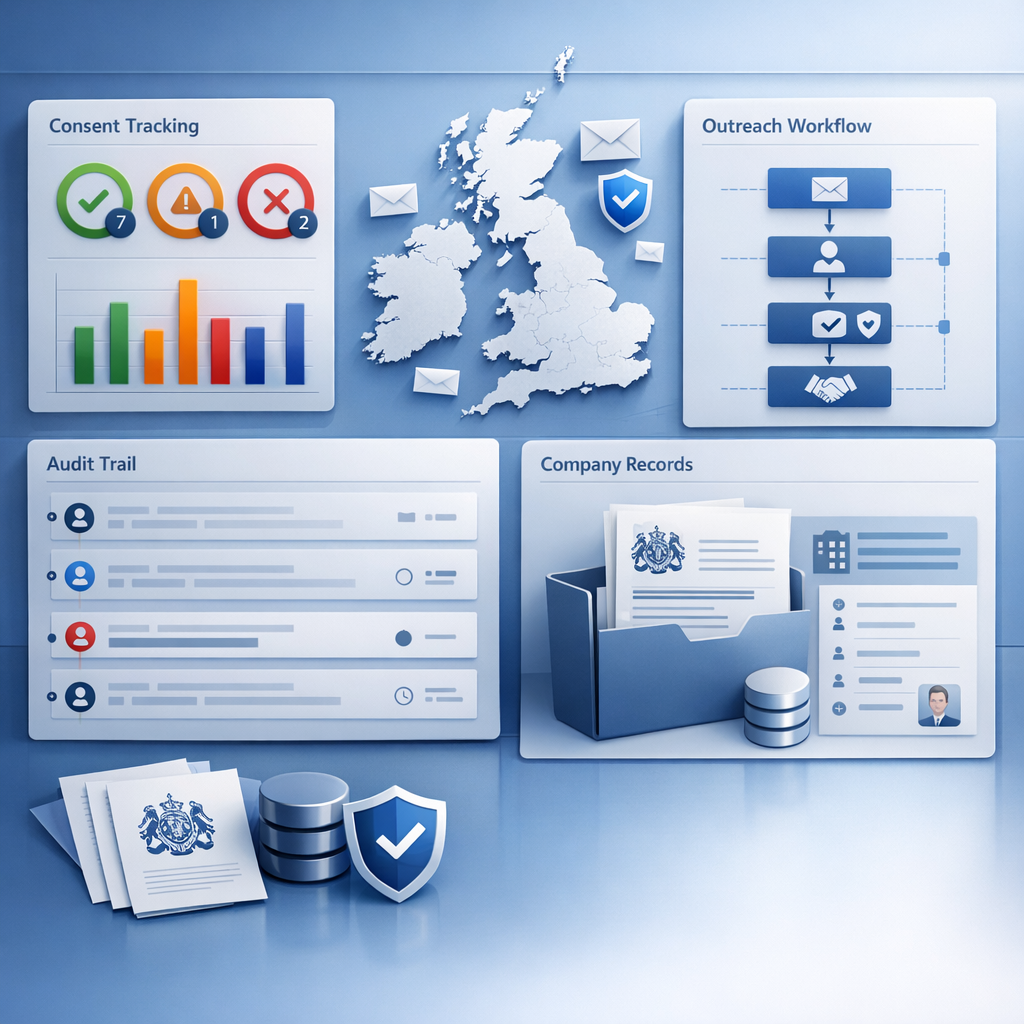
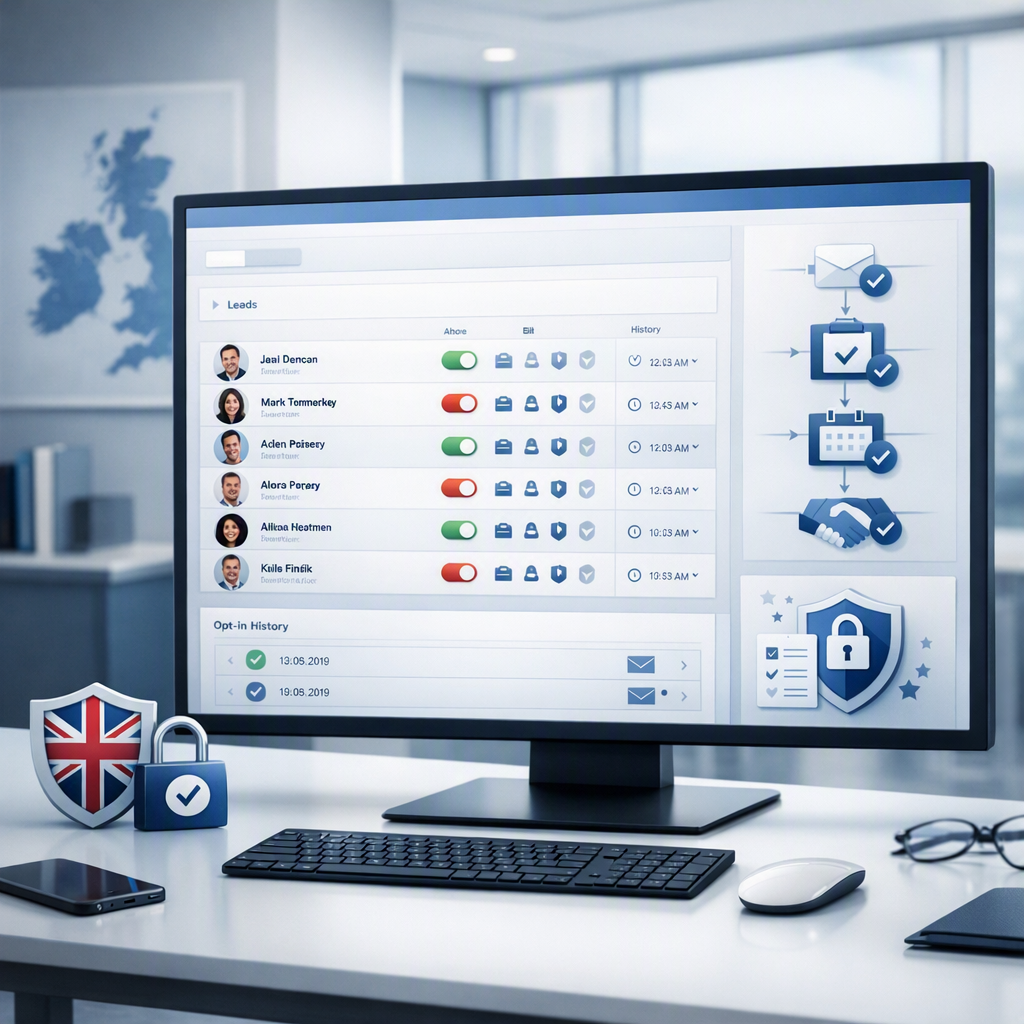
HelloGrowthCRM consent tracker template UK is a ready-to-use CRM workflow for British B2B teams that records lawful basis, marketing consent, cookie and channel preferences, and audit trails in one place, helping sales and marketing teams work in line with ICO guidance, PECR, UK GDPR, and the Data Protection Act 2018.
Key Takeaways
- HelloGrowthCRM gives UK teams a practical consent tracker template inside the CRM, not a separate spreadsheet.
- The template logs lawful basis, opt-in status, suppression rules, source, timestamp, and change history for each contact.
- Companies House data can support compliant B2B enrichment when used carefully and tied to a clear purpose.
- PECR, UK GDPR, and ICO guidance affect email marketing, cookies, and how you document contact preferences.
- HelloGrowthCRM reporting helps London, Manchester, and Birmingham teams spot consent gaps before campaigns go live.
- British teams can start with a low-risk rollout using Free Trial, then expand to automation and audits.
What is the HelloGrowthCRM consent tracker template for UK B2B teams?
HelloGrowthCRM consent tracker template for UK B2B teams is a prebuilt CRM setup that helps businesses capture, store, update, and report on consent and lawful basis data for every lead and customer record, so teams can market and sell with better control, clearer evidence, and less compliance risk.
In plain terms, this template turns consent management into an everyday CRM process. Instead of chasing consent status across inboxes, forms, and spreadsheets, your team stores it against the contact and company record.
For UK B2B teams, that matters because rules are split across a few areas:
- UK GDPR for lawful processing and accountability
- The Data Protection Act 2018 as the UK’s main data protection law
- PECR for email, SMS, and cookies
- ICO guidance on direct marketing and consent
The UK government explains the UK GDPR framework at GOV.UK, while the regulator gives direct marketing guidance through the ICO.
Inside HelloGrowthCRM, the consent tracker template works well alongside AI CRM, Email Automation, Smart Inbox, and WhatsApp & SMS CRM. That means you can apply preferences at the point of action, not after the send.
Why this matters for commercial teams
Sales and marketing teams often assume compliance is only a legal task. In practice, it is an operations task too. When I have audited pipelines like this for UK SaaS firms, the biggest problem was not bad intent. It was fragmented data and no shared source of truth.
A consent tracker template fixes three common issues:
- reps do not know who can be emailed
- marketers cannot prove where consent came from
- managers cannot audit changes over time
That is why the template is product-led. It is designed to live in the same system where campaigns, tasks, and follow-ups happen.
Which consent and preference fields should a UK CRM template include?
A UK CRM consent template should include fields for lawful basis, marketing consent status, communication channel preferences, source, capture method, timestamp, policy version, suppression reason, and audit history, because those fields let teams prove what was collected, why it was collected, and how preferences changed over time.
At a minimum, your HelloGrowthCRM template should include these contact-level fields:
| Field | Type | Example value | Why it matters |
|---|---|---|---|
| Lawful basis | Dropdown | Legitimate interests | Shows the basis for processing |
| Email marketing consent | Dropdown | Opted in / Opted out / Not set | Controls sends |
| SMS/WhatsApp consent | Dropdown | Opted in | Supports channel rules |
| Cookie preference source | Text | Website banner | Links web preference context |
| Consent source | Dropdown | Form / Call / Event / Import | Proves origin |
| Consent capture date | Date-time | 2026-03-12 10:42 | Creates audit evidence |
| Privacy notice version | Text | v3.2 | Shows notice presented |
| Suppression status | Checkbox | True | Blocks future sends |
| Suppression reason | Dropdown | Unsubscribed / Complaint | Supports governance |
| Last preference update | Date-time | 2026-04-01 09:14 | Tracks changes |
| Evidence URL or note | Text | Landing page URL | Adds traceability |
| Data source | Dropdown | Companies House / Web form | Distinguishes enrichment source |
You can then pair those fields with Sales Task Boards for review queues and Revenue Attribution to connect compliant acquisition to pipeline outcomes.
Recommended company-level fields
Company records need their own data model too, especially in B2B:
- Company registration number
- Companies House status
- SIC code
- Registered office region
- Data enrichment source
- Enrichment refresh date
- Account-level suppression flag
This helps separate company facts from personal marketing permissions. That distinction matters when you enrich account data but still need care with individual contacts.
How do ICO, PECR, and UK GDPR apply to B2B outreach in HelloGrowthCRM?
ICO, PECR, and UK GDPR apply to B2B outreach in HelloGrowthCRM by setting rules for when and how you can contact people, what lawful basis you rely on, how you respect opt-outs, and how well you document those decisions inside your CRM and campaign workflow.
For most teams, the practical question is simple: “Can we contact this person through this channel for this purpose, and can we prove why?” Your template should answer that before any send.
The ICO states that organisations must comply with specific rules on electronic marketing under PECR and data protection law more broadly through UK GDPR and the Data Protection Act 2018, as outlined in its guidance on direct marketing.
Email and SMS rules in practice
For B2B teams, the main operational controls are:
- identify the channel used
- log whether consent is needed or another lawful basis is being relied on
- keep suppression records
- make opt-out action immediate
- avoid using one preference across all channels without checking
In one rollout we did with a 12-person sales team in London, the fastest win was adding channel-level statuses instead of a single “marketing consent” field. That cut manual list cleaning before campaigns and reduced internal disputes about who could be contacted.
Cookie and web form capture
If your consent starts on the website, your CRM should capture:
- form submission source
- cookie banner or preference centre status where relevant
- privacy notice version shown
- UTM and landing page details
- timestamp and IP logs if your web stack stores them
That data can be passed into HelloGrowthCRM via Zapier, Gmail, or All Integrations, then used in workflows and suppression logic.
Can Companies House data be used as a compliant B2B enrichment source?
Companies House data can be used as a compliant B2B enrichment source when it is limited to a clear business purpose, mapped to account records carefully, and combined with lawful processing controls, because public company data does not remove your responsibility to handle personal data fairly and transparently.
This is where many teams get sloppy. Public does not mean unrestricted. Companies House is a strong source for account enrichment, but you still need governance if personal data appears in a record.
Companies House provides official UK company information through its public service at Companies House.
Best uses for Companies House data in HelloGrowthCRM
Use Companies House data mainly for company-level enrichment, such as:
- registered company name
- company number
- incorporation date
- status
- registered office
- filing status
- SIC classification
These fields help with routing, segmentation, territory planning, and account qualification. They also work well with Territory Management, AI Lead Scoring, and AI Pipeline Management.
Important limitations
Be careful if a workflow pulls in named directors or other personal details. You should document:
- why that data is needed
- how long it is kept
- who can access it
- whether it is relevant to the sales process
This works especially well for teams under 50 reps. Above that, expect to need tighter governance, role permissions, and regular audits. If you need a more hands-on operating model, Managed RevOps is the safer route.
How HelloGrowthCRM structures consent tracking better than spreadsheets
HelloGrowthCRM structures consent tracking better than spreadsheets by linking consent fields, workflow rules, campaign suppression, contact history, and reporting inside one system, which reduces manual errors and gives teams an auditable trail that can actually be used during daily sales and marketing work.
A spreadsheet can list statuses. It cannot reliably enforce them during outbound activity. That is the key difference.
HelloGrowthCRM template vs spreadsheet tracking
| Capability | HelloGrowthCRM consent tracker template | Spreadsheet |
|---|---|---|
| Contact-level preferences | Native fields on records | Manual columns |
| Channel suppression | Automated in workflows | Manual filtering |
| Audit trail | Time-stamped activity history | Often incomplete |
| Form and source capture | Connected from integrations | Manual entry |
| Reporting by team or region | Built-in views and dashboards | Hard to maintain |
| Permission controls | CRM user roles | Weak |
| Campaign enforcement | Works with Email Automation | External process |
| Scaling across teams | Strong | Fragile |
In Manchester and Birmingham teams I have worked with, spreadsheet consent logs usually failed at the same point: handoffs between marketing and SDRs. A rep exported a list, a marketer used an older version, or an opt-out sat in an inbox for two days. A shared CRM removes that lag.
Reporting views that matter
Useful dashboard views include:
- contacts with missing lawful basis
- opted-out contacts touched in the last 30 days
- new leads from web forms without notice version
- Companies House-enriched accounts missing contact preference status
- campaign-ready segments by channel and region
You can build these views alongside Pipeline Health Score and the CRM ROI Calculator to connect compliance work to pipeline outcomes.
How to set up the HelloGrowthCRM consent tracker template: Step-by-Step
Setting up the HelloGrowthCRM consent tracker template means creating the right fields, connecting data sources, applying workflow rules, and building audit-friendly reports so your UK B2B team can capture lawful basis, preference changes, and enrichment history without slowing down sales execution.
- Create core consent fields
Add contact and company fields for lawful basis, channel preference, source, timestamp, notice version, suppression status, and enrichment source inside Features. - Define your status values
Standardise dropdown values like Opted in, Opted out, Not set, Suppressed, and Review needed. Keep labels simple so reps in London, Manchester, and Birmingham use them consistently. - Separate company data from personal permissions
Store Companies House facts at account level. Store contact permissions at person level. This avoids mixing public company data with individual marketing preferences. - Connect your lead capture sources
Sync forms, inboxes, and calendars using tools like Calendly, Google Meet, and Slack where needed. - Add workflow rules for suppression
Build rules so opted-out contacts are excluded automatically from Email Automation and follow-up sequences. This is where a CRM beats a spreadsheet. - Log evidence automatically
Capture source URL, timestamp, campaign ID, and form name in hidden or system fields. If a rep updates preferences after a call, log the reason in the activity note. - Create a review queue
Use Sales Task Boards to flag contacts with missing lawful basis, stale preferences, or unclear enrichment records for manual review. - Build compliance dashboards
Create views by owner, region, and channel. Include counts for missing data, suppressed contacts, and recently updated preferences so managers can audit weekly. - Test with a small team first
Start with one pod or region. In one implementation with a 20-user team, we piloted only web-form and outbound-email records for two weeks before adding events and partner leads. - Roll out and train
Give reps short examples, not policy decks. Show them when to update a preference, when to stop outreach, and where to see the audit trail on the record.
Example field logic for UK teams
A simple setup often works best:
- If Email marketing consent = Opted out, exclude from marketing sends
- If Lawful basis is blank, mark as Review needed
- If Data source = Companies House, require account owner review before activation
- If preference updated, stamp date-time and user automatically
For advanced teams, AI Sales Copilot and AI Deal Insights can surface missing data during pipeline reviews without forcing managers to run manual audits.
What should UK B2B teams budget for a consent-ready CRM setup?
UK B2B teams should budget for a consent-ready CRM setup by planning not only for software cost in GBP, but also for field design, workflow setup, training, and periodic audits, because compliance value comes from operational discipline as much as from the tool itself.
If you are evaluating options, budget for four parts:
- CRM subscription
- implementation time
- integration effort
- internal governance
For small and mid-sized teams, a practical buying path is to start with a Demo, validate the field model, then review Pricing against the number of users and required workflows.
A simple budgeting view
For many UK B2B teams, the real savings come from avoiding:
- duplicate sends
- manual list cleaning
- missed unsubscribes
- poor data quality across teams
The Data Protection Act 2018 is the UK’s framework law for data protection and works alongside UK GDPR obligations, as summarised by GOV.UK.
A product-led setup also means less custom build work later. If you want to test fit fast, use a Free Trial and build one live dashboard before committing to a wider rollout.
British teams that need one place to track lawful basis, preferences, suppression, and Companies House enrichment should try HelloGrowthCRM. It gives sales, marketing, and RevOps a shared system of record, stronger reporting, and practical controls that fit day-to-day work across the UK. Start with a Free Trial or book a Demo to see the consent tracker template in action.
About the author
James Carter is a Sales Operations Lead at HelloGrowthCRM with 10 years of experience in B2B SaaS revenue operations. He has led CRM, lifecycle, and compliance data projects for UK commercial teams ranging from seed-stage startups to multi-region scaleups. One project that informed this article was a consent and suppression redesign for a 12-person London sales team that moved preference tracking from spreadsheets into the CRM and cut manual campaign checks significantly.
Frequently Asked Questions
Q: What is the HelloGrowthCRM consent tracker template UK used for?
A: The HelloGrowthCRM consent tracker template UK is used to record lawful basis, marketing consent, channel preferences, and audit history for B2B contacts and accounts in one CRM workflow. It helps British teams manage outreach with better evidence and fewer manual checks.
Q: Does HelloGrowthCRM help with PECR and UK GDPR compliance?
A: Yes, HelloGrowthCRM helps with PECR and UK GDPR compliance by giving teams structured fields, suppression rules, and reporting views that support better process control. It does not replace legal advice, but it makes day-to-day compliance work easier to manage.
Q: Can I use Companies House data in HelloGrowthCRM?
A: Yes, you can use Companies House data in HelloGrowthCRM for company enrichment when you have a clear business purpose and proper controls around personal data. It is best used for account-level details like company number, status, and registered office information.
Q: What fields should a UK consent tracker include?
Frequently Asked Questions
Ready to put this into practice?
Set up your pipeline, WhatsApp follow-ups, and AI lead scoring in minutes — free, no credit card.
Try HelloGrowthCRM freeGet CRM tips in your inbox
Join thousands of sales professionals who get weekly insights on CRM strategy, AI automation, and pipeline optimization.

The HelloGrowthCRM team publishes guides on CRM strategy, AI sales tools, and revenue operations for small business sales teams.