HelloGrowthCRM software
Built for real small-business sales teams
HelloGrowthCRM helps reps qualify faster, follow up on time, and close more deals—with practical automation in one place.
- AI lead scoring and pipeline visibility
- Built-in dialer, WhatsApp, and email automation
- Sales forecasting and RevOps-ready reporting
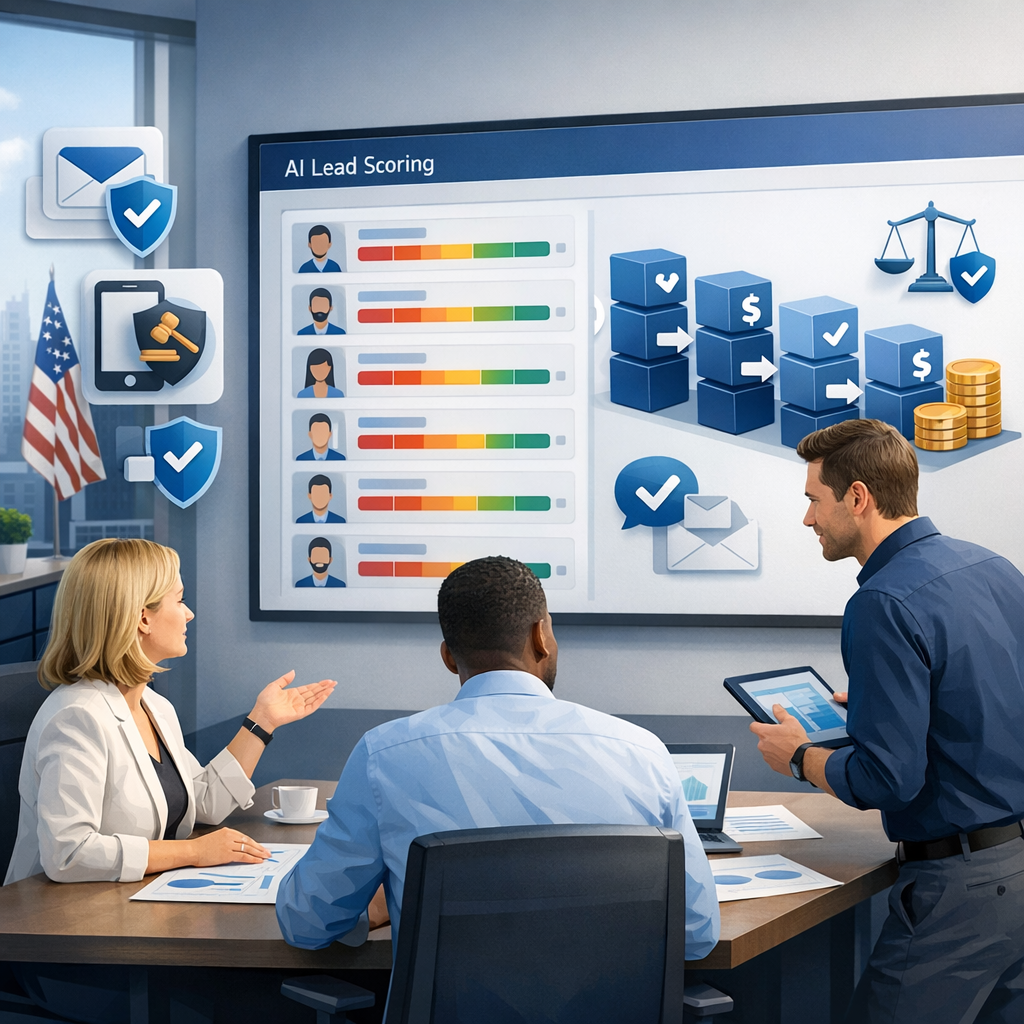
AI lead scoring for UK B2B CRM is the practice of using machine learning inside a customer relationship management platform to rank prospects by likelihood to convert, combining behavioural activity, firmographic data from sources like Companies House, and consent‑compliant signals under UK GDPR and PECR to prioritise sales outreach.
Key Takeaways
- AI lead scoring ranks B2B prospects automatically using behaviour, firmographic data, and engagement signals.
- UK teams can enrich leads with Companies House data such as industry, director history, and company size.
- Compliance matters: UK GDPR, the Data Protection Act 2018, and PECR shape how scoring signals are collected and used.
- AI scoring helps sales teams in cities like London and Manchester focus on high‑intent prospects faster.
- Modern CRMs like HelloGrowthCRM combine AI scoring, automation, and compliant communication workflows.
What Is AI Lead Scoring in a UK B2B CRM?
AI lead scoring in a UK B2B CRM is the automated process of evaluating and ranking leads based on behavioural activity, company data, and engagement signals using machine learning models that predict conversion likelihood while respecting UK GDPR, PECR, and lawful data processing standards.
Traditional lead scoring assigns manual points. For example, marketing teams might add:
- +10 points for downloading a whitepaper
- +20 points for booking a demo
- +5 points for opening three emails
This works at small scale. It fails once pipelines grow.
AI lead scoring replaces manual scoring with predictive modelling. The system analyses patterns across past deals and learns which attributes correlate with closed revenue.
For B2B teams in the UK, the most useful signals typically combine three categories:
1. Behavioural signals
These show intent.
Examples include:
- Website visits to pricing or integration pages
- Repeated visits from the same domain
- Webinar attendance
- Email reply behaviour
- Meeting bookings
In HelloGrowthCRM, these signals feed automatically into AI Lead Scoring, where models analyse engagement patterns alongside historical pipeline data.
2. Firmographic signals from Companies House
Firmographic data helps qualify the company itself.
Companies House publishes official company information including directors, filing history, and registered address through the UK government registry.
Official company information is publicly accessible through the UK government’s registry at Companies House.
Useful fields for scoring include:
- Company age
- Industry classification (SIC codes)
- Director turnover
- Registered office location
- Filing status
In one rollout I ran for a London SaaS vendor, we weighted company age and SIC codes heavily because deals closed 2.3× more often with established firms in target industries.
3. Engagement signals from CRM activity
These show how the buying process progresses.
Examples:
- Sales call frequency
- Proposal views
- Meeting attendance
- Response time to follow-ups
Platforms with integrated tools like a CRM Dialer, Meeting Scheduler, and Smart Inbox capture these signals automatically.
The combination of these data layers produces a far more reliable lead score than manual point systems.
Why UK B2B Sales Teams Use AI Lead Scoring
UK B2B sales teams use AI lead scoring to prioritise the highest‑intent prospects, shorten sales cycles, and align marketing and sales around measurable buying signals while remaining compliant with UK GDPR and PECR regulations governing electronic marketing and personal data use.
The core problem is simple: most pipelines are bloated.
When I audit pipelines for growing SaaS teams, I often see:
- 60–70% of leads are unqualified
- Sales reps chase low‑intent prospects
- Marketing sends follow-ups that sales ignores
AI scoring fixes this by ranking leads objectively.
AI prioritisation improves pipeline efficiency
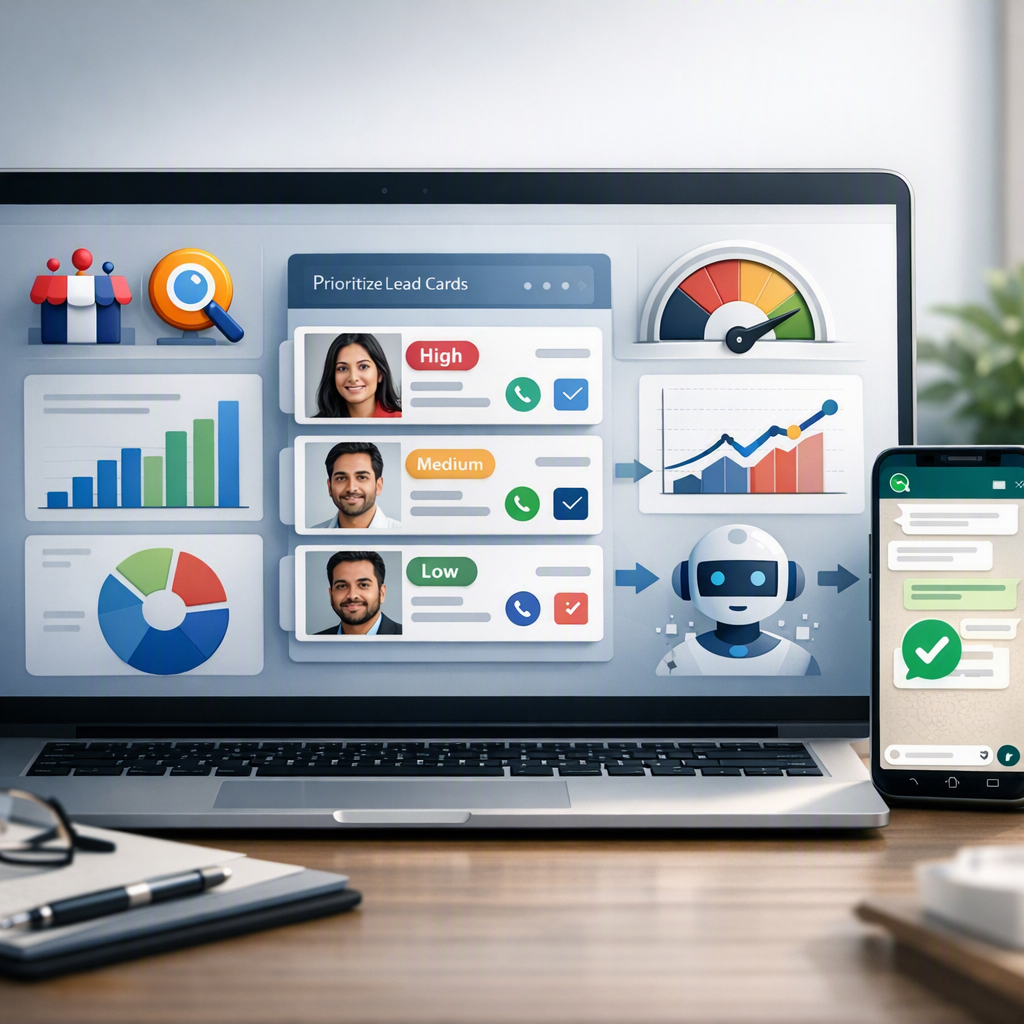
Sales teams can instantly see which prospects deserve attention.
For example:
- Score 90+: demo request, high-fit company, multiple visits
- Score 70–89: strong engagement, ideal firmographic match
- Score below 50: early interest or low-fit organisation
Tools like AI Pipeline Management use these scores to surface the deals most likely to close.
Marketing and sales share a single scoring model
Marketing campaigns often optimise for leads, while sales cares about revenue.
AI scoring bridges this gap by training models on actual closed deals.
This means the scoring system learns:
- which industries convert
- which lead sources close fastest
- which behaviours predict buying intent
In one Manchester rollout with a 12‑person sales team, we retrained the scoring model using two years of closed‑won deals. Within two quarters, average opportunity qualification time dropped by nearly 30%.
AI scoring feeds automation
Once a score crosses a threshold, automation can trigger actions:
- Assign lead to a sales rep
- Start a follow-up sequence
- Send a meeting booking link
- Alert the sales manager
This works especially well when combined with Email Automation and Sales Task Boards.
Using Companies House Data for Lead Scoring
Companies House data strengthens AI lead scoring by providing authoritative firmographic information such as industry classification, company age, director records, and filing history, allowing UK B2B CRMs to identify higher‑quality companies before sales teams spend time on outreach.
Unlike scraped datasets, Companies House information is an official government registry.
This makes it a trusted enrichment source.
Key fields used in AI lead scoring
Several Companies House attributes correlate strongly with B2B buying behaviour.
Common scoring inputs include:
- SIC codes – Industry classification helps match your ideal customer profile
- Company age – Established firms often have larger budgets
- Number of directors – Signals company scale
- Registered location – Helpful for territory management
- Filing status – Late filings may indicate financial instability
In HelloGrowthCRM, enriched company records can feed scoring models automatically while also supporting Territory Management.
Combining Companies House with behavioural signals
Firmographics alone do not indicate purchase intent.
The best models combine:
- company fit
- behavioural activity
- engagement timing
Example scoring formula:
Lead score components:
- 40% behavioural signals
- 35% firmographic match
- 25% engagement recency
This hybrid approach works better than static qualification frameworks.
Using Companies House for enrichment workflows
A typical enrichment workflow looks like this:
- Lead submits website form
- CRM matches company name
- Companies House data enriches the record
- AI scoring updates the lead score
- Automation triggers next action
When connected with tools like Revenue Attribution, teams can track which company segments actually generate revenue.
Staying Compliant with UK GDPR and PECR
UK B2B AI lead scoring must comply with the UK GDPR, the Data Protection Act 2018, and PECR rules governing electronic marketing, meaning organisations must collect lawful data, maintain transparent processing purposes, respect consent where required, and avoid automated decisions that produce unfair or unexplained outcomes.
Compliance is not optional.
The UK regulator enforces strict rules.
The Information Commissioner’s Office (ICO) oversees data protection enforcement in the UK through guidance and regulatory powers.
https://ico.org.uk/
Key compliance principles for lead scoring
When building scoring systems, ensure you follow these principles:
- Lawful basis for processing
- Data minimisation
- Transparency about data usage
- Fair automated decision-making
Official UK GDPR guidance is published by the government at:
https://www.gov.uk/data-protection
PECR and electronic marketing
PECR regulates:
- cold emails
- SMS marketing
- automated calling
Sales teams must ensure marketing messages follow consent or soft opt‑in rules depending on the context.
This matters when automating follow‑ups.
For example:
- Sending unsolicited marketing emails may breach PECR
- Follow‑ups to existing business contacts may fall under legitimate interest
Practical compliance controls inside a CRM
Modern AI CRMs support compliance through built‑in controls:
- consent tracking
- suppression lists
- audit logs
- opt‑out automation
For example, communication channels inside WhatsApp & SMS CRM can enforce opt‑out rules automatically.
AI Lead Scoring vs Manual Lead Scoring
AI lead scoring differs from manual scoring because machine learning models analyse historical deal outcomes and behavioural patterns to predict conversion probability, whereas manual scoring assigns fixed point values based on predefined rules that rarely adapt to real buying behaviour.
Manual scoring was designed for smaller pipelines.
AI scoring adapts continuously.
| Feature | Manual Lead Scoring | AI Lead Scoring |
|---|---|---|
| Scoring method | Fixed rules | Machine learning models |
| Data inputs | Limited fields | Behaviour + firmographics + engagement |
| Adaptability | Static | Learns from closed deals |
| Accuracy | Often subjective | Data‑driven predictions |
| Automation | Limited | Fully automated prioritisation |
Where manual scoring still works
Manual scoring is fine when:
- pipelines are under 200 leads
- sales teams are under five reps
- product pricing is low
Beyond that scale, manual scoring breaks quickly.
When AI scoring becomes essential
AI scoring becomes valuable when:
- lead volume increases
- sales cycles become complex
- multiple data sources exist
That is why AI scoring integrates naturally with tools like AI Deal Insights and AI Sales Copilot.
How to Implement AI Lead Scoring in a UK B2B CRM: Step‑by‑Step
Implementing AI lead scoring in a UK B2B CRM involves combining behavioural tracking, Companies House enrichment, compliance controls, and machine‑learning models trained on historical deal outcomes to automatically prioritise leads and trigger compliant sales workflows.
- Define your ideal customer profile
- Integrate enrichment sources
- Capture behavioural signals
- Train the scoring model
- Set score thresholds
- Automate follow‑ups
- Monitor pipeline performance
Real‑world automation workflow example
Here is a common automation flow used by UK B2B SaaS teams:
- Lead visits pricing page three times
- CRM identifies company via domain
- Companies House data enriches record
- AI score rises above 80
- System assigns lead to a London sales rep
- AI schedules follow‑up email
- Sales rep receives task notification
I implemented a similar workflow for a Manchester fintech startup. The result was fewer cold calls and significantly more meetings booked with qualified companies.
CTA: Try AI Lead Scoring with HelloGrowthCRM
If your team spends too much time chasing unqualified leads, AI lead scoring can change how your pipeline works. HelloGrowthCRM combines behavioural tracking, Companies House enrichment, and automated workflows in one platform built for UK B2B teams.
You can explore the platform through the AI CRM, review the full Features, or start with a live Demo. British sales teams can also start quickly with a no‑risk Free Trial.
About the author
Daniel Mercer is a Revenue Operations Lead at HelloGrowthCRM with 11 years of experience building B2B sales infrastructure for SaaS companies. He specialises in CRM architecture, lead scoring models, and revenue attribution. Earlier in his career he led a RevOps rebuild for a London fintech firm that processed over 120,000 inbound leads annually, which directly informed the workflows described in this article.
Frequently Asked Questions
Q: What is AI lead scoring in a UK B2B CRM?
A: AI lead scoring in a UK B2B CRM is the use of machine learning to rank leads by their likelihood to convert using behavioural engagement, firmographic company data, and CRM interactions while complying with UK GDPR and PECR rules. It helps sales teams focus on the most promising prospects first.
Q: Is Companies House data legal to use for lead scoring?
A: Yes, Companies House data is legal to use for lead scoring because it is publicly available company information published by the UK government. However, organisations must still follow UK GDPR principles such as lawful processing, transparency, and data minimisation.
Q: How accurate is AI lead scoring compared with manual scoring?
A: AI lead scoring is typically more accurate than manual scoring because it learns from historical deal outcomes and behavioural patterns instead of relying on fixed rules. Over time the model improves as more pipeline and conversion data becomes available.
Q: Does UK GDPR restrict AI lead scoring?
A: UK GDPR does not prohibit AI lead scoring, but it requires organisations to process data lawfully, explain automated decision-making where relevant, and avoid unfair profiling. Companies must also respect transparency, data minimisation, and legitimate interest guidelines.
Q: What signals should be included in AI lead scoring?
A: The best AI lead scoring models combine behavioural signals such as website activity, firmographic data from sources like Companies House, and engagement data like email replies or meeting bookings to create a more accurate prediction of buying intent.
Q: How long does it take to implement AI lead scoring?
A: Most B2B teams can implement AI lead scoring within a few weeks if their CRM already captures behavioural and pipeline data. The longest step is usually preparing historical deal data to train the scoring model effectively.
Q: Can small UK sales teams use AI lead scoring?
A: Yes, small sales teams can use AI lead scoring, especially if they receive many inbound leads. Even a five‑person sales team can benefit from automated prioritisation and follow‑up workflows inside modern AI‑driven CRM systems.
Q: Which CRM features work best with AI lead scoring?
A: AI lead scoring works best alongside behavioural tracking, email automation, pipeline analytics, and engagement tools such as CRM dialers or meeting schedulers. These systems generate the signals needed for accurate predictive scoring.
Frequently Asked Questions
Ready to put this into practice?
Set up your pipeline, WhatsApp follow-ups, and AI lead scoring in minutes — free, no credit card.
Try HelloGrowthCRM freeGet CRM tips in your inbox
Join thousands of sales professionals who get weekly insights on CRM strategy, AI automation, and pipeline optimization.

The HelloGrowthCRM team publishes guides on CRM strategy, AI sales tools, and revenue operations for small business sales teams.