HelloGrowthCRM software
Built for real small-business sales teams
HelloGrowthCRM helps reps qualify faster, follow up on time, and close more deals—with practical automation in one place.
- AI lead scoring and pipeline visibility
- Built-in dialer, WhatsApp, and email automation
- Sales forecasting and RevOps-ready reporting
Introduction to AI Sales Forecasting
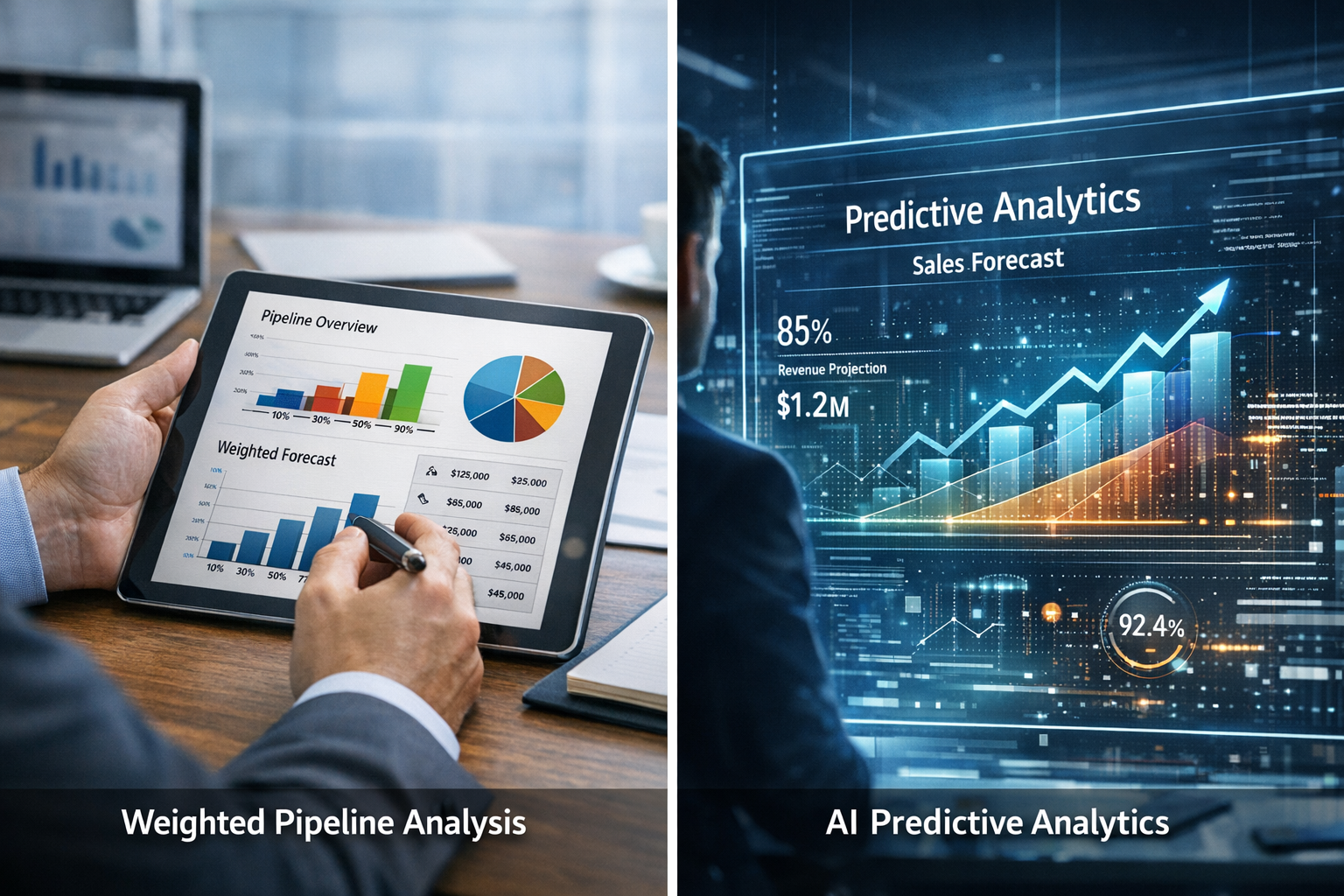
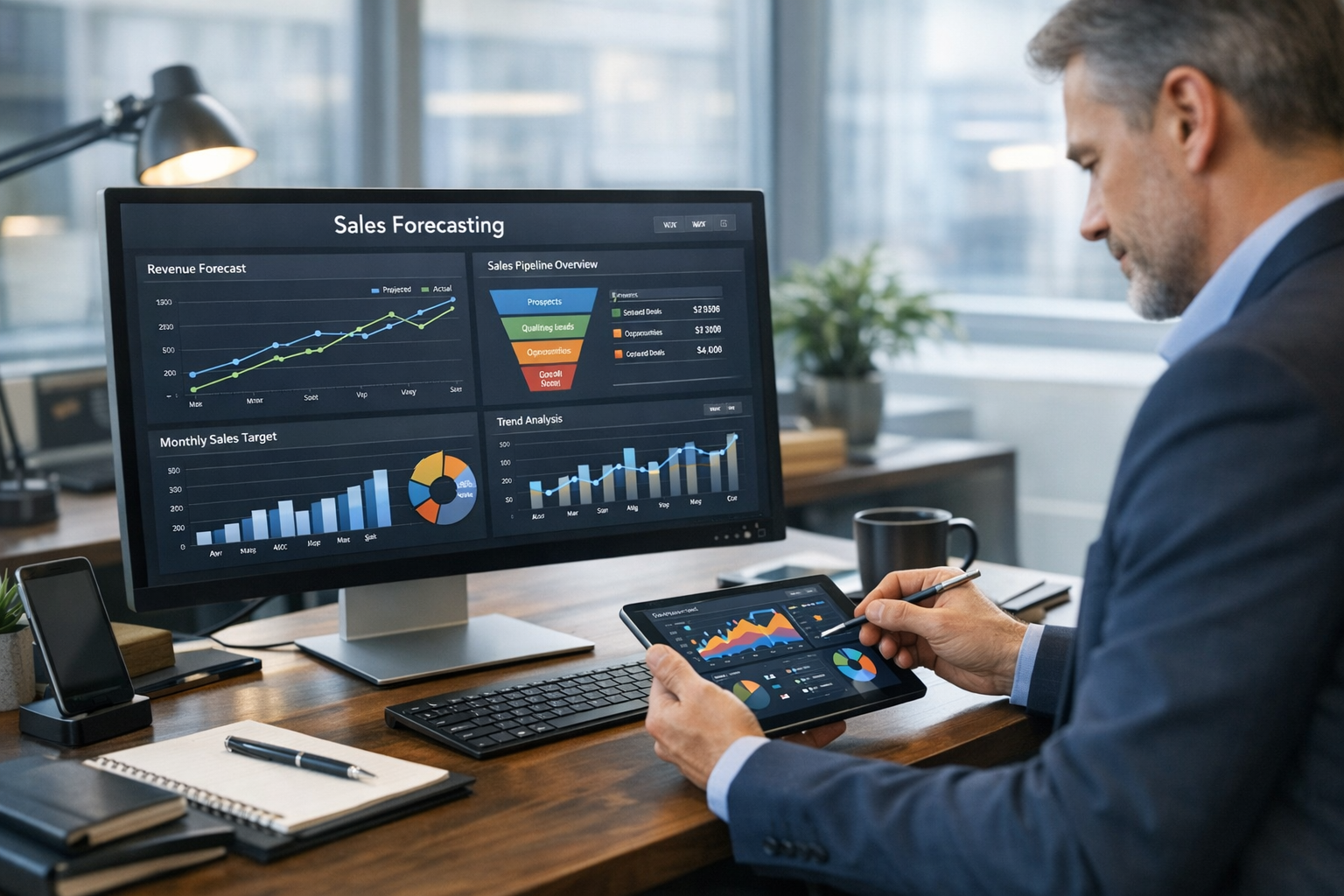
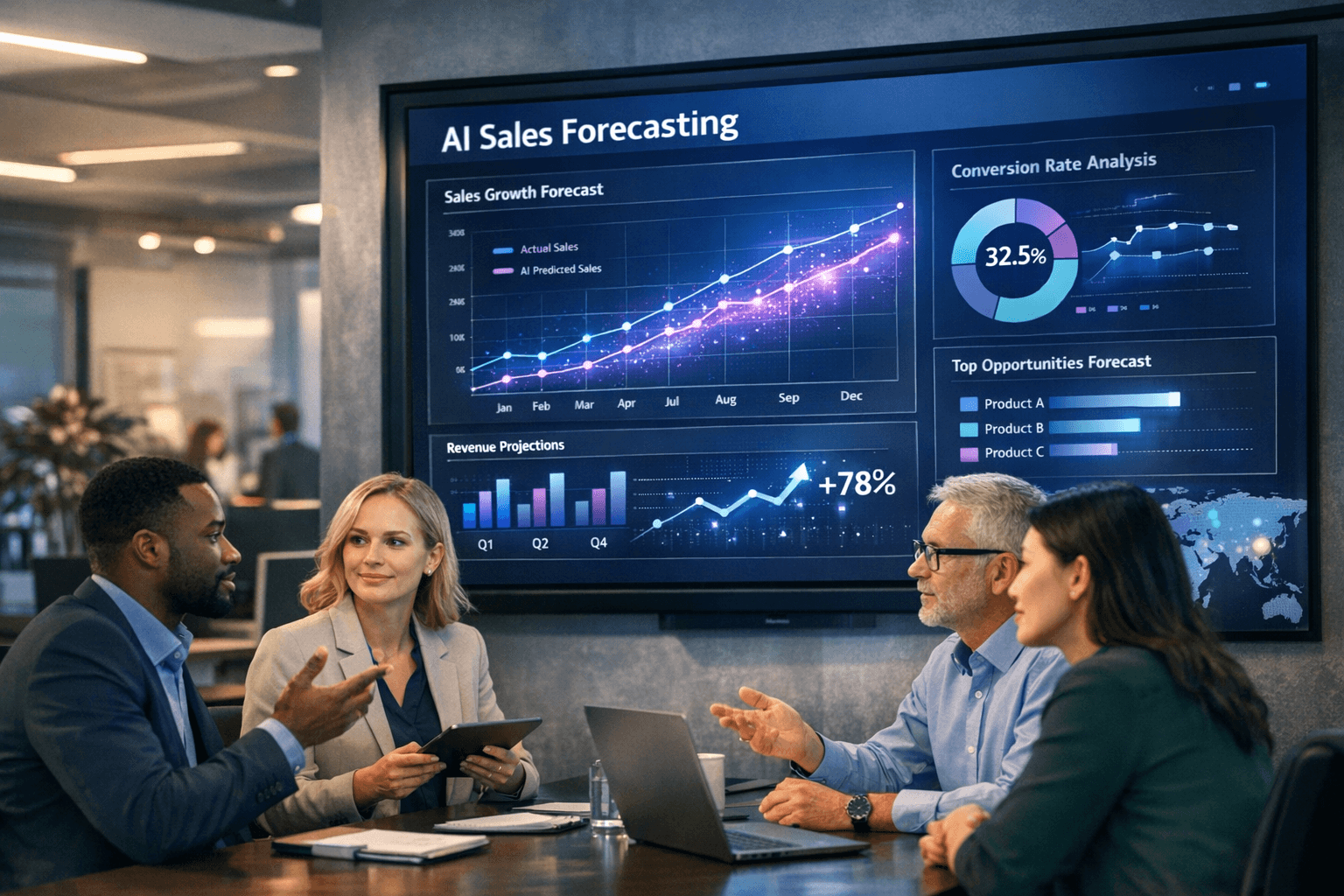
Sales forecasting is critical for any business aiming to grow and succeed. Traditionally, sales teams relied on intuition and past experiences to predict future sales. This method, often based on opinions, can lead to inaccuracies and missed opportunities. In contrast, AI sales forecasting uses data-driven algorithms to provide more accurate predictions, enabling businesses to make better decisions.
Understanding AI Sales Forecasting
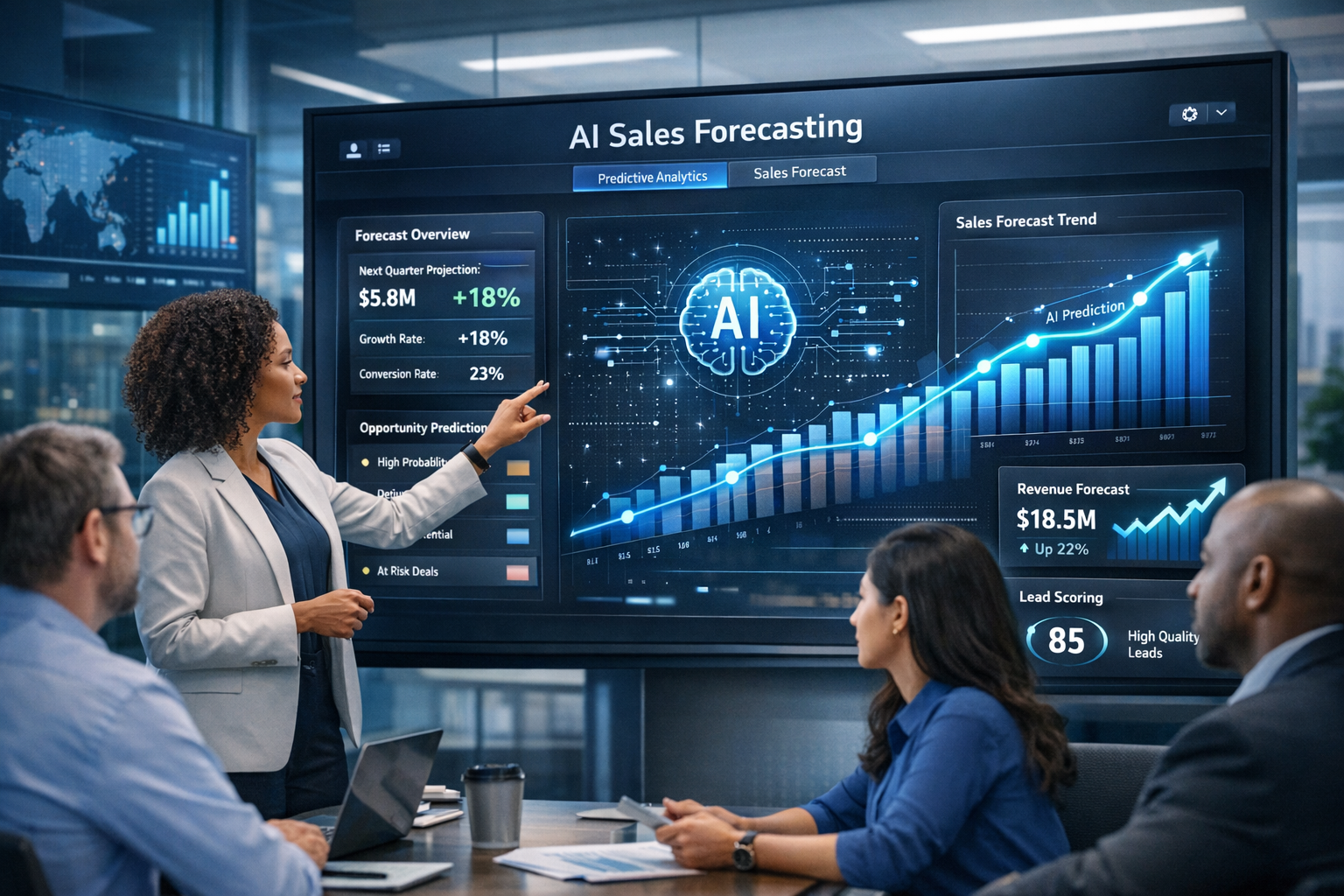
AI sales forecasting involves using artificial intelligence to analyze historical sales data and market trends. By processing large amounts of information, AI can identify patterns that may not be visible to human analysts. This technology helps sales teams predict future sales with greater accuracy. Businesses can then allocate resources more effectively and develop strategies that align with anticipated demand.
The Benefits of AI Sales Forecasting
Adopting AI for sales forecasting offers numerous advantages over traditional methods. First, AI can analyze vast datasets quickly, providing insights that would take humans much longer to uncover. Second, it reduces the influence of personal bias, leading to more objective forecasts. Third, AI can continuously learn and adapt to new information, improving its predictions over time. Finally, businesses can enhance their overall efficiency and responsiveness to market changes.
- Key benefits of AI sales forecasting include:
- Increased accuracy in predictions
- Faster analysis of data
- Reduced bias in forecasting
- Continuous learning and improvement
- Enhanced decision-making capabilities
How AI Outperforms Traditional Methods
Traditional sales forecasting often relies on historical data and subjective judgment. While these methods can provide a baseline, they may not account for sudden market changes or emerging trends. AI, on the other hand, can analyze real-time data from various sources, including social media, economic indicators, and customer behavior. This enables businesses to respond to changes more swiftly and accurately.
AI also employs advanced algorithms that can identify complex relationships within the data. For example, it can detect seasonal trends or correlations between different products. These insights help sales teams adjust their strategies proactively rather than reactively. As a result, businesses can capitalize on opportunities and mitigate risks effectively.
- How AI outperforms traditional methods:
- Real-time data analysis
- Identification of complex patterns
- Proactive strategy adjustments
- Swift response to market changes
- Enhanced risk management
Best Practices for Implementing AI Sales Forecasting
To maximize the benefits of AI sales forecasting, businesses should follow several best practices. First, ensure data quality by collecting accurate and relevant information. Poor data can lead to misleading forecasts. Second, choose the right AI tools that align with your business needs and goals. Third, involve your sales team in the process to ensure their insights and experiences inform the AI's learning.
Additionally, regularly review and update the forecasting models. As market conditions change, the algorithms should adapt accordingly. Finally, foster a culture of data-driven decision-making within your organization. Encourage team members to rely on AI insights rather than solely on gut feelings.
- Best practices for AI sales forecasting:
- Ensure high-quality data collection
- Select appropriate AI tools
- Involve sales teams in the process
- Regularly update forecasting models
- Promote a data-driven culture
Challenges in AI Sales Forecasting
Despite its advantages, AI sales forecasting is not without challenges. One major concern is data privacy and security. Businesses must ensure they handle customer data responsibly and comply with regulations. Additionally, some organizations may face resistance from employees who are hesitant to trust AI over their experience. To overcome this, clear communication about the benefits of AI is essential.
Another challenge is the potential for over-reliance on AI. While AI can provide valuable insights, it should not replace human judgment entirely. A balanced approach that combines AI forecasts with human expertise will yield the best results. Finally, businesses need to invest in training and resources to ensure their teams can effectively use AI tools.
- Common challenges in AI sales forecasting:
- Data privacy and security concerns
- Resistance from employees
- Over-reliance on AI insights
- Need for training and resources
- Balancing AI with human judgment
The Future of AI Sales Forecasting
As technology continues to evolve, the future of AI sales forecasting looks promising. Businesses that embrace these advancements will likely gain a competitive edge. Innovations such as machine learning and predictive analytics will enhance forecasting accuracy even further. Moreover, as AI tools become more accessible, small and medium-sized businesses can also benefit from these technologies.
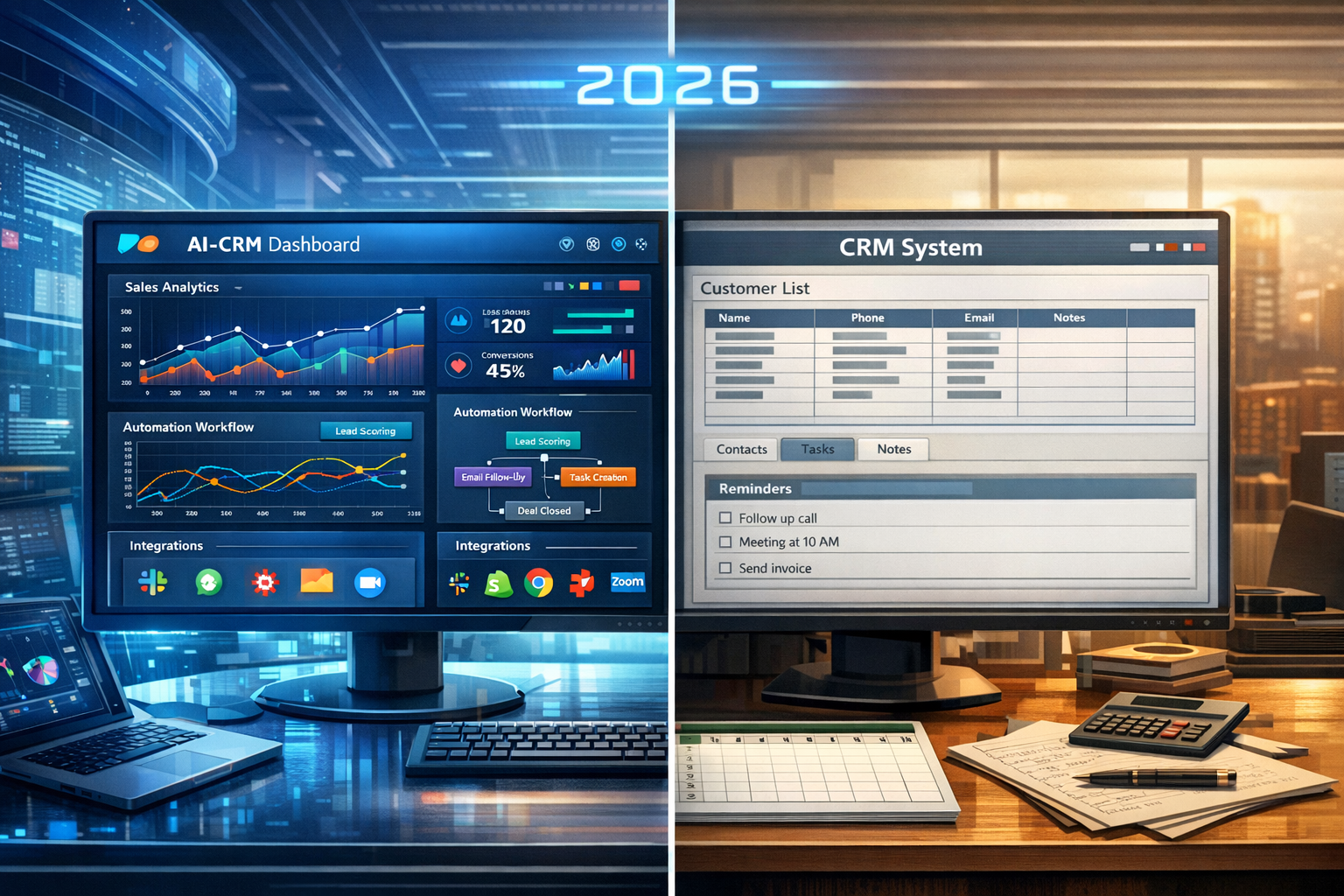
The integration of AI with other technologies, such as customer relationship management systems, will streamline processes and improve overall efficiency. Ultimately, businesses that leverage AI sales forecasting will be better equipped to navigate the complexities of the marketplace and achieve sustained growth.
- Future trends in AI sales forecasting:
- Enhanced machine learning capabilities
- Greater accessibility for smaller businesses
- Integration with other technologies
- Continuous improvement of forecasting accuracy
- Increased focus on customer insights
Frequently Asked Questions
What is AI sales forecasting?
AI sales forecasting uses artificial intelligence to analyze data and predict future sales more accurately than traditional methods.
What are the benefits of using AI for sales forecasting?
Benefits include increased accuracy, faster data analysis, reduced bias, continuous learning, and enhanced decision-making capabilities.
Ready to put this into practice?
Set up your pipeline, WhatsApp follow-ups, and AI lead scoring in minutes — free, no credit card.
Try HelloGrowthCRM freeGet CRM tips in your inbox
Join thousands of sales professionals who get weekly insights on CRM strategy, AI automation, and pipeline optimization.

The HelloGrowthCRM team publishes guides on CRM strategy, AI sales tools, and revenue operations for small business sales teams.