HelloGrowthCRM software
Built for real small-business sales teams
HelloGrowthCRM helps reps qualify faster, follow up on time, and close more deals—with practical automation in one place.
- AI lead scoring and pipeline visibility
- Built-in dialer, WhatsApp, and email automation
- Sales forecasting and RevOps-ready reporting
Understanding Revenue Operations
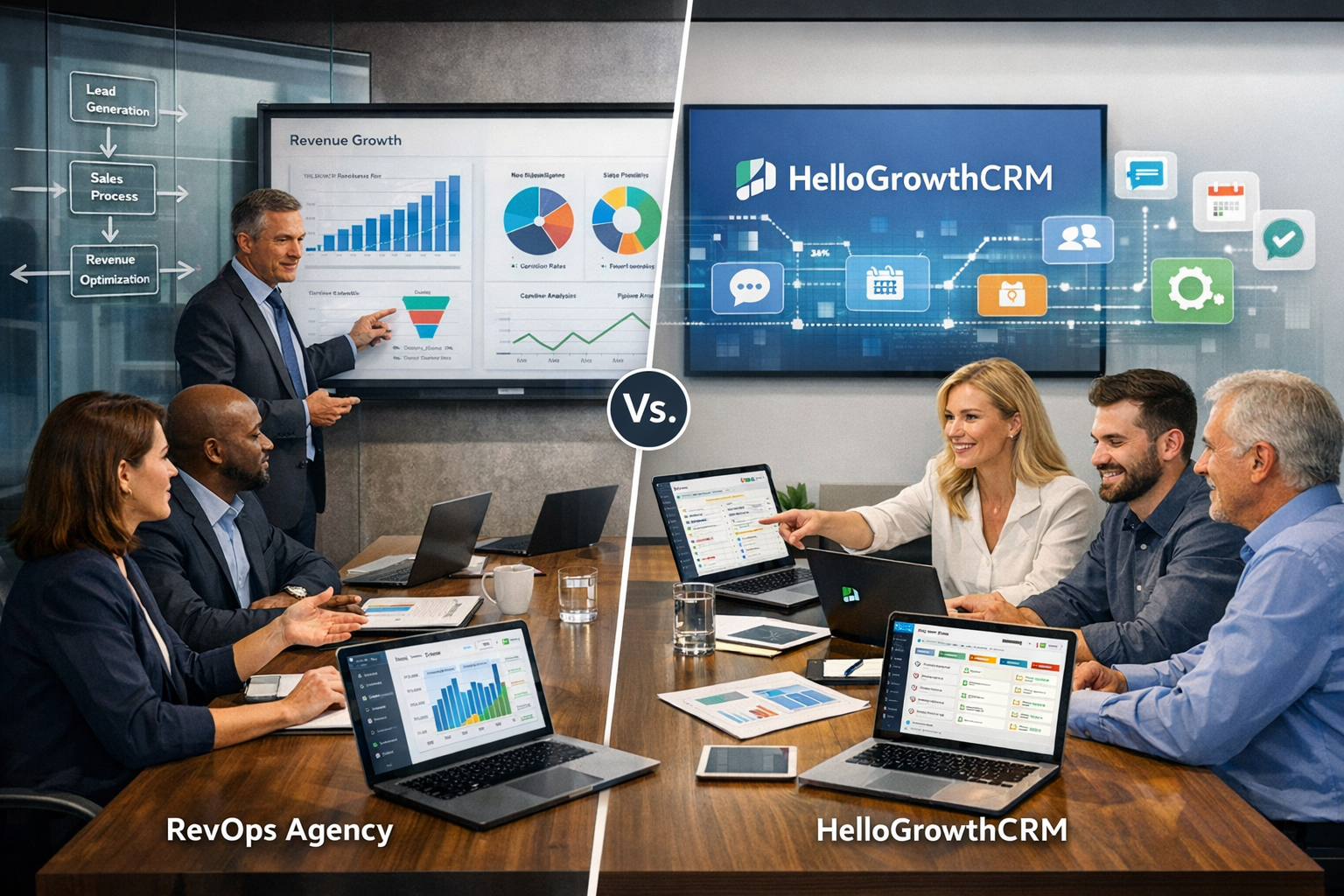
Revenue operations, or RevOps, is a method that aligns sales, marketing, and customer service. The goal is to optimize revenue generation. Businesses can manage these operations in-house or outsource them to experts. Each choice has pros and cons. It's important to evaluate which option fits your business goals best.
Managed Revenue Operations
Managed revenue operations involve working with external experts. These firms specialize in improving revenue processes. They bring valuable experience and knowledge. This can enhance your revenue strategies significantly.
Benefits of Managed Revenue Operations
Outsourcing revenue operations allows businesses to focus on core activities. Here are some key benefits:
- Access to expert knowledge
- Improved efficiency in processes
- Cost savings on hiring and training
- Scalability as your business grows
- Fresh perspectives on revenue strategies
When you partner with professionals, you can expect better results. They know industry trends and best practices. This can lead to increased revenue and growth.
In-House Revenue Operations
In-house revenue operations mean managing everything internally. This option gives you full control over your processes. However, it also comes with its own challenges.
Advantages of In-House Revenue Operations
Managing revenue operations in-house has its benefits:
- Full control over strategies and processes
- Direct oversight of your team
- Better alignment with company culture
- Quick decision-making and implementation
- Customized strategies to fit your needs
However, it also requires a strong team with diverse skills. You need experts in sales, marketing, and customer service. This can be a challenge for smaller businesses.
Key Differences Between Managed and In-House Revenue Operations
Understanding the differences between these two options is crucial. Here are some key points to consider:
- Control: In-house operations give you full control. Managed operations rely on external experts.
- Cost: In-house may seem cheaper at first. However, managed operations can save money in the long run.
- Expertise: Managed operations provide access to specialized knowledge. In-house teams may lack this expertise.
- Scalability: Managed operations can scale quickly. In-house teams may struggle to keep up with growth.
- Focus: Outsourcing allows you to focus on your core business. In-house management can distract from other important tasks.
Evaluating Your Business Needs
When deciding between managed and in-house revenue operations, consider your business needs. Here are some questions to ask:
- What is your current revenue strategy?
- Do you have the expertise in-house?
- How quickly do you need to scale?
- What is your budget for revenue operations?
- How much time can you dedicate to managing these processes?
Answering these questions will help you make an informed decision.
Making the Right Choice for Your Business
Choosing the right approach depends on your unique situation. Here are some tips to help you decide:
- Assess Your Resources: Look at your current team and skills. Do you have the right people in place?
- Consider Your Goals: What are your short-term and long-term goals? Which option aligns better with these goals?
- Evaluate Costs: Compare the costs of hiring in-house versus outsourcing. Consider both short-term and long-term expenses.
- Think About Growth: How quickly do you plan to grow? Managed operations may offer more flexibility.
- Review Industry Trends: Stay informed about trends in revenue operations. This can help you choose the best approach.
Conclusion
Both managed and in-house revenue operations have their strengths. The right choice depends on your business's unique needs. Managed operations offer expertise and efficiency. In-house operations provide control and customization.
Evaluate your goals, resources, and budget. This will help you make the best decision for your business.
FAQ
What are managed revenue operations?
Managed revenue operations involve outsourcing revenue processes to specialized firms. They bring expertise and experience to improve your revenue strategies.
What are the benefits of in-house revenue operations?
In-house revenue operations give you full control, direct oversight, and the ability to customize strategies. However, it requires a skilled team.
How do I choose between managed and in-house operations?
Consider your resources, goals, costs, and growth plans. Answering these questions will help you make the right choice.
Can I switch from in-house to managed revenue operations?
Yes, many businesses switch from in-house to managed operations as they grow. This can help them scale and access expertise.
How can HelloGrowthCRM help with revenue operations?
HelloGrowthCRM offers tools to streamline your revenue processes. You can explore features like Sales Forecasting and Email Automation to enhance your strategies.
Ready to optimize your revenue operations? Try HelloGrowthCRM today and see the difference!
Frequently Asked Questions
Ready to put this into practice?
Set up your pipeline, WhatsApp follow-ups, and AI lead scoring in minutes — free, no credit card.
Try HelloGrowthCRM freeGet CRM tips in your inbox
Join thousands of sales professionals who get weekly insights on CRM strategy, AI automation, and pipeline optimization.

The HelloGrowthCRM team publishes guides on CRM strategy, AI sales tools, and revenue operations for small business sales teams.