HelloGrowthCRM software
Built for real small-business sales teams
HelloGrowthCRM helps reps qualify faster, follow up on time, and close more deals—with practical automation in one place.
- AI lead scoring and pipeline visibility
- Built-in dialer, WhatsApp, and email automation
- Sales forecasting and RevOps-ready reporting
Predictive Lead Scoring vs Rule-Based: Which Is Better?
In the world of sales, understanding which leads to prioritize can make a significant difference in conversion rates and overall success. Two popular methods to evaluate and score leads are predictive lead scoring and rule-based lead scoring. Each approach has its unique strengths and weaknesses, and knowing which one best suits your small business sales team can help you leverage your resources more effectively. In this article, we will explore both methods, their applications, and how integrating AI CRM tools like HelloGrowthCRM can enhance your lead scoring strategy.
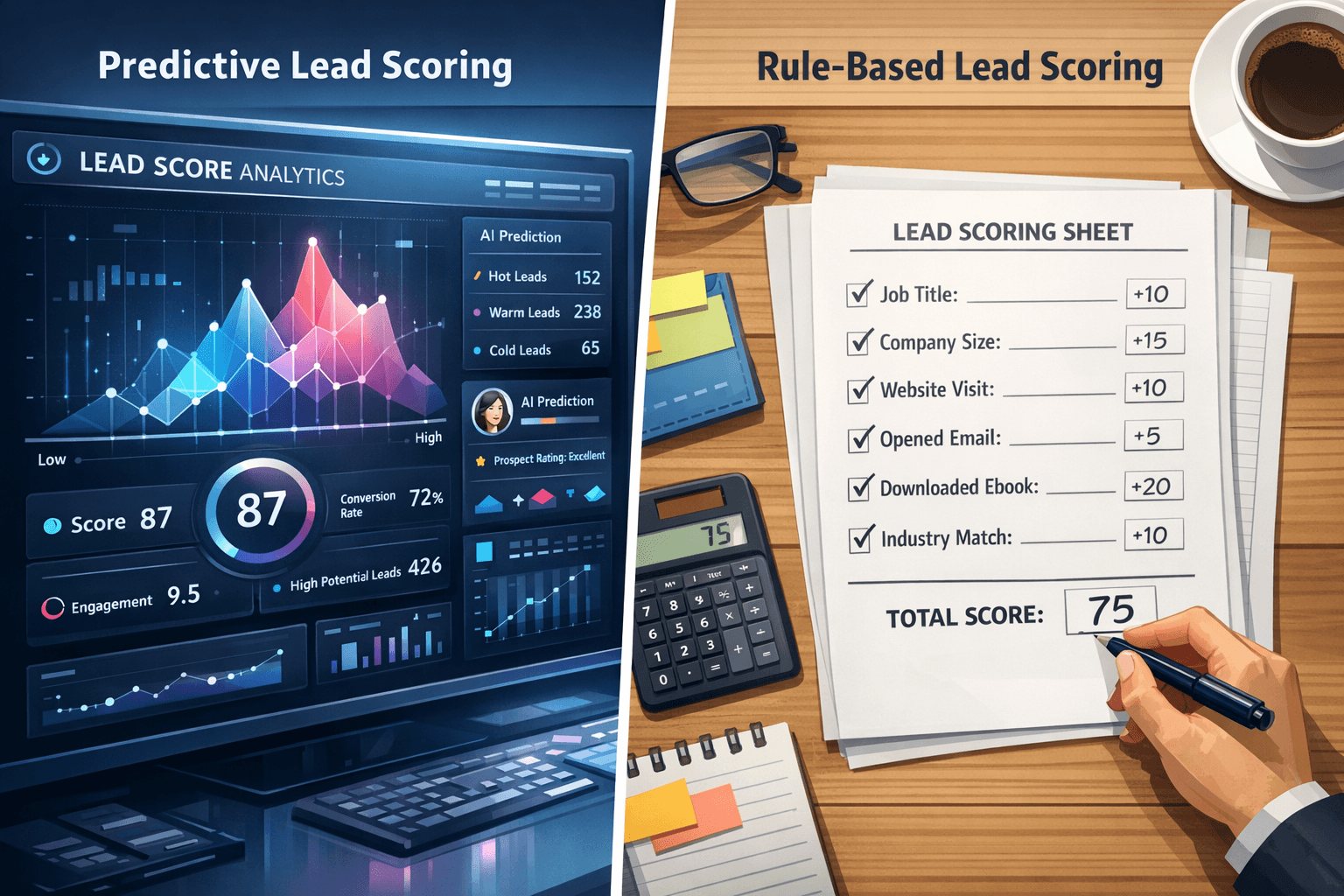
Predictive lead scoring utilizes advanced algorithms and machine learning to analyze historical data and predict the likelihood of a lead converting into a customer. This method takes into account various factors such as demographic information, past interactions, and behavioral patterns. By identifying trends and correlations in the data, predictive scoring provides a more nuanced and accurate assessment of leads.
On the other hand, rule-based lead scoring relies on a predefined set of criteria established by sales teams. These criteria may include factors such as job title, company size, or engagement level. While rule-based scoring can be straightforward to implement, it often lacks the depth and adaptability of predictive scoring. As a result, leads may be misclassified, leading to missed opportunities or wasted resources.
Understanding the differences between these two approaches is crucial for sales leaders and RevOps teams. Let's dive deeper into the pros and cons of each method.
Advantages of Predictive Lead Scoring
- Data-Driven Insights: Predictive lead scoring employs data analytics to generate insights that can drive decision-making. By leveraging historical data, sales teams can focus on leads with a higher likelihood of conversion.
- Continuous Learning: As more data is gathered, predictive models can evolve and improve their accuracy over time. This adaptability ensures that your scoring system remains relevant and effective in changing market conditions.
- Personalization: With predictive scoring, sales teams can tailor their outreach efforts based on the unique traits of high-scoring leads. This personalization can lead to more meaningful interactions and ultimately higher conversion rates.
- Time Efficiency: By automating the lead scoring process, sales teams can save time and focus on nurturing high-potential leads rather than sifting through a long list of prospects.
Advantages of Rule-Based Lead Scoring
- Simplicity: Rule-based scoring is often easier to understand and implement, especially for small teams with limited resources. It allows sales leaders to quickly establish criteria that align with their business objectives.
- Control: Sales teams have full control over the criteria used for scoring, ensuring that it reflects the specific needs and nuances of their business.
- Immediate Results: Unlike predictive models that require historical data, rule-based scoring can be implemented and start delivering insights right away.
- Cost-Effective: For smaller businesses or those just starting, rule-based scoring can be a more budget-friendly option, as it doesn't require advanced technology or extensive data analysis.
While both methods have their merits, the choice between predictive lead scoring and rule-based scoring ultimately depends on your business's specific needs and resources. For small business sales teams, integrating a robust AI CRM like HelloGrowthCRM can provide the best of both worlds.
How HelloGrowthCRM Enhances Lead Scoring
HelloGrowthCRM is designed to empower small business sales teams with intelligent features that streamline their lead scoring process. Here’s how it can enhance your lead scoring strategy:
- AI-Powered Insights: HelloGrowthCRM utilizes AI algorithms to analyze your customer data, providing predictive lead scoring that helps you focus on the most promising leads. This feature allows you to prioritize your outreach efforts effectively.
- Customizable Scoring Rules: If you prefer rule-based scoring, HelloGrowthCRM lets you set up custom scoring rules that align with your business objectives. You can easily adjust these rules as your business evolves.
- Integrated Communication Tools: With built-in communication features like WhatsApp/SMS and a dialer, HelloGrowthCRM enables you to engage with leads quickly and efficiently, increasing the chances of conversion.
- Task Automation: Automating repetitive tasks frees up your sales team to focus on building relationships with high-scoring leads. HelloGrowthCRM’s automation capabilities save time and enhance productivity.
- Real-Time Forecasting: The CRM provides real-time forecasting tools that help sales leaders make informed decisions based on current data trends, ensuring your team stays ahead of the curve.
To maximize your lead scoring efforts, consider implementing a combination of predictive and rule-based scoring. This hybrid approach allows you to leverage the strengths of both methods while minimizing their weaknesses. For example, you can use predictive scoring to identify high-potential leads and then apply rule-based criteria to further qualify them.
Best Practices for Implementing Lead Scoring
- Define Your Criteria: Clearly outline the characteristics of your ideal customer. This will help you establish effective scoring criteria, whether you opt for predictive or rule-based scoring.
- Regularly Review and Adjust: The market is continuously evolving, and so should your lead scoring criteria. Regularly review and adjust your scoring rules to ensure they remain relevant.
- Train Your Team: Ensure your sales team understands how the lead scoring system works. Provide training on how to interpret scores and use them to guide their outreach efforts.
- Leverage Technology: Utilize tools like HelloGrowthCRM to automate and enhance your lead scoring process. This will save time and improve accuracy, allowing your team to focus on what matters most—closing deals.
- Monitor Performance: Track the performance of your lead scoring system by analyzing conversion rates and other relevant metrics. This will help you identify areas for improvement and ensure your strategy remains effective.
In conclusion, the decision between predictive lead scoring and rule-based scoring should be guided by your business's unique needs and resources. By integrating an AI CRM like HelloGrowthCRM, you can harness the power of both methods to create a comprehensive lead scoring system that drives sales success.
HelloGrowthCRM makes it easy to take the next step. You can Explore our features, Check our pricing plans, Schedule a demo, or Start your free trial today and see how it fits your team's workflow within minutes.
The platform includes Learn more about AI lead scoring — built to help growing teams qualify leads, automate follow-up, and report on pipeline health with confidence.
You can also explore Discover integrations for your tools, Check out our sales tools to connect the tools and resources your team already relies on.
Frequently Asked Questions
What is predictive lead scoring?
Predictive lead scoring uses algorithms to analyze data and predict the likelihood of a lead converting into a customer.
How does rule-based lead scoring work?
Rule-based lead scoring assigns scores to leads based on predefined criteria set by sales teams.
Can I combine both lead scoring methods?
Yes, combining predictive and rule-based scoring can provide a comprehensive approach to lead qualification.
Ready to put this into practice?
Set up your pipeline, WhatsApp follow-ups, and AI lead scoring in minutes — free, no credit card.
Try HelloGrowthCRM freeGet CRM tips in your inbox
Join thousands of sales professionals who get weekly insights on CRM strategy, AI automation, and pipeline optimization.

The HelloGrowthCRM team publishes guides on CRM strategy, AI sales tools, and revenue operations for small business sales teams.