HelloGrowthCRM software
Built for real small-business sales teams
HelloGrowthCRM helps reps qualify faster, follow up on time, and close more deals—with practical automation in one place.
- AI lead scoring and pipeline visibility
- Built-in dialer, WhatsApp, and email automation
- Sales forecasting and RevOps-ready reporting
Understanding the cost of a Customer Relationship Management system is essential for any business aiming to enhance its customer interactions. The total cost includes not only the subscription fees but also various indirect expenses that can accumulate over time. Knowing these costs helps businesses make informed decisions about their investments. This guide will break down the costs associated with CRM systems and provide a method for calculating the return on investment.
Direct Costs of CRM Systems
The direct costs of a CRM system primarily consist of the subscription fees. These fees can vary based on the features and the number of users. Businesses often choose between cloud-based and on-premise solutions, which can impact the overall cost.
- Subscription fees: Monthly or annual payments for using the software
- Setup fees: Costs associated with initial configuration and customization
- Training costs: Expenses for training staff to use the system effectively
In addition to these direct costs, businesses may face additional charges for extra features or integrations. Understanding these costs upfront can help in budgeting and planning for the future.
Indirect Costs of CRM Systems
Indirect costs are often overlooked but can significantly impact the overall expense of a CRM system. These costs can include the time spent on training employees and the potential loss of productivity during the transition phase.
- Employee training: Time and resources spent on training staff to use the CRM
- Data migration: Costs associated with transferring data from old systems to the new CRM
- Maintenance and updates: Ongoing expenses for system updates and technical support
By considering these indirect costs, businesses can gain a clearer picture of the total investment required for a CRM system.
Calculating ROI of a CRM System
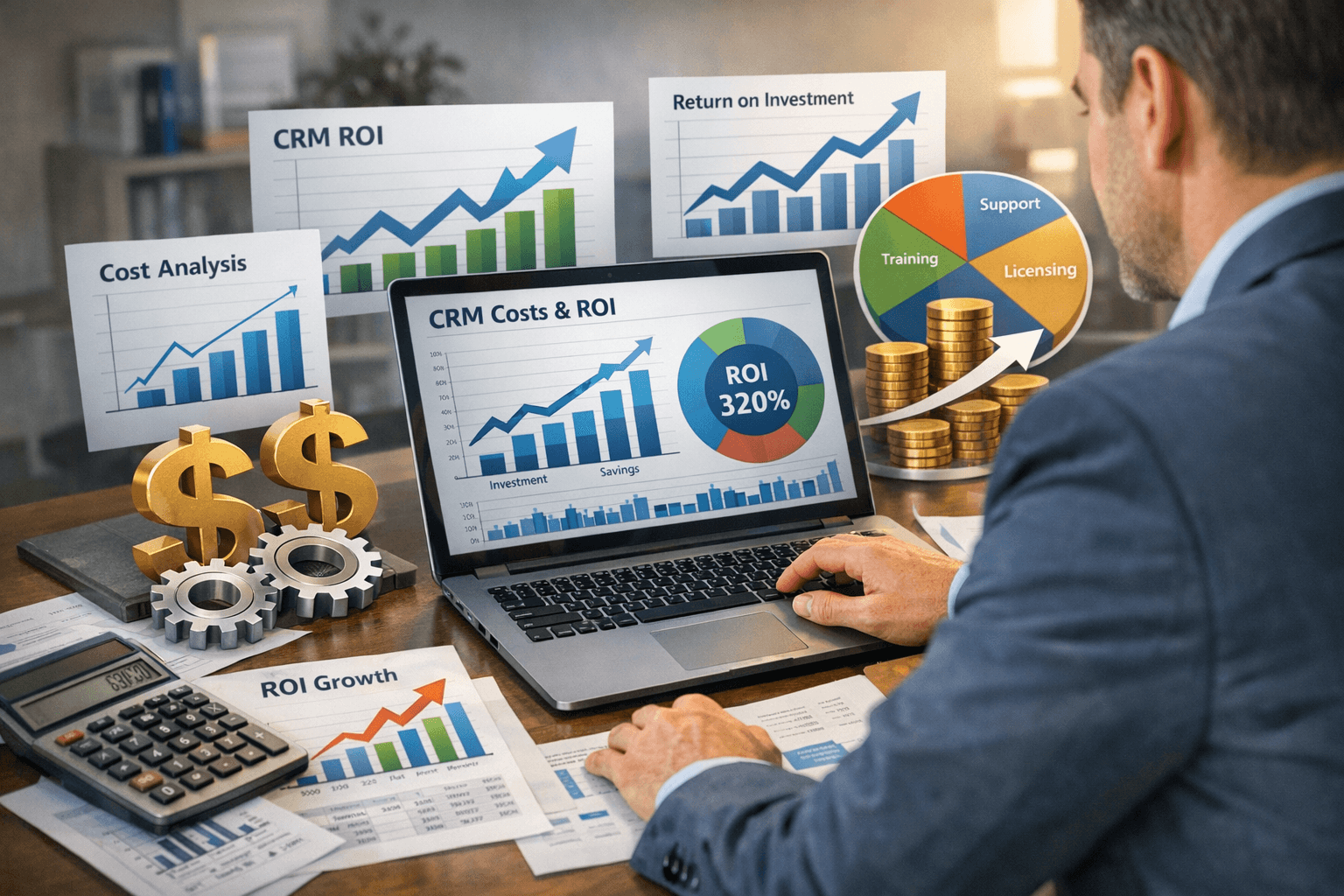
Calculating the return on investment (ROI) for a CRM system is crucial for understanding its value. ROI measures the financial return gained from the investment compared to its cost. A simple formula to calculate ROI is:
ROI = (Net Profit from CRM - Cost of CRM) / Cost of CRM x 100
To accurately assess the net profit from the CRM, businesses need to identify the benefits gained from its use. These benefits can include increased sales, improved customer retention, and enhanced efficiency.
- Increased sales: Revenue growth resulting from better customer management
- Improved customer retention: Savings from retaining existing customers rather than acquiring new ones
- Enhanced efficiency: Time savings that lead to reduced operational costs
Each of these benefits can significantly impact the overall ROI calculation.
Best Practices for Maximizing CRM ROI
To maximize the ROI of a CRM system, businesses should follow certain best practices. These practices help ensure that the CRM is used effectively and that the investment pays off in the long run.
- Define clear goals: Set specific objectives for what the CRM should achieve in terms of sales and customer engagement
- Regularly review performance: Analyze how the CRM is contributing to business goals and adjust strategies as needed
- Foster user adoption: Encourage employees to use the system consistently by providing ongoing training and support
Implementing these best practices can help businesses fully leverage the capabilities of their CRM systems and enhance their overall performance.
Evaluating the Long-Term Value of a CRM System
The long-term value of a CRM system goes beyond immediate financial returns. It can lead to improved customer relationships and a stronger market position. Businesses should consider both short-term gains and long-term benefits when evaluating a CRM investment.
- Customer insights: The ability to analyze customer behavior and preferences can lead to better-targeted marketing efforts
- Competitive advantage: A well-implemented CRM can help differentiate a business from its competitors
- Scalability: A robust CRM can adapt to growing business needs, making it a sustainable choice
By focusing on these long-term benefits, businesses can better understand the full value of their CRM investment.
Conclusion
Understanding the costs and ROI associated with a CRM system is vital for any business looking to improve its customer relationships. By breaking down direct and indirect costs, calculating ROI, and following best practices, businesses can make informed decisions. A well-chosen CRM system can lead to significant benefits, including increased sales, improved customer retention, and enhanced efficiency. Evaluating both short-term and long-term value will help businesses maximize their investment in CRM technology.
Frequently Asked Questions
What are the direct costs of a CRM system?
Direct costs include subscription fees, setup fees, and training costs.
How do you calculate the ROI of a CRM system?
ROI is calculated using the formula: (Net Profit from CRM - Cost of CRM) / Cost of CRM x 100.
Ready to put this into practice?
Set up your pipeline, WhatsApp follow-ups, and AI lead scoring in minutes — free, no credit card.
Try HelloGrowthCRM freeGet CRM tips in your inbox
Join thousands of sales professionals who get weekly insights on CRM strategy, AI automation, and pipeline optimization.

The HelloGrowthCRM team publishes guides on CRM strategy, AI sales tools, and revenue operations for small business sales teams.