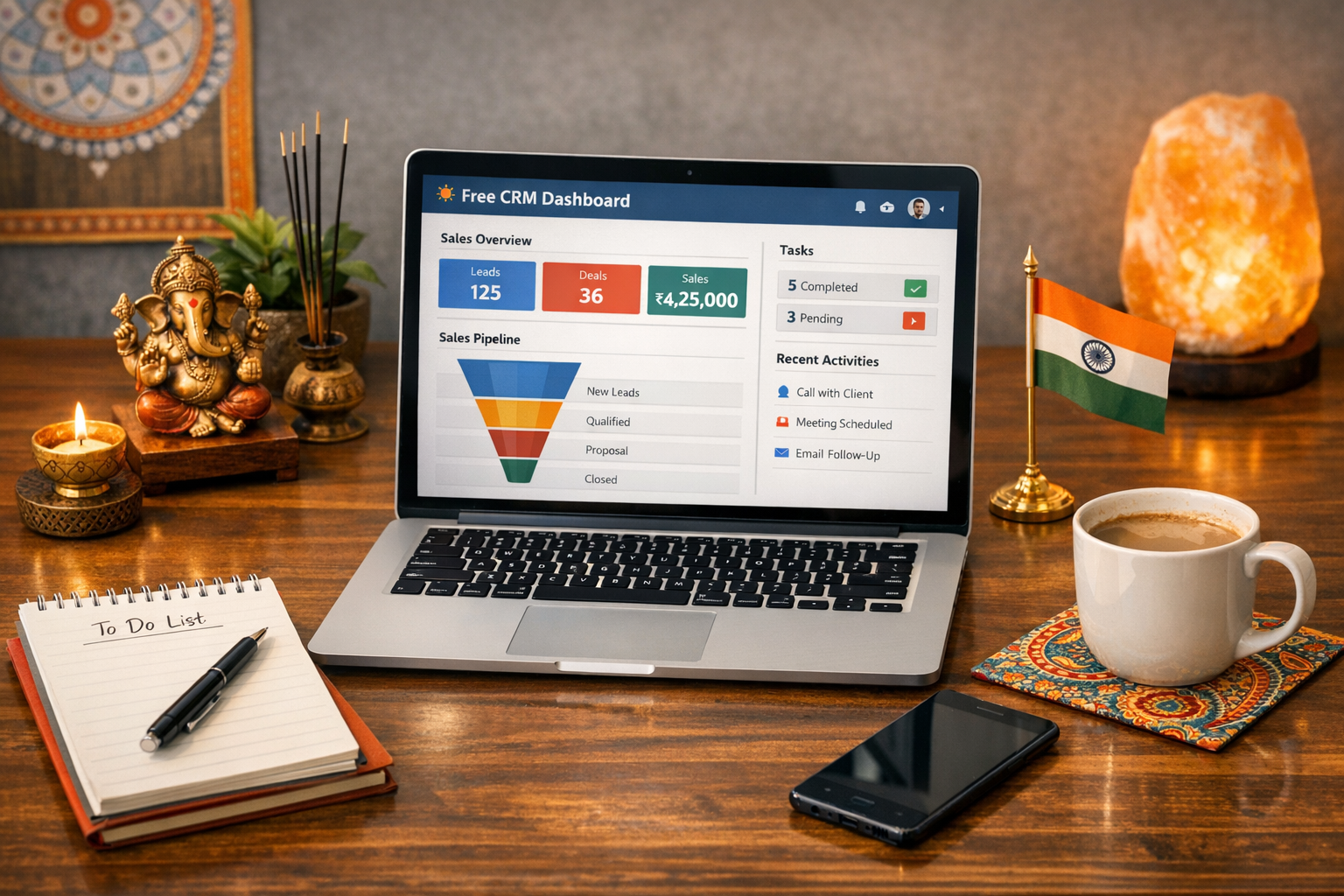
HelloGrowthCRM software
Built for real small-business sales teams
HelloGrowthCRM helps reps qualify faster, follow up on time, and close more deals—with practical automation in one place.
- AI lead scoring and pipeline visibility
- Built-in dialer, WhatsApp, and email automation
- Sales forecasting and RevOps-ready reporting
Revenue Attribution: Which Channels Are Actually Driving Deals?
Understanding sales metrics is crucial for any business looking to optimize its revenue generation strategies. Revenue attribution plays a significant role in deciphering which marketing channels are effectively driving deals and contributing to your bottom line. In a landscape where multiple channels compete for attention, it can be challenging to pinpoint the exact source of your revenue. This is where robust sales metrics come into play, allowing sales leaders, RevOps professionals, and small business owners to make informed decisions about where to allocate resources and efforts.
At the heart of revenue attribution lies the concept of multi-touch attribution, which assesses the impact of various touchpoints along the customer journey. This methodology acknowledges that customers often interact with multiple channels before making a purchase. By utilizing sales metrics effectively, businesses can gain insights into which channels are most influential at different stages of the buying process. Whether it’s social media, email campaigns, or paid advertising, understanding the contribution of each channel is essential for maximizing ROI.
To effectively analyze revenue attribution, businesses need to implement a systematic approach. This involves tracking and measuring the performance of each channel, which can be accomplished through various tools and technologies. HelloGrowthCRM offers features that can help streamline this process. By integrating sales metrics directly into your CRM, you can gain real-time insights and optimize your sales strategies accordingly.
Key Sales Metrics for Revenue Attribution
When it comes to revenue attribution, several key sales metrics can help you gauge the effectiveness of your marketing channels. These metrics provide a comprehensive view of how different channels contribute to your overall sales performance. Here are some essential sales metrics to consider:
- Customer Acquisition Cost (CAC): This metric measures the total cost of acquiring a new customer, including marketing expenses. It helps you understand the efficiency of your marketing efforts.
- Customer Lifetime Value (CLV): CLV estimates the total revenue a customer will generate throughout their relationship with your business. Knowing this helps prioritize high-value channels.
- Conversion Rate: This metric tracks the percentage of leads that convert into paying customers. It allows you to assess the effectiveness of your sales funnel.
- Return on Investment (ROI): ROI measures the profitability of your marketing campaigns, helping you identify which channels deliver the best returns.
- Lead Source Performance: Tracking the performance of leads based on their source can reveal which channels are most effective in generating qualified leads.
By closely monitoring these sales metrics, you can make more informed decisions about where to invest your marketing budget. This data-driven approach not only enhances your understanding of revenue attribution but also helps you refine your overall sales strategy.
Implementing Multi-Touch Attribution
Implementing a multi-touch attribution model requires a thoughtful approach. It’s essential to determine which attribution model aligns best with your business goals. There are various models to choose from, including first-touch, last-touch, and linear attribution. Each model has its strengths and weaknesses, and understanding these can help you select the right one for your organization.
First-touch attribution assigns all credit to the initial touchpoint, while last-touch attribution gives full credit to the final touchpoint before conversion. Linear attribution, on the other hand, distributes credit evenly across all touchpoints. Depending on your sales cycle and customer behavior, one model may be more suitable than another.
Once you choose an attribution model, it’s crucial to integrate it into your CRM system. HelloGrowthCRM can help with this integration, allowing you to track each customer interaction seamlessly. By capturing data from various channels, you can analyze how different touchpoints influence the customer journey and ultimately drive revenue.
Analyzing and Interpreting Data
Data analysis is a critical component of revenue attribution. Once you have collected data from various channels, the next step is to interpret this information to uncover actionable insights. Look for trends and patterns that can inform your marketing strategies. For instance, if you notice that email campaigns have a higher conversion rate than social media ads, it may be time to allocate more resources toward email marketing.
Additionally, segmentation can provide deeper insights into customer behavior. By categorizing your customers based on demographics, purchase history, or engagement levels, you can tailor your marketing efforts to specific groups. This targeted approach can enhance the effectiveness of your campaigns and improve overall revenue attribution.
When analyzing data, consider using visualization tools to present your findings in a clear and concise manner. Graphs and charts can help illustrate complex data sets, making it easier to communicate insights to your team. With HelloGrowthCRM, you can leverage built-in reporting features that simplify data visualization and interpretation.
Optimizing Marketing Strategies
With a clear understanding of revenue attribution and the associated sales metrics, the next step is to optimize your marketing strategies. This involves reallocating resources to the most effective channels based on the insights gained from your data analysis. For example, if you discover that paid search ads yield a higher ROI compared to organic search, it may be wise to invest more in your paid advertising efforts.
Moreover, continuously testing and refining your marketing campaigns can lead to improved performance over time. A/B testing different messaging, creative assets, or targeting strategies can help you identify what resonates best with your audience. This iterative approach ensures that your marketing efforts remain aligned with your revenue goals.
It’s also important to foster collaboration between your sales and marketing teams. Open communication between these departments can enhance the understanding of customer needs and preferences. When both teams work together towards common objectives, it can lead to more effective revenue attribution and ultimately drive better sales performance.
Leveraging Technology for Success
In today’s digital landscape, leveraging technology is essential for effective revenue attribution. There are numerous tools available that can help streamline the process of tracking and analyzing sales metrics. HelloGrowthCRM, for instance, provides a comprehensive solution that integrates various data sources, enabling you to gain real-time insights into your sales performance.
By utilizing HelloGrowthCRM, you can automate data collection and reporting, freeing up valuable time for your sales and marketing teams. This allows them to focus on strategy and execution rather than getting bogged down in manual data entry. Furthermore, with the ability to customize dashboards and reports, you can ensure that your sales metrics align with your specific business objectives.
As you embrace technology in your revenue attribution efforts, consider investing in training and support for your team. Ensuring that your staff is well-versed in using these tools will maximize their effectiveness and ultimately lead to better decision-making.
Conclusion
In conclusion, understanding revenue attribution and its impact on sales metrics is vital for any small business looking to optimize its marketing efforts. By implementing a systematic approach to track and analyze performance across various channels, you can uncover valuable insights that drive revenue growth. Utilizing tools like HelloGrowthCRM can enhance your ability to manage data effectively and make informed decisions that align with your business goals. As you refine your marketing strategies based on these insights, you’ll be well-equipped to identify which channels are truly driving deals and contributing to your success.
HelloGrowthCRM makes it easy to take the next step. You can Discover the features of HelloGrowthCRM that can help your business thrive., or Learn about our pricing plans that fit your business needs. and see how it fits your team's workflow within minutes.
You can also explore Explore more insights on sales metrics and revenue attribution., Access resources to enhance your sales and marketing strategies., Find out more about HelloGrowthCRM and our mission. to connect the tools and resources your team already relies on.
Ready to put this into practice?
Set up your pipeline, WhatsApp follow-ups, and AI lead scoring in minutes — free, no credit card.
Try HelloGrowthCRM freeGet CRM tips in your inbox
Join thousands of sales professionals who get weekly insights on CRM strategy, AI automation, and pipeline optimization.

The HelloGrowthCRM team publishes guides on CRM strategy, AI sales tools, and revenue operations for small business sales teams.