HelloGrowthCRM software
Built for real small-business sales teams
HelloGrowthCRM helps reps qualify faster, follow up on time, and close more deals—with practical automation in one place.
- AI lead scoring and pipeline visibility
- Built-in dialer, WhatsApp, and email automation
- Sales forecasting and RevOps-ready reporting
Most deals are not lost to competitors. They are lost to silence — a quote nobody chased, a demo nobody recapped, a warm lead that cooled off while the rep was busy. Research on lead response has said the same thing for years: the follow-up you actually send beats the perfect message you meant to write.
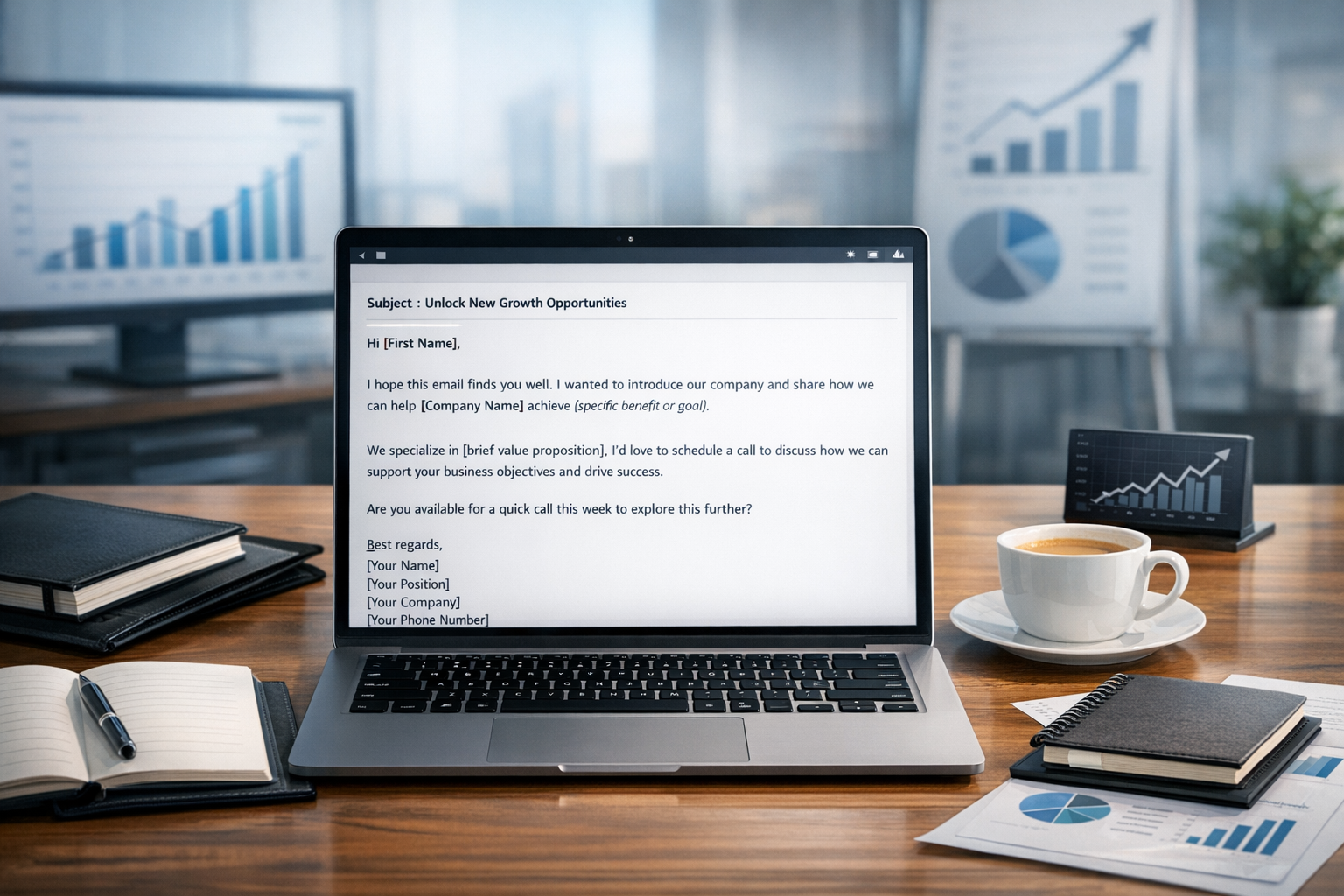
Below are ten copy-paste templates — six emails and four SMS — covering the full life of a deal, each with clear guidance on when to use it. Swap the bracketed fields, cut anything that doesn't sound like you, and send. At the end, you'll find the five rules that make any template work better.
1. New lead response — email (send within 5 minutes)
When to use: the moment an inquiry or form submission arrives. Speed matters more than polish here; the first vendor to respond usually gets the conversation.
Subject: Your question about [product/service]
Hi [Name],
Thanks for reaching out about [what they asked for]. I can definitely help with that.
To point you in the right direction quickly: are you looking to [option A] or [option B]? Reply with one line and I'll send exactly what fits — or if it's easier, grab 15 minutes here: [booking link].
[Rep name]
2. New lead response — SMS (send within 5 minutes)
When to use: alongside or instead of the email, especially when the lead came from a phone call or mobile form. Keep it under 300 characters.
Hi [Name], this is [Rep] from [Company] — got your inquiry about [topic]. What's the best time for a quick call today? Or reply here and I'll answer by text. (Reply STOP to opt out.)
3. Missed call — SMS (send immediately)
When to use: every time a lead calls and nobody picks up. This one template recovers more revenue than almost any other, because a caller is the hottest lead you'll ever get.
Hi, you just called [Company] — sorry we missed you! This is [Rep]. Reply here with what you need, or I'll call you back within the hour. Which do you prefer?
4. Post-call recap — email (send within 2 hours of the call)
When to use: after every discovery or demo call. It confirms you listened, creates a written record, and sets up the next step so the deal doesn't drift.
Subject: Recap + next steps from today's call
Hi [Name],
Good talking today. Quick recap of what I heard: you need [main problem] solved by [timeline], and the main concern is [objection/constraint].
Agreed next steps: I'll send [deliverable] by [date]; you'll [their action] by [date]. Then we reconnect on [date/time] — invite attached.
Anything I missed or got wrong, tell me now and I'll fix it.
[Rep name]
5. Quote or proposal delivery — email (within 24 hours of promising it)
When to use: when sending the quote. The mistake most reps make is attaching a PDF with "let me know" — give it a deadline, a summary, and a next step instead.
Subject: Your quote from [Company] — valid until [date]
Hi [Name],
Quote attached. The short version: [scope in one sentence] for [price], which includes [the thing they cared most about]. Pricing is valid until [date].
Most clients at this point ask about [common question] — the answer is [answer].
If it looks right, reply "go ahead" and I'll start the paperwork. If something's off, tell me what to adjust.
[Rep name]
6. Quote nudge — SMS (day 3 after the quote)
When to use: three days of silence after a quote. Short, light, easy to answer with one thumb.
Hi [Name], [Rep] from [Company] — just checking you received the quote I sent [day]. Any questions, or anything you'd like adjusted? Happy to tweak it.
7. No-show recovery — email (within 30 minutes of the missed meeting)
When to use: when a prospect misses a booked call. No guilt, no sarcasm — assume good faith and make rebooking effortless. You'll recover far more meetings this way.
Subject: We missed each other — new time?
Hi [Name],
Looks like today got away from us — no problem at all, it happens. Here are three slots that still work this week: [slot 1], [slot 2], [slot 3]. Or grab anything on my calendar: [link].
If priorities have shifted and this isn't needed anymore, just say so — no hard feelings.
[Rep name]
8. Re-engagement — email (after 2–3 weeks of silence)
When to use: when a previously engaged deal has gone quiet and the nudges are unanswered. The goal is a reply of any kind, not a close.
Subject: Still on your radar?
Hi [Name],
We were talking about [project] a few weeks back and I don't want to pester you if things have changed. Usually silence means one of three things: (1) timing slipped, (2) you went another direction, or (3) it's buried in the inbox.
Reply 1, 2 or 3 and I'll know exactly what to do next — including leaving you alone if that's the answer.
[Rep name]
9. The breakup — email (final message, day 30+)
When to use: once, at the end of the road. It cleans your pipeline and — counterintuitively — gets more replies than any other follow-up, because it's the only one with a real deadline.
Subject: Closing your file at [Company]
Hi [Name],
I've reached out a few times about [project] without catching you, so I'll assume the timing isn't right and close this out on my end this Friday.
If that's wrong and you'd like to keep it open, one line is all it takes. Either way — thanks for the conversations, and you're welcome back anytime.
[Rep name]
10. Post-sale check-in and referral ask — email (2–4 weeks after delivery)
When to use: after the customer has had real results. The referral ask only works after the check-in confirms they're happy — never lead with the ask.
Subject: How's [product/service] working out?
Hi [Name],
It's been a few weeks since [delivery/go-live] — how's it going? Anything not working the way you expected, I want to hear about it first.
And if it IS going well: who's one person in your network wrestling with the same problem you had? An intro from you would mean a lot — and I'll treat them well.
[Rep name]
Five rules that make every template work harder
- Personalize the first line, automate the rest. One specific detail — their words, their deadline, their industry — is the difference between "template" and "message".
- One message, one question. Every template above ends with a single, easy-to-answer question. Two CTAs get half the replies of one.
- SMS for speed, email for substance. Texts win on response time (most are read within minutes); email wins for recaps, quotes, and anything the buyer forwards internally. Use both, on the same timeline. And for SMS, get opt-in and honor STOP requests — it's the law in most markets, and it protects your deliverability.
- Fix the timing before the wording. A mediocre follow-up on day 3 beats a brilliant one on day 12. The cadence that works for most SMB deals: touch on day 0, day 3, day 7, day 14, then the breakup at day 30.
- Let the system carry the calendar. Nobody remembers day-3 nudges across forty open deals. In HelloGrowthCRM, these templates live as email sequences and SMS automations triggered by pipeline stage — quote sent schedules the nudge, no-show schedules the recovery email — so the follow-up happens even on your busiest week. The Free Forever plan (200 leads, 1 pipeline, 500 tasks) is enough to set this up end to end; see the pricing page for what the $12/user Professional plan adds.
Frequently Asked Questions
How many follow-ups should a sales team send?
Five to seven touches over about 30 days, across email, SMS, and phone. Most replies come between touches three and five — which is exactly where most reps stop.
Should follow-ups come from a personal address or a company one?
A named rep, always. Replies to "sales@" addresses are measurably lower, and follow-up is fundamentally a person-to-person activity.
Do I need permission to send sales SMS?
Yes. Get explicit opt-in before texting, identify your business in each message, and honor STOP requests immediately. Rules vary by country, so check your market's requirements.
How do I stop templates from sounding robotic?
Rewrite the first sentence of every send with one detail specific to that buyer, and read it aloud once. If you wouldn't say it on the phone, don't send it.
Ready to put this into practice?
Set up your pipeline, WhatsApp follow-ups, and AI lead scoring in minutes — free, no credit card.
Try HelloGrowthCRM freeGet CRM tips in your inbox
Join thousands of sales professionals who get weekly insights on CRM strategy, AI automation, and pipeline optimization.

The HelloGrowthCRM team publishes guides on CRM strategy, AI sales tools, and revenue operations for small business sales teams.