Best CRM for Wedding Planners India 2026 — Feature Comparison

Co-Founder, HelloGrowthCRM · January 18, 2026 · 14 min read
HelloGrowthCRM software
Built for real small-business sales teams
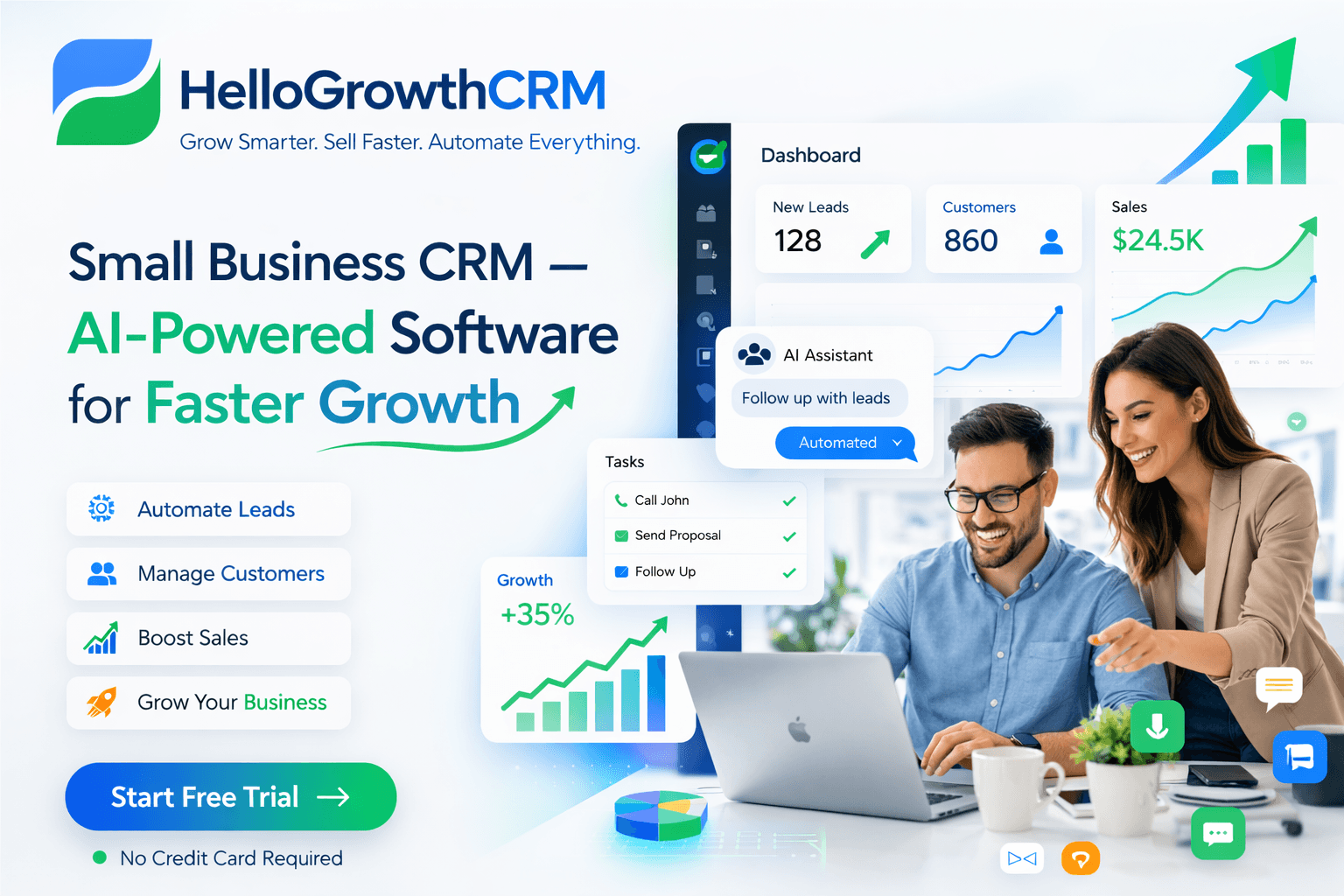
HelloGrowthCRM helps reps qualify faster, follow up on time, and close more deals—with practical automation in one place.
- AI lead scoring and pipeline visibility
- Built-in dialer, WhatsApp, and email automation
- Sales forecasting and RevOps-ready reporting
What a wedding planner CRM must do — and what most miss
A CRM for wedding planners must do two things that most generic CRM platforms do not consider: manage relationships with both clients and vendors within the same system, and track payment milestones that flow in both directions simultaneously. A platform that handles only client-side management misses 60% of the coordination work in a wedding planning business. Last Updated: May 2026.
The 2026 evaluation landscape for wedding planners includes general-purpose CRMs (Salesforce, HubSpot, Zoho), event management platforms (Aisle Planner, Honeybook, Planning Pod), and purpose-built Indian CRMs like HelloGrowthCRM. Each category has different strengths, and the right choice depends on whether your primary challenge is client acquisition and follow-up or event execution and vendor coordination.
Feature comparison: event platforms vs CRM platforms for wedding planners
Event management platforms like Aisle Planner and Honeybook are strong on event execution: floor plans, timelines, task checklists, and client portals for sharing documents. They are weak on the sales-side workflow — lead management, enquiry follow-up, proposal conversion, and payment reminder automation.
Indian wedding planners who receive most enquiries on WhatsApp and Instagram find these platforms difficult to integrate into their actual communication workflow.
General-purpose CRMs like HubSpot and Zoho are strong on lead management and follow-up automation but are not configured for event-specific workflows out of the box. They require significant customization to handle event date pipelines, vendor tracking, and the payment structures common in Indian wedding planning.
HelloGrowthCRM occupies a useful middle position: strong lead management and follow-up automation, WhatsApp-native communication, customizable pipelines for both client and vendor workflows, and payment milestone tracking — all at Rs.899 per month without the enterprise-level setup complexity.
The 6 features that matter most for Indian wedding planners
Feature one: dual pipeline management — separate but linked pipelines for client records and vendor records. Clients move through Enquiry to Proposal Sent to Advance Paid to Planning Active to Event Done. Vendors move through Vetted to Contacted to Confirmed to Advance Paid to Payment Released.
Feature two: WhatsApp-native communication. In India, client enquiries and vendor confirmations both happen on WhatsApp. Native integration is the only way to make this workable.
Feature three: event date tracking as a pipeline field. Every client record must display the event date prominently. Pipeline stages and automated reminders should reference this date for timing.
Feature four: payment milestone tracking with auto-reminders. Both client payments and vendor payments must be visible in one dashboard, with automated reminders firing before each milestone.
Feature five: team task boards. During busy season, a planner with 4 active events needs a single daily task view across all events.
Feature six: mobile-first design. Most coordination calls and client meetings happen outside the office.
HelloGrowthCRM for wedding planners: what Rs.899 per month covers
At Rs.899 per month, HelloGrowthCRM gives a wedding planning business: unlimited client and vendor contacts with custom fields for event date, budget, event type, and location; dual pipeline management for client journey and vendor management; WhatsApp automation for enquiry follow-up, proposal nudges, and payment reminders; task boards with daily action views for all team members; and a built-in dialer for client and vendor calls with call logging.
The custom fields capability is especially important for wedding planners. A client record might need fields for: event date, venue, approximate guest count, estimated budget, event type (Hindu, Christian, Muslim, destination), and preferred vendor categories. All of these can be configured without technical support in under 30 minutes.
Vendor records benefit from custom fields for vendor category, capacity (events per month), regions they operate in, typical advance percentage, and performance rating. This enables a planner to quickly identify available vendors for a new event by filtering the vendor database by category and region.
Switching from WhatsApp and spreadsheets to CRM: the 5-day playbook
Day one: import existing client contacts and vendor contacts separately. Configure custom fields for both record types. Create the client pipeline stages.
Day two: configure the vendor pipeline stages and connect WhatsApp Business. Test inbound message capture by messaging from a personal number — the message should appear in the corresponding contact record automatically.
Day three: set up enquiry follow-up sequences. New enquiries from Instagram, JustDial, or referrals should trigger an automatic WhatsApp reply within 5 minutes and a follow-up message if no response in 48 hours.
Day four: configure payment milestone reminders for the top 5 active client accounts. Each milestone should have a reminder 3 days before the due date and a follow-up task if payment is not received within 5 days.
Day five: brief the team on the task board workflow. Each team member should start their day from the task board view rather than scrolling WhatsApp. The adjustment period for most teams is 3–5 days; within two weeks, the workflow feels natural and the reduction in coordination overhead is measurable.
Implementation checklist for Best CRM for Wedding Planners India 2026 — Feature Comparison
Best CRM for Wedding Planners India 2026 — Feature Comparison creates the most value when the team turns it into a repeatable operating rhythm instead of treating it like a one-time idea. That means defining ownership, documenting the workflow, and making sure the CRM captures the information required to move work forward consistently.
For teams in the Industry category, the real gain usually comes from clarity. Reps should know what triggers the next step, managers should know what to inspect weekly, and leadership should know which metrics indicate that the workflow is improving execution rather than just creating extra activity.
A practical implementation checklist should also explain what happens before launch and what happens after launch. Before rollout, the team should agree on definitions, entry criteria, ownership rules, and the small set of data points that matter most.
After rollout, the team should review real records, measure whether the workflow is actually being used, and tighten the process when a stage, task, or handoff is still too ambiguous.
This is where many CRM initiatives lose momentum. Teams buy the feature or copy the framework, but they never translate it into a weekly operating habit. The stronger path is to keep the workflow simple, connect it to visible manager review points, and make sure the next action is obvious enough that reps do not need to guess what to do next.
What strong teams standardize after adopting Best CRM for Wedding Planners India 2026 — Feature Comparison
The strongest teams usually standardize stage rules, ownership, response expectations, and the minimum fields required for reporting. They also make sure follow-up tasks, communication history, and manager review points are visible in one system instead of being scattered across spreadsheets and inboxes.
That consistency is especially important for HelloGrowthCRM readers because the platform is designed to connect lead management, communication, pipeline control, and reporting in one place. When those pieces stay aligned, teams spend less time cleaning up process gaps and more time improving conversion quality.
Standardization does not mean forcing the whole company into unnecessary complexity. It means choosing the handful of rules that make execution more reliable. That might include one definition of a qualified lead, one owner for each stage transition, one agreed list of required fields, and one review cadence for deals or accounts that are going stale.
Those rules make automation and dashboards more trustworthy because everyone is working from the same operating model.
It also helps new hires ramp faster. When a process is written down clearly and reflected in the CRM itself, reps can understand how work moves without relying on tribal knowledge. That reduces friction, shortens onboarding time, and makes the system easier to improve later because the baseline workflow is already visible and testable.
Metrics to review when evaluating Best CRM for Wedding Planners India 2026 — Feature Comparison
A useful workflow should change measurable outcomes. The exact metrics vary by topic, but most teams should review conversion rate, stage velocity, follow-up completion, response time, pipeline aging, and forecast confidence. Looking at both activity metrics and quality metrics gives a more reliable picture than tracking volume alone.
If the workflow is not improving those signals, the issue is often not effort but design. The team may be tracking too much, automating too early, or failing to define the next action clearly enough for reps and managers to trust the process.
It is also worth separating leading indicators from lagging indicators. Leading indicators show whether the team is doing the right things now, such as responding quickly, completing follow-up tasks, or moving records forward with the right context. Lagging indicators show whether those habits ultimately improve outcomes, such as more meetings booked, better conversion between stages, higher win rates, or more accurate forecasts.
Teams need both views if they want to improve the system instead of reacting only after performance slips.
For HelloGrowthCRM buyers, this matters because the platform is meant to reduce the gap between activity and insight. A strong CRM should help teams see what changed, why it changed, and which part of the workflow needs attention next. When those metrics are reviewed consistently, the blog topic becomes more than educational content.
It becomes a practical operating standard that guides better day-to-day decisions.
How HelloGrowthCRM readers should apply Best CRM for Wedding Planners India 2026 — Feature Comparison
The best next step after reading this guide is to connect the topic to a real operating problem in your funnel. That could be slow lead response, unclear qualification, poor pipeline hygiene, weak forecasting, or disconnected communication. Once the problem is specific, it becomes easier to decide which features, tools, or service paths inside HelloGrowthCRM will actually help.
That practical lens is what turns educational blog content into a useful buying and implementation resource. It helps teams compare options more clearly, reduce CRM complexity, and make better process decisions with less trial and error.
A useful way to apply the guide is to identify one workflow your team already struggles with, then map the current steps from start to finish. Where does work stall? Which fields are missing? Which manager review points are inconsistent? Which channels are disconnected from the CRM?
Answering those questions creates a direct path from educational content to implementation priorities, which is much more valuable than collecting ideas without acting on them.
From there, teams can use HelloGrowthCRM in stages. Some will start with software only and implement the workflow internally. Others will pair the software with managed RevOps support so follow-up, reporting, and process discipline improve faster. In both cases, the strongest outcome comes from using the blog guidance as a bridge between diagnosis and execution, not as a standalone article that never changes how the team works.
Operational expansion for Best CRM for Wedding Planners India 2026 — Feature Comparison
Best CRM for Wedding Planners India 2026 — Feature Comparison creates the most value when the team turns it into a repeatable operating rhythm instead of treating it like a one-time idea. That means defining ownership, documenting the workflow, and making sure the CRM captures the information required to move work forward consistently.
For teams in the Industry category, the real gain usually comes from clarity. Reps should know what triggers the next step, managers should know what to inspect weekly, and leadership should know which metrics indicate that the workflow is improving execution rather than just creating extra activity.
A practical implementation checklist should also explain what happens before launch and what happens after launch. Before rollout, the team should agree on definitions, entry criteria, ownership rules, and the small set of data points that matter most.
After rollout, the team should review real records, measure whether the workflow is actually being used, and tighten the process when a stage, task, or handoff is still too ambiguous.
This is where many CRM initiatives lose momentum. Teams buy the feature or copy the framework, but they never translate it into a weekly operating habit. The stronger path is to keep the workflow simple, connect it to visible manager review points, and make sure the next action is obvious enough that reps do not need to guess what to do next.
What strong teams standardize after adopting Best CRM for Wedding Planners India 2026 — Feature Comparison
The strongest teams usually standardize stage rules, ownership, response expectations, and the minimum fields required for reporting. They also make sure follow-up tasks, communication history, and manager review points are visible in one system instead of being scattered across spreadsheets and inboxes.
That consistency is especially important for HelloGrowthCRM readers because the platform is designed to connect lead management, communication, pipeline control, and reporting in one place. When those pieces stay aligned, teams spend less time cleaning up process gaps and more time improving conversion quality.
Standardization does not mean forcing the whole company into unnecessary complexity. It means choosing the handful of rules that make execution more reliable. That might include one definition of a qualified lead, one owner for each stage transition, one agreed list of required fields, and one review cadence for deals or accounts that are going stale.
Those rules make automation and dashboards more trustworthy because everyone is working from the same operating model.
It also helps new hires ramp faster. When a process is written down clearly and reflected in the CRM itself, reps can understand how work moves without relying on tribal knowledge. That reduces friction, shortens onboarding time, and makes the system easier to improve later because the baseline workflow is already visible and testable.
Metrics to review when evaluating Best CRM for Wedding Planners India 2026 — Feature Comparison
A useful workflow should change measurable outcomes. The exact metrics vary by topic, but most teams should review conversion rate, stage velocity, follow-up completion, response time, pipeline aging, and forecast confidence. Looking at both activity metrics and quality metrics gives a more reliable picture than tracking volume alone.
If the workflow is not improving those signals, the issue is often not effort but design. The team may be tracking too much, automating too early, or failing to define the next action clearly enough for reps and managers to trust the process.
It is also worth separating leading indicators from lagging indicators. Leading indicators show whether the team is doing the right things now, such as responding quickly, completing follow-up tasks, or moving records forward with the right context. Lagging indicators show whether those habits ultimately improve outcomes, such as more meetings booked, better conversion between stages, higher win rates, or more accurate forecasts.
Teams need both views if they want to improve the system instead of reacting only after performance slips.
For HelloGrowthCRM buyers, this matters because the platform is meant to reduce the gap between activity and insight. A strong CRM should help teams see what changed, why it changed, and which part of the workflow needs attention next. When those metrics are reviewed consistently, the blog topic becomes more than educational content.
It becomes a practical operating standard that guides better day-to-day decisions.
How HelloGrowthCRM readers should apply Best CRM for Wedding Planners India 2026 — Feature Comparison
The best next step after reading this guide is to connect the topic to a real operating problem in your funnel. That could be slow lead response, unclear qualification, poor pipeline hygiene, weak forecasting, or disconnected communication. Once the problem is specific, it becomes easier to decide which features, tools, or service paths inside HelloGrowthCRM will actually help.
That practical lens is what turns educational blog content into a useful buying and implementation resource. It helps teams compare options more clearly, reduce CRM complexity, and make better process decisions with less trial and error.
A useful way to apply the guide is to identify one workflow your team already struggles with, then map the current steps from start to finish. Where does work stall? Which fields are missing? Which manager review points are inconsistent? Which channels are disconnected from the CRM?
Answering those questions creates a direct path from educational content to implementation priorities, which is much more valuable than collecting ideas without acting on them.
From there, teams can use HelloGrowthCRM in stages. Some will start with software only and implement the workflow internally. Others will pair the software with managed RevOps support so follow-up, reporting, and process discipline improve faster. In both cases, the strongest outcome comes from using the blog guidance as a bridge between diagnosis and execution, not as a standalone article that never changes how the team works.
Get CRM tips in your inbox
Join thousands of sales professionals who get weekly insights on CRM strategy, AI automation, and pipeline optimization.
No spam. Unsubscribe anytime.
Harnish Shah is co-founder of Soor LLC and oversees engineering and growth at HelloGrowthCRM. He brings expertise in AI-driven software architecture and go-to-market systems for B2B SaaS. He previously co-built Hello Growth CRM and has helped early-stage companies scale their sales infrastructure.