HelloGrowthCRM software
Built for real small-business sales teams
HelloGrowthCRM helps reps qualify faster, follow up on time, and close more deals—with practical automation in one place.
- AI lead scoring and pipeline visibility
- Built-in dialer, WhatsApp, and email automation
- Sales forecasting and RevOps-ready reporting
Selecting the right Customer Relationship Management (CRM) tool is essential for B2B organizations looking to optimize their lead management processes. A well-implemented CRM for lead management not only streamlines sales workflows but also enhances teamwork, improves communication with leads, and significantly boosts overall productivity. In this article, we’ll delve into the crucial factors to consider when choosing a CRM specifically tailored for effective lead management in B2B environments. We’ll explore how HelloGrowthCRM can help you streamline your sales funnel, making your lead management not just efficient, but exceptional.
What is CRM Lead Management?
CRM lead management refers to the processes and systems used within a CRM platform to track and nurture leads through the sales funnel. This involves gathering lead information, assessing lead quality, and continuously managing relationships with potential clients until conversion. Effective CRM lead management should include capabilities that automate tasks, facilitate communication, and provide insights into lead behavior, allowing sales teams to prioritize their efforts efficiently.
Importance of Effective Lead Management
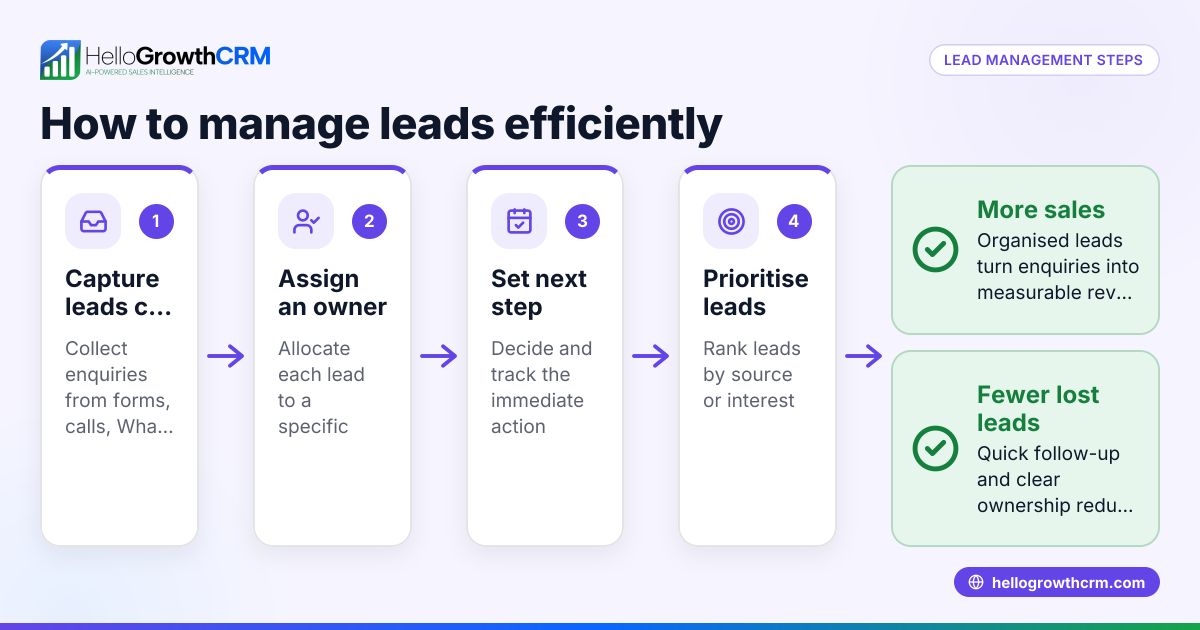
The difference between a successful sales team and an average one often lies in how effectively they manage their leads. Here are some key benefits of effective lead management:
- Improved Efficiency: Automating lead tracking and follow-up actions reduces time spent on mundane tasks.
- Better Lead Insights: Access to real-time data allows teams to tailor their strategies and focus on high-potential leads.
- Enhanced Conversion Rates: Nurturing leads effectively increases the likelihood of converting them into paying customers.
- Streamlined Collaboration: A shared platform allows sales and marketing teams to work together seamlessly.
Key Factors to Consider When Choosing a CRM for Lead Management
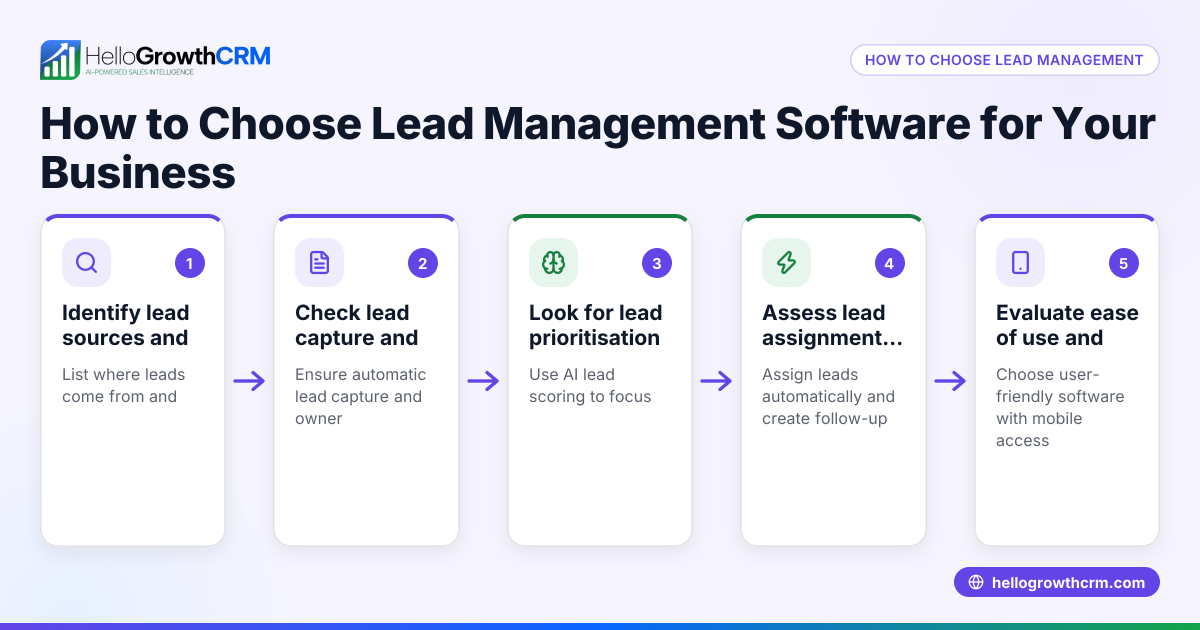
1. Integration with Existing Tools
One of the first aspects to examine is the CRM's ability to integrate with your existing tools. A CRM that seamlessly connects with your marketing automation software, sales enablement tools, and communication platforms can significantly enhance lead management.
Why Integration Matters
- Data Synchronization: Ensures that all data remains consistent across platforms.
- Enhanced Functionality: By combining tools, you can leverage each platform's strengths for a more comprehensive strategy.
- Improved User Adoption: Familiar tools can lead to greater team buy-in and usage.
HelloGrowthCRM offers extensive Integrations with popular tools, ensuring your team can work efficiently and effectively.
2. Lead Scoring Capabilities
Lead scoring is a method of ranking leads based on their potential to convert. A CRM that includes features for AI Lead Scoring allows you to prioritize leads by their behaviors and demographics, enabling your sales team to focus on the most promising opportunities.
Advantages of AI Lead Scoring
- Saves Time: By identifying high-potential leads, sales reps can prioritize their efforts, leading to quicker conversions.
- Increased ROI: Targeting the right leads improves the efficiency of your sales processes, maximizing revenue.
- Refined Strategies: Analyzing lead scoring data allows teams to refine their communication strategies.
3. Customization and User Experience
Every organization has unique lead management processes, and your CRM should accommodate those processes rather than forcing you to adapt to its limitations. When evaluating CRMs, consider the degree of customization available and the overall user experience.
Features to Seek
- Custom Fields: Adapt the CRM to fit your business needs by creating fields relevant to your products or services.
- User-Friendly Interface: A clean, intuitive layout can dramatically reduce the learning curve for your team.
- Mobile Accessibility: In today’s fast-paced environment, a mobile-friendly CRM allows sales reps to access information on the go.
HelloGrowthCRM emphasizes a strong user experience, which is central to its design philosophy.
4. Reporting and Analytics
Effective lead management needs to be data-driven, and advanced reporting and analytics features in a CRM can provide the insights necessary to refine your lead management strategy. Look for dashboards that give you real-time feedback on lead performance, sales cycle lengths, and conversion rates.
The Importance of Data
- Track Progress: Analytics help you gauge which strategies are working and which need improvement.
- Forecast Sales: Understanding lead trends enables accurate Sales Forecasting.
- Enhance Decision-Making: Data-driven insights lead to more informed decisions about where to allocate resources.
5. Automation Features
Automation is a cornerstone of effective lead management. A CRM with robust automation features can handle repetitive tasks such as follow-ups and reminders, ensuring no lead falls through the cracks.
Benefits of Automation
- Time Savings: Automating routine tasks allows your sales team to focus on building relationships.
- Consistent Communication: Regular follow-ups maintain engagement with leads.
- Reduced Errors: Automation minimizes human error in processes like data entry.
Features such as Email Automation within HelloGrowthCRM help maintain ongoing communication with leads throughout the sales funnel.
How HelloGrowthCRM Optimizes Lead Management
HelloGrowthCRM is tailored specifically for B2B companies, providing powerful tools designed to simplify lead management and drive sales performance.
Comprehensive Lead Management Features
HelloGrowthCRM comes equipped with an array of features to optimize every aspect of your lead management process, including:
- Advanced Lead Scoring: Assign scores based on user-defined criteria, giving your sales team the insights they need to prioritize leads effectively.
- Customizable Dashboards: Tailored analytics and reporting tools allow you to visualize performance at a glance, making decision-making faster and more impactful.
- Integrated Communication: Streamlined communication tools let you engage with leads directly from the CRM, ensuring timely responses.
Streamlined Sales Funnel
By employing HelloGrowthCRM, you can expect to see significant improvements in your sales funnel efficiency. The platform’s intelligent design and capabilities empower B2B teams to:
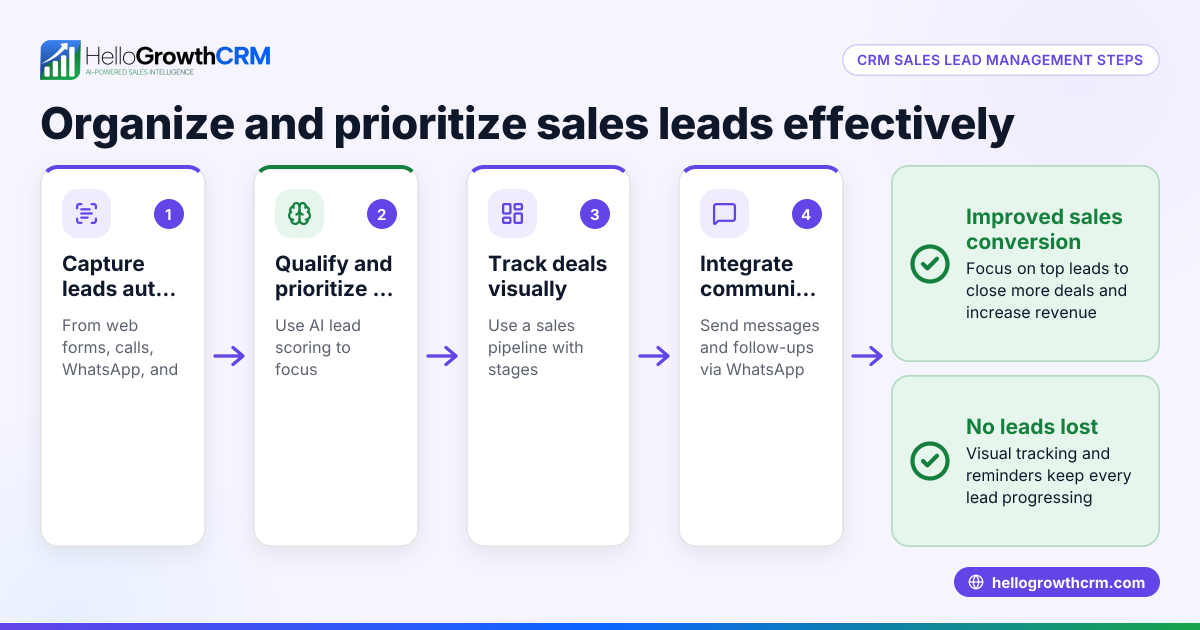
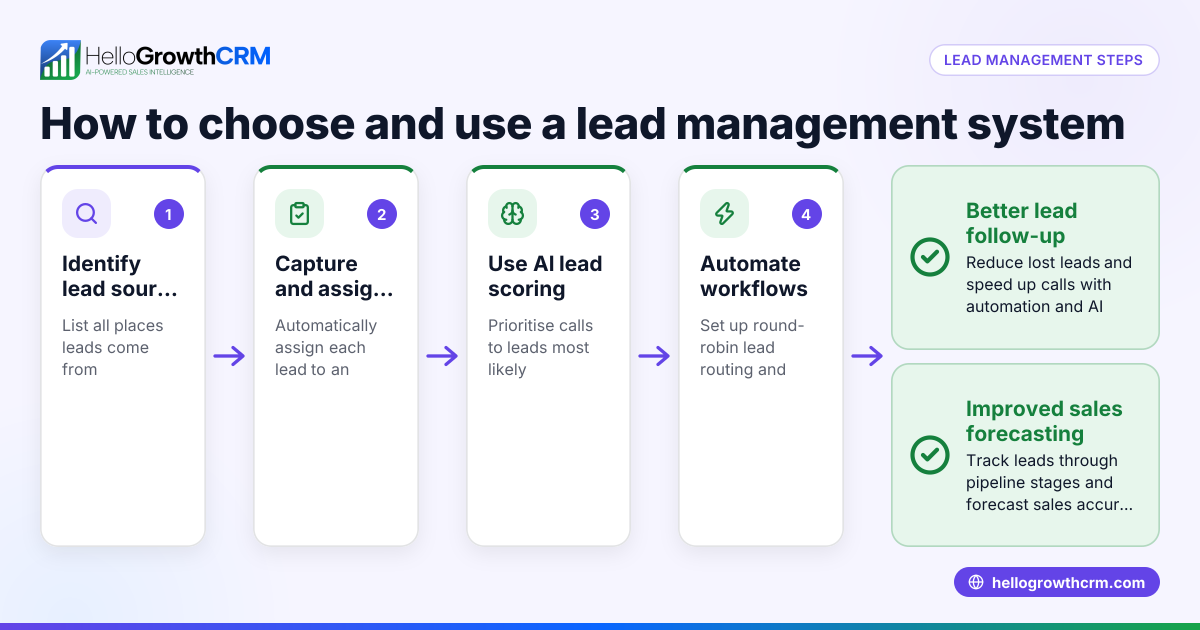
- Track leads from initial contact through to conversion.
- Analyze lead behavior to refine follow-up strategies.
- Collaborate in real-time with integrated communication tools.
- Automate the follow-up processes to ensure consistent engagement.
Personalized Support and Training
HelloGrowthCRM also offers personalized support and training to ensure your team can maximize the tool's effectiveness. By utilizing Demo sessions and ongoing support, you set your team up for success.
Pricing That Scales with Your Business
Furthermore, HelloGrowthCRM's Pricing structure is designed to accommodate businesses of various sizes, ensuring you pay for only what you need as you grow.
Conclusion
Choosing the right CRM for lead management is a critical decision for any B2B organization aiming for long-term success. You must consider key factors like integrations, lead scoring, customization, reporting, and automation features. By selecting a CRM that genuinely meets the needs of your sales team, you can streamline your processes, enhance collaboration, and ultimately improve your conversions.
HelloGrowthCRM is designed with all these essential features in mind, ready to revolutionize your lead management process. Don't leave your sales success to chance—take the first step today by signing up for a Free Trial and discover the power of an efficient CRM tailored for B2B environments.
FAQ
1. What should I look for in a CRM for lead management?
Look for integration capabilities, lead scoring, customization options, robust reporting and analytics, and powerful automation features.
2. How can AI lead scoring improve my lead management?
AI lead scoring prioritizes leads based on data insights, helping your sales team focus their efforts on leads most likely to convert.
3. Is HelloGrowthCRM suitable for small businesses?
Yes, HelloGrowthCRM is designed for businesses of all sizes, with flexible pricing and features that can scale as your organization grows.
4. Can HelloGrowthCRM integrate with other tools I use?
Absolutely! HelloGrowthCRM offers extensive Integrations with various tools to enhance your lead management processes.
5. How does automation in HelloGrowthCRM save time?
Automation allows repetitive tasks to be handled without manual work, enabling your sales team to focus on higher-value activities like closing deals.
Explore HelloGrowthCRM today and upgrade your lead management processes for a more efficient sales journey!
Implementation Checklist for Choosing the Right CRM for Streamlined B2B Lead Management
Teams researching crm lead management usually need more than a high-level definition. They need a repeatable process, clear ownership, and a way to connect day-to-day execution back to pipeline quality and revenue outcomes. That is why the most useful version of this topic is practical: it should help a team decide what to standardize, what to automate, and what to measure first.
Start by deciding where crm lead management fits in the revenue workflow. For some teams it belongs near lead qualification, because better prioritization affects who gets attention first. For others it belongs in pipeline management, because the real problem is inconsistent stage movement, poor follow-up discipline, or weak forecast confidence. The exact placement matters because it determines which records, fields, and manager reviews should change after the process is introduced.
Step-by-step rollout model
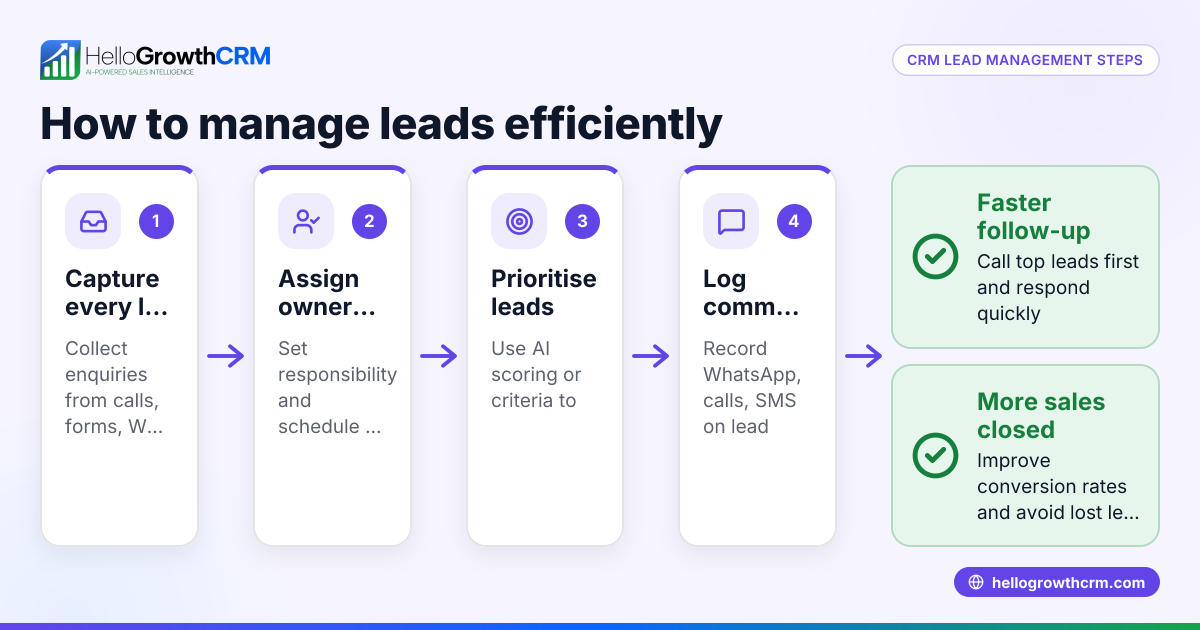
- Define the business outcome the team wants from crm lead management. That could be faster speed-to-lead, better conversion from demo to opportunity, cleaner qualification, or fewer stalled deals.
- Identify which team owns the process day to day. A workflow with no owner usually becomes a dashboard topic instead of an execution habit.
- Decide which fields or signals are required. Keep the list narrow enough that reps can maintain it without turning the CRM into admin overhead.
- Add automations only after the workflow is clear. Good automation reduces repetitive work, but bad automation hides process problems and makes reporting less trustworthy.
- Review performance weekly. Teams improve faster when they inspect real records, not just summary charts.
What strong teams usually standardize
- A clear definition of when a lead, account, or deal qualifies for the next step
- Required fields that support follow-up, segmentation, and reporting
- Ownership rules for handoffs, reminders, and stage progression
- Manager review checkpoints for aging, conversion, and execution quality
- An escalation path for records that are blocked, stale, or missing context
Metrics to watch after rollout
When a team implements crm lead management well, performance should change in ways that are visible. Look at conversion rate between stages, response time, meeting creation, pipeline age, follow-up completion, and forecast confidence. If those numbers do not move after implementation, the process may be too theoretical, too hard to use, or not connected tightly enough to how reps actually work inside the CRM.
It is also useful to separate activity metrics from quality metrics. A team can appear busy while still failing to improve outcomes. Measuring both helps leadership understand whether crm lead management is increasing output only, or improving the quality of decisions and follow-through as well.
How HelloGrowthCRM supports this workflow
HelloGrowthCRM is most effective when the team uses it as an operating system rather than a contact database. The platform helps centralize lead records, activity history, communication, automation triggers, reporting, and follow-up actions in one place. That matters for crm lead management because it reduces the gap between strategy and execution. Reps can see the context, managers can inspect progress, and leaders can connect the process back to revenue performance.
For example, a team may start with a simple scoring or qualification framework, then connect it to follow-up tasks, reporting views, internal alerts, and manager dashboards. Another team may apply the same principle to messaging, meeting scheduling, outbound sequencing, or account prioritization. In each case, the system works best when the workflow is inspectable and the next step is obvious.
Common mistakes that reduce content quality and execution quality
One common mistake is treating crm lead management as a one-time setup instead of an ongoing operating discipline. Teams launch the framework, create a dashboard, and assume the problem is solved. In reality, the process needs feedback loops. Inputs drift, rep behavior changes, and the market evolves. Without review, even a good workflow loses accuracy.
Another mistake is overcomplicating the first version. Teams sometimes try to capture too many fields, too many exceptions, or too many automations before the basic operating model is stable. That creates resistance and lowers adoption. A better approach is to launch the smallest version that still produces measurable decisions, then add sophistication after the team trusts the workflow.
Practical FAQ extension
How long should a team give this process before judging results?
Most teams need a few weeks of consistent use before they can evaluate whether crm lead management is improving execution. The exact timing depends on deal cycle length and lead volume, but a workflow should usually be reviewed across multiple reporting intervals before large conclusions are drawn.
Does crm lead management matter only for large sales teams?
No. Smaller teams often benefit even more because a clear workflow prevents follow-up gaps and makes performance easier to inspect without adding management layers. The key is to keep the process proportional to team size.
What is the best first improvement to make?
Usually the best first improvement is clarity. Define the next step, the owner, and the required information. Once those are stable, automation and reporting become much more valuable.
Final execution notes for Choosing the Right CRM for Streamlined B2B Lead Management
crm lead management becomes commercially valuable when it helps a team move faster with more confidence, not when it just adds vocabulary. The teams that get the best results usually connect workflow design, data hygiene, automation, and manager inspection into one rhythm. That is the lens readers should use when evaluating any approach connected to HelloGrowthCRM.
Frequently Asked Questions
Ready to put this into practice?
Set up your pipeline, WhatsApp follow-ups, and AI lead scoring in minutes — free, no credit card.
Try HelloGrowthCRM freeGet CRM tips in your inbox
Join thousands of sales professionals who get weekly insights on CRM strategy, AI automation, and pipeline optimization.

The HelloGrowthCRM team publishes guides on CRM strategy, AI sales tools, and revenue operations for small business sales teams.