HelloGrowthCRM software
Built for real small-business sales teams
HelloGrowthCRM helps reps qualify faster, follow up on time, and close more deals—with practical automation in one place.
- AI lead scoring and pipeline visibility
- Built-in dialer, WhatsApp, and email automation
- Sales forecasting and RevOps-ready reporting
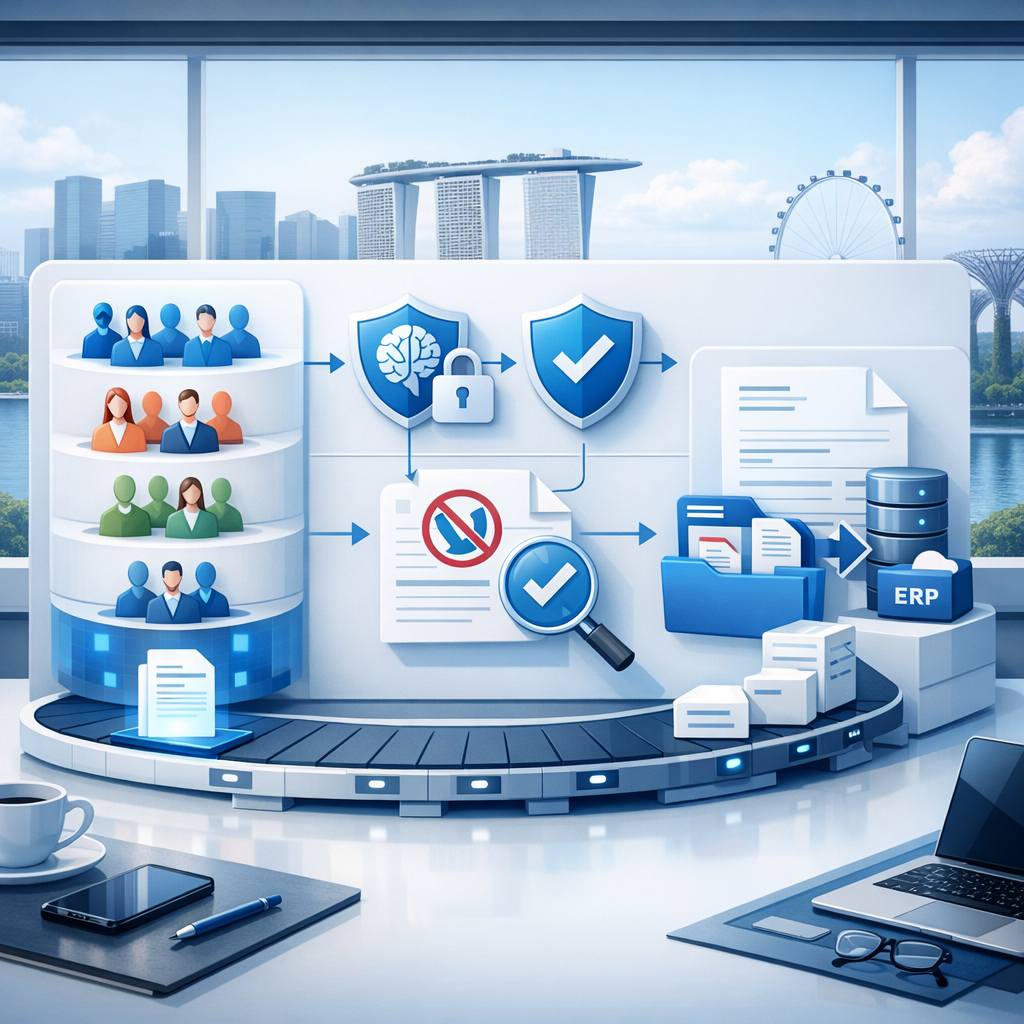
Singapore CRM lead routing workflows are the rule-based paths that capture, score, assign, contact, and hand off leads inside a CRM for Singapore sales teams, while enforcing PDPA consent controls, Do Not Call screening, territory rules, and downstream finance handoffs such as PEPPOL-ready customer onboarding and invoicing triggers.
Key Takeaways
- A strong Singapore lead routing workflow must handle capture, enrichment, scoring, assignment, follow-up, and finance handoff in one connected process.
- PDPA compliance is not a side task. It should sit inside routing logic, consent fields, audit trails, and channel-specific contact rules.
- Do Not Call checks matter most when teams use phone, SMS, or WhatsApp outreach from inside the CRM.
- Fast speed-to-lead improves conversion, but only when routing rules are clear by territory, segment, and account ownership.
- PEPPOL handoff points help sales, finance, and RevOps align from closed-won to billing without manual chasing.
- HelloGrowthCRM helps Singapore teams connect AI CRM, AI Lead Scoring, Revenue Attribution, and Sales Forecasting in one workflow.
What are Singapore CRM lead routing workflows?
Singapore CRM lead routing workflows are the automated rules that decide where each lead goes, who owns it, how fast follow-up starts, which channels are allowed, and when finance or operations should take over, all while aligning with Singapore compliance requirements and local operating realities.
In practice, this means your CRM is not just a contact database. It becomes the operating system for lead response.
A good workflow usually covers:
- Lead capture from forms, ads, events, referrals, and imports
- Lead source tagging and enrichment
- Consent and communication preference checks
- Do Not Call review for phone-based outreach
- Scoring and prioritisation
- Assignment by territory, industry, account size, or named owner
- SLA timers for first response
- Sequence or task creation
- Pipeline stage movement
- Closed-won handoff to onboarding, finance, and invoicing
For Singapore teams, local context changes the design. A business development team in Singapore CBD may split leads by enterprise segment. A field-heavy team in Jurong East may route by industrial zone and rep travel time. A distributed inside-sales team in Tampines may prioritise speed-to-lead and digital channels.
When I have audited pipelines like this, the biggest issue is rarely missing leads. It is usually unclear ownership. Two reps think a lead belongs to the other, or no one knows whether outreach is allowed. That slows response and adds compliance risk.
This is where Sales Task Boards, Smart Inbox, and Meeting Scheduler become useful. They turn routing rules into visible actions, not hidden admin logic.
Why do PDPA and DNC rules need to be built into routing from day one?
PDPA and DNC rules need to be built into routing from day one because compliance decisions affect who can contact a lead, through which channel, on what basis, and with what record of consent, making them core workflow logic rather than a legal review after leads have already entered the funnel.
This matters because sales teams move fast. If compliance sits outside the CRM, reps will improvise.
Singapore's Personal Data Protection Commission publishes guidance and resources that shape how organisations should manage personal data and consent under the PDPA https://www.pdpc.gov.sg/. The PDPC also operates the national Do Not Call framework and registry information pages https://www.pdpc.gov.sg/overview-of-pdpa/do-not-call-registry.
What should be checked inside the CRM?
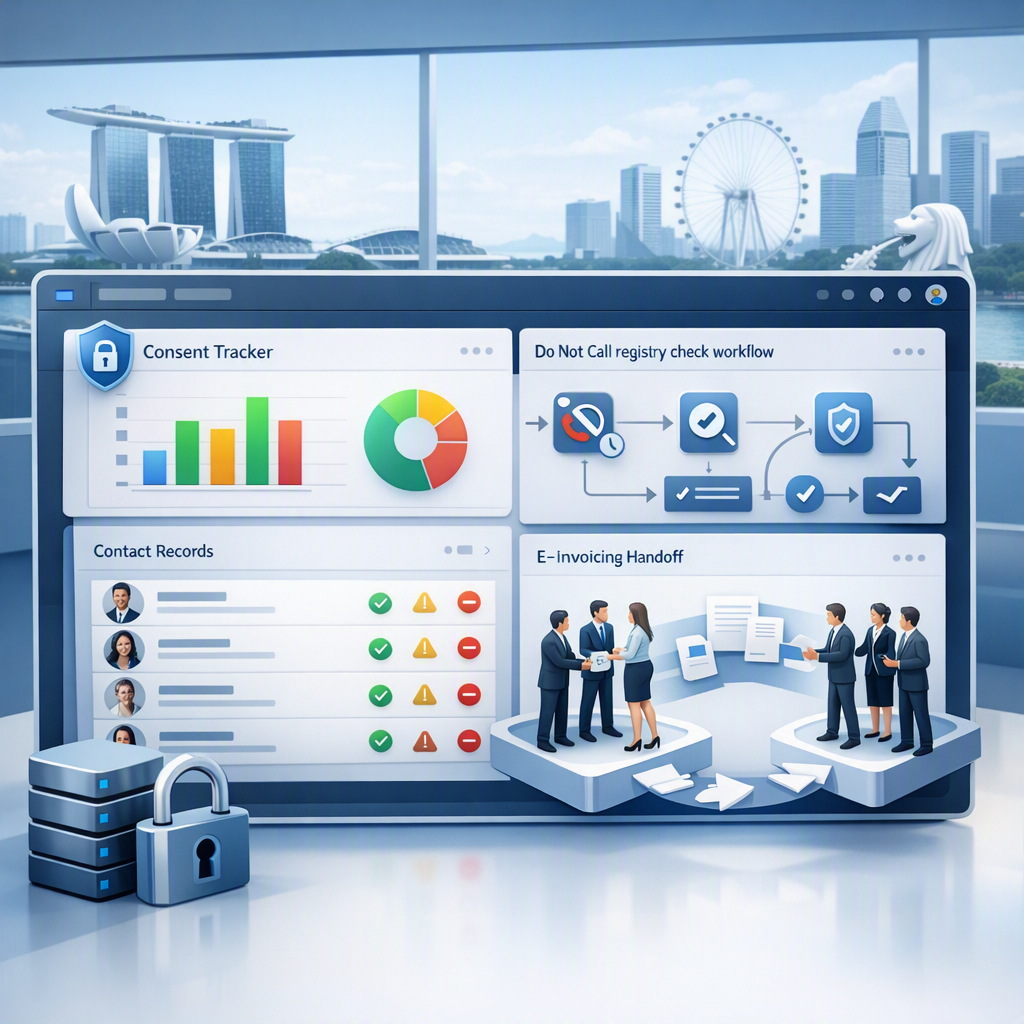
At minimum, your workflow should track:
- Lead source
- Consent status
- Consent timestamp
- Consent text version
- Allowed channels
- DNC check status
- DNC check date
- Business vs individual contact classification
- Data retention review date
- Owner and next action SLA
If your team uses CRM Dialer or WhatsApp & SMS CRM, these fields should block or allow outreach automatically. That is safer than leaving channel decisions to memory.
A practical compliance pattern
A simple pattern works well for many B2B teams under 50 reps:
- Capture the lead.
- Identify whether the record includes personal data.
- Check consent basis and intended channels.
- Screen against DNC requirements before phone or message outreach.
- Route only to eligible playbooks.
- Log every action.
This works for many mid-market teams. Above that scale, you may need legal review, custom field governance, and tighter role permissions.
In one rollout we did with a 12-person sales team, the fastest improvement came from adding one mandatory field: "contactable channel status." That single field cut rep hesitation and reduced ad hoc messaging.
What should a PDPA-compliant lead routing workflow include?
A PDPA-compliant lead routing workflow should include lead capture rules, consent records, DNC screening, scoring logic, assignment rules, SLA timers, pipeline controls, audit trails, and closed-won handoffs, so sales teams can move quickly without losing control over personal data use or operational ownership.
Here is a practical framework for Singapore B2B teams.
1. Lead capture and data minimisation
Capture only the fields you need for qualification and follow-up.
Typical first-touch fields:
- Name
- Work email
- Company
- Job title
- Phone number if needed
- Country
- Enquiry type
- Consent checkbox where applicable
Avoid collecting extra personal fields unless they support a clear use case.
2. Enrichment and scoring
Use AI Lead Scoring to rank leads by fit and intent. Good inputs include industry, employee count, inbound source, page depth, and response history.
Add explicit thresholds such as:
- Score 80+: assign within 5 minutes
- Score 50-79: SDR queue within 30 minutes
- Score below 50: nurture via Email Automation
3. Assignment logic
Use simple, auditable routing rules first.
Common Singapore assignment models:
- By geography: CBD, Jurong East, Tampines, islandwide
- By segment: SMB, mid-market, enterprise
- By vertical: logistics, professional services, manufacturing, SaaS
- By named account owner
- By round-robin within a team
4. Follow-up automation
Each routed lead should trigger:
- A first-call or first-email task
- A cadence start date
- An SLA countdown
- A manager alert if untouched
- A meeting link if inbound intent is high
You can support this with Follow-Up Cadence Builder, Google Meet, or Microsoft Teams.
5. Forecast and pipeline controls
Routing should not stop after assignment. It should shape forecast quality.
Use required stage fields like:
- MEDDPICC status
- Next step date
- Close date confidence
- Buying committee count
- Deal risk reason
This is where AI Pipeline Management and AI Deal Insights help managers spot stalled deals early.
Which routing model works best for Singapore B2B teams?
The best routing model for Singapore B2B teams depends on deal size, territory design, and response expectations, but most teams get the best mix of speed and control from a hybrid model that combines lead scoring, territory ownership, named accounts, and SLA-based reassignment rules.
A pure round-robin model feels fair. It often fails in practice.
A pure territory model feels logical. It often slows down urgent inbound response.
A hybrid model is usually stronger because it balances:
- Existing account ownership
- Market coverage
- Specialist knowledge
- Speed-to-lead
- Compliance review points
| Routing model | Best for | Strength | Risk |
|---|---|---|---|
| Round-robin | Small inbound teams | Fast and simple | Poor account context |
| Territory-based | Field sales and location-heavy teams | Clear ownership | Slower when owners are busy |
| Named-account | Enterprise ABM motions | Better relationship continuity | New inbound can sit idle |
| Score-based | High-volume digital demand gen | Faster prioritisation | Can miss strategic accounts |
| Hybrid | Most Singapore B2B teams | Balances speed and fit | Needs clean admin design |
For example, a CBD-focused enterprise team may give named accounts priority, then use score-based reassignment after 15 minutes. A Jurong East industrial team may route site-related leads by area first. A Tampines inside-sales team may send all high-intent demo requests to the first available qualified rep.
If you want to test routing economics, use the CRM ROI Calculator and compare lost-response costs against admin time.
How do PEPPOL handoffs fit into lead routing and sales ops?
PEPPOL handoffs fit into lead routing and sales ops by defining the point where a qualified or closed-won deal leaves the selling workflow and enters onboarding, billing, and invoice readiness, which reduces rework, improves forecast trust, and helps finance teams move faster after signature.
PEPPOL matters in Singapore because it standardises e-invoicing exchange between businesses and government-linked entities. IMDA explains Singapore's nationwide e-invoicing approach and PEPPOL framework here: https://www.imda.gov.sg/how-we-can-help/nationwide-e-invoicing-framework.
Where should the handoff happen?
Do not wait until finance asks for missing data. Define handoff triggers in the CRM.
Useful trigger points include:
- Stage changes to proposal sent
- Verbal commit
- Closed-won
- Customer onboarding started
What data should move at handoff?
At minimum, pass:
- Legal entity name
- Billing contact
- UEN if needed
- Contract value in SGD
- Start date
- Product or service package
- Tax and invoice requirements
- PEPPOL readiness notes
This is easier when your CRM connects to Proposal Builder, Stripe, QuickBooks, or All Integrations.
In one rollout with a B2B services team, we added a "finance-ready" validation step before closed-won. Forecast accuracy improved because deals stopped being marked won before billing details were usable.
How to build Singapore CRM lead routing workflows: Step-by-Step
Building Singapore CRM lead routing workflows means mapping your lead journey from capture to invoice handoff, then turning each decision into CRM fields, assignment rules, compliance checks, SLA timers, and reporting, so sales, RevOps, and finance all work from one auditable operating model.
- Map your lead sources
List every source, including forms, referrals, events, ads, chat, and imports. Add one source taxonomy so reporting stays clean. - Define required compliance fields
Create fields for consent status, allowed channels, DNC check status, and contact classification. Make them mandatory before outreach tasks can fire. - Set scoring criteria
Use fit, intent, and recency signals. Start simple, then refine with Lead Scoring Calculator or AI Lead Scoring. - Build assignment logic
Route by territory, segment, owner, or score. Add fallback reassignment if no action happens inside your SLA. - Create follow-up playbooks
Trigger call tasks, emails, meeting links, or manager alerts automatically. Connect Gmail, Slack, and Calendly where needed. - Add stage rules and exit criteria
Define what must be true before a lead becomes an opportunity, proposal, commit, or closed-won. This improves forecast trust. - Design the PEPPOL and billing handoff
Decide when finance data becomes required. Add a handoff checklist before onboarding starts. - Test with one team first
Pilot with one pod in CBD, Jurong East, or Tampines. Measure response time, touched-lead rate, meeting rate, and compliance exceptions. - Review weekly for 30 days
Look for skipped fields, reassignment volume, and blocked outreach. Tune rules based on real rep behaviour, not assumptions.
Metrics to watch after go-live
Track a short operating scorecard:
- Speed-to-lead in minutes
- Lead-to-meeting rate
- First-touch SLA attainment
- DNC block rate
- Reassignment rate
- Opportunity creation rate
- Stage conversion by owner
- Forecast coverage in SGD
- Closed-won to invoice-ready time
What tools inside HelloGrowthCRM support this workflow?
HelloGrowthCRM supports Singapore lead routing workflows by combining lead capture, scoring, assignment, communication, pipeline management, forecasting, and handoff controls in one system, which helps teams reduce admin gaps, speed up follow-up, and keep compliance and revenue operations connected.
For most Singapore teams, the key advantage is fewer handoffs between disconnected tools.
A practical HelloGrowthCRM stack for this use case can include:
- AI CRM for central lead and account records
- AI Lead Scoring for prioritisation
- CRM Dialer for controlled call workflows
- WhatsApp & SMS CRM for approved messaging flows
- Sales Forecasting for stage-based projections
- Revenue Attribution for source-to-revenue tracking
- Managed RevOps if your team needs help designing the operating model
HelloGrowthCRM is our product, so that is an important disclosure. The platform is a strong fit for Singapore SMB and mid-market teams that want one system across sales and RevOps. If you run a very large regional enterprise with heavy custom governance, expect a longer design cycle and deeper integration planning.
If you are evaluating options, start with Features, review Pricing, or book a Demo to walk through a Singapore-specific routing design.
For Singaporean teams that want faster follow-up without losing control over PDPA, DNC, and finance handoffs, HelloGrowthCRM gives you a practical way to build one workflow from enquiry to invoice-ready customer. Start with a Free Trial or request a Demo and we can help you map a routing model for your team in SGD terms.
About the author
Aaron Lim is a Revenue Operations Lead at HelloGrowthCRM with 11 years of experience in B2B SaaS sales ops, CRM design, and pipeline governance. He has led CRM and routing rollouts for Singapore and APAC teams across SaaS, services, and industrial sales environments. One project that informed this article was a redesign of lead assignment, SLA tracking, and finance handoff for a 12-person Singapore sales team that sold into both SME and enterprise accounts. His work focuses on forecast accuracy, routing logic, and practical compliance-by-design.
Frequently Asked Questions
Q: What is a Singapore CRM lead routing workflow?
A: A Singapore CRM lead routing workflow is the set of CRM rules that capture, score, assign, and follow up on leads while applying PDPA, DNC, and operational handoff controls. It helps sales teams respond faster and keep ownership, compliance, and reporting aligned.
Q: Do B2B sales teams in Singapore need DNC checks inside the CRM?
A: Yes, B2B sales teams in Singapore should build DNC checks into the CRM when they use phone, SMS, or similar outreach channels. This reduces manual mistakes, creates an audit trail, and helps reps know which channel is allowed before they contact a lead.
Q: How fast should lead follow-up be for inbound Singapore leads?
A: Inbound Singapore leads should be followed up as fast as your team can reliably manage, ideally within minutes for high-intent enquiries. The right target depends on volume, segment, and rep capacity, but shorter response times usually improve meeting rates and reduce lead leakage.
Q: What fields are essential for PDPA-compliant routing?
A: The essential fields for PDPA-compliant routing are consent status, consent timestamp, allowed contact channels, DNC check status, lead source, and owner. Many teams also add contact classification, retention review date, and a compliance notes field for exceptions.
Q: Where should PEPPOL handoff happen in the sales process?
A: PEPPOL handoff should happen before or at closed-won, once billing and legal entity data are complete enough for invoice readiness. This prevents finance delays, reduces back-and-forth after signature, and makes closed-won reporting more trustworthy.
Q: Which routing model is best for Singapore teams?
A: The best routing model for Singapore teams is usually a hybrid of territory, account ownership, lead score, and SLA reassignment rules. This model protects relationship context while still keeping response times fast for urgent inbound leads.
Q: Can HelloGrowthCRM support PDPA-aware sales workflows?
A: Yes, HelloGrowthCRM can support PDPA-aware sales workflows through configurable fields, routing rules, communication controls, audit-friendly activity tracking, and connected pipeline reporting. Teams can tailor the setup to their sales motion, territories, and handoff requirements.
Frequently Asked Questions
Ready to put this into practice?
Set up your pipeline, WhatsApp follow-ups, and AI lead scoring in minutes — free, no credit card.
Try HelloGrowthCRM freeGet CRM tips in your inbox
Join thousands of sales professionals who get weekly insights on CRM strategy, AI automation, and pipeline optimization.

The HelloGrowthCRM team publishes guides on CRM strategy, AI sales tools, and revenue operations for small business sales teams.