Overview
Intercom sits on your website and in your product, catching questions from visitors and users at the exact moment of interest. Those conversations are full of buying signals that die in the inbox unless something moves them into a pipeline. The HelloGrowthCRM integration creates and updates CRM contacts from Intercom conversations, so a chat that says "do you support multi-branch?" becomes a lead with an owner and a next step — not a closed conversation.
Context flows both directions. The CRM writes internal notes back to Intercom so support and success agents see deal stage and account owner beside the conversation, and sales sees chat history on the CRM timeline before a demo. For product-led teams, this is the bridge between "signed up and asked a question" and "entered the pipeline".
What data is involved
- Intercom conversation participants created or updated as CRM contacts, matched on email.
- Conversation summaries and links attached to the CRM contact timeline.
- Qualified chats convertible to CRM leads with source attribution retained.
- CRM context (owner, stage, plan) written to Intercom as internal notes for agents.
- Intercom tags and segments mappable to CRM tags.
- Lead-qualification events from Intercom bots routable into CRM pipelines.
Step-by-step setup
Setup at a glance (3-5 bullets)
- Go to Settings → Integrations → Intercom.
- Enter your Intercom API token.
- Sync contacts and map fields.
- Add notes from the lead or contact detail view when needed.
Sign in or sign up at HelloGrowthCRM. Open the login page, enter your credentials (or use Google), or choose Sign up if you need a new account. You must be signed in before you can open Settings and connect this integration.
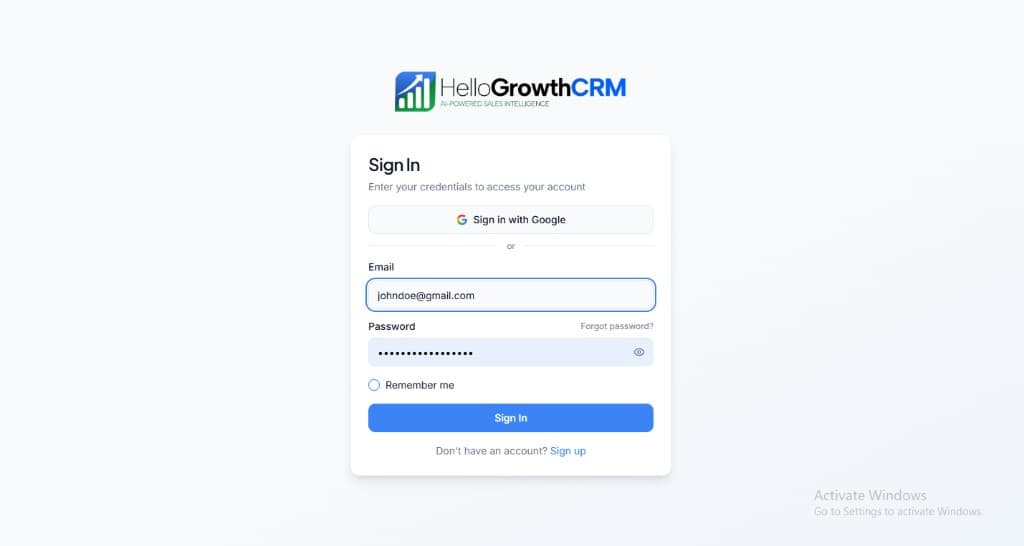
Open login page(opens in a new tab)app.hellogrowthcrm.com/login
Open Settings. In the left sidebar, under Admin, click Settings (you will land on the Settings area; the URL is app.hellogrowthcrm.com/settings).
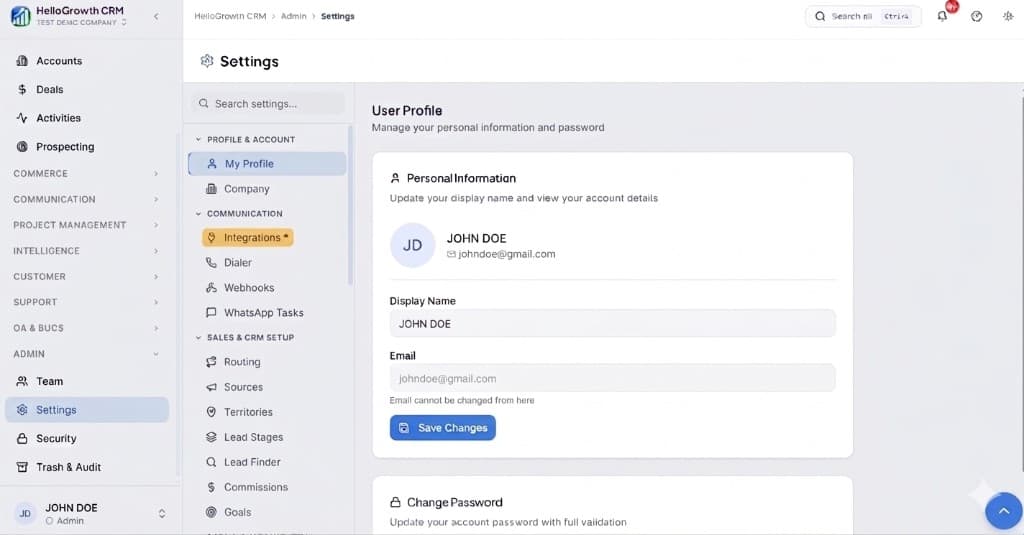
Open Settings(opens in a new tab)app.hellogrowthcrm.com/settings
Go to Integrations. On the Settings screen, use the middle settings menu. Under COMMUNICATION, click Integrations (star icon). Then find and configure this connector—the connector-specific steps below pick up from here.
Open Settings (Integrations)(opens in a new tab)app.hellogrowthcrm.com/settings
- Go to Settings → Integrations → Intercom.
- Enter your Intercom API token.
- Sync contacts and map fields.
- Add notes from the lead or contact detail view when needed.
Best practices
- Qualify in the chat before creating a lead — route only conversations with buying intent into the pipeline, or reps drown in support noise.
- Use Intercom bot qualification answers (team size, use case) to pre-fill CRM fields so reps open the conversation informed.
- Write deal stage back to Intercom notes; an agent who knows the account is in negotiation escalates differently.
- Set an SLA on chat-sourced leads measured in minutes, not days — chat leads decay faster than form fills.
- Keep the full conversation in Intercom and sync the summary; the CRM timeline should tell the story, not archive transcripts.
Best for & common use cases
Bridging sales and support so agents see CRM context in Intercom.
- Escalations from AE to support with full deal history.
Expected outcomes
- Faster lead handoff between tools and CRM owners
- Cleaner activity history for follow-up and reporting
- Lower manual copy-paste errors in the pipeline
Troubleshooting
- Leads missing from CRM: the qualifying tag or bot path isn't the one configured as the trigger — align the trigger with what agents actually use.
- Anonymous visitors not syncing: contacts without a captured email can't be matched — configure the bot to ask for email before handoff.
- Notes not appearing in Intercom: the access token lost the conversations write scope after a workspace change — reauthorise the integration.
FAQ
Governance
Treat API keys and webhooks as production secrets. Align field mapping with your privacy policy and regional regulations (GDPR, marketing consent, telemarketing rules). Your admin controls which roles can install or edit integrations.
Related integrations in this category
Gmail, Calendar, Sheets, and Drive integration: mailbox sync to leads and contacts plus Workspace productivity context alongside pipeline work.
Outlook email and calendar sync: mailboxes on Microsoft 365 log to CRM records with deals and contacts; pairs with Outlook Calendar for meetings.
Social messaging integration: route Meta inbox conversations into CRM threads with contact linkage.
Bot integration for messaging and notifications from CRM events to Telegram chats or channels.
Third-party live chat integration: sync visitors and transcripts into CRM leads and activities.
Embeddable on-site chat with AI auto-responses and human handoff to CRM owners.
Rich CRM notifications in Slack channels (new leads, deal updates, task reminders).
CRM notifications with rich embeds via webhook to your server channels.