HelloGrowthCRM software
Built for real small-business sales teams
HelloGrowthCRM helps reps qualify faster, follow up on time, and close more deals—with practical automation in one place.
- AI lead scoring and pipeline visibility
- Built-in dialer, WhatsApp, and email automation
- Sales forecasting and RevOps-ready reporting
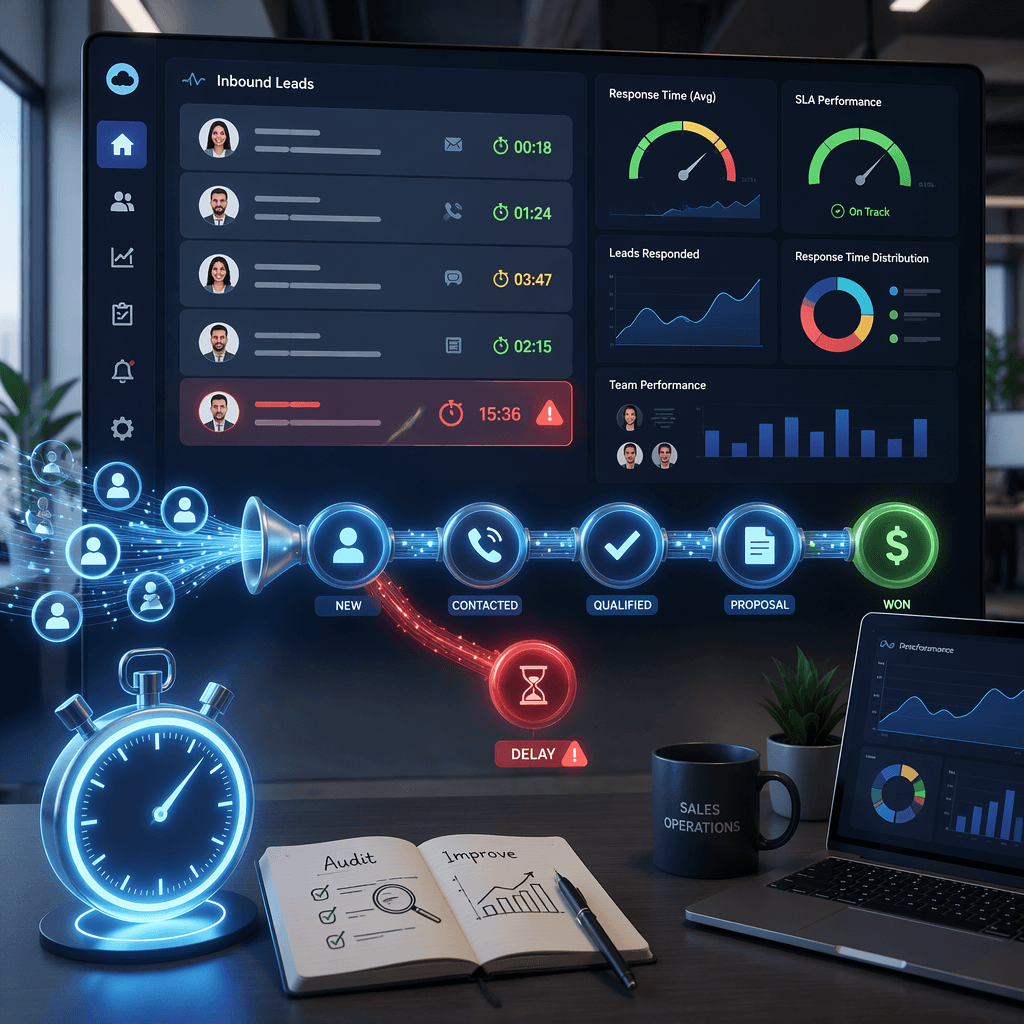
A speed to lead audit tool measures how quickly a sales team responds to new inbound leads across channels like web forms, WhatsApp, missed calls, ads, or marketplaces. It tracks the time between when a lead arrives and when the first meaningful response happens. By analyzing response time data, sales teams can identify bottlenecks, improve routing, and dramatically increase conversion rates. HelloGrowthCRM’s speed-to-lead audit tool combines response-time tracking, automated lead routing, and real-time alerts to help teams fix slow responses before leads go cold.
Key Takeaways
- A speed to lead audit tool tracks the time between lead capture and first sales response across channels.
- Faster responses increase conversion rates, especially for inbound leads actively researching solutions.
- HelloGrowthCRM monitors response times from forms, WhatsApp, ads, missed calls, and marketplace leads.
- Automated routing, alerts, and dashboards help identify slow responses and fix bottlenecks quickly.
- Sales leaders can use response-time data to improve accountability and lead handling performance.
Why Speed to Lead Matters in Modern Sales
Speed to lead is one of the strongest predictors of inbound conversion success. When a buyer submits a form or sends a message, they are usually evaluating multiple vendors at once. The first team to respond often sets the tone.
Research consistently shows that quick responses drive better results. According to Harvard Business Review research, companies that contact potential customers within an hour are far more likely to qualify the lead compared to slower responders. See the research here:
https://hbr.org/2011/03/the-short-life-of-online-sales-leads
In practice, many companies underestimate how slow their response times really are.
In pipeline audits I have run for SaaS and B2B service companies, average response times often look like this:
- Website form leads: 2–12 hours
- Marketplace leads: 4–24 hours
- WhatsApp messages: 1–6 hours
- Missed call follow-ups: sometimes never
These delays happen because leads arrive through different tools. Marketing automation captures forms. Messaging apps receive inquiries. Marketplaces send email notifications. None of these systems talk to each other.
Without a unified tracking layer, sales leaders cannot measure response time accurately.
That is exactly the gap a speed to lead audit tool solves.
What Is a Speed-to-Lead Audit Tool?
A speed-to-lead audit tool tracks and analyzes how quickly sales teams respond to inbound leads across all channels.
Instead of guessing, it records precise timestamps for:
- Lead creation
- Lead assignment
- First outreach attempt
- First successful contact
- Follow-up actions
HelloGrowthCRM’s platform tracks these metrics inside a unified AI CRM so teams can see response performance across the entire pipeline.
A good speed-to-lead audit tool answers questions like:
- How long does it take to respond to new leads?
- Which channels have the slowest responses?
- Which reps respond fastest?
- How many leads wait more than 30 minutes for a response?
- Which routing rules create delays?
These insights allow revenue teams to fix operational issues that reduce inbound conversion.
Common Causes of Slow Lead Response
Most slow response problems are not caused by lazy sales reps. They are caused by broken workflows.
When I audit pipelines, these are the most common issues I see.
1. Leads Arrive in Too Many Tools
Many companies collect inbound leads from several sources:
- Website forms
- WhatsApp messages
- LinkedIn lead forms
- Marketplace inquiries
- Missed calls
- Ad campaign forms
If each source feeds into a different tool, reps must constantly check multiple dashboards.
HelloGrowthCRM solves this by centralizing messages inside a Smart Inbox and syncing channels like WhatsApp into one timeline.
2. No Automatic Lead Routing
Without routing rules, leads sit unassigned until someone manually distributes them.
This delay alone can add hours.
Modern CRM systems route leads automatically based on rules such as:
- geography
- product interest
- company size
- source channel
- round-robin distribution
HelloGrowthCRM uses intelligent routing powered by AI Lead Scoring to assign high-value leads instantly.
3. No Response-Time Visibility
If managers cannot see response-time metrics, slow behavior goes unnoticed.
A proper dashboard should track:
- median response time
- fastest response rep
- slowest response channels
- percentage of leads contacted within SLA
Teams often use pipeline analytics tools like Pipeline Health Score to track these indicators.
4. No Immediate Notifications
When a lead arrives, the assigned rep must know instantly.
In many companies, notifications get buried in email.
With HelloGrowthCRM, teams can trigger alerts through integrations like Slack or push notifications inside the CRM workspace.
Channels a Speed-to-Lead Audit Should Track
Inbound leads rarely come from one source. A proper audit tool must track all major entry points.
HelloGrowthCRM monitors response speed across several common channels.
Website Forms
Website leads are often the highest intent.
Using form integrations with Gmail or marketing platforms, HelloGrowthCRM captures form submissions instantly and assigns them to the correct rep.
Messaging Channels
Buyers increasingly start conversations through messaging.
The WhatsApp & SMS CRM integration tracks:
- first message timestamp
- response delay
- conversation outcomes
This data feeds directly into response-time dashboards.
Marketplace Leads
Marketplaces and directories often send leads through email notifications.
HelloGrowthCRM parses these automatically and converts them into CRM leads so response time can be measured accurately.
Missed Calls
Missed inbound calls are one of the most overlooked lead sources.
When integrated with a CRM Dialer or telephony platform like Twilio, HelloGrowthCRM logs missed calls and tracks how long it takes for a rep to call back.
Paid Ads
Ad platforms like Meta Ads generate high-intent leads. These must be contacted quickly.
The speed-to-lead audit tool measures how long it takes from lead capture to first outreach attempt.
How to Run a Speed-to-Lead Audit: Step-by-Step
1. Centralize Lead Sources
Connect every inbound source into one system. This includes website forms, messaging apps, ads, marketplaces, and missed calls.
2. Track Lead Creation Timestamp
The CRM must log the exact time each lead enters the system. This timestamp becomes the baseline for response-time calculations.
3. Define Response SLAs
Set clear response targets. Many inbound teams aim for responses within 5–15 minutes during business hours.
4. Monitor First Outreach
Track the first outbound action such as a call, message, or email. HelloGrowthCRM captures this automatically through tools like Email Automation and the CRM dialer.
5. Measure Channel-Level Performance
Compare response time by lead source. Marketplace leads may require different workflows than website leads.
6. Identify Bottlenecks
Look for patterns such as unassigned leads, delayed notifications, or overloaded reps.
7. Automate Routing and Alerts
Fix the root cause with routing rules, instant notifications, and task automation.
Response-Time Dashboards for Sales Leaders
A speed-to-lead audit only works if the results are visible.
HelloGrowthCRM provides dashboards that show response performance across the entire team.
Important metrics include:
- Average response time
- Median response time
- Leads contacted within SLA
- Rep-level response speed
- Channel-level response speed
During one CRM rollout I led with a 12-person inside sales team, we discovered that 40% of leads waited over two hours for a first response. The issue was not rep performance. Leads arrived through email notifications and waited for manual assignment.
After implementing automated routing and alerts, response times dropped from 2 hours to under 10 minutes within two weeks.
This type of visibility is why many companies combine response analytics with Revenue Attribution to understand how speed affects revenue.
How Automation Cuts Response Time
Automation removes the operational delays that slow teams down.
HelloGrowthCRM uses several automation layers to improve response speed.
Intelligent Lead Assignment
Routing rules distribute leads instantly to the right rep. Territory rules can be configured with Territory Management.
Automated Follow-Up Tasks
If a rep does not respond within a defined window, the system can create tasks inside Sales Task Boards.
AI Sales Assistance
AI-powered tools such as the AI Sales Copilot can recommend the best response message based on the lead’s source and activity.
Real-Time Notifications
Alerts can be triggered through Slack or CRM notifications to ensure no lead goes unnoticed.
Using Speed-to-Lead Data to Improve Conversion Rates
Response-time analytics become powerful when connected to pipeline performance.
For example, teams can analyze:
- conversion rate vs response time
- revenue vs response time
- lead qualification rate vs response time
In several pipeline reviews I have run, the difference between responding in 5 minutes versus 1 hour changed qualification rates by more than 3x.
Analyst firms like Gartner frequently highlight CRM data visibility as a key driver of sales performance improvements.
https://www.gartner.com/en/sales/topics/crm
By combining response-time data with pipeline analytics and forecasting tools like Sales Forecasting, sales leaders can see the full impact of faster engagement.
When a Speed-to-Lead Audit Works Best
Speed-to-lead audits deliver the most value for teams with significant inbound lead volume.
Typical use cases include:
- SaaS companies with inbound demo requests
- agencies receiving website inquiries
- marketplaces generating supplier leads
- B2B services with WhatsApp inquiries
- e-commerce businesses with high-ticket sales
For teams under five reps, the solution may simply be better notification workflows.
For teams larger than 50 reps, speed-to-lead tracking often requires more advanced routing rules and governance.
HelloGrowthCRM provides both options through configurable workflows and scalable Managed RevOps support.
Try the Speed-to-Lead Audit Tool in HelloGrowthCRM
If your team relies on inbound leads, response speed directly impacts revenue.
HelloGrowthCRM’s speed-to-lead audit tool helps you measure exactly how quickly your team responds across forms, WhatsApp, ads, marketplaces, and missed calls. With automated routing, real-time alerts, and response dashboards, sales teams can eliminate delays and contact leads while intent is still high.
You can explore the full capabilities inside the Features page, review Pricing, or start with a Free Trial to run your first speed-to-lead audit.
About the author
Arjun Mehta is a Sales Operations Lead at HelloGrowthCRM with over 10 years of experience in B2B SaaS revenue operations. He specializes in pipeline analytics, lead routing systems, and CRM automation design. Earlier in his career, he led a CRM implementation project that rebuilt inbound lead routing for a 120‑rep sales organization, reducing average response times from several hours to under 15 minutes.
Frequently Asked Questions
Q: What is a speed to lead audit tool?
A: A speed-to-lead audit tool tracks how quickly sales teams respond to new inbound leads. It measures the time between lead capture and the first outreach attempt across channels like forms, messaging apps, ads, or calls. This helps sales leaders identify delays and improve response workflows.
Q: Why is speed to lead important for inbound sales?
A: Buyers contacting vendors through inbound channels usually evaluate multiple options at the same time. Faster responses increase the chances of engaging the prospect while interest is still high. Studies have shown that contacting leads quickly dramatically improves qualification and conversion rates.
Q: What response time should sales teams aim for?
A: Many high-performing inbound teams target responses within 5–15 minutes during working hours. The exact SLA depends on industry and lead volume. The key goal is to contact leads before competitors do.
Q: Which lead sources should be included in a speed-to-lead audit?
A: A proper audit should track all inbound channels such as website forms, WhatsApp messages, ad campaign leads, marketplaces, and missed calls. Tracking every entry point ensures response-time data reflects real customer activity.
Q: How does HelloGrowthCRM measure response time?
A: HelloGrowthCRM logs the exact timestamp when a lead enters the CRM and when the first outreach happens. It then calculates response-time metrics automatically and shows them in dashboards so teams can monitor performance.
Q: Can automation improve lead response speed?
A: Yes. Automation can route leads instantly, trigger notifications, and create follow-up tasks. These workflows remove manual delays and ensure every new lead is contacted quickly.
Q: Is a speed-to-lead audit useful for small sales teams?
A: Yes, but the implementation may be simpler. Smaller teams often benefit from centralized lead capture and instant notifications. Larger teams typically require advanced routing rules, dashboards, and SLA monitoring.
Frequently Asked Questions
Ready to put this into practice?
Set up your pipeline, WhatsApp follow-ups, and AI lead scoring in minutes — free, no credit card.
Try HelloGrowthCRM freeGet CRM tips in your inbox
Join thousands of sales professionals who get weekly insights on CRM strategy, AI automation, and pipeline optimization.

The HelloGrowthCRM team publishes guides on CRM strategy, AI sales tools, and revenue operations for small business sales teams.