HelloGrowthCRM software
Built for real small-business sales teams
HelloGrowthCRM helps reps qualify faster, follow up on time, and close more deals—with practical automation in one place.
- AI lead scoring and pipeline visibility
- Built-in dialer, WhatsApp, and email automation
- Sales forecasting and RevOps-ready reporting
A CRM for commercial cleaning companies is a customer relationship management system designed to track facility walkthroughs, manage cleaning service bids, and monitor recurring contract renewals in one organized sales pipeline. Instead of juggling spreadsheets, emails, and phone notes, a cleaning business can store every opportunity—from first site inspection to multi‑year service contract—inside a single system. With a structured pipeline, teams can schedule walkthroughs, follow up on proposals, and prevent renewal opportunities from slipping through the cracks.
Key Takeaways
- Commercial cleaning companies manage complex sales cycles that include walkthrough requests, proposal submissions, and recurring contract renewals.
- A pipeline-based CRM helps track each opportunity from first inquiry to signed contract.
- Automated reminders and follow-ups prevent missed bids and delayed responses.
- Contract renewal tracking ensures recurring revenue does not disappear unnoticed.
- Tools like AI Pipeline Management and Email Automation help cleaning teams run sales operations without manual tracking.
Why Commercial Cleaning Companies Struggle With Sales Tracking
Commercial cleaning is a relationship-driven service business. Deals rarely close after a single phone call. Most opportunities follow a predictable but messy process:
- A building manager requests a walkthrough.
- A supervisor visits the facility and assesses cleaning needs.
- The company prepares a bid or service proposal.
- Negotiations happen around scope and frequency.
- A contract is signed for monthly or multi‑year service.
Yet many companies still track these steps manually.
Common tools include:
- Shared spreadsheets
- Email threads
- Paper notes from walkthroughs
- Personal calendars
This setup works for very small teams. It breaks down quickly once a company manages dozens of facilities or multiple sales reps.
According to Gartner's research on CRM systems, companies using structured CRM platforms improve sales forecasting accuracy and pipeline visibility compared to teams relying on fragmented tools.
In commercial cleaning, the risk is simple: missed follow-ups lead to lost contracts.
The Unique Sales Pipeline in the Cleaning Industry
Cleaning services have a different pipeline than typical B2B software or retail sales. The process is tied to physical site visits and recurring service contracts.
A typical cleaning sales pipeline looks like this:
- New inquiry or referral
- Walkthrough scheduled
- Walkthrough completed
- Proposal sent
- Negotiation or revision
- Contract signed
- Onboarding and service start
- Renewal monitoring
Each stage has operational tasks.
For example:
Walkthrough Stage
During a facility walkthrough, teams must capture:
- Square footage
- Floor types
- Restroom counts
- Trash removal requirements
- Cleaning frequency
Without a CRM, these notes often sit in notebooks or phone photos.
With a centralized system like an AI CRM, the walkthrough record becomes part of the deal itself. The sales rep can attach notes, documents, and pricing assumptions directly to the opportunity.
Proposal Stage
Once the walkthrough is complete, the company sends a cleaning proposal.
That proposal usually includes:
- Scope of work
- Cleaning frequency
- Staffing requirements
- Monthly price
- Contract length
Using a system like the Proposal Builder, sales teams can generate proposals faster and track when prospects open them.
In one rollout I led with a 12‑person commercial cleaning sales team, proposal tracking alone reduced lost bids by almost 20%. The issue was not pricing—it was delayed follow-ups after sending proposals.
Why Contract Renewals Are the Biggest Revenue Risk
Many cleaning contracts renew annually or every two to three years.
That means today's revenue depends on contracts signed years ago.
The problem? Many companies forget renewal dates.
Common renewal failures include:
- Contract expiration not tracked
- Facility manager changes
- Competitors approaching the client first
- Pricing not reviewed before renewal
A CRM pipeline solves this by turning renewals into proactive opportunities.
With tools like Revenue Attribution and Customer Health Score, teams can track:
- contract value
- service satisfaction
- renewal probability
When I audit cleaning company pipelines, renewal visibility is almost always missing. Companies track new deals carefully but rely on memory for renewals.
That is dangerous when 60–80% of revenue often comes from recurring contracts.
Research frequently cited in business strategy discussions at Harvard Business Review’s sales topic hub highlights that retaining existing customers is usually far cheaper than acquiring new ones. For cleaning companies, renewal tracking is one of the highest ROI improvements.
How AI Helps Manage Cleaning Sales Pipelines
Modern CRM platforms do more than store contacts. AI features help prioritize work and identify risk in the pipeline.
For commercial cleaning businesses, several capabilities matter most.
AI Lead Scoring for New Opportunities
Not every walkthrough request becomes a contract.
An AI model can prioritize leads based on:
- facility size
- industry type
- location
- contract potential
- past win rates
Tools like AI Lead Scoring automatically rank incoming opportunities so teams focus on high-value properties first.
Automated Follow-Up After Proposals
Cleaning companies often lose deals because the prospect simply forgets to respond.
With Email Automation, teams can create follow-up sequences such as:
- Day 2: proposal confirmation
- Day 5: pricing clarification
- Day 10: reminder email
- Day 14: call task
This removes the need for manual reminders.
Pipeline Risk Alerts
Large facility contracts often stall during negotiation.
AI systems like AI Deal Insights flag deals when:
- there has been no activity
- proposals remain unopened
- walkthroughs have not been scheduled
The sales manager can intervene before the opportunity goes cold.
Communication in One Place
Cleaning clients frequently communicate through different channels:
- phone calls
- SMS
A CRM that includes a unified inbox such as Smart Inbox or messaging through WhatsApp & SMS CRM ensures every conversation stays attached to the deal record.
Managing Site Walkthroughs Without Chaos
Walkthrough scheduling is one of the most time-consuming parts of selling cleaning services.
Facility managers often offer limited time windows.
A CRM helps coordinate these visits.
For example:
- The rep sends a scheduling link using Meeting Scheduler.
- The appointment automatically appears inside the deal timeline.
- Notes from the visit attach to the opportunity record.
This eliminates the typical “Where are the walkthrough notes?” problem.
In one operations project I supported, we mapped every walkthrough to a pipeline stage. That simple change gave leadership a clear view of upcoming bids for the next month.
It also helped predict staffing requirements for potential contracts.
Building a Pipeline That Matches Cleaning Operations
The best CRM pipelines mirror real business workflows.
For commercial cleaning companies, I recommend these stages:
- Inquiry received
- Walkthrough scheduled
- Walkthrough completed
- Proposal drafted
- Proposal sent
- Negotiation
- Contract signed
- Service onboarding
- Renewal monitoring
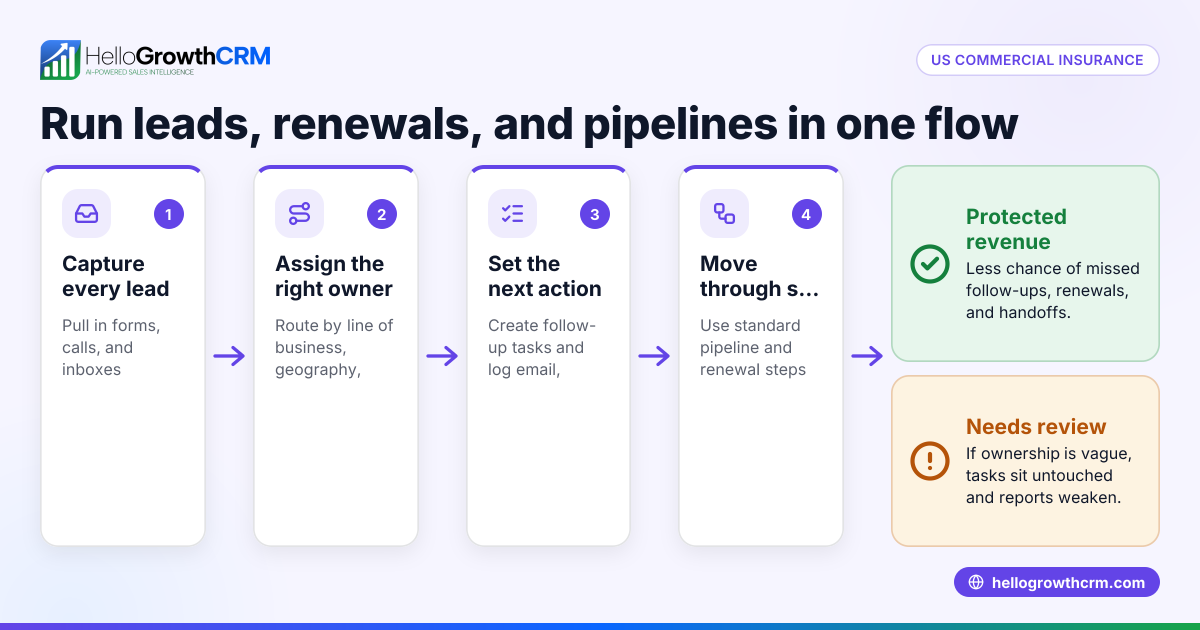
Each stage should trigger tasks automatically.
For example:
- Proposal sent → create follow-up task in 5 days
- Contract signed → trigger onboarding checklist
- Contract start → schedule renewal reminder 90 days before expiration
Systems like Sales Task Boards help teams visualize these steps clearly.
Integrations That Matter for Cleaning Companies
Cleaning businesses rely on several external systems.
A CRM works best when it connects to them.
Key integrations include:
- Email systems through Gmail
- Calendar scheduling through Calendly
- Messaging platforms like WhatsApp
- Accounting systems such as QuickBooks
These integrations ensure quotes, invoices, and communications stay connected to the same customer record.
Without integrations, teams often duplicate work across multiple tools.
How to Set Up a CRM for Commercial Cleaning Companies: Step-by-Step
1. Define Your Sales Pipeline Stages
Map your real sales process from inquiry to renewal. Most cleaning companies need stages for walkthrough scheduling, proposal creation, and contract negotiation.
2. Import Existing Clients and Leads
Upload contacts, facilities, and past contracts into the CRM. This ensures renewal tracking begins immediately.
3. Create Walkthrough Scheduling Workflows
Use tools like Meeting Scheduler so prospects can book site visits directly with your sales team.
4. Standardize Proposal Templates
Build reusable proposals with pricing tables and service scopes using tools like Proposal Builder.
5. Automate Follow-Up Sequences
Set automated email or task reminders using Email Automation so every proposal gets consistent follow-up.
6. Track Contract Start and Renewal Dates
Add renewal triggers and reminders inside the pipeline. This ensures contracts are reviewed before expiration.
7. Monitor Pipeline Health Weekly
Use analytics tools like the Pipeline Health Score to monitor deal velocity, stalled proposals, and upcoming renewals.
Why HelloGrowthCRM Works Well for Cleaning Companies
HelloGrowthCRM was designed for revenue teams that manage multi-stage pipelines and recurring revenue contracts.
For commercial cleaning companies, the platform helps by:
- tracking walkthroughs and proposals in a single pipeline
- automating follow-ups on bids
- monitoring contract renewal timelines
- capturing communication across phone, email, and messaging
- using AI to identify stalled or risky deals
Unlike generic CRM platforms, HelloGrowthCRM focuses heavily on pipeline clarity and automated workflows.
That matters in industries like cleaning services where opportunities can stall between site visits and proposal approvals.
If your team currently tracks deals in spreadsheets or scattered tools, you can explore the full platform capabilities on the Features page or start with a guided Demo. You can also test the system yourself with a Free Trial to see how a structured pipeline improves visibility.
About the author
Daniel Reeves is a Revenue Operations Lead at HelloGrowthCRM with 11 years of experience helping B2B service companies build predictable sales pipelines. He has implemented CRM systems for facility services, logistics providers, and commercial contractors across North America and Europe. One of his recent projects involved redesigning the sales pipeline for a multi‑city commercial cleaning company managing over 400 recurring facility contracts. His work focuses on CRM architecture, pipeline forecasting, and RevOps automation.
Frequently Asked Questions
Q: What is the best CRM for commercial cleaning companies?
A: The best CRM for commercial cleaning companies is one that tracks walkthroughs, proposals, and recurring contracts in a pipeline. Tools like HelloGrowthCRM help manage facility bids, automate follow-ups, and monitor contract renewals in one system.
Q: Why do cleaning companies need a CRM?
A: Cleaning companies manage multiple prospects, site visits, and long-term contracts simultaneously. A CRM organizes these opportunities and ensures proposals, follow-ups, and renewals are tracked consistently.
Q: Can a CRM track contract renewals for cleaning services?
A: Yes. Most modern CRM systems allow businesses to set contract start dates and renewal reminders. This ensures sales teams contact clients before contracts expire and reduces revenue loss.
Q: How does a CRM help with site walkthrough scheduling?
A: A CRM can include built-in scheduling tools or integrations that allow prospects to book walkthrough appointments. These meetings automatically attach to the deal record so notes and follow-ups stay organized.
Q: Is a CRM useful for small cleaning companies?
A: Yes. Even small teams benefit from a structured pipeline that tracks leads and proposals. For companies with fewer than five reps, a simple CRM setup can replace spreadsheets and improve follow-up consistency.
Q: How long does it take to implement a CRM for a cleaning company?
A: Most small and mid-size cleaning businesses can implement a CRM within a few days. The main tasks include importing contacts, defining pipeline stages, and setting up proposal templates and follow-up workflows.
Q: Can HelloGrowthCRM integrate with accounting software used by cleaning companies?
A: Yes. HelloGrowthCRM supports integrations with tools such as QuickBooks and other accounting platforms. This allows cleaning businesses to connect contracts, invoices, and revenue tracking in one system.
Frequently Asked Questions
Ready to put this into practice?
Set up your pipeline, WhatsApp follow-ups, and AI lead scoring in minutes — free, no credit card.
Try HelloGrowthCRM freeGet CRM tips in your inbox
Join thousands of sales professionals who get weekly insights on CRM strategy, AI automation, and pipeline optimization.

The HelloGrowthCRM team publishes guides on CRM strategy, AI sales tools, and revenue operations for small business sales teams.