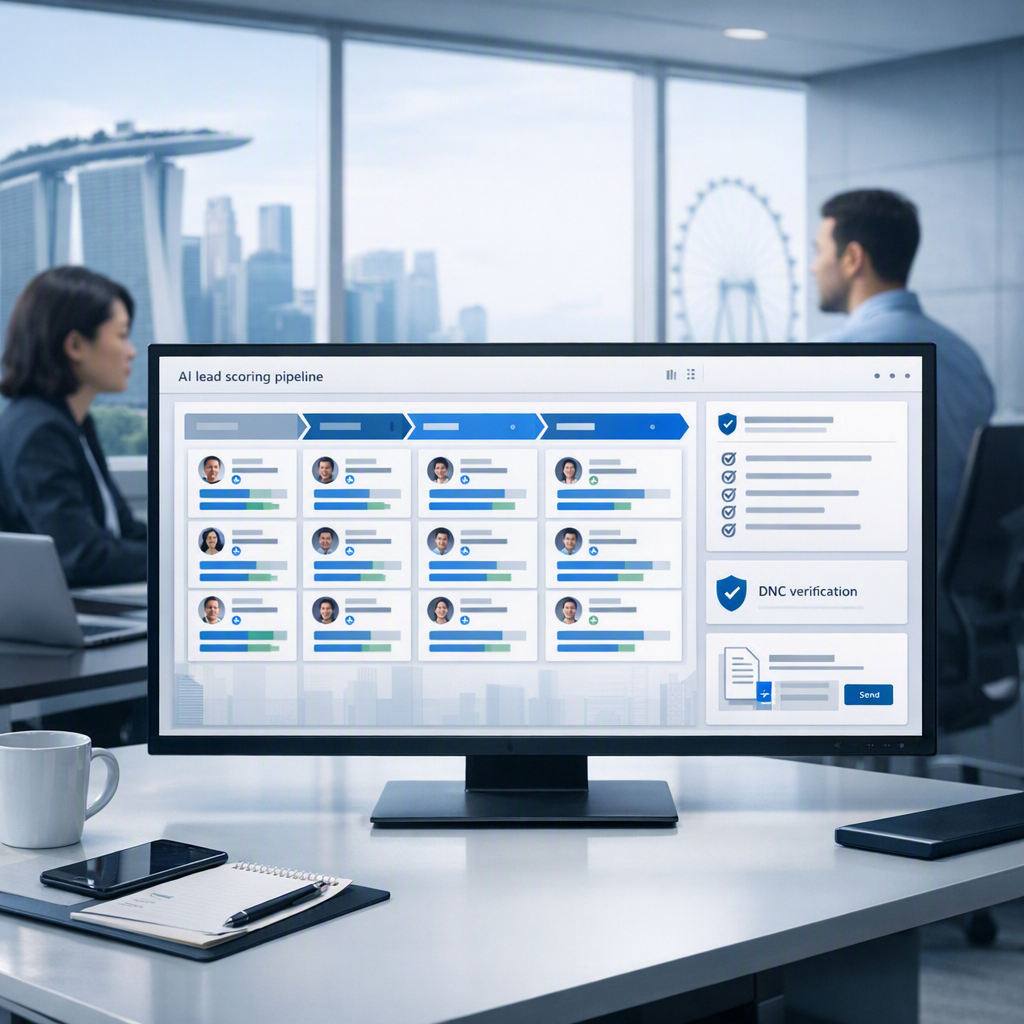
HelloGrowthCRM software
Built for real small-business sales teams
HelloGrowthCRM helps reps qualify faster, follow up on time, and close more deals—with practical automation in one place.
- AI lead scoring and pipeline visibility
- Built-in dialer, WhatsApp, and email automation
- Sales forecasting and RevOps-ready reporting
A CRM for Singapore logistics SMEs is a customer relationship and revenue workflow system that helps freight forwarders and transport teams capture shipper enquiries, manage RFQs and carrier quotes, track PDPA consent, run Do Not Call-safe outreach, and complete PEPPOL-ready invoicing in SGD from one shared platform.
Key Takeaways
- Logistics SMEs need a CRM that fits the RFQ-to-cash flow, not just generic contact storage.
- In Singapore, consent tracking, PDPA controls, and Do Not Call checks should sit inside daily sales work.
- HelloGrowthCRM can connect enquiry capture, quote follow-up, tasking, messaging, and invoice handoff in one workflow.
- PEPPOL billing matters for B2B logistics teams that invoice corporate buyers and public-sector linked customers in SGD.
- Teams in Singapore CBD, Jurong East, and Tampines often win faster when sales, ops, and finance work from one pipeline.
- The best setup is simple: standard fields, stage rules, clear ownership, and compliance steps built into every handoff.
Why logistics SMEs in Singapore need a CRM built for RFQ-to-cash
A CRM for Singapore logistics SMEs is most useful when it mirrors the full RFQ-to-cash process, from inbound shipper enquiry to carrier rate collection, quote follow-up, booking confirmation, invoicing, and payment tracking, while also handling PDPA consent, DNC-safe outreach, and Singapore-specific B2B finance requirements.
Freight forwarding and logistics sales are messy by default. Leads come from email, referrals, WhatsApp, web forms, trade events, and repeat accounts. A shipper in Singapore CBD may ask for urgent air freight to Sydney. Another buyer in Jurong East may want a monthly cross-border trucking rate. A customer in Tampines may ask for warehousing plus local delivery.
If those requests live in inboxes and spreadsheets, teams lose time in three places:
- quote turnaround
- follow-up discipline
- finance handoff
That is why industry fit matters more than generic CRM features. In logistics, the CRM should show:
- enquiry source
- lane and shipment mode
- Incoterms
- cargo type
- chargeable weight or container type
- target gross margin
- promised quote-by date
- carrier quote status
- booking status
- invoice status
In one rollout we did with a 12-person sales team, the biggest issue was not lead generation. It was quote leakage between sales and operations. Reps sent rates by email, but no one tracked whether the customer opened, replied, negotiated, or went silent. A shared pipeline and Smart Inbox fixed that faster than adding more SDR activity.
For logistics teams evaluating software, this is where a purpose-built AI CRM matters. It should not force freight teams to work like generic SaaS sales reps. It should adapt to lanes, carrier responses, booking milestones, and finance triggers.
Singapore also raises the bar on compliance. The Personal Data Protection Commission sets the framework for personal data obligations under the PDPA. Outreach rules also matter when teams call or message prospects, because Singapore’s Do Not Call provisions sit inside the same regulatory environment and should shape your lead handling process.
What the RFQ-to-cash workflow looks like for a freight forwarder
The RFQ-to-cash workflow for a freight forwarder starts with a shipper enquiry, moves through qualification, carrier quote collection, customer proposal, follow-up, booking, job handoff, invoicing, and payment collection, with each step needing clear ownership, timestamps, and compliance checks to prevent missed revenue.
Most Singapore logistics SMEs already do these steps. The problem is they do them across too many tools.
The core stages to track
A practical pipeline for small and mid-sized logistics firms looks like this:
- New enquiry
Lead enters from web, referral, call, email, or WhatsApp. - Qualified RFQ
Team confirms lane, volume, shipment mode, timeline, and buyer fit. - Carrier pricing in progress
Ops or procurement requests rates from shipping lines, airlines, or transport partners. - Quote sent
Customer receives formal offer with validity, surcharges, and service notes. - Negotiation / follow-up
Rep handles price pushback, timing, and service questions. - Won / booking confirmed
Job gets handed to operations with service-level notes intact. - Invoice issued
Finance bills in SGD and sends through the right customer channel, including PEPPOL where needed. - Paid / closed
Cash is received and reconciled.
The data fields that matter
When I have audited pipelines like this, the fastest gains came from standardising fields that reps used every day. For logistics SMEs, include:
- account name and site location
- contact role and buying authority
- consent status and source
- DNC check status
- shipment mode: air, sea, road, courier
- origin and destination
- lane frequency
- cargo category
- estimated revenue and gross margin
- quote due date
- next follow-up date
- billing entity
- PEPPOL required: yes/no
This is where Sales Task Boards, Meeting Scheduler, and Email Automation help. The goal is simple. No enquiry should sit idle without an owner, next step, and due date.
How HelloGrowthCRM supports PDPA, DNC checks, and controlled outreach
HelloGrowthCRM supports PDPA- and DNC-aware logistics selling by giving teams a place to log consent, record communication preferences, restrict outreach workflows, and create auditable contact histories, so reps can follow up quickly without losing sight of Singapore compliance requirements.
This is not legal advice. Teams should still review their exact obligations with counsel. But your CRM should make compliant behaviour easier than non-compliant behaviour.
PDPA-aligned consent tracking
Under Singapore’s PDPA, teams need to handle personal data responsibly. The PDPC overview of the Personal Data Protection Act explains the baseline obligations around collection, use, and disclosure.
Inside the CRM, that means every lead or contact record should capture:
- consent source
- consent date
- purpose of contact
- preferred channel
- opt-out status
- data owner
- retention review date
For example, if a shipper contact at a CBD importer filled out a rate request form, the record should show that web form submission as the source. If a sales rep met a prospect at a trade event in Suntec, that source should be logged too.
With HelloGrowthCRM, teams can combine contact records with WhatsApp & SMS CRM, Gmail, and Slack workflows so outreach history stays visible and reviewable.
Do Not Call-safe outreach practices
Singapore’s DNC rules matter for calls and text marketing. A practical CRM process should require a DNC check before prospecting sequences begin, especially for purchased lists or event lists.
A safe workflow includes:
- store the number in E.164 format
- record DNC check date
- record check result
- block automation for unverified numbers
- require lawful basis or consent notes before SMS or call campaigns
This is especially useful if your team uses a CRM Dialer or AI Voice Agent for outbound follow-up. The system should not just help you call faster. It should help you call safely.
Why audit trails matter
In logistics, accounts often have multiple stakeholders. One consignee contact may approve rates. Another may handle billing. A third may manage operations. Without clean records, reps guess. Good audit trails remove guesswork and reduce risk.
Why PEPPOL-ready billing matters for Singapore B2B logistics teams
PEPPOL-ready billing matters for Singapore B2B logistics teams because many corporate buyers and public-sector related entities expect structured e-invoicing, and a CRM that captures billing details early helps finance issue faster, cleaner invoices without rekeying customer or job data.
Singapore has pushed digital invoicing through the nationwide InvoiceNow framework. IMDA states that InvoiceNow is Singapore’s nationwide e-invoicing network based on the Peppol standard. That matters for logistics firms sending recurring or high-volume B2B invoices.
What finance needs from sales and ops
To avoid invoice delay, sales should capture these fields before handoff:
- legal billing entity
- UEN if needed
- billing address
- PO number
- cost centre or reference
- tax treatment
- PEPPOL / InvoiceNow required
- payment terms
- contact for accounts payable
When those fields are missing, finance chases the rep, the customer waits, and cash collection slips.
HelloGrowthCRM helps by connecting pipeline records to downstream billing triggers. With Revenue Attribution, Proposal Builder, and integrations like QuickBooks, Stripe, and All Integrations, logistics SMEs can reduce rework between commercial and finance teams.
A simple comparison of process maturity
| Workflow area | Spreadsheet + inbox approach | HelloGrowthCRM approach |
|---|---|---|
| Enquiry capture | Manual forwarding and copy-paste | Central lead capture with owner and source |
| Carrier quote tracking | Hidden in email threads | Deal record with tasks, notes, and due dates |
| Follow-up | Rep memory and calendar reminders | Automated sequences and next-step tracking |
| PDPA consent records | Scattered notes | Structured fields and activity history |
| DNC checks | Manual and inconsistent | Required checkpoints before outreach |
| Invoice handoff | Finance rekeys data | Shared record with billing fields |
| Reporting | End-of-month manual rollups | Live pipeline and forecast visibility |
This is also where Sales Forecasting and AI Pipeline Management become useful. Forecast quality improves when quote stages are tied to real operational milestones, not rep optimism.
How to set up a CRM for Singapore logistics SMEs: Step-by-Step
Setting up a CRM for Singapore logistics SMEs means mapping your actual RFQ-to-cash stages, defining compliance fields, standardising follow-up rules, connecting communication channels, and linking finance handoff data so sales, ops, and billing work from one trusted system instead of disconnected inboxes and spreadsheets.
- Map your current workflow
List every step from enquiry to payment. Include who owns each handoff. Do this for air, sea, and local transport if your process differs. - Define required fields
Make lane, shipment mode, quote due date, margin, consent status, DNC check status, and billing requirements mandatory. Keep the form short enough for reps to use. - Build your pipeline stages
Set stages like New Enquiry, Qualified RFQ, Pricing Pending, Quote Sent, Negotiation, Won, Invoice Issued, and Paid. Avoid too many stages. - Create service-specific playbooks
Use different templates for FCL, LCL, air freight, courier, and warehousing. This helps reps send faster and more accurate replies through Email Automation. - Connect your channels
Sync email, calling, meeting booking, and messaging. HelloGrowthCRM works better when Google Meet, Microsoft Teams, WhatsApp, and calendars are connected. - Set compliance checkpoints
Add consent capture, DNC verification, and opt-out rules to your workflows. Do not leave them as training notes only. - Automate follow-up and risk flags
Use AI Lead Scoring and AI Deal Insights to highlight stale quotes, overdue responses, and at-risk opportunities. - Link sales to finance handoff
Push won deals into invoicing prep with billing fields complete. If your buyers need PEPPOL support, flag it before service starts. - Review weekly metrics
Track quote turnaround time, stage velocity in days, win rate by lane, gross margin by rep, and days from booking to invoice.
A good starting target is simple. Every active enquiry should have one owner, one next action, and one due date. If you want to quantify the business case first, use the CRM ROI Calculator or assess process gaps with the RevOps Maturity Assessment.
What features matter most for freight forwarders and logistics sales teams
The best CRM features for freight forwarders and logistics sales teams are shared inboxes, quote-stage visibility, task automation, communication logging, forecasting, and account-level history, because logistics deals move across sales, operations, and finance and need one source of truth to keep pace.
Priority features to look for
Choose a CRM that can handle:
- multi-contact accounts
- quote and lane tracking
- follow-up automation
- task queues for inside sales
- messaging and calling logs
- margin-aware forecasting
- handoff notes for operations
- invoice preparation fields
- dashboards by branch or territory
If you manage teams across CBD, Jurong East, and Tampines, Territory Management helps assign accounts and protect ownership. If reps need coaching on quote follow-up, AI Sales Copilot can suggest next actions after calls and meetings. If deal slippage is common, the Deal Risk Agent is useful for spotting stalled opportunities before month-end.
A realistic limitation to plan for
This approach works very well for SMEs and mid-market teams under 50 reps. Above that, you may need deeper TMS, WMS, or ERP orchestration and more complex data governance. A CRM should run the commercial workflow. It should not replace a full transport management stack.
HelloGrowthCRM is our product, so that bias should be clear. But that also means this guide is based on the exact workflow issues we see in logistics deployments, not a generic software checklist.
For Singapore SMEs exploring digital adoption, IMDA’s SMEs Go Digital programme is also worth reviewing. It gives a useful benchmark for digital readiness and process improvement, even if your final stack includes multiple systems.
If your team wants a cleaner RFQ-to-cash process, try HelloGrowthCRM for Singaporean logistics teams. You can review Features, explore Pricing, book a Demo, or start a Free Trial to see how one platform can connect enquiries, quote follow-up, compliance tracking, and PEPPOL-ready billing handoff in SGD.
About the author
Marcus Tan is a Revenue Operations Lead at HelloGrowthCRM with 11 years of experience in B2B SaaS, CRM implementation, and commercial process design. He has led CRM and RevOps rollouts for sales teams across logistics, industrial services, and B2B distribution in Singapore. One project that informed this article involved redesigning an RFQ-to-cash workflow for a freight services team with 12 sales and operations users, reducing quote follow-up gaps and improving invoice handoff quality.
Frequently Asked Questions
Q: What is the best CRM for Singapore logistics SMEs?
A: The best CRM for Singapore logistics SMEs is one that fits the RFQ-to-cash workflow, tracks PDPA consent, supports DNC-safe outreach, and prepares clean billing handoffs for PEPPOL-ready invoicing. For many growing teams, HelloGrowthCRM fits this need better than a generic contact database because it connects sales, ops, and finance work.
Q: How does a CRM help freight forwarders in Singapore?
A: A CRM helps freight forwarders in Singapore by centralising shipper enquiries, quote tracking, follow-ups, booking handoffs, and invoice preparation in one system. This reduces missed quotes, improves response speed, and gives managers clearer visibility across branches and lanes.
Q: Does a CRM need PDPA features for logistics sales teams?
A: Yes, a CRM for logistics sales teams in Singapore should support PDPA-aligned data handling because reps collect and use personal contact data every day. At minimum, it should record consent source, communication preferences, opt-outs, and access-controlled activity history.
Q: How do DNC checks fit into a logistics CRM workflow?
A: DNC checks fit into a logistics CRM workflow by acting as a required step before outbound calls or SMS campaigns begin. The safest setup logs check dates, results, and outreach permissions directly on the contact record so reps do not rely on memory.
Q: Why is PEPPOL important for logistics SMEs in Singapore?
A: PEPPOL is important for logistics SMEs in Singapore because many B2B buyers want structured electronic invoices that are faster to process and easier to reconcile. Capturing billing data early in the CRM helps finance issue compliant invoices with less rework.
Q: Can HelloGrowthCRM replace a transport management system?
Frequently Asked Questions
Ready to put this into practice?
Set up your pipeline, WhatsApp follow-ups, and AI lead scoring in minutes — free, no credit card.
Try HelloGrowthCRM freeGet CRM tips in your inbox
Join thousands of sales professionals who get weekly insights on CRM strategy, AI automation, and pipeline optimization.

The HelloGrowthCRM team publishes guides on CRM strategy, AI sales tools, and revenue operations for small business sales teams.