HelloGrowthCRM software
Built for real small-business sales teams
HelloGrowthCRM helps reps qualify faster, follow up on time, and close more deals—with practical automation in one place.
- AI lead scoring and pipeline visibility
- Built-in dialer, WhatsApp, and email automation
- Sales forecasting and RevOps-ready reporting
A CRM for logistics companies in India is a customer relationship management system designed to capture shipper inquiries, manage freight quotes, track follow-ups, and monitor shipments from the first inquiry to final dispatch. Instead of managing calls, WhatsApp messages, spreadsheets, and email threads separately, logistics teams use a CRM to organize every lead and deal inside a single pipeline. For Indian freight brokers, transport aggregators, and 3PL providers, this means faster quote responses, fewer missed follow-ups, and better visibility across sales and operations.
Key Takeaways
- Logistics companies in India receive shipper leads from calls, WhatsApp, marketplaces, and email, which makes tracking quotes difficult without a centralized CRM.
- A logistics CRM helps teams manage shipper inquiries, freight quotes, negotiations, and dispatch updates inside one pipeline.
- Automation tools such as Email Automation and WhatsApp messaging reduce manual follow-ups for freight quotes.
- AI tools like AI Lead Scoring help logistics teams prioritize high-value shipments and enterprise clients.
- Integrated communication tools such as WhatsApp & SMS CRM ensure that no shipper inquiry gets missed.
- HelloGrowthCRM provides a unified system for logistics sales, operations, and dispatch teams.
Why Indian Logistics Companies Struggle to Track Shipper Leads
India’s logistics industry is fragmented and fast-moving. Freight companies often receive inquiries from many sources at the same time. Without a structured system, tracking conversations and quotes becomes difficult.
Most logistics sales teams handle inquiries from:
- WhatsApp messages from shippers
- Phone calls from transport brokers
- Marketplace platforms like LoadShare or Transporter listings
- Email inquiries from enterprise clients
- Website lead forms
A typical logistics sales executive in cities like Mumbai, Delhi, Ahmedabad, or Chennai may handle 30–50 inquiries per day. Many of these requests involve different routes, vehicle types, and price negotiations.
When these conversations stay scattered across phones, Excel sheets, and inboxes, several problems appear:
- Freight quotes get lost in chat threads
- Sales reps forget to follow up with shippers
- Managers cannot see which deals are active
- Dispatch teams receive incomplete booking details
A modern AI CRM solves this by centralizing every shipper conversation and deal into one place.
Instead of searching through WhatsApp or call logs, teams can see every inquiry organized in a structured pipeline.
What a CRM Pipeline Looks Like for Logistics Companies
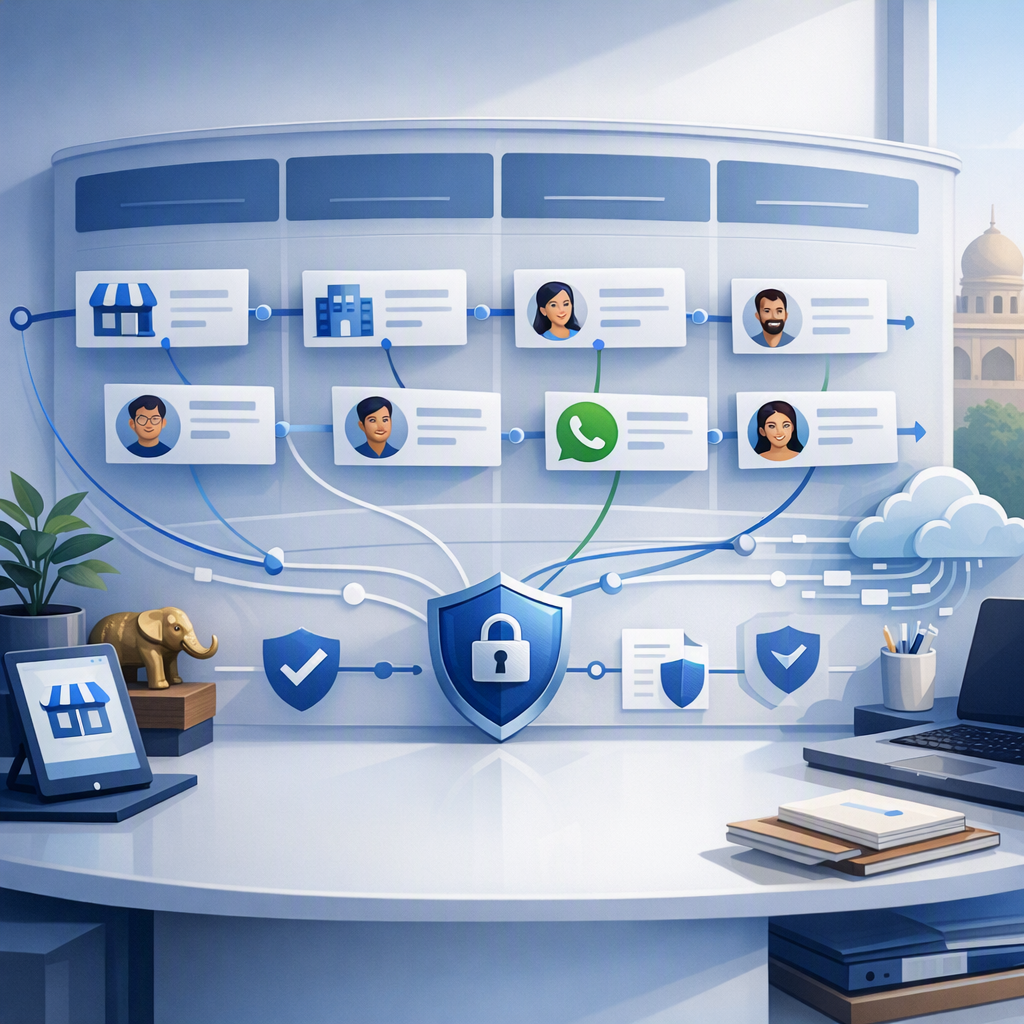
A CRM pipeline helps logistics teams visualize the journey from the first inquiry to dispatch confirmation.
Most freight companies follow a similar deal flow.
1. Shipper Inquiry
The process starts when a shipper requests a quote. This may include:
- Pickup and delivery locations
- Cargo type
- Vehicle requirement
- Dispatch date
- Load size or weight
With integrations like WhatsApp and Gmail, HelloGrowthCRM automatically converts these inquiries into leads inside the system.
2. Quote Preparation
Sales teams evaluate routes, truck availability, and market rates before sending a freight quote.
Instead of drafting quotes manually, teams can generate professional freight proposals using tools like the Proposal Builder.
This keeps quotes consistent and easy to track.
3. Negotiation and Follow-Ups
Shippers often negotiate freight pricing or timelines.
Without a CRM, many sales reps forget to follow up after sending a quote.
Automation tools such as Email Automation and follow-up reminders ensure that each quote receives timely follow-ups.
4. Booking Confirmation
Once a shipper approves the quote, the deal moves to the booking stage.
The CRM records:
- Final freight price
- Vehicle type
- Pickup time
- Dispatch contact details
This information becomes instantly available to dispatch teams.
5. Dispatch and Completion
After vehicle assignment, the deal moves to the final stage of the pipeline.
Sales managers can track:
- Which shipments were dispatched
- Revenue generated per deal
- Win rates for quotes
Tools like Revenue Attribution help logistics companies measure how many inquiries convert into paying shipments.
Managing Shipper Communication Across Channels
Indian logistics businesses rely heavily on phone calls and WhatsApp for communication.
However, these channels are difficult to manage when used outside a CRM.
A centralized communication system solves this problem.
WhatsApp Conversations with Shippers
Many transport companies receive their first inquiry on WhatsApp.
With WhatsApp & SMS CRM, these conversations appear directly inside the CRM timeline.
Sales reps can:
- Reply to shippers without switching apps
- Attach quotes or documents
- Assign conversations to team members
Every message stays linked to the shipper’s deal record.
Phone Call Tracking
Freight deals often require multiple phone calls.
A built-in CRM Dialer allows teams to make calls directly from the CRM while automatically recording call activity.
Managers can see:
- How many calls each rep makes
- Which inquiries receive follow-ups
- Which conversations lead to bookings
This visibility helps logistics companies improve their sales process.
Shared Communication Inbox
When logistics companies grow, multiple team members handle shipper communication.
A shared system such as Smart Inbox helps teams manage conversations without confusion.
It prevents situations where two sales reps reply to the same shipper or where a lead goes unanswered.
Using AI to Prioritize High-Value Freight Deals
Not every inquiry leads to a profitable shipment.
Some leads involve small shipments, low-margin routes, or unrealistic rates.
AI-powered CRM tools help logistics companies focus on the most valuable deals.
For example, AI Lead Scoring automatically ranks shipper inquiries based on factors such as:
- Shipment size
- Route profitability
- Past shipper behavior
- Quote engagement
High-value opportunities move to the top of the pipeline.
Sales teams can spend more time closing profitable freight deals.
AI also helps with pipeline monitoring.
Tools like AI Pipeline Management detect stalled deals and suggest follow-ups before opportunities go cold.
Aligning Sales and Dispatch Teams
One of the biggest challenges in logistics companies is the gap between sales and operations.
Sales teams promise dispatch timelines, while operations teams manage vehicle availability.
Without shared visibility, miscommunication becomes common.
A unified CRM helps both teams stay aligned.
Sales teams can capture detailed shipment requirements in the CRM.
Dispatch teams can view these details instantly and assign vehicles accordingly.
Task management tools such as Sales Task Boards help teams track operational steps like:
- Vehicle confirmation
- Driver assignment
- Dispatch scheduling
- Shipment completion
This reduces confusion and improves operational efficiency.
How to Implement a CRM for Logistics Companies in India: Step-by-Step
- Capture All Lead Sources
Connect lead channels such as WhatsApp, website forms, and email to your CRM. Integrations like WhatsApp and Zapier automatically capture shipper inquiries.
- Create a Logistics Sales Pipeline
Define stages such as Inquiry, Quote Sent, Negotiation, Booking Confirmed, and Dispatch Scheduled. This structure helps teams track freight deals clearly.
- Standardize Freight Quote Templates
Use structured templates for freight quotes. Tools like the Proposal Builder help teams send consistent and professional quotations.
- Automate Quote Follow-Ups
Set automated reminders and follow-up messages using Email Automation. This ensures every shipper receives timely responses.
- Enable Call and WhatsApp Tracking
Use a built-in communication system such as the CRM Dialer and WhatsApp integration so all conversations stay linked to deals.
- Use AI for Deal Prioritization
Activate tools like AI Lead Scoring and pipeline monitoring to focus on profitable freight opportunities.
- Track Revenue and Dispatch Performance
Monitor deal conversion rates and revenue with analytics tools like Revenue Attribution.
Why HelloGrowthCRM Works Well for Indian Logistics Teams
Many logistics companies in India still rely on spreadsheets, WhatsApp chats, and manual call tracking.
This approach may work for small teams, but it breaks quickly as inquiries increase.
HelloGrowthCRM brings the entire process into one platform.
Key advantages include:
- Unified communication across calls, WhatsApp, and email
- AI-powered deal prioritization and pipeline monitoring
- Automated quote follow-ups
- Clear visibility into shipment revenue
- Easy integration with logistics workflows
Unlike generic CRMs, HelloGrowthCRM is built for fast-moving sales environments where inquiries arrive from many channels.
For logistics companies operating in hubs like Mumbai, Gurugram, Bangalore, or Pune, this centralized system helps teams respond faster and close more freight bookings.
If your team currently manages shipper leads across scattered tools, explore HelloGrowthCRM’s Features or start a Free Trial to see how a unified pipeline can improve your logistics sales process.
Frequently Asked Questions
Q: What is a CRM for logistics companies in India?
A: A CRM for logistics companies in India is a system that helps freight brokers, transport companies, and 3PL providers manage shipper inquiries, freight quotes, and shipment bookings. It organizes all leads and deals into a single pipeline. This makes it easier to track conversations, follow-ups, and dispatch progress.
Q: Why do logistics companies need a CRM?
A: Logistics companies often receive inquiries through WhatsApp, phone calls, and marketplace platforms. Without a CRM, these leads become difficult to track. A CRM centralizes communication, manages quotes, and ensures timely follow-ups with shippers.
Q: Can a CRM manage WhatsApp inquiries from shippers?
A: Yes. A CRM with WhatsApp integration allows teams to capture and manage shipper messages directly inside the system. Tools like WhatsApp & SMS CRM store conversations alongside deal records. This keeps all communication organized.
Q: How does AI help logistics sales teams?
A: AI helps logistics teams identify the most valuable opportunities. Tools like AI Lead Scoring rank shipper inquiries based on profitability and engagement. This helps sales reps focus on deals that are more likely to convert.
Q: How can a CRM improve freight quote follow-ups?
A: A CRM tracks when quotes are sent and reminds sales reps to follow up with shippers. Automated tools like Email Automation can send reminders and follow-up messages automatically. This reduces missed opportunities.
Q: Is HelloGrowthCRM suitable for small logistics companies?
A: Yes. HelloGrowthCRM works for both small freight brokers and large logistics companies. Smaller teams benefit from automation and centralized lead tracking, while larger companies gain visibility across multiple sales and dispatch teams.
Q: How quickly can a logistics company implement a CRM?
A: Most logistics companies can set up their CRM pipeline within a few days. Integrations with tools like WhatsApp, email, and call systems allow teams to start capturing leads immediately. Over time, automation and AI features can further improve efficiency.
Frequently Asked Questions
Ready to put this into practice?
Set up your pipeline, WhatsApp follow-ups, and AI lead scoring in minutes — free, no credit card.
Try HelloGrowthCRM freeGet CRM tips in your inbox
Join thousands of sales professionals who get weekly insights on CRM strategy, AI automation, and pipeline optimization.

The HelloGrowthCRM team publishes guides on CRM strategy, AI sales tools, and revenue operations for small business sales teams.