HelloGrowthCRM software
Built for real small-business sales teams
HelloGrowthCRM helps reps qualify faster, follow up on time, and close more deals—with practical automation in one place.
- AI lead scoring and pipeline visibility
- Built-in dialer, WhatsApp, and email automation
- Sales forecasting and RevOps-ready reporting
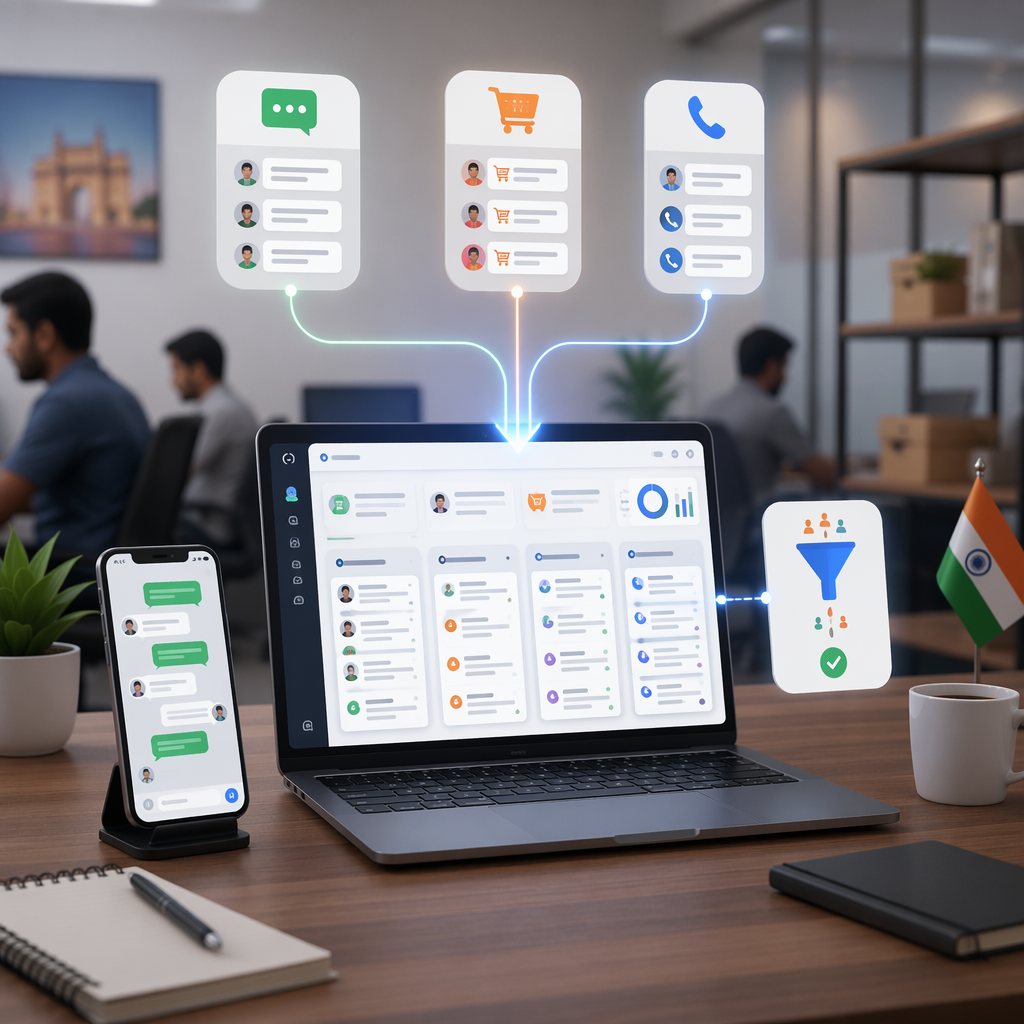
Managing IndiaMART leads in a CRM in India means capturing inquiries from IndiaMART, TradeIndia, WhatsApp, website forms, and phone calls into one centralized system where sales teams can track conversations, assign follow-ups, and move prospects through a structured pipeline. For many Indian SMEs, especially in tier‑2 and tier‑3 cities, this shift from scattered spreadsheets and personal phones to a unified CRM improves response speed, prevents lead leakage, and creates predictable sales processes.
Key Takeaways
- Many Indian B2B SMEs lose leads because IndiaMART, TradeIndia, WhatsApp, and website inquiries are handled across different tools.
- A centralized CRM helps teams capture leads automatically, assign them to sales reps, and track every follow‑up.
- Structured pipelines help businesses manage distributor, dealer, and bulk order opportunities more effectively.
- Automated reminders, messaging, and lead scoring improve response speed and conversion rates.
- Tools like AI CRM systems help Indian sales teams operate professionally without complex enterprise software.
Why Indian SMEs Struggle to Manage Marketplace Leads
Platforms like IndiaMART and TradeIndia are powerful lead sources for manufacturers, wholesalers, exporters, and service providers across India. A small manufacturing company in Rajkot, a packaging supplier in Coimbatore, or a machinery distributor in Ludhiana may receive dozens of inquiries every day.
But most companies manage those leads using manual workflows:
- Leads arrive via email or IndiaMART dashboards
- Salespeople copy details into spreadsheets
- Follow-ups happen through personal WhatsApp numbers
- Phone calls are not recorded or tracked
- Managers have no visibility into deal progress
This setup creates several problems.
Leads Get Lost Between Tools
Sales teams often track leads in Excel while communicating through WhatsApp or phone calls. When a salesperson forgets to update the spreadsheet, the lead disappears from the system.
A centralized platform with tools like Smart Inbox and WhatsApp & SMS CRM keeps all conversations connected to the lead record.
Follow-Ups Depend on Memory
In many Indian SMEs, follow-ups rely on the salesperson remembering to call back. During busy weeks or travel schedules, those reminders slip.
CRM systems with structured tasks such as Sales Task Boards help teams see pending calls, demos, or quotations in one place.
Managers Cannot See Pipeline Health
Sales owners often ask questions like:
- Which IndiaMART leads are serious buyers?
- How many quotations are pending?
- Which dealers are likely to close this month?
Without structured tracking, it is difficult to answer.
Using tools like AI Pipeline Management and Sales Forecasting helps managers understand which deals need attention.
The Most Common Lead Sources for Indian B2B SMEs
Indian SME sales teams rarely depend on a single lead source. Most companies generate inquiries from multiple channels.
Marketplace Platforms
B2B marketplaces are still the primary lead generators for many industries.
Common platforms include:
- IndiaMART
- TradeIndia
- ExportersIndia
- Alibaba (for export businesses)
These platforms deliver buyer inquiries, but managing them manually becomes difficult as volumes grow.
WhatsApp Business
WhatsApp is the most widely used business communication channel in India. Buyers often ask for:
- Product catalogs
- Price lists
- Sample availability
- Delivery timelines
When conversations happen on personal phones, the company loses visibility. Integrating conversations using WhatsApp inside a CRM solves this problem.
Website Lead Forms
Many SMEs now run simple websites or landing pages that collect inquiries. These leads should automatically flow into a CRM instead of email inboxes.
Advertising Channels
Businesses using Meta or Google ads generate leads through forms or landing pages. Integrations such as Meta Ads help capture these leads directly into the CRM.
Phone Calls
In industries like machinery, industrial supplies, or packaging, buyers often call directly after seeing a listing or advertisement.
A built-in CRM Dialer ensures every call is logged against the lead.
Why a CRM Is Critical for Tier‑2 and Tier‑3 Sales Teams
Many growing Indian companies are based outside major metro cities. Cities like Surat, Indore, Nagpur, Coimbatore, and Kanpur have strong manufacturing and trading ecosystems.
These teams face unique challenges.
Small Sales Teams Managing Large Territories
A company may have only 3–5 salespeople handling entire states. They manage dealers, distributors, and direct buyers simultaneously.
With Territory Management, leads can be automatically assigned based on geography.
Field Sales and Dealer Networks
Industrial sales often involve:
- Dealer relationships
- Distributor negotiations
- Factory visits
- Product demos
Tracking these interactions becomes easier when activities and notes are logged in one CRM system.
Slow Follow-Up Cycles
Buyers for industrial products often take weeks or months to finalize orders. A structured pipeline and automated reminders ensure deals stay active.
Solutions like AI Deal Insights highlight stalled opportunities and suggest next actions.
Benefits of Managing IndiaMART Leads in One CRM
Centralizing leads from marketplaces, WhatsApp, and websites creates measurable improvements for sales teams.
Faster Lead Response
Responding within minutes increases the chance of winning the deal. CRM automation helps route new leads instantly to the right salesperson.
Teams can also automate messages using Email Automation or WhatsApp follow-ups.
Clear Sales Pipeline Visibility
Managers can see:
- New inquiries
- Quotations sent
- Negotiations in progress
- Deals won or lost
Using dashboards like the Pipeline Health Score helps leadership identify gaps early.
Better Lead Qualification
Not every inquiry from IndiaMART is serious. Some buyers only compare prices.
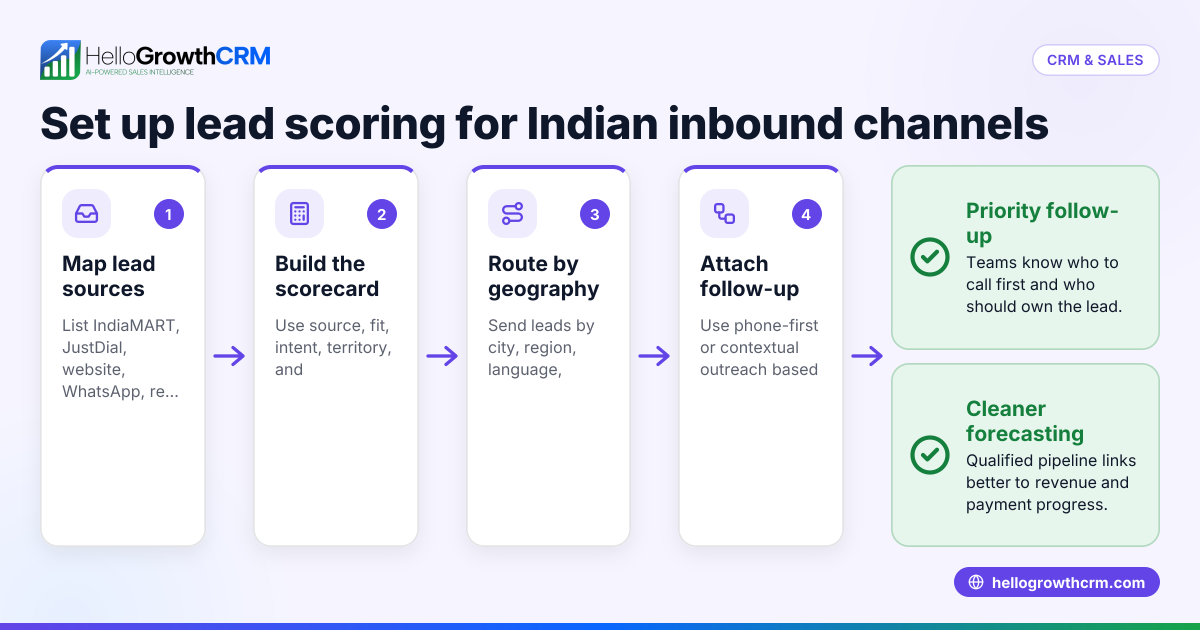
Tools like AI Lead Scoring analyze engagement and activity to prioritize high‑intent buyers.
Stronger Sales Discipline
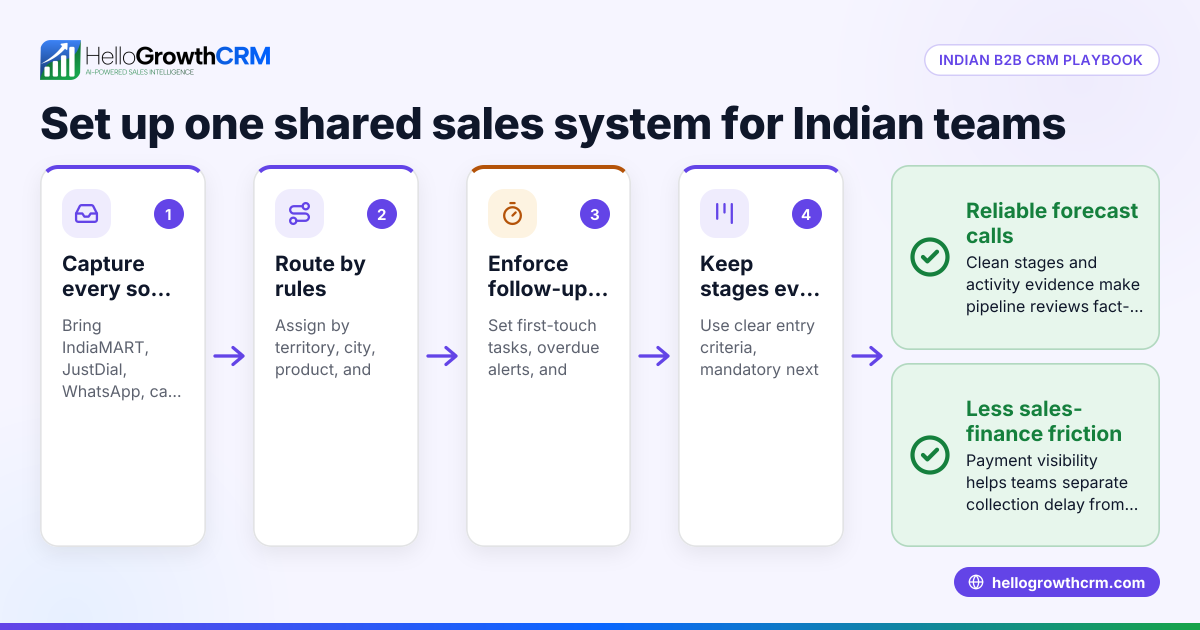
A CRM creates a structured workflow:
- Every lead must be assigned
- Every deal must have a stage
- Every salesperson must log activity
This improves accountability across the team.
How to Manage IndiaMART Leads in CRM India: Step-by-Step
1. Capture Leads Automatically
Connect IndiaMART emails, website forms, and marketing channels so every inquiry flows into the CRM automatically.
Integrations like Gmail and automation tools such as Zapier help route leads into your pipeline.
2. Create a Structured Sales Pipeline
Define clear deal stages such as:
- New Inquiry
- Qualification
- Quotation Sent
- Negotiation
- Order Confirmed
Tools like AI Pipeline Management help teams track deal movement easily.
3. Assign Leads to the Right Salesperson
Distribute leads based on territory, product category, or dealer network.
With Territory Management, a Gujarat inquiry can automatically go to the regional salesperson.
4. Track Conversations in One Inbox
Consolidate email, WhatsApp, and SMS conversations into one workspace. This prevents communication gaps when salespeople are unavailable.
Using tools like Smart Inbox ensures every message is visible to the team.
5. Schedule Follow-Ups and Tasks
Create follow-up reminders for calls, meetings, and quotation reviews.
Tools like Meeting Scheduler allow prospects to book product demos easily.
6. Analyze Pipeline and Forecast Revenue
Track which deals are moving forward and which ones are stalled.
Solutions such as Sales Forecasting help managers estimate upcoming revenue based on pipeline activity.
Automating Follow-Ups for High-Volume Marketplace Leads
One challenge with IndiaMART or TradeIndia leads is volume. Sales teams may receive 30–100 inquiries per week.
Automation ensures consistent communication.
Automated First Responses
Send instant WhatsApp or email replies acknowledging the inquiry and requesting additional details.
This creates a professional experience even outside working hours.
Follow-Up Sequences
Many buyers need multiple follow-ups before responding. Automated sequences can send reminders or messages at scheduled intervals.
You can even use tools from the Sales Tools collection to design effective follow-up workflows.
AI Assistance for Sales Teams
AI-powered systems like AI Sales Copilot analyze conversations and suggest next actions. This helps inexperienced sales reps handle negotiations more effectively.
Managing Dealer and Distributor Pipelines
Many Indian SMEs sell through distributors rather than direct customers.
CRM pipelines should reflect this reality.
Dealer Qualification
Not every distributor becomes a long-term partner. Track early conversations, sample orders, and territory discussions.
Distributor Performance Tracking
Metrics such as repeat orders, payment timelines, and inventory movement can help evaluate partner performance.
Account Health Monitoring
Tools like Customer Health Score help identify inactive dealers who may need engagement.
Comparing CRM Options for Indian SMEs
Several CRM platforms operate in the Indian market. Popular options include Zoho CRM, Freshsales, and LeadSquared.
These tools provide general CRM capabilities but may require customization for marketplace-driven sales workflows.
HelloGrowthCRM focuses specifically on modern sales teams using AI and automation. Features like AI CRM, automated pipeline management, and integrated communication tools help Indian SMEs move faster without complex setup.
The platform also integrates with popular tools through the All Integrations ecosystem.
Getting Started with a Centralized Sales System
Transitioning from spreadsheets to a CRM may feel like a big change. But most Indian SMEs can implement a structured system within a few weeks.
Start by:
- Importing existing leads from spreadsheets
- Connecting email and WhatsApp channels
- Creating pipeline stages
- Training sales reps on follow-up tracking
Many companies also evaluate ROI using tools like the CRM ROI Calculator to understand how improved lead management impacts revenue.
When implemented correctly, a centralized CRM dramatically improves sales discipline and conversion rates.
Indian SMEs that rely on marketplace leads need speed, visibility, and structure. HelloGrowthCRM is designed for exactly this environment.
If your team receives leads from IndiaMART, TradeIndia, WhatsApp, and website forms, you can bring everything into one place with HelloGrowthCRM. Explore the platform’s Features, see how it fits your workflow with a Demo, or start a Free Trial to experience how Indian sales teams manage leads and pipelines more efficiently.
Frequently Asked Questions
Q: What is the best way to manage IndiaMART leads in CRM in India?
A: The best approach is to automatically capture leads from IndiaMART emails or APIs into a CRM where they can be assigned, tracked, and followed up. A centralized system ensures no inquiry is missed and helps sales teams maintain structured pipelines.
Q: Can WhatsApp conversations be tracked inside a CRM?
A: Yes. Many modern CRM platforms integrate with WhatsApp so conversations appear directly within the lead record. This helps managers track communication history and ensures sales reps follow up consistently.
Q: Why do Indian SMEs lose leads from marketplaces like IndiaMART?
A: Leads often get lost because teams manage them using spreadsheets, personal phones, and scattered email threads. Without a centralized system, follow-ups are missed and managers lack visibility into the sales pipeline.
Q: How quickly should sales teams respond to marketplace inquiries?
A: Ideally within a few minutes to one hour. Fast responses increase the chances of converting the inquiry into a conversation. Automated messages and CRM notifications help teams respond quickly.
Q: Is CRM useful for small sales teams in tier‑2 or tier‑3 cities?
A: Yes. In fact, smaller teams benefit the most because CRM systems create structure and accountability. They help sales reps manage territories, track leads, and maintain consistent follow-ups.
Q: How long does it take to implement a CRM for marketplace leads?
A: Most SMEs can set up a CRM within a few days if lead sources and pipelines are clearly defined. Importing existing data and connecting email or WhatsApp integrations usually completes the setup quickly.
Q: Can CRM systems help forecast sales from IndiaMART leads?
A: Yes. By tracking deal stages and conversion rates, CRM platforms can estimate expected revenue. Sales forecasting tools use pipeline data to predict monthly or quarterly sales performance.
Frequently Asked Questions
Ready to put this into practice?
Set up your pipeline, WhatsApp follow-ups, and AI lead scoring in minutes — free, no credit card.
Try HelloGrowthCRM freeGet CRM tips in your inbox
Join thousands of sales professionals who get weekly insights on CRM strategy, AI automation, and pipeline optimization.

The HelloGrowthCRM team publishes guides on CRM strategy, AI sales tools, and revenue operations for small business sales teams.