HelloGrowthCRM software
Built for real small-business sales teams
HelloGrowthCRM helps reps qualify faster, follow up on time, and close more deals—with practical automation in one place.
- AI lead scoring and pipeline visibility
- Built-in dialer, WhatsApp, and email automation
- Sales forecasting and RevOps-ready reporting
AI follow-up workflows in a CRM that comply with CAN-SPAM and TCPA are automated sequences that use artificial intelligence to trigger emails, SMS messages, and sales tasks based on buyer behavior while enforcing U.S. consent, opt‑out, and identification requirements so mid‑market sales teams can scale outreach without violating federal communication laws.
Key Takeaways
- AI follow‑up workflows automate email, SMS, and task reminders while enforcing CAN‑SPAM and TCPA consent rules.
- U.S. RevOps teams must track opt‑ins, opt‑outs, sender identity, and message frequency inside the CRM.
- AI scoring and pipeline signals help trigger follow‑ups at the right moment in the deal cycle.
- Compliance becomes easier when communication logs live in one CRM system connected to finance and marketing tools.
- Platforms like AI CRM help sales teams automate outreach while maintaining auditable compliance records.
What Are AI Follow-Up Workflows in a CRM?
AI follow-up workflows in a CRM are automated sequences that use behavioral signals, deal-stage data, and AI scoring to trigger emails, SMS reminders, call tasks, or meeting requests automatically while tracking consent and opt‑outs required by U.S. laws like CAN‑SPAM and TCPA.
In practice, these workflows sit inside a sales platform and trigger actions when certain events happen. Examples include:
- A prospect downloads a pricing sheet
- A meeting ends without a scheduled next step
- A proposal remains unopened for three days
- A deal stalls in the “evaluation” stage
Instead of a sales rep remembering to follow up, the CRM triggers a sequence automatically.
Modern platforms like AI Pipeline Management combine signals from deal activity, email engagement, and lead scores. AI models decide when outreach should happen and what message type is best.
For example:
- Email follow‑up if a prospect opened a proposal
- SMS reminder before a scheduled demo
- Task creation if a lead stops responding
In one rollout I ran for a 12‑person SaaS sales team in San Francisco, we replaced manual follow‑ups with AI triggers tied to stage velocity. Deals that sat untouched for five days automatically generated reminders, emails, and call tasks. Response rates improved immediately because reps stopped forgetting outreach.
The key difference from basic automation is that AI adapts to signals rather than firing fixed sequences.
Why CAN-SPAM and TCPA Compliance Matters for AI Outreach
CAN‑SPAM and TCPA compliance matters for AI follow‑up workflows because automated outreach can scale quickly, and U.S. law requires businesses to include sender identification, opt‑out mechanisms, and consent tracking when contacting prospects through email, phone calls, or SMS messaging.
The CAN‑SPAM Act governs commercial email messages in the United States. It requires:
- Clear sender identification
- A physical mailing address
- Honest subject lines
- An easy unsubscribe mechanism
The Federal Trade Commission states that commercial email must include a clear opt‑out method and honor unsubscribe requests promptly.
https://www.ftc.gov/business-guidance/resources/can-spam-act-compliance-guide-business
Meanwhile, the Telephone Consumer Protection Act (TCPA) regulates SMS and automated calling. Businesses generally need prior consent before sending automated texts or robocalls to mobile numbers.
The Federal Communications Commission enforces these rules under TCPA.
https://www.fcc.gov/general/telephone-consumer-protection-act-1991-tcpa
For RevOps teams, the risk grows when automation is added. A poorly configured sequence can send thousands of messages instantly.
I have audited pipelines where sales reps used separate outreach tools without centralized consent tracking. In one Chicago fintech company, multiple systems sent follow‑ups to the same prospect after they opted out. The issue was not malicious. The CRM simply did not enforce global suppression rules.
A centralized system like Smart Inbox combined with WhatsApp & SMS CRM prevents this problem because opt‑outs propagate across every communication channel.
Core Components of a Compliant AI Follow-Up Workflow
A compliant AI follow‑up workflow combines automation triggers, consent tracking, message templates, and audit logs inside a CRM so every automated message respects opt‑in rules, includes required disclosures, and records activity for legal verification and operational analysis.
A reliable workflow usually contains five elements.
1. Consent Tracking
Every contact record should store:
- Email subscription status
- SMS opt‑in timestamp
- Source of consent
- Opt‑out history
Platforms with Customer Health Score and contact scoring often track these attributes automatically.
2. Behavioral Triggers
AI determines when outreach happens based on signals such as:
- Website activity
- Proposal opens
- Meeting attendance
- Deal stage velocity
Tools like AI Lead Scoring help identify which prospects deserve immediate follow‑up.
3. Message Templates With Compliance Fields
Templates should automatically include:
- Business name
- Mailing address
- Unsubscribe links
- SMS opt‑out instructions like “Reply STOP to unsubscribe”
4. Communication Logging
Every message must be recorded.
Modern CRMs sync communication history across:
- SMS
- calls
- meetings
When connected with Gmail or Google Meet, this data becomes part of the contact timeline.
5. Audit Trails
Audit logs show:
- when a message was sent
- what triggered it
- which consent status existed at that moment
SOC 2–minded teams often require this level of traceability. Centralized tools like Agentic AI Hub can log automated actions from AI agents.
Email vs SMS vs AI Task Automation: Compliance Differences
Email, SMS, and task-based follow‑ups each carry different regulatory and operational constraints, so RevOps teams should configure workflows that match the compliance rules of CAN‑SPAM for email and TCPA for SMS while using tasks and call reminders as lower‑risk engagement methods.
Below is a practical comparison used when designing outreach workflows.
| Channel | Primary Law | Consent Requirement | Typical Use Case | Compliance Risk |
|---|---|---|---|---|
| CAN‑SPAM | No prior opt‑in required, but must include unsubscribe and business identity | Proposal follow‑ups, product updates | Medium | |
| SMS | TCPA | Usually requires prior express consent before automated texts | Demo reminders, appointment alerts | High |
| AI Sales Tasks | Internal workflow | No external communication | Rep call reminders, manual outreach tasks | Low |
Because SMS carries higher legal risk, many teams restrict automation to transactional events.
Example:
- “Your demo starts in 30 minutes”
- “Your support ticket was updated”
When AI is involved, teams often deploy guardrails.
For instance, a workflow might require:
- SMS only after consent flag = true
- Maximum 2 automated texts per week
- Mandatory opt‑out text in every message
Using systems like AI Sales Copilot or AI Deal Insights also helps determine when a manual rep message is better than automation.
How to Design AI Follow-Up Workflows in Your CRM: Step-by-Step
Designing AI follow‑up workflows in a CRM involves mapping the buyer journey, defining compliance rules for each communication channel, connecting AI scoring signals to triggers, and logging all outreach activity so RevOps teams can automate sequences safely while maintaining CAN‑SPAM and TCPA compliance.
1. Map the buyer journey
Identify stages such as discovery, demo, evaluation, and procurement. Determine where follow‑ups usually stall.
2. Define compliance rules
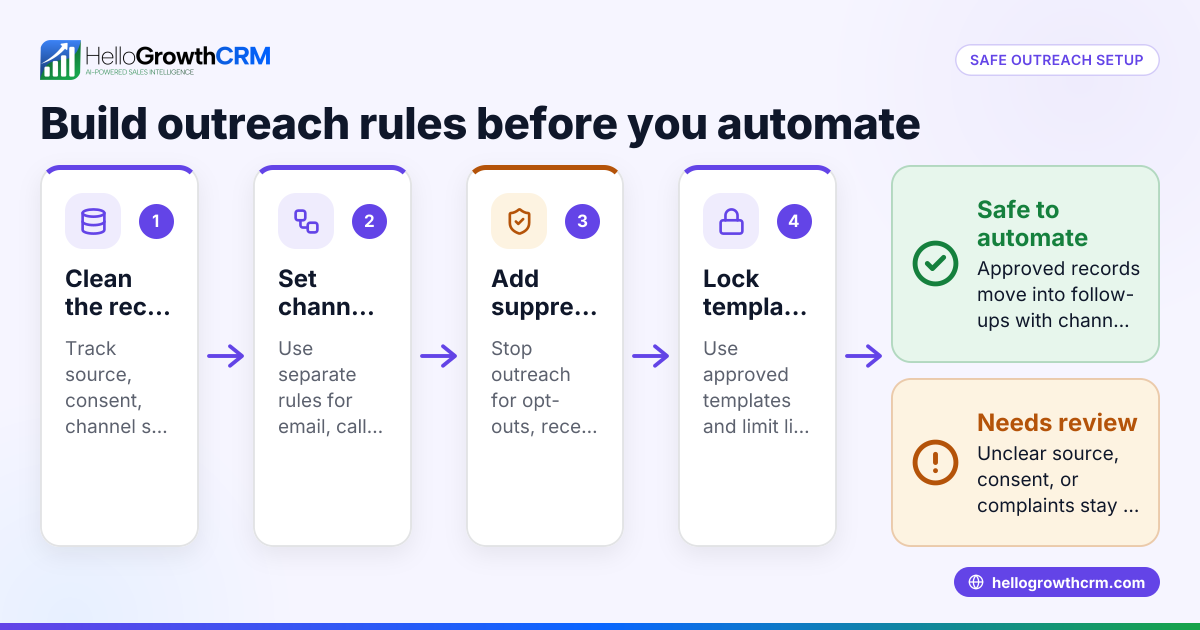
Set channel rules early.
Example policies:
- Email allowed for all prospects
- SMS allowed only after explicit consent
- Automated calls disabled without opt‑in
3. Add AI scoring triggers
Connect scoring signals from tools like AI Lead Scoring or pipeline velocity metrics.
Common triggers include:
- lead score increase
- meeting no‑show
- proposal viewed but not signed
4. Create compliant message templates
Every template must include required disclosures.
Email example fields:
- company address
- unsubscribe link
- sender identity
SMS templates must include opt‑out instructions.
5. Set frequency limits
AI automation should avoid excessive outreach.
Typical B2B cadence:
- 5–7 emails over 21 days
- 1–2 SMS reminders
- call tasks between emails
You can model sequences using tools like the Follow-Up Cadence Builder.
6. Enable activity logging
Sync communication activity with CRM timelines through integrations like:
7. Monitor pipeline health
Automation should improve deal movement.
Use tools like the Pipeline Health Score or Sales Forecasting to measure impact.
In one RevOps project I worked on in Austin, we implemented AI-triggered follow‑ups tied to proposal views. If a CFO opened a pricing doc twice but did not reply, the CRM triggered a rep task and a short follow‑up email. That workflow increased proposal response rates within two months.
Integrating AI Follow-Up Workflows With Your Sales Stack
AI follow‑up workflows work best when your CRM integrates with marketing, finance, and communication tools so deal signals, payment events, and engagement data automatically trigger compliant outreach sequences.
For U.S. mid‑market companies, the stack usually includes:
- Salesforce or HubSpot CRM
- Stripe for payments
- QuickBooks for accounting
- Slack for internal alerts
AI CRM platforms connect these systems.
For example:
- Payment events from Stripe can trigger onboarding messages
- Invoice updates from QuickBooks can notify account managers
- Marketing leads from HubSpot can enter sales workflows
HelloGrowthCRM was designed to centralize these signals. Its Email Automation and CRM Dialer keep every communication tied to a contact record.
The result is one compliance layer controlling:
- consent
- messaging frequency
- channel usage
That centralized model reduces the risk of rogue outreach tools violating regulations.
Common Mistakes RevOps Teams Make With AI Outreach
RevOps teams often break compliance or damage deliverability when they deploy AI follow‑up automation without centralized consent tracking, frequency limits, or message personalization, which leads to duplicate outreach, ignored opt‑outs, and poor buyer experience.
Here are the most common mistakes I see when auditing CRM automation.
Sending SMS Without Documented Consent
Many tools allow SMS campaigns instantly.
However, TCPA rules require consent for automated texts. If the CRM cannot prove when a contact opted in, the company carries legal risk.
Not Syncing Opt-Outs Across Systems
A prospect might unsubscribe in:
- marketing automation
- sales outreach tool
- support platform
If systems are not synced through All Integrations, outreach continues.
Over-Automating Early Stage Outreach
AI works best after signals exist.
Automating cold outreach sequences without behavioral data often hurts response rates.
Ignoring Pipeline Context
Automation should align with deal stages.
Using AI Deal Insights or Territory Management ensures messages reflect the prospect’s buying stage.
Why U.S. Mid-Market Sales Teams Use HelloGrowthCRM for AI Follow-Ups
HelloGrowthCRM helps U.S. RevOps teams automate compliant follow‑up workflows with built‑in AI signals, communication logging, and consent tracking designed for CAN‑SPAM and TCPA requirements.
The platform centralizes:
- email automation
- SMS messaging
- call tracking
- AI pipeline insights
Features like AI Pipeline Management, Smart Inbox, and AI Voice Agents allow sales teams to scale outreach while maintaining regulatory safeguards.
For American B2B teams working in Salesforce‑heavy ecosystems, HelloGrowthCRM integrates with tools across the stack while maintaining SOC‑2‑friendly audit trails.
If your team wants to automate follow‑ups without risking compliance issues, explore the platform’s Features, review Pricing, or start a Free Trial to test AI workflows with your existing sales stack.
About the author
Daniel Reeves is a Sales Operations Lead in B2B SaaS with 11 years of experience building revenue systems for U.S. mid‑market companies. He has led RevOps automation projects across startups in San Francisco, Austin, and Chicago. One project included implementing AI‑driven follow‑up workflows for a 40‑rep fintech sales team using a unified CRM and compliance framework.
Frequently Asked Questions
Q: What is an AI follow-up workflow in a CRM?
A: An AI follow‑up workflow in a CRM is an automated sequence that uses AI signals such as lead score changes, deal activity, or meeting outcomes to trigger emails, SMS messages, or tasks while tracking consent and opt‑out rules required under U.S. regulations.
Q: Does CAN-SPAM require opt-in for B2B email outreach?
A: CAN‑SPAM does not require prior opt‑in for B2B email outreach, but it requires businesses to clearly identify themselves, include a valid mailing address, and provide a working unsubscribe option that must be honored promptly.
Q: Do AI-generated SMS follow-ups fall under TCPA rules?
A: Yes, AI‑generated SMS follow‑ups generally fall under TCPA rules if they are sent using automated systems. Businesses usually need prior express consent from the recipient before sending automated text messages to mobile numbers.
Q: How do CRMs track compliance for automated outreach?
A: CRMs track compliance by storing consent status, logging communication history, and enforcing suppression lists so automated workflows stop sending messages after a prospect unsubscribes or opts out of communication.
Q: Can AI decide when to send sales follow-ups?
A: Yes, AI can determine optimal follow‑up timing by analyzing engagement signals such as email opens, website visits, proposal views, and pipeline stage movement, which allows workflows to trigger outreach when a buyer is most likely to respond.
Q: What tools should integrate with a CRM for AI follow-ups?
A: A CRM for AI follow‑ups should integrate with communication tools, finance systems, and marketing platforms such as Gmail, Slack, Stripe, QuickBooks, and HubSpot so buyer signals and transaction events can trigger automated outreach sequences.
Q: Are automated follow-up emails legal in the United States?
A: Automated follow‑up emails are legal in the United States as long as they comply with CAN‑SPAM rules, including truthful subject lines, sender identification, a physical address, and a clear unsubscribe option in every commercial email.
Q: What is the safest channel for automated sales follow-ups?
A: Email and internal sales tasks are generally the safest channels for automated follow‑ups because they carry fewer regulatory restrictions than SMS or automated calling, which are regulated under TCPA and require documented recipient consent.
Frequently Asked Questions
Ready to put this into practice?
Set up your pipeline, WhatsApp follow-ups, and AI lead scoring in minutes — free, no credit card.
Try HelloGrowthCRM freeGet CRM tips in your inbox
Join thousands of sales professionals who get weekly insights on CRM strategy, AI automation, and pipeline optimization.

The HelloGrowthCRM team publishes guides on CRM strategy, AI sales tools, and revenue operations for small business sales teams.