HelloGrowthCRM software
Built for real small-business sales teams
HelloGrowthCRM helps reps qualify faster, follow up on time, and close more deals—with practical automation in one place.
- AI lead scoring and pipeline visibility
- Built-in dialer, WhatsApp, and email automation
- Sales forecasting and RevOps-ready reporting
AI follow-up workflows in a CRM are automated sequences that capture inbound leads, analyze intent using AI, and trigger personalized follow-up actions across channels like email, website chat, and WhatsApp. Instead of relying on manual responses from sales reps, an AI-driven CRM evaluates the lead’s source, message, behavior, and engagement signals to send tailored replies, create tasks, schedule meetings, and move deals through the pipeline automatically. For B2B teams handling dozens or hundreds of inbound leads per week, AI follow-up workflows reduce response time, improve qualification, and prevent high-value leads from slipping through the cracks.
Key Takeaways
- AI follow-up workflows automatically capture inbound leads from website forms and WhatsApp conversations and trigger immediate personalized responses.
- Modern AI CRMs combine lead scoring, automated messaging, and task orchestration so reps focus on high-intent opportunities.
- Multi-step workflows typically include instant replies, qualification prompts, follow-up reminders, and meeting scheduling.
- Integrating channels like email, WhatsApp, and CRM dialers ensures every lead receives consistent follow-up across touchpoints.
- AI insights such as engagement signals and deal risk indicators help prioritize leads that are most likely to convert.
Why AI Follow-Up Workflows Matter for B2B Lead Management
Speed is the single biggest factor in inbound lead conversion.
Several studies show that companies that respond to leads within minutes dramatically increase the chance of engagement. A well-known analysis cited by the Harvard Business Review found that responding to leads within an hour makes teams significantly more likely to qualify them compared to slower responses.
Source: https://hbr.org/2011/03/the-short-life-of-online-sales-leads
Yet most B2B teams struggle with response time. Leads arrive from:
- Website forms
- WhatsApp messages
- Chat widgets
- Demo requests
- Marketing campaigns
These inquiries rarely come in neat batches. They appear throughout the day across multiple channels. Without automation, sales reps miss opportunities.
This is where AI-driven CRM workflows help.
Instead of waiting for a rep to manually review a new lead, an AI-powered platform like AI CRM instantly analyzes the lead source and message context. It can then trigger actions such as:
- sending a personalized email response
- replying on WhatsApp
- assigning the lead to the correct sales rep
- scheduling a follow-up task
- updating pipeline stages
In many B2B teams I have worked with, the biggest improvement came from simply eliminating the “lead sitting idle” problem. One SaaS client we supported had an average first-response time of 18 hours. After implementing automated workflows, that dropped to under 3 minutes.
Common Sources of Inbound Leads
Before building automation, it helps to understand where inbound leads typically originate.
Website Forms
Website forms are still the most common source of inbound B2B leads. Typical examples include:
- demo requests
- contact forms
- pricing inquiries
- gated content downloads
When connected to a CRM, form submissions can automatically create a new contact and deal record.
Using tools like Meeting Scheduler, many companies allow prospects to book meetings directly after form submission. AI workflows can then trigger reminders and follow-up sequences.
WhatsApp Conversations
WhatsApp has become a powerful lead generation channel for many global B2B companies. Prospects often prefer sending a quick message instead of filling out a form.
With a unified platform like WhatsApp & SMS CRM, these conversations automatically appear inside the CRM. AI can analyze the message content and route it to the right workflow.
For example:
- A pricing question triggers a pricing response template.
- A support issue routes to customer success.
- A demo request creates a meeting booking link.
Marketing Campaign Leads
Inbound leads also come from advertising and marketing campaigns.
These include:
- LinkedIn ads
- Meta ads
- webinar registrations
- email campaigns
Integrations like Meta Ads and Zapier automatically sync campaign leads into the CRM, where AI workflows can take over.
The Core Components of an AI Follow-Up Workflow
An effective AI follow-up workflow usually combines four operational layers.
1. Lead Capture and Data Enrichment
The first step is capturing the lead in the CRM with enough context to act on it.
Typical fields include:
- name
- company
- phone
- source
- message content
AI tools can also enrich records with additional insights such as company size or industry.
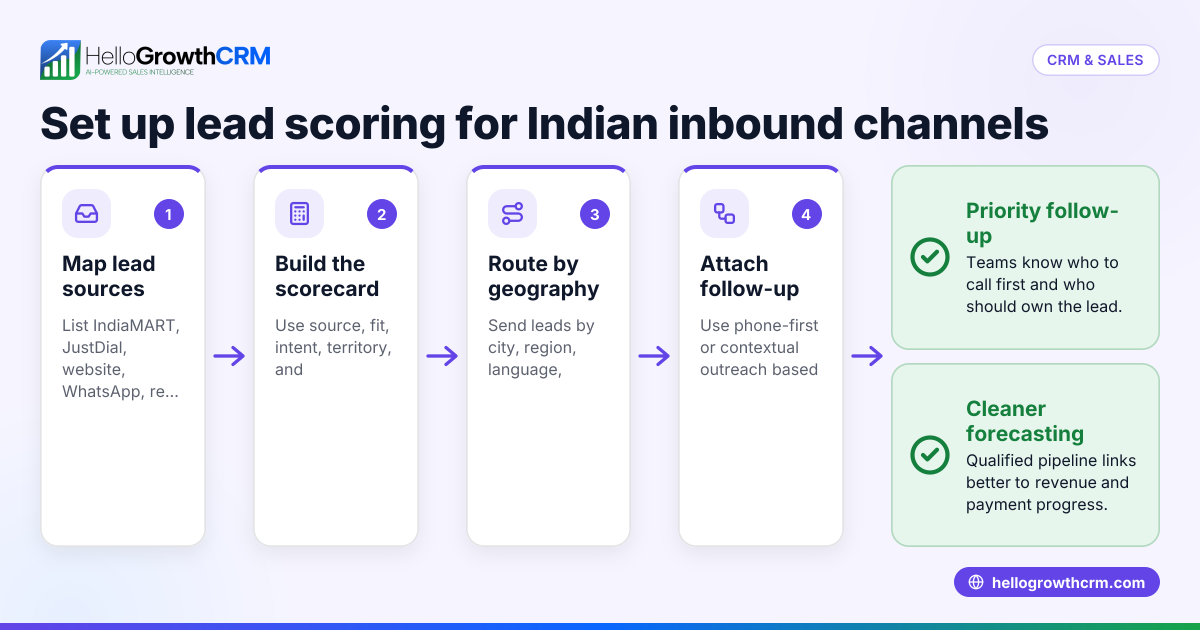
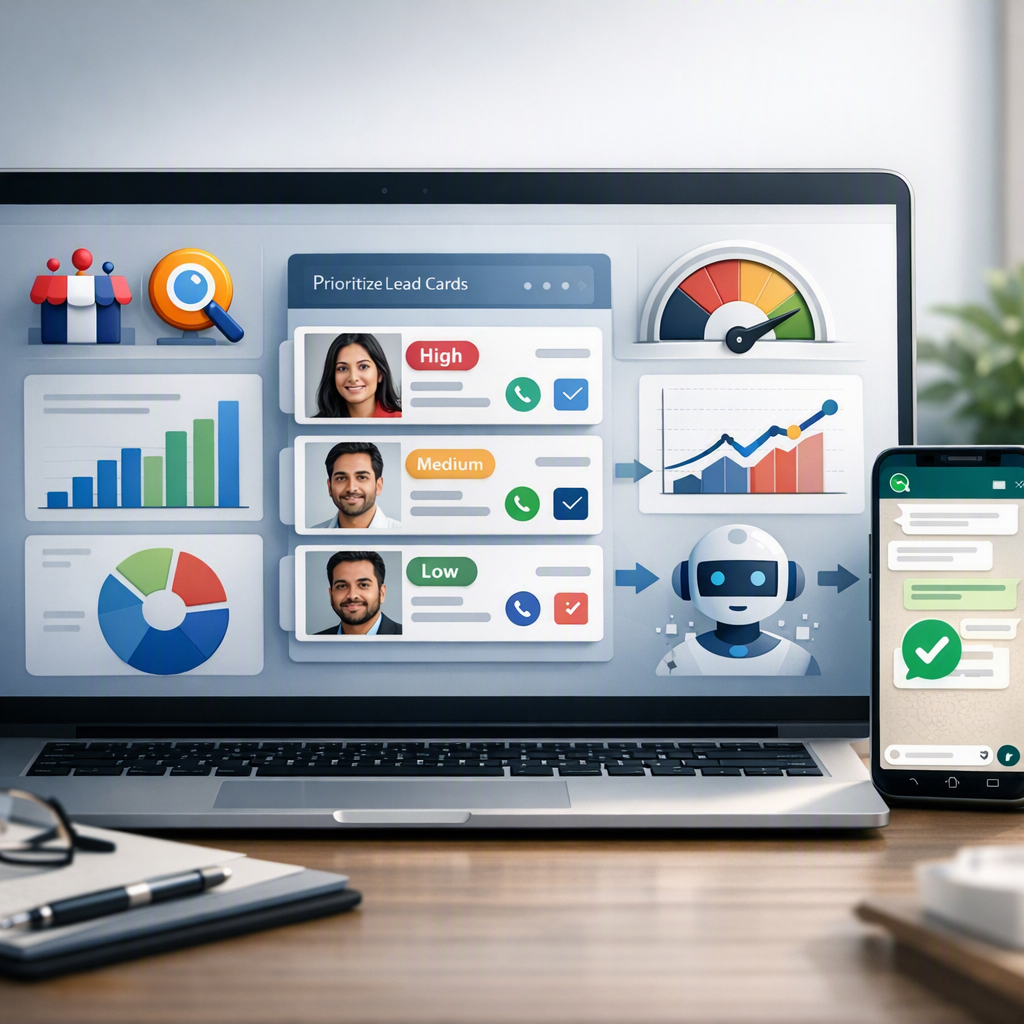
In platforms like HelloGrowthCRM, leads can be evaluated using AI Lead Scoring. This scoring helps prioritize prospects that match your ideal customer profile.
2. AI-Personalized First Response
The first response matters most.
AI can instantly generate a personalized reply based on:
- the lead’s inquiry
- the website page they visited
- company data
- prior conversation context
For example, a workflow might send:
- a tailored email response
- a WhatsApp message
- a meeting booking link
Tools like Email Automation allow these responses to be triggered automatically while still sounding human.
3. Task Creation for Sales Reps
Automation should not replace sales reps entirely. Instead, it should guide them toward the highest-value conversations.
A strong workflow automatically creates tasks such as:
- call within 30 minutes
- send follow-up email
- review qualification data
These tasks can appear inside visual pipelines such as Sales Task Boards, making it easy for reps to see what needs attention.
4. Multi-Step Follow-Up Sequences
Many leads will not respond to the first message.
This is normal.
Effective workflows therefore include multi-step follow-up sequences. These may involve:
- reminder emails
- WhatsApp nudges
- call tasks
- meeting invites
In one pipeline audit I conducted for a 12-person sales team, nearly 40 percent of closed deals came after the third follow-up. Without automation, most of those deals would have been lost.
AI Insights That Improve Follow-Up Prioritization
AI workflows become more powerful when they incorporate behavioral signals.
Engagement Signals
AI can track signals like:
- email opens
- link clicks
- website revisits
- reply sentiment
These signals can automatically adjust lead scores or pipeline stages.
Tools such as AI Deal Insights highlight which prospects are actively engaging so sales reps know where to focus.
Pipeline Risk Detection
Some leads start strong but later stall.
AI systems can detect patterns such as:
- long stage durations
- declining response rates
- missing qualification fields
Automated alerts from systems like the Deal Risk Agent warn sales managers before deals go cold.
According to research from Gartner, organizations that combine AI insights with CRM automation see measurable improvements in sales productivity and forecasting accuracy.
Source: https://www.gartner.com/en/sales/topics/crm
How to Build AI Follow-Up Workflows in Your CRM: Step-by-Step
1. Connect Lead Sources
Integrate your website forms, WhatsApp account, and marketing platforms with the CRM so every inbound lead automatically creates a contact record.
2. Define Lead Qualification Rules
Set criteria such as company size, industry, and inquiry type. Use AI scoring to prioritize leads that match your ideal customer profile.
3. Create an Instant Response Message
Design an automated email or WhatsApp reply that acknowledges the inquiry and offers the next step. Include a meeting link if appropriate.
4. Assign Leads Automatically
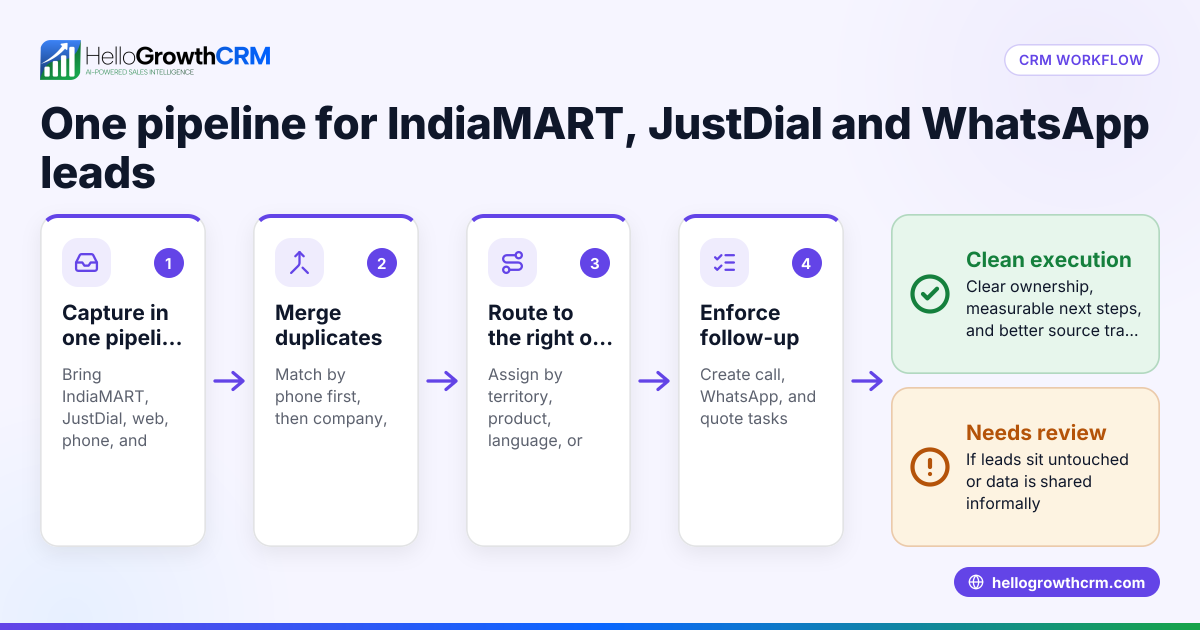
Route leads to the correct sales rep based on territory, product interest, or round-robin assignment. This avoids delays in ownership.
5. Generate Follow-Up Tasks
Create automatic tasks such as “call within 15 minutes” or “send proposal details.” These tasks ensure human engagement when needed.
6. Build a Multi-Step Follow-Up Sequence
Design a series of follow-ups across several days. This may include emails, WhatsApp reminders, and phone calls using a built-in CRM Dialer.
7. Track Engagement and Adjust Workflow
Monitor open rates, replies, and stage movement. Tools like Pipeline Health Score help identify workflow gaps.
Real Example: AI Follow-Up in a SaaS Sales Pipeline
In one rollout we did with a mid-market SaaS team, the biggest problem was inconsistent follow-up.
Leads arrived from two main channels:
- demo requests on the website
- WhatsApp inquiries from paid ads
Before automation, the process looked like this:
- leads were manually exported
- reps responded when they had time
- many inquiries never received a second follow-up
We implemented a structured AI workflow inside the CRM.
The system performed the following actions automatically:
- created a contact and deal record
- sent a personalized email response
- triggered a WhatsApp confirmation message
- assigned the lead to the correct sales rep
- created a call task within 20 minutes
If the lead did not respond, the workflow triggered additional follow-ups on day two and day four.
Within three months, the team saw:
- 45 percent faster first-response time
- higher meeting booking rates
- more consistent pipeline data for forecasting with Sales Forecasting
The key improvement was consistency. AI workflows ensured every lead received the same structured follow-up process.
Best Practices for AI Follow-Up Workflows
When designing these workflows, several practical rules help avoid common mistakes.
Keep the First Message Short
Prospects prefer quick responses.
Acknowledge the inquiry and suggest the next step. Avoid sending long automated messages.
Use Multiple Channels
Do not rely on email alone.
Combining email, WhatsApp, and phone outreach improves response rates. Platforms with unified communication like Smart Inbox help manage these conversations.
Avoid Over-Automation
Automation works best when combined with human judgment.
AI should handle routine responses and prioritization. Sales reps should handle complex discussions and negotiations.
Measure Pipeline Impact
Track metrics such as:
- lead response time
- meeting booking rate
- stage conversion rate
- sales cycle length
Tools like the CRM ROI Calculator can help estimate the revenue impact of better follow-up workflows.
Why HelloGrowthCRM Is Built for AI Follow-Up Automation
Most CRMs store contact data but require heavy manual work to run follow-ups.
HelloGrowthCRM takes a different approach. The platform is designed around automation and AI-driven sales workflows.
Teams can:
- capture leads from multiple channels
- automate responses using AI
- prioritize opportunities with AI scoring
- track deal health in real time
Agent-based automation inside the Agentic AI Hub can also trigger advanced actions like post-call analysis through the Post-Call Agent.
Disclosure: HelloGrowthCRM is the platform I work with, so the examples here reflect how these workflows are implemented inside that system. However, the principles apply to most modern AI-enabled CRMs.
If your team is handling growing inbound volume, it is worth exploring the platform’s capabilities through a Free Trial or a guided Demo to see how AI follow-up workflows can improve lead response speed and pipeline conversion.
About the author
Arjun Mehta is a Revenue Operations Lead at HelloGrowthCRM with over 9 years of experience in B2B SaaS sales operations and CRM automation. He specializes in pipeline design, sales workflow automation, and AI-driven CRM systems. Earlier in his career, he led a full CRM migration and workflow automation project for a global SaaS company with a 40‑person sales team, reducing lead response time from hours to minutes. That hands-on implementation experience directly informed the workflows described in this article.
Frequently Asked Questions
Q: What is an AI follow-up workflow in a CRM?
A: An AI follow-up workflow is an automated sequence that responds to inbound leads, prioritizes them using AI scoring, and triggers actions such as emails, WhatsApp messages, and tasks. The goal is to ensure every lead receives timely engagement. AI also analyzes behavior signals to help sales teams focus on the most promising opportunities.
Q: Why are fast lead responses important in B2B sales?
A: Fast responses dramatically increase the chance of qualifying and converting inbound leads. Research from Harvard Business Review shows that companies responding within an hour are far more likely to connect with prospects. AI workflows make instant responses possible even when sales reps are unavailable.
Q: Can AI automatically respond to WhatsApp leads?
A: Yes. Many modern CRMs integrate with WhatsApp and can automatically respond to incoming messages using predefined workflows. AI can analyze the inquiry, send a personalized response, and route the conversation to the appropriate sales rep.
Q: How many follow-ups should a B2B sales workflow include?
A: Most successful workflows include 3–6 follow-up attempts over several days or weeks. Deals often close after multiple touches. Automated sequences ensure consistent follow-up without requiring manual tracking from sales reps.
Q: Does AI replace sales reps in follow-up workflows?
A: No. AI handles repetitive tasks like sending initial responses, scoring leads, and scheduling reminders. Sales reps remain essential for discovery calls, negotiations, and relationship building. The goal is to free reps from manual work so they can focus on selling.
Q: What metrics should teams track for AI follow-up workflows?
A: Key metrics include lead response time, meeting booking rate, lead-to-opportunity conversion rate, and sales cycle length. Monitoring these metrics helps teams refine their workflows and improve pipeline performance.
Q: How can a company start implementing AI follow-up workflows?
A: Start by connecting all lead sources to a centralized CRM. Then create automated responses, lead scoring rules, and multi-step follow-up sequences. Platforms like HelloGrowthCRM provide built-in automation and AI tools that simplify this setup.
Frequently Asked Questions
Ready to put this into practice?
Set up your pipeline, WhatsApp follow-ups, and AI lead scoring in minutes — free, no credit card.
Try HelloGrowthCRM freeGet CRM tips in your inbox
Join thousands of sales professionals who get weekly insights on CRM strategy, AI automation, and pipeline optimization.

The HelloGrowthCRM team publishes guides on CRM strategy, AI sales tools, and revenue operations for small business sales teams.