HelloGrowthCRM software
Built for real small-business sales teams
HelloGrowthCRM helps reps qualify faster, follow up on time, and close more deals—with practical automation in one place.
- AI lead scoring and pipeline visibility
- Built-in dialer, WhatsApp, and email automation
- Sales forecasting and RevOps-ready reporting
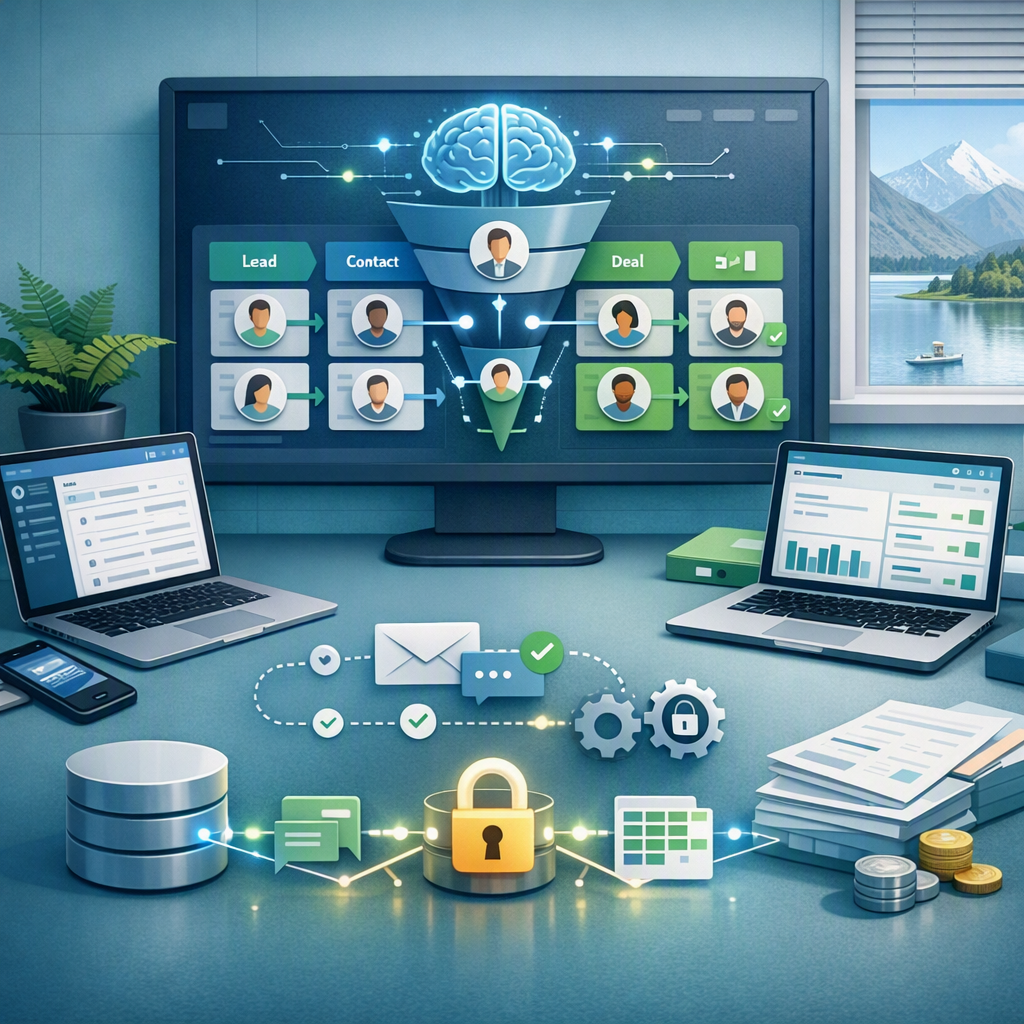
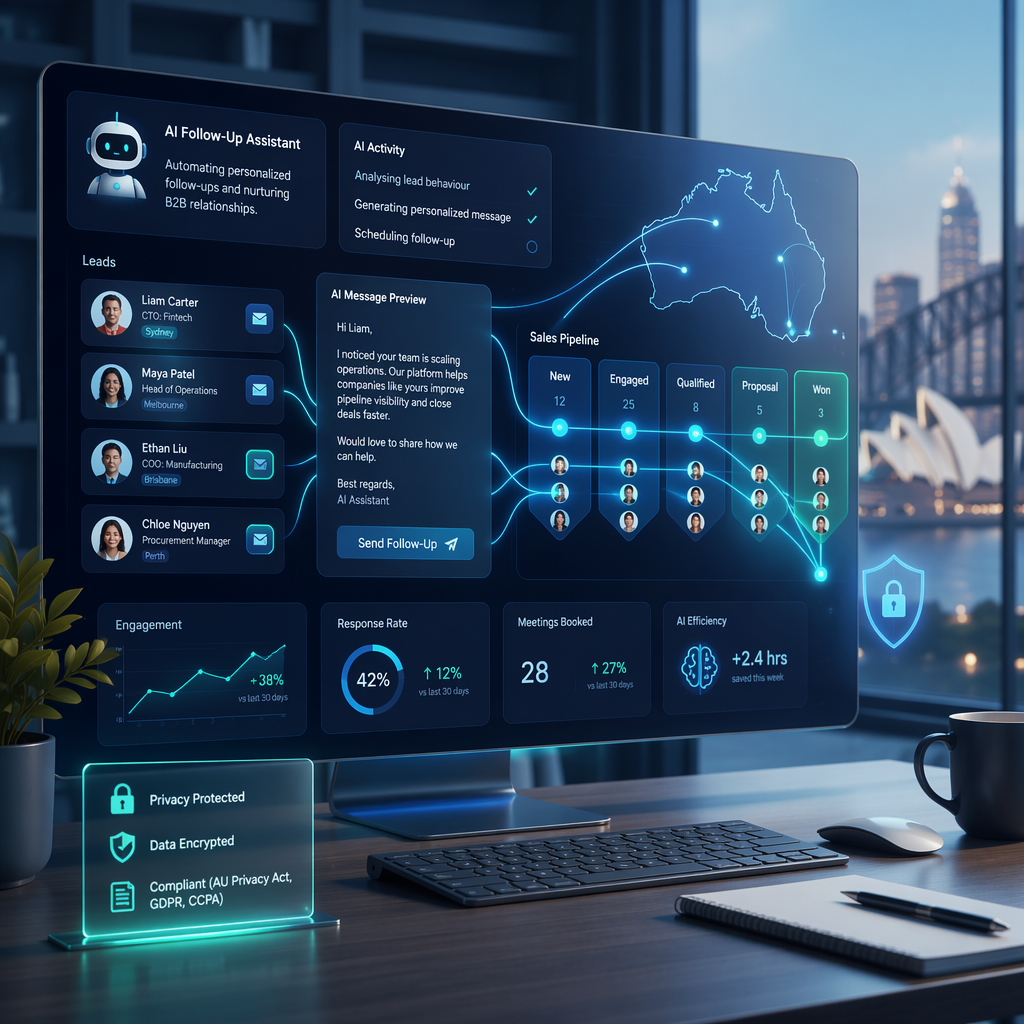
AI follow-up workflows in a New Zealand CRM are automated sequences that use artificial intelligence to send timely, personalised messages to leads and customers while respecting local privacy and anti‑spam laws. Instead of relying on manual reminders, the CRM triggers emails, calls, or messages based on behaviour such as form submissions, meeting attendance, or deal stage changes. For Auckland and Wellington B2B teams, these workflows help maintain consistent follow-up without breaching the Privacy Act 2020 or the Unsolicited Electronic Messages Act.
Key Takeaways
- AI follow-up workflows automatically send personalised messages based on lead activity, deal stage, or engagement signals.
- New Zealand businesses must follow the Privacy Act 2020 and the Unsolicited Electronic Messages Act when sending automated outreach.
- AI-powered CRMs can track consent, store communication history, and enforce compliant follow-up sequences.
- Integrations with tools like Xero, email, and messaging platforms help SMB exporters manage both sales and billing data.
- Auckland and Wellington sales teams often combine AI lead scoring with automated follow-up to prioritise export opportunities.
Why AI Follow-Up Workflows Matter for New Zealand B2B Teams
Most B2B deals in New Zealand take weeks or months to close. That is especially true for export-led companies supported by NZ Trade & Enterprise programs. A prospect in Singapore or Australia may attend a webinar today but not request a proposal for several weeks.
Without automation, follow-ups slip through the cracks.
AI workflows solve that problem by triggering messages when certain signals appear. For example:
- A prospect downloads a product guide
- A deal moves from discovery to proposal
- A meeting ends without a next step
- A quote is sent but not opened
When these triggers fire, the CRM sends the next message automatically. A system like an AI CRM can combine behaviour data, pipeline stage, and lead score to decide when and how to follow up.
In one rollout I helped implement for a 12‑person Auckland SaaS sales team, the biggest issue was inconsistent follow-up. Reps often waited five to seven days before sending a second email. After introducing automated sequences with AI prompts and a structured follow-up cadence, average response time dropped to under 24 hours and pipeline conversion improved by about 18 percent.
Consistency, not clever messaging, is usually the biggest win.
The Legal Requirements: Privacy and Anti‑Spam in New Zealand
Automation does not remove legal responsibility. Every automated outreach system must comply with New Zealand regulations.
Two laws matter most for CRM-driven follow-ups.
Privacy Act 2020
The Privacy Act governs how organisations collect, store, and use personal information. It includes 13 Information Privacy Principles that regulate data handling.
For sales teams, the most relevant principles include:
- Collect information only for a clear business purpose
- Tell people how their data will be used
- Keep data secure
- Allow people to access or correct their data
You can review the official guidance from the Office of the Privacy Commissioner here: https://www.privacy.org.nz/privacy-act-2020/.
In practice, this means your CRM must:
- Record how the lead was obtained
- Track consent for communications
- Securely store personal data
Platforms with built‑in governance, like AI Pipeline Management, make it easier to track these data points across deals.
Unsolicited Electronic Messages Act (Anti‑Spam Law)
This law regulates commercial electronic messages such as marketing emails, SMS, and automated outreach.
The Department of Internal Affairs explains the rules here: https://www.dia.govt.nz/Spam.
The law requires three things for every message:
- Consent – The recipient must have given permission, either explicitly or implicitly.
- Identification – The sender must clearly identify themselves.
- Unsubscribe – Each message must include a working opt-out method.
For automated workflows, this means every email or message generated by your CRM must still include those elements.
Modern systems combine email automation with compliance tracking. For example, Email Automation tools can automatically insert unsubscribe links and sender identification.
Where AI Makes Follow-Up Smarter
Automation alone simply schedules messages. AI improves timing, personalisation, and prioritisation.
Three capabilities matter most.
AI Lead Scoring
AI models analyse engagement signals to rank leads.
Signals often include:
- Email opens
- Meeting attendance
- Website visits
- Proposal views
- Deal stage velocity
A system like AI Lead Scoring can automatically raise priority when a buyer becomes active again.
In practice, this means a dormant lead who suddenly views pricing gets immediate follow-up.
When I audit pipelines, I usually find 20–30 percent of deals have no activity for more than two weeks. AI scoring highlights those accounts before they stall completely.
Behaviour‑Triggered Messaging
Instead of sending messages on a fixed schedule, AI can trigger outreach based on behaviour.
Examples include:
- Send a follow-up email 2 hours after a meeting
- Notify a rep if a proposal is viewed twice
- Trigger a WhatsApp message when a deal reaches negotiation
For teams selling internationally, combining messaging channels matters. Many exporters now connect their CRM to messaging platforms using tools like WhatsApp & SMS CRM.
AI Call and Conversation Analysis
Follow-up workflows improve when conversation data feeds back into the system.
Tools such as an AI Sales Copilot or the Post-Call Agent can summarise calls, identify objections, and generate suggested next steps.
This prevents the classic problem where reps leave meetings without scheduling the next interaction.
Typical AI Follow-Up Workflow for NZ Export Sales
Auckland and Wellington SMB exporters often use a similar automation pattern.
Here is a simplified version.
- Lead enters CRM from website or event.
- AI lead scoring ranks the lead.
- CRM assigns the lead to a territory or rep.
- Automated follow-up sequence begins.
- Engagement signals update the score.
- AI highlights deals at risk of going cold.
This structure works especially well when combined with pipeline monitoring tools such as AI Deal Insights.
For companies participating in NZ Trade & Enterprise growth programs, this approach helps maintain consistent outreach across multiple international markets.
Integrating CRM Workflows with Xero and Finance Data
New Zealand SMBs often run their finance stack on Xero. Connecting CRM activity with accounting data creates stronger follow-up signals.
For example:
- When an invoice is generated, the CRM can trigger onboarding emails.
- If payment is overdue, a reminder workflow can start.
- High-value customers can trigger account expansion campaigns.
CRMs typically connect to finance systems through integrations. HelloGrowthCRM supports accounting workflows through integrations such as Stripe and QuickBooks, which many exporters use alongside Xero for international billing.
In one RevOps project I supported for a Wellington manufacturing exporter, we connected invoice status to CRM customer records. When an order was completed, the system triggered a follow-up asking for feedback and a referral. That single automation produced three qualified leads in the first month.
How to Build AI Follow-Up Workflows: Step-by-Step
1. Define the Trigger Events
Choose the actions that start a follow-up sequence. Common triggers include form submissions, meeting completions, or deal stage changes.
2. Capture Consent and Data Source
Store where the lead came from and how consent was obtained. This ensures compliance with the Privacy Act and anti‑spam regulations.
3. Segment Leads by Score or Stage
Use AI scoring or pipeline stages to personalise follow-up timing and messaging. High-intent leads should receive faster outreach.
4. Create Multi‑Channel Sequences
Combine email, calls, and messaging channels. Systems like a CRM Dialer or integrated messaging help reps respond quickly.
5. Add AI Suggestions for Personalisation
Use AI-generated prompts based on meeting notes, product interest, or company size.
6. Monitor Pipeline Health
Track stalled deals and engagement drop-offs using analytics tools such as the Pipeline Health Score.
7. Continuously Refine the Workflow
Review response rates, deal velocity, and unsubscribe rates every month. Adjust timing and messaging to maintain compliance and engagement.
Common Mistakes NZ Teams Make with Automation
Even good automation can fail if implemented poorly.
The most common problems include:
- Sending messages without recorded consent
- Over-automating outreach with generic messaging
- Ignoring stalled deals in the pipeline
- Failing to connect CRM with finance or support data
One pattern I frequently see in audits is “automation overload.” A company adds dozens of sequences but never reviews results. The result is disengaged prospects and rising unsubscribe rates.
A simple workflow with clear triggers usually performs better.
Why HelloGrowthCRM Works for New Zealand Sales Teams
HelloGrowthCRM was designed for revenue operations teams that need automation without losing compliance control. It combines lead scoring, AI insights, and messaging automation inside a single platform.
For example, teams can:
- Run automated follow-up sequences with Email Automation
- Prioritise prospects using AI Lead Scoring
- Track stalled opportunities using AI Pipeline Management
- Connect communication tools through integrations like Gmail and Slack
Unlike generic CRM platforms, HelloGrowthCRM also includes RevOps support through Managed RevOps. That helps growing New Zealand companies implement workflows correctly from the start.
If your Auckland, Wellington, or Christchurch sales team wants to automate follow-ups without risking compliance issues, you can explore the platform through a Free Trial or book a guided Demo.
About the author
James Holloway is the Sales Operations Lead at HelloGrowthCRM with 11 years of experience in B2B SaaS revenue operations. He has implemented CRM and automation systems for technology exporters across Auckland and Wellington. In 2023 he led a RevOps transformation project for a 15‑person SaaS company expanding into Australia and Southeast Asia, implementing AI-driven pipeline management and compliant automated follow-up workflows.
Frequently Asked Questions
Q: What is an AI follow-up workflow in a CRM?
A: An AI follow-up workflow is an automated sequence that sends emails, messages, or reminders based on lead behaviour or pipeline stage. AI models decide timing, prioritisation, and personalisation. This helps sales teams respond faster without manually tracking every lead.
Q: Are automated sales emails legal in New Zealand?
A: Yes, but they must comply with the Unsolicited Electronic Messages Act. Messages must have recipient consent, clearly identify the sender, and include an unsubscribe option. Automation does not remove these legal requirements.
Q: How does the Privacy Act 2020 affect CRM systems?
A: The Privacy Act requires organisations to collect personal data for a clear purpose, store it securely, and allow individuals to access or correct it. CRM systems must track how contact information was obtained and how it is used in communication workflows.
Q: Can AI decide when to follow up with leads?
A: Yes. AI models can analyse engagement signals such as email opens, website visits, and meeting activity. Based on these signals, the CRM can automatically trigger a follow-up message or notify a sales rep.
Q: Why do New Zealand exporters need automated follow-ups?
A: Export deals often involve long buying cycles and international time zones. Automated follow-up ensures consistent communication with prospects in markets like Australia, Singapore, and the UK while sales teams focus on closing deals.
Q: How does CRM automation integrate with accounting tools like Xero?
A: CRM systems can sync invoice, payment, and customer data with finance platforms. This allows workflows to trigger onboarding emails, renewal reminders, or upsell campaigns based on financial activity.
Q: What is the easiest way to start using AI follow-up workflows?
A: Start with a simple sequence triggered by a form submission or meeting completion. Use AI lead scoring to prioritise responses and monitor engagement. Many teams begin with a CRM trial before scaling automation across the pipeline.
Frequently Asked Questions
Ready to put this into practice?
Set up your pipeline, WhatsApp follow-ups, and AI lead scoring in minutes — free, no credit card.
Try HelloGrowthCRM freeGet CRM tips in your inbox
Join thousands of sales professionals who get weekly insights on CRM strategy, AI automation, and pipeline optimization.

The HelloGrowthCRM team publishes guides on CRM strategy, AI sales tools, and revenue operations for small business sales teams.